
A recent report underscores the need for economic freedom, it states that it "... is the key to peace as well as to prosperity: "When measures of both economic freedom and democracy are included in a statistical study, economic freedom is about 50 times more effective than democracy in diminishing violent conflict. The impact of economic freedom on whether states fight or have a military dispute is highly significant, while democracy is not a statistically significant predictor of conflict."..."
Via Globalization Institute
Economic Freedom: Key to Prosperity & Peace


Read User's Comments(0)

Language and Neo-Colonialism: African Development Challenge
 Kwesi Kwaa Prah writes "...Africa represents today the only major historical and cultural area of the world where despite their indigenous socio-cultural majorities, countries prefer to use the languages of their erstwhile masters in their attempts to develop and make social progress. The result of this neo-colonial approach to culture and democracy is that the scientific and technological culture of Africans is hardly advancing.Actually, Africa, by and large, is retrogressing or stagnating. Mass society and its culture is shut off, and condemned to cultural backwardness and alienation from the life of the elite. The elite in turn is bent on what many social critics regard as mindless imitation of the colonial and metropolitan cultures of the west. This is an orientation, which in effect integrates the elite more into the culture of the former colonial masters than the indigenous cultures from where this elite historically and socially derives..."
"Pluralism and Democracy - The African Experience"
Bart Dijkstra of Free Voice gave a speech where he outlined crucial components of democracy "...good government is all about respecting the freedom of others and to realise that your freedom is not an absolute right. In Africa this is known by the concept of Ubuntu. This means that if you overstep your boundaries, inflict hardship on others or deprive others what is rightfully theirs you inflict this hardship on yourself; you deprive yourself of what you deny others. I see this concept of Ubuntu very much alive in the countries in Africa I know. I lived some years in Zimbabwe and others countries in the South and I have noticed that this concept is an important cornerstone of the bottom-up democratic process, which even when the top down process fails, which happens to many countries on this continent at present, still will guarantee that democracy has a very good change to emerge even if the top-down process is in shambles..."
Top-Down to Bottom-Up Development
Evelyn Kiapi Matsamura writes "...Decentralisation - the transfer of power from governments in often distant capitals to local authorities - is frequently depicted as one of the strategies that hold the greatest promise for helping the rural poor. At present, most of these people rely on agriculture for their livelihood. Yet, they have tended to exercise little control over the policies which are drawn up for rural areas, and which have a direct effect on the success of farming (for example)..."
What do African leaders think?
Dozie Azike asks the question What do African leaders think? "...We have megalomaniacs leading as leaders. Leaders who have stolen the wealth of their countries and kept them in foreign accounts and are begging for debt forgiveness. Leaders who are richer than their counterparts from developed countries they are asking for debt forgiveness. Leaders who are living more lavishly than their counterparts from creditor nations. Leaders who are richer than their countries. Leaders who go on vacation to developed countries, because there are no infrastructures. Leaders whose kids have gone abroad to study so that they will come back and take over from them. Leaders who are so myopic and uninformed. Leaders who see grants and loans as free gift because they will ultimately end up in their own pockets. Leaders who can go to IMF and World Bank to borrow money to construct palaces and houses for their wives and concubines, to construct mushroom projects that might have been awarded to their cronies. Leaders who are despotic. Leaders who glorify that their own people have not seen the light. Leaders who cannot be differentiated from devil..."
Traditional Autocracy:Mswati of Swaziland
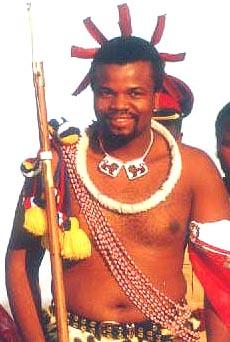 Successful leadership ultimately depends on a leaders inherent abilities, the framework in which they operate and the effectiveness of associated checks and balances. Swaziland is an example of a traditional system gone awry, where a constitutional monarch has evolved into the worst type of destructive autocrat. As Babs Ajayi elucidates the slide into misrule began when the "...king was able to dissolve the Supreme Council of State (SCS), the Liqoqo. The legislative structure of the state was skewed in favour of the royal family and their sidekicks but a call for restructuring the legislature was rejected. The Swaziland Federation of Trade Unions (SFTU) have been on strike again and again pressing for reforms and demanding accountability, demanding that the state be separated from the palace and insisting that a people-oriented constitutional review be embarked upon. In 2001, the nation's Constitutional Review Commission enhanced King Mswati's powers. The Commission went on to extend the ban on all political parties in Swaziland..."
Debt, Despots and Domination
Chris Ngwodo writes "...we should realize that the current prominence of debt relief in international circles is driven by much more than altruism...debt relief is aimed at altering the social climates that support the spread of extremism and terror all over the third world without altering the global economic balance of power...ongoing campaign for debt relief must be articulated from the perspective of its moral economy. Much of those debts are odious because they were incurred by dictatorships which were unrepresentative of the masses now groaning under the debt burden...debt relief must be accompanied by the institution of justice in the global economic system. The pious hypocrisy of the west in championing free markets in Africa while maintaining subsidies and guarding its own markets strategically is obvious...The willingness of so many western countries and banks to receive stolen funds is as criminal as the original theft itself. The debt issue should be tied to the repatriation of Africa's stolen wealth that has been piling up in foreign vaults...African nations must look inward and tackle decisively the culture of graft that is destroying governance and impoverishing their people. It would be profound to see past leaders and government operatives being put on trial and convicted for economic crimes, theft and embezzlement..."
Via Pambazuka News
Langganan:
Postingan (Atom)