RSS
Menampilkan postingan yang diurutkan menurut relevansi untuk kueri brown. Urutkan menurut tanggal Tampilkan semua postingan

The Brown Hair on my Portrait Painting Looks Like Tawny Wool

The artist assigned to paint a portrait of someone with brown hair may reach for any brown pigment to represent the follicles in the hope that it will do, the result being the hair looks flat, dull and more like wool than fine strands. How can the artist paint brown hair realistically?

How to Paint Brown Hair on Portraits

Painting Brown Hair
Rachel Shirley
The artist may reflect upon what went wrong when painting hair in order to make changes to how the oil painting was completed. Any of the following painting practices could be at fault:
  • Making blanket assumptions about the colour of brown hair, using any tube of oil paint labelled “brown” to represent anything from brunette to auburn.
  • Illustrating every strand of the hair in a linear fashion with a fine sable, resulting in a synthetic appearance that resembles a wig rather than real hair.
  • Allowing harsh dividing lines to remain between tonal areas, making the hair appear solid or plastic rather than divisible strands.
  • Mixing the brown colour with white to represent highlights, or black to darken it, resulting in dirty grey colours.
  • Treating the hair area as a separate entity to the rest of the face, by omitting to illustrate how the hair casts shadows over the brow and cheeks, resulting in a cut out appearance to the brown hair.
Tips on Painting Brunette

The observant artist will notice that brown hair is a mere blanket label for a diversity earthen colours, including brunette, ochre, auburn, coffee, toffee, bronze tan, chocolate and russet that require different colour mixes to achieve. With this in mind, the following remedies may help the artist paint brown hair realistically.
  • Avoid using generic brown paint to represent the whole head of hair. The brown colour will vary between individuals and even between strands.
  • The key to suggesting the soft texture of hair is through blending. Look out for harsh divisions in tonal areas that could draw the eye. Use a soft sable for achieving smooth gradations.
  • Highlights are not merely white, but other colours. Some brunettes exhibit blue highlights, others show pinks, violets and even red.
  • Avoid using black to darken brown hair. Warm brown hair can be darkened with a little pthalo blue and burnt umber; cool brown hair can be darkened with a little ultramarine and permanent rose.
  • There is no need to draw every strand of the hair. It is better to blend the colours of hair and to suggest detail with a fine sable on selected areas of the hair, such as highlights and stray strands.
Pay special attention to the outline of the hair, particularly strands that fall over the face or catch the light.

Illustrating local shadows over the face can be effective at creating an almost photographic representation of hair and making it look as though it belongs to the subject.

Backlit hair will create bright russet colours, pinks, golds and bronzes, with tones similar to bright translucent autumn leaves. Take advantage of these opportunities to create a striking portrait.

Colour Mixes for Shades of Brown Hair

Color Mixing Recipes for Portraits: More than 500 Color Combinations for skin, eyes, lips & hair
click to buy from Amazon
Lots of browns and earth colours are not needed for every shade of brown. I use burnt sienna, burnt umber, ultramarine, pthalo blue, permanent rose, cadmium red and titanium white for all my brown hair paintings.

The portrait artist may find the following pigment mixtures helpful when trying to capture a particular colour mix for brown hair. The pigments are suggestion only, as in real life, more colours will be seen in highlights, reflections and darks. Varying amounts of white will be required in each case to express paler tones.

Ash brown hair: burnt umber, a little pthalo blue with white.
Auburn hair: burnt sienna, permanent rose and ultramarine.
Russet hair: burnt umber, cadmium red and a little ultramarine.
Toffee hair: burnt umber, cadmium red and a little ultramarine.
Dark coffee hair: burnt umber, pthalo blue and permanent rose.
Almost black brown hair: burnt umber, pthalo blue and a little permanent rose.

Oil Painting Techniques for Painting Hair

Glazing and dry brushing are great for suggesting realistic hair. Such painting techniques are explored on my articles via the links below and also via the links on this site navigation.

  • Digg
  • Del.icio.us
  • StumbleUpon
  • Reddit
  • RSS

Don't Blame Us, We're Incompetent!

Powerline blog has a great post up today- Don't Blame Us, We're Incompetent!

We devoted almost all of our radio show today to the Obama administration's recent foreign policy stumbles--in particular, Hillary Clinton's European apology tour and President Obama's mysteriously insulting treatment of Prime Minister Gordon Brown. We speculated about whether Obama's treatment of Brown was calculated disrespect, or whether the administration simply doesn't know how to host the Prime Minister of our most important ally on a state visit to Washington.

The White House, evidently stung by negative reaction in Great Britain, is now telling the British that the insult to Brown was inadvertent, the problem being that President Obama is "overwhelmed" by his job: Sources close to the White House say Mr Obama and his staff have been "overwhelmed" by the economic meltdown and have voiced concerns that the new president is not getting enough rest.

British officials, meanwhile, admit that the White House and US State Department staff were utterly bemused by complaints that the Prime Minister should have been granted full-blown press conference and a formal dinner, as has been customary. They concede that Obama aides seemed unfamiliar with the expectations that surround a major visit by a British prime minister.

But Washington figures with access to Mr Obama's inner circle explained the slight by saying that those high up in the administration have had little time to deal with international matters, let alone the diplomatic niceties of the special elationship.

Allies of Mr Obama say his weary appearance in the Oval Office with Mr Brown illustrates the strain he is now under, and the president's surprise at the sheer volume of business that crosses his desk. A well-connected Washington figure, who is close to members of Mr Obama's inner circle, expressed concern that Mr Obama had failed so far to "even fake an interest in foreign policy".

Where to begin? Obama, after two years of expressing smug contempt for the Bush administration, is "surprised at the sheer volume" of work the President has to do. And he's too tired to deal competently with one of the most important foreign officials he will meet during his term in office. So: maybe he should cut down on the late-night White House partying? And why in the world does the White House--let alone the State Department!--not have someone who is "[familiar] with the expectations that surround a major visit by a British prime minister?" If true, this is rank incompetence.

To some extent, the Brown fiasco might be attributed to Obama's failure to "even fake an interest in foreign policy." (Just think, by the way, how much work he will have to do when he realizes that as President, he has to deal with both domestic and foreign policy!) But I'm not sure that's the whole explanation.

The Telegraph's story contains this suggestion that Obama's slight of the British Prime Minister may have been intentional, at least in part: The real views of many in Obama administration were laid bare by a State Department official involved in planning the Brown visit, who reacted with fury when questioned by The Sunday Telegraph about why the event was so low-key. The official dismissed any notion of the special relationship, saying: "There's nothing special about Britain. You're just the same as the other 190 countries in the world. You shouldn't expect special treatment."

So: was the Brown fiasco intentional, or was it the result of Obama administration incompetence? Or a combination of the two? Most likely, I think, the latter.

There are a lot of things going on in my household right now, and we've been up late at night too- my wife suggests that because of her lack of sleep, she should be forgiven for any major policy blunders or international incidents she causes. I told her that excuse won't fly in this house, even if it flies in the White House.

A word of advice to President Obama- take some more vacations, exercise a bit more, and delegate authority better- you might make less mistakes then. To be fair though- you'll be called lazy and incompetent by liberal Democrats like you if you do that.

  • Digg
  • Del.icio.us
  • StumbleUpon
  • Reddit
  • RSS

Kos 'Brown is Nuts'

Over at the Daily Kos, this is how they are treating the special election in Massachusetts to fill the vacant US Senate seat there-

The bizarre rumors were already circulating about the possibility that there could be a delay in seating Naked Scotty Brown should he manage a win in Massachusetts, I hinged that 'You can already hear wingnuts warming up the pipes and getting ready to howl'- Well, the candidate himself is already howling. Brown is barking at the moon, spinning out his theory, and of course, calling on Martha Coakley to reject the non-existent conspiracy. Brown is nuts.
One of the main features of the left in this country is that they are totally unconnected with reality. The Democrat Secretary of State for Massachusetts is on record saying several times that if Brown is elected, it will take weeks for them to certify the election, and that until the election is certified, they are not going to sit him in the Senate. The delay will give the Democrats more time to jam through their healthcare bill, so it is a big deal. It makes perfect sense, it is a reasonable (although dirty) tactic to try, and the only rub is that he tipped his hand early. This was reported in the news yesterday, and one day later Brown picked up on it and mentioned it.

But you can see on Daily Kos that they reject the logic of the ploy and the statements of the SoS and subscribe instead to the politics of personal destruction, calling him a 'nut' 'spinning out his theory' and 'barking at the moon.' The people who run Daily Kos, who President Obama relies on for advice and talking points, are either ill informed or liars, and it shows in the quality of their website and their analysis.

  • Digg
  • Del.icio.us
  • StumbleUpon
  • Reddit
  • RSS

Father Brown Mysteries, The - The Blue Cross, The Secret Garden, The Queer Feet, and The Arrow of Heaven: A Radio Dramatization (Colonial Radio Theatre on the Air)

From London to Cornwall, then to Italy and France, a short, shabby priest takes on bandits, traitors and killers. Why is he so successful? The reason is that after years spent in the priesthood, Father Brown knows human nature and is not afraid of its dark side. Thus he understands criminal motivation and how to deal with it. The Blue Cross — Father Brown is traveling to London to attend a meeting of priests, and he is carrying with him a priceless silver cross, studded with blue sapphires. Flambeau, the thief, plans to steal it. The Secret Garden — Father Brown is called to investigate the beheading of a man, committed in a closed garden. How did the murderer escape? The Queer Feet — Father Brown investigates a death at the Vernon Hotel. The Arrow of Heaven — Father Brown comes to the aid of a man receiving threatening letters, but he is unable to prevent him from being killed with an arrow.


Click here to buy from Amazon

  • Digg
  • Del.icio.us
  • StumbleUpon
  • Reddit
  • RSS

Recommendation on the GOP Candidate for Secretary of State

One of the hotly contested races this year at the Michigan Republican State Convention (held in Lansing on Saturday, August 28) will be the race for the Republican nominee for Secretary of State. In my opinion, there has been little objective analysis so far on the candidates, as I don't consider the liberals working at the major newspapers or the hired hands working for the candidates to be objective opinions, so I am going to once again jump into the void and provide some analysis of the candidates. To prove my objectivity, I will volunteer that when I began writing this blog post I still had not decided who I would recommend, although in doing research for it and looking over my notes from the many debates and functions that I have attended, I feel that I can offer some guidance on who delegates should vote for.

Voters will be able to vote for a Michigan Secretary of State election of 2010 on November 2, 2010.  Candidates for Secretary of State are nominated by political parties at their state conventions. The office of Secretary of State is an open seat because Michigan state term limit laws prevent current Secretary of State Terri Lynn Land from running for a third term, in spite of the fact that she has been doing an amazing job with that office and proved that someday she is going to be an important leader for our state.

Unlike in years past when the Secretary of State race really didn't matter that much, this year it does. The main reason for this is because of billionaire George Sorus and his attempt to corrupt our democracy by corrupting the very nature of elections in our county. As I wrote earlier in Soros Creates Project to Install Secretaries of State Across the Nation in Attempt to Control Vote Counting Forever:

George Soros has created a "527" group called the Secretary of State Project, which can accept unlimited undisclosed money, and will use that money to run attack ads and hit pieces on Republican and moderate Democrats in an attempt to install left-wing Democrats as secretaries of state across the nation. Once Soros has put in place left-wing Democrats as secretaries of state all across the nation, they will be the ones counting the votes, deciding who is a registered voter and who isn't, and supervising the election process.

Joseph Stalin once remarked, "The people who cast the votes decide nothing. The people who count the votes decide everything." George Soros is setting it up so that across the nation, left-wing Democrats will decide everything for our nation.

SoS Project is also endorsing Jocelyn Benson, candidate for secretary of state in Michigan, whom it lauds as an "[e]lection law scholar and community organizer." Benson is a candidate ACORN would love.
Now that you understand why important it is to win the Secretary of State position this year, let's immediately narrow down our list of possible candidates. Of course I hope that no one in their right mind considers voting for Democrat Jocelyn Benson- she is a left-wing liberal professor and lawyer who wants to let illegal aliens and Democrats from out of state vote, doesn't really like the 'one-person, one-vote' rule, wants to put an electronic chip in your license card so that she can track you at all times, wants to have Democrats count the votes and certify the votes in any election, and thinks that ACORN should run the entire Secretary of State office.

Also we probably can eliminate Green Party nominee John Anthony La Pietra, who is an attorney and likely a watermelon, Libertarian Scotty Boman, who is a community college instructor and will only suck votes away from real conservative candidates, and Tea Party candidate Kyle Franklin, who likely lives in California and is a registered Democrat who got on the ballot through forged signatures (see my post Fake Tea Party Group Exposed as Democrat Plot!).

So, let's now take a look at the possible Republican candidates for Secretary of State. There is State Senator Cameron Brown, Calhoun County Clerk Anne Norlander, State Representative Paul Scott, Oakland County Clerk Ruth Johnson, and State Senator Michelle McManus.

According to recent polling data the race is still wide open, although for the record McManus and Brown are in the lead. The numbers are Michelle McManus (R) 9.4%, Cameron Brown (R) 7.6%. Paul Scott (R) 5.2%, Ruth Johnson (R) 4.4%, Anne Norlander (R) 2.2%, and Undecided 71.2% (source: Glengariff Group Inc.).

As far as campaign finances go, Brown raised $228,000 (including $160,000 he gave his campaign), Norlander raised $224,000 (including $174,000 she loaned her campaign), McManus raised $197,000, Johnson has raised $174,000 (including $51,000 she gave herself), and Scott has raised $103,000 (includes $36,000 he gave his campaign) (source: The Detroit News), so it appears that McManus and Johnson are the big fundraisers.

Cameron Brown has a Master's Degree in Public Administration, served as St. Joseph county commissioner from 1988-98 and Mchigan State Senator from 2003 to present, and also is the former vice president of marketing for Freeman Manufacturing Co. He is a rather bland and boring speaker, does not get the crowd fired up, doesn't strike me as particularly conservative, has no experience as an elections official, and I haven't seen him at too many Tea Party events. He would be a solid and steady SoS, but doesn't strike me as the best candidate for the job.

Michelle McManus has a BA from CMU, is the former director of Gov. John Engler's northern office., was a State Representative from 1997-2002, and a State Senator from 2003-present. She has been involved with the Tea Party movement from the very start and strikes me as being a good conservative option for SoS, but she has no experience as an election official and doesn't excite the crowd. She would also be a good SoS, and I can see why she leads in both polls and fundraising, but I still feel there is a better candidate out there.

Ruth Johnson has a Master's Degree, was on the Oakland County Board of Commissioners from 1989-1998, was a State Representatives from 1999-2002, and since 2003 has served as the Oakland County Clerk. She's an able and nice clerk, but I think she like Mike Bouchard in that she is a state-wide election loser- I am bothered by her inability to run away with her last several Clerk elections here in Oakland County, and she was the lieutenant governor running mate for Dick DeVos in 2006 when he was hammered by an unpopular and inept Granholm. Also, she seems to be approaching the SoS position more as a legislator and less as an administrator. She's a good clerk and her experience running elections and ballots is a good plus, and she is raising a lot of money, and everyone in Oakland County is a homer for her, but I think that there are several candidates for SoS who bring a little more to the table.

Anne Norlander has a BA in Education from MSU, is a former kindergarten teacher, served as Calhoun county commissioner from 1984-1988, and has served as Calhoun County clerk from 1989 to present. Out of all the candidates running for Secretary of State, she has the most experience, and every time that I've seen her talk or debate, that experience has showed- she knows what the SoS office does better than any candidates, she knows the rules and regulations better than the other candidates, she knows exactly what's going on in other states and what the controversies are around the nation with regards to voting and elections, and clearly would run the SoS's office with command and ability. In any other year, I think she would be the best choice of candidates, as I feel the Secretary of State's office should be as un-political as possible and run by the best possible executive administrator, which I feel Norlander is. But I'm bothered by her lack of fundraising, her lack of support at events that I've gone to, and her poor polling numbers. I'd like to recommend her, but this election I'm going a different direction.

Paul Scott has a MA in public policy (from Harvard, and I'm not sure if that is a plus or a minus) and a law degree (from UofM, and again I'm not sure if that is a plus or minus), worked as the former deputy director, Gallup Organization's World Poll Division, and now is in the Michigan House of Representatives from 2009 to present. He lacks experience as an administrator and executive in elections and voting and he at times demonstrated a lack of knowledge about what the Secretary of State's office could do. But experience and knowledge can come quickly. Scott hasn't been active in the Tea Party movement that I know of, but in debates and speeches he expressed solid conservative values and struk me as the most game-changing possibility for the Tea Party/Conservative/Libertarian element of the GOP. He is a great speaker and debater and has charisma. Some people are going to hold his age against him- he is only 29 and is rather young, but contrary to what some of the old-timers in the GOP think, talent should be rewarded over 'paying your dues'. Scott is going to be controversial, he is going to upset a lot of people, and when the Democrats turn the SoS election ugly he likely is going to have some things that he said that rubbed people the wrong way, but I'm feeling a little reckless and annoyed with the traditional establishment in the GOP and don't want Brooks picking Johnson for me or other old-timers telling me to go with Brown, so I'm going to be recommending that you vote for Paul Scott.

A Conservative Teacher recommends that you vote for Paul Scott as the GOP nominee for Secretary of State. Let's roll the dice on this wild card and buck the traditional GOP establishment by going with a young and energetic conservative who could be the next great Secretary of State for Michigan.

(source information on degrees and experience came from the AP)

UPDATE: After another week of research and discussion, I'd like to add a few more things. First, a considerable amount of the 'vote for Ruth Johnson' stuff is coming from people who Ruth knows and has worked for- it's homer-type stuff. Second, most of the criticism leveled at Paul Scott continues to be of the 'he's too young' variety, and I consider that to be bogus criticism. Third, Anne Norlander seems to be switching her focus from winning the campaign to running up support for her doing other things in her political future. Fourth, Cameron Brown continues to exist. And last, Michelle McManus has impressed me more and more whenever I have met her.

So, that being said, I recommend that if you are feeling a little crazy and want to shake things up, go with Paul Scott. If you want a more solid and sensible pick, go with Michelle McManus. See you at the convention!

  • Digg
  • Del.icio.us
  • StumbleUpon
  • Reddit
  • RSS

Michelle Rhee, The Fixer Did Damage Control After Sex Charges Against Kevin Johnson

The Story The Wash. Post Won't Report

If you haven't read this already it is a 'must read' Examiner Exclusive by Byron York with Bill Myers contributing to the report. It reads like an episode from Dominick Dunne's TV show Power, Privilege and Justice. It confirms my belief that no 'reign of terror' lasts forever. I'd be interested to hear how you think this drama will play out. The Wash. Post has not covered this story in their newspaper not surprisingly to most of us. The story is only featured in their online blog while all other major newspapers worth their salt across the US are featuring this story as a head liner. I have posted the Examiner story in its entirety as well as links (below) from an article on this same subject by David Lipscomb of The Washington Times newspaper, Mike Debonis of the Washington City Paper, The Hill News, The NY Times, Sacramento news, Sacramento Bee, SCUSD Observer and L.A. Times

Wash. Times link

Wash.City Paper link
The Hill news

Exclusive: Congressional Report: Rhee did 'damage control' after sex charges against fiancee Kevin Johnson

By: Byron York
Chief Political Correspondent
November 20, 2009

A congressional investigation of the volunteer organization AmeriCorps contains charges that D.C. schools chief Michelle Rhee handled "damage control" after allegations of sexual misconduct against her now fiancee, Sacramento Mayor Kevin Johnson, a former NBA star and a prominent ally of President Obama, The Washington Examiner learned Friday morning.

The charges are contained in a report prepared by Sen. Charles Grassley, the ranking Republican on the Senate Finance Committee, and Rep. Darrell Issa, ranking Republican on the House Committee on Oversight and Government Reform.

The investigation began after the AmeriCorps inspector general, Gerald Walpin, received reports that Johnson had misused some of the $800,000 in federal AmeriCorps money provided to St. Hope, a non-profit school that Johnson headed for several years.


Walpin was looking into charges that AmeriCorps-paid volunteers ran personal errands for him, washed his car, and took part in political activities.  In the course of investigating those allegations, the congressional report says, Walpin's investigators were told that Johnson had made inappropriate advances toward three young women involved in the St. Hope program -- and that Johnson offered at least one of those young women money to keep quiet.

Johnson's office did not respond to calls for comment Friday morning.

At the time, Rhee was on the board of St. Hope. A former St. Hope employee who reported one of the allegations of inappropriate sexual conduct by Johnson told Walpin's investigators that Rhee "learned of the allegations and played the role of a fixer, doing 'damage control,'" the congressional report says.


The employee told investigators that Rhee told her that "she was making this her number one priority, and she would take care of the situation."  A short time later, the employee learned that the girl who had complained about Johnson had received a visit from Johnson's personal attorney.


The congressional report quotes the girl as saying the attorney "basically asked me to keep quiet," and Johnson offered her $1,000 a month for the duration of her time with St. Hope.  Once investigators learned about that, the report says, they had "reasonable suspicions about potential hush money payments and witness tampering at a federally funded entity."

Rhee did not respond to calls for comment Friday.


Walpin included the allegations of inappropriate sexual conduct, along with evidence of misuse of federal money, in a criminal referral to the U.S. Attorney's Office in Sacr
amento.  The acting U.S. Attorney, Lawrence Brown, reached a settlement with Johnson under which St. Hope was obligated to pay back some of the money, but took no action on the other matters.

The White House fired Walpin on June 10. The sexual misconduct allegations he was investigating have been secret until now.

A White House spokesman said he had not seen the report yet, and declined comment.

In the spring of 2008, Walpin's office received a tip that Johnson had misused AmeriCorps money.  Walpin sent two investigators to Sacramento to check the story out.  They discovered that money had in fact been misused, and also learned of the allegations of inappropriate sexual conduct by Johnson.


In August 2008, at the time Walpin referred the matter to the U.S. Attorney, he also presented the evidence of misuse of federal money to officials at the Corporation for National and Community Service, the federal agency that oversees AmeriCorps.  In September 2008, those officials barred Johnson from receiving any more federal money.


All this was happening as Johnson was running for mayor of Sacramento, a race he won in November 2008.  Johnson's suspension from receiving federal money became a hot issue in early 2009 after Congress passed the $787 billion stimulus bill.  Many people in Sacramento worried that the city would not be able to get its share of that money if the mayor was banned from receiving federal dollars.

Amid that atmosphere of anxiety, in April of this year, the U.S. Attorney's office announced a deal under which St. Hope would pay back about half of the money it received from AmeriCorps and, in return, Johnson would no longer be banned from receiving federal money.  Brown released a statement saying the settlement "removes any cloud whether the City of Sacramento will be prevented from receiving much-needed federal stimulus funds."

The deal was made by Brown and top officials at the Corporation for National and Community Service -- Walpin was cut out of the process.  He strongly disagreed with the arrangement, suspecting that it came about more for political reasons than prosecutorial ones.  The new report takes his side, saying Brown's "motivation to reach a settlement was not to protect the financial interests of the United States, but rather to remove Johnson from the suspended parties list in order to ensure Sacramento's eligibility to receive stimulus funds."  Neither Brown nor the U.S. Attorney's office cooperated with the Grassley/Issa investigation.


After the settlement, Walpin wanted to continue probing the St. Hope affair, particularly a new allegation that St. Hope employees might have destroyed evidence. Walpin made his case to the board of the Corporation for National and Community Service at a meeting on May 20.  He also strongly criticized the board for making what he felt was a bad settlement and for failing to exercise sufficient oversight of the matter.

At one point in the meeting, which all sides describe as contentious, Walpin apparently became confused when asked a question.  Accounts differ; some who were in the room said Walpin seemed disoriented and out of it, while others said he seemed to simply lose his place for a moment.  Whatever the case, after the heated discussion of the St. Hope matter, Corporation board chairman Alan Solomont, a major Democratic donor and Obama supporter, took the unusual step of going to the White House to report the events of the just-concluded meeting and recommend that Walpin be fired.


After a cursory investigation, the White House Counsel's Office called Walpin on June 10 and told him that he had one hour to either resign or be fired.  Walpin declined to resign and was fired.  The firing was an apparent violation of a law requiring the president to give 30 days'  notice to Congress before dismissing an inspector general.  Only later did the White House inform Congress.  When lawmakers asked for an explanation of Walpin's firing, the White House said he was dismissed because he had been "confused, disoriented, unable to answer questions and exhibited other behavior that led the board to question his capacity to serve."


The new report strongly suggests that Walpin was in fact fired because of the dispute over St. Hope and concludes that the White House "orchestrated an after-the-fact smear campaign to justify" Walpin's dismissal.

The report says the allegations of sexual misconduct and a cover-up "provide important context for Walpin's insistence that the St. Hope matter should not have been settled without further inquiry."  In light of those allegations, the report says, complaints that Walpin was being too aggressive seem unfounded.  "The content of the referral tends to undermine any notion that the [inspector general's] investigation was driven by inappropriate motives on the part of Walpin," the report says.  "Rather, it appears to have been driven by non-political, career investigators simply following the facts."


There seems little doubt that Johnson's alleged conduct contributed to a sometimes troubled atmosphere at St. Hope.  In the criminal referral, Walpin wrote that the allegations "seriously impact on both the security of young [volunteers] placed in the care of [St. Hope] and, if such incidents occur, the ability of AmeriCorps to continue to attract volunteers."  The referral, which Grassley and Issa's investigators have released in its entirety along with the new report, contains the following description of one of the incidents, a description which uses the AmeriCorps terminology of referring to young volunteers as "Members."


Our investigation disclosed evidence of sexual misconduct towards young female Members by Mr. Johnson.  One Member reported that, in the February/March 2007 time frame, she was entering grades in the [school's] database system per Mr. Johnson's instructions at the St. Hope office at night, purportedly as part of her AmeriCorps service.  [The girl] contacted Mr. Johnson to inform him that she had completed the grades and wanted him to review them. 


About 11:00 p.m., Mr. Johnson arrived at St. Hope and instructed [the girl] to gather her things and come with him.  Mr. Johnson drove to [the girl's] apartment, which is managed by St. Hope Development and houses its AmeriCorps Members, purportedly so that they could review the students' grades.  While in [the girl's] apartment, in which another AmeriCorps Member had a separate bedroom, Mr. Johnson laid down on [the girl's] bed.  [The girl] sat on the edge of the bed to show him the grades, at which time Mr. Johnson "laid down behind me cupping his body around mine like the letter C.  After about 2-3 minutes or so, I felt his hand on my left side where my hip bone is." 


Further, although not detailed in her written statement, [the girl] during the interview demonstrated while explaining that Mr. Johnson's hand went under her untucked shirt and moved until his hand was on her hip.  [The girl] immediately got up and stated she was done and left the room.  When she returned, Mr. Johnson was still in her bed, but now apparently sleeping.  Only after [the girl] sought to take a blanket to sleep elsewhere did Mr. Johnson exit to the living room of the apartment.  [The girl] related that Mr. Johnson slept on the couch in her apartment living room that night and subsequently left the apartment at approximately 6 a.m. the next day.
The young woman told investigators that after she "got the courage" to tell her supervisors, she was visited by Johnson's lawyer, who, the girl said, "basically asked me to keep quiet."  Later, the girl said, Johnson himself "offered to give me $1,000 a month until the end of the program." Johnson, the girl said, said the arrangement would be confidential -- "between him and I."


Walpin is embroiled in a lawsuit against the Corporation for National and Community Service in which he is seeking to get his old job back. There have been arguments and counter-arguments filed in the case, but a final decision is likely many months away.

Examiner reporter Bill Myers contributed to this report


Posted by the Washington Teacher featuring Candi Peterson, blogger in residence, story courtesy of the Examiner.

  • Digg
  • Del.icio.us
  • StumbleUpon
  • Reddit
  • RSS

Why do My Oil Paintings Look Dull?

In an attempt to copy the old masters, the artist may temper vibrant colors in the belief that an oil painting should look sombre. In other cases, the artist may strive for vibrant paintings and instead finds garish colors. How can the artist paint vibrant oil paintings?

Causes of a Dull Oil Painting

Oil Painting with Bright Colors
Rachel Shirley
The traditional view of an oil painting is often one that contains lots of earth colors. The prospective artist may therefore purchase a set of oil paints dominated with lots of browns and neutrals. The following may also cause a dull painting.
  • Darkening colors with black. For example, adding black to green for foliage or black to flesh tint for shaded areas of portraits. Black and any bright color often results in dirty colors.
  • Tempering vivid colors with neutrals in the belief they are always too bright.
  • Painting alla prima can sometimes result in an oil painting that lacks depth of color once the painting is dry.
  • Over-mixing oil pigments, causing the color mixture to lose its life
  • Using too many colors in a mix, such as more than three.
An unsuitable frame may make an oil painting look cheap and amateurish. A thin gold frame or black plastic strip does any painting little justice. A wide rustic wooden frame will compliment a landscape or portrait painting.

Paint like the Old Masters

Many beginners believe that the essence of an oil painting lies with the old masters, which are noted for heavily shaded areas, known as chiaroscuro. Early oil painters were restricted in the colors they could use, as blue pigment (lapis lazuli) was costly to produce, which is why early paintings appear subdued. In other cases, bright pigments dulled with time.

Egg Tempera Techniques

Furthermore, the precursor to oil colors was egg tempera, which is essentially ground pigment mixed with egg yolk. Mixing colors was almost impossible, as each color had to be blended separately before applying onto the panel. This meant many of pigments were necessary for painting.

The Best Oil Colors

Brilliant Color: Painting Vibrant Outdoor Scenes
click to buy from Amazon
Thankfully, times have changed and oil color manufacturing processes means that these restrictions are taken away. The artist may use any color at his disposal and mix the colors on the palette or the painting. In this respect, less oil pigments are necessary. Some artists will strive to emulate the old masters, having lots of earth colors within his palette. However, such a practice may not be suitable for producing vibrant oil paintings.

Colors that Cause a Dull Painting

Many oil painting sets contain unnecessary oil colors, which is why I purchase the tubes separately. Except for adding bulk to paint or mixing neutrals, I have found the following oil colors often lie redundant within my painting kit and many cause dull color mixtures:

Earth colors: Raw sienna, raw umber, yellow ochre (overrated in my view), brown ochre, cadmium brown, sepia, Vandyke brown.

Other unnecessary oil colors: Cadmium orange, flesh tint, sap green, olive green, lamp black, cadmium orange, paynes grey, Naples yellow and flesh tint.

These colors however, may prove invaluable in a watercolour or pastel kit. In oil pigment terms, the only earth colors I include in my color mixes are burnt sienna, a lovely golden brown, and burnt umber, ideal for creating rich warm darks.

How to Create Depth of Color in Oil Painting

Colors often appear dulled when an oil painting is dry. Varnishing it will bring out the saturated appearance of the colors again. But an oil painting that appears flat could benefit from glazing, a technique where a thin layer of oil paint is applied over a paint layer. Glazing adds depth and richness to oil painting, but more than four glazes are probably unnecessary.

Proper understanding of the color theory will prove invaluable for producing vibrant color mixes in paintings. I always include the three primaries within my palette. In printing terms, these are yellow, cyan and magenta. In oil pigments, I have found cadmium yellow (pale), pthalo blue and permanent rose pretty close. Ultramarine, cadmium red, viridian and lemon yellow are also useful.

External Links Relating to Issues of Dull Paintings

Further strategies for creating vivid oil paintings more in depth can be found on the following links.

  • Digg
  • Del.icio.us
  • StumbleUpon
  • Reddit
  • RSS

Brown Bear, Brown Bear, What Do You See? (Book & CD)


With more than 7 million copies in print in various formats and languages, Brown Bear, Brown Bear, What Do You See? Is one of the most treasured children’s books of all time. Now, more than 40 years after its first printing, this classic is finally available in a new, affordable paperback and CD edition.


The narration, provided by Academy Award winning actress Gwyneth Paltrow, comes from a Grammy-nominated recording, which is sure to bring warmth and humor to children and parents alike.


A special bonus Spanish-language track is included on the audio CD.


Click here to buy from Amazon

  • Digg
  • Del.icio.us
  • StumbleUpon
  • Reddit
  • RSS

Daniel Hannan

Last week I heard a speech from this guy on Sean Hannity, and it was great. Daniel Hannan is a Troy Member of the European Parliament (MEP) who represents South East England, criticised British Prime Minister Gordon Brown to his face in a stirring speech, and now the clip of this speech is one of the top clips on youtube.

From Mail Online:

Mr Hannan's assault came after the Premier had given a keynote speech to the European Parliament in Strasbourg. As Mr Brown looked on through gritted teeth, shaking his head, the Tory lambasted him as a 'Brezhnev era apparatchik' who was ' pathologically incapable' of taking responsibility for his role in the financial crisis. The clip features Mr Brown looking on with a frozen smile, while Mr Hannan warned how Britain was entering the recession in a 'dilapidated condition' with an 'almost unbelievable' deficit. After accusing Mr Brown of losing his moral authority, he finished with the pay-off line: 'You are the devalued Prime Minister of a devalued government.'
The speech is not long- I encourage you to take 3 minutes out of your day to watch it here. It will encourage and excite you. Now one can only hope that a US Congressman will say the similar thoughts to our Brezhnev era apparatchik who is running up an unbelievable deficit in our nation.

UPDATE: Powerlineblog also posted on this today.

UPDATE II: If you haven't already, check out the interview of Daniel Hannan over at Vox Popoli- it is very interesting.

UPDATE III: Be sure to check out Daniel Hannan's new book at The New Road to Serfdom: A Letter of Warning to America.

  • Digg
  • Del.icio.us
  • StumbleUpon
  • Reddit
  • RSS

How do I Paint Blonde Hair on My Portraits?

The portrait artist faced with painting blonde hair may automatically reach for titanium white and vary it with black or dark brown for shadows in the belief that these colors will create convincing blonde hair. Instead, the hair looks muddy and flat. What colors should the artist use for blonde hair?

How Not to Paint Blonde Hair

How to Paint Blonde Hair
Rachel Shirley
Before making changes to a portrait with blonde hair, the artist may identify what went wrong with the hair aspect of the painting, which could be any of the following:
  • Making blanket assumptions about blonde hair in that it always contains lots of white paint, and allowing this to reflect in the painting.
  • Darkening pale colors with black or dark brown for the shadows, resulting in dirty darks.
  • Applying the dark areas prior to the pales, contaminating the pale colors when they are applied afterwards. In an effort to put this right, the artist may add more white on top, resulting in an overworked painting with dirty pales.
  • Painting the blonde color mix onto a white painting surface, which appear dark by comparison. The artist may inevitably make all the color mixes paler, which has a knock-on effect upon the painting, resulting in a washed-out representation of a blonde haired person in the portrait.
Tips on Mixing Colors for Blonde Hair

Close observation of blonde hair will reveal that it often contains lots of dark color mixes which can be found between strands and on the dark side of the head. Ash blonde, for instance often contains earth colors; platinum hair contains a little blue.

Rather than use black or dark brown to darken blonde hair, use a complimentary color. Warm blonde hair, for instance such as honey blonde or strawberry blonde can be darkened with a little blue and earth colour. I often use ultramarine and burnt sienna or ultramarine and a little burnt umber.

Cool blonde hair such as ash blonde or dirty blonde hair can be darkened with a little burnt umber and pthalo blue.

Work onto a toned ground rather than white when painting a blonde subject. A mid-toned neutral color such as pale brown or smoky blue is ideal. This makes it possible to key in the pale color mixes with the darks more accurately and prevent a ghostly painting of blonde hair. Working from dark to light is also a great exercise in gauging tonal variations accurately.

Art Techniques for Painting Blonde Hair

The Complete Oil Painter: The Essential Reference for Beginners to Professionals
click to buy from Amazon
Apply the pale colors prior to the darks. This preserves the clean color mixes for blondes highlights for example, from being sullied by a neighbouring dark color.
Create soft gradations between pales and darks with a soft clean sable. Keep wiping the surplus paint onto a clean rag with each stroke to prevent unwanted tonal bands from appearing on the hair.

Work from thin paint to thick, finishing off with highlights. I express light catching strands of hair by dragging neat white paint onto selected areas of the portrait with a fine sable. I use the same method for expressing outlines of the hair, such as flyaway stands or rogue locks falling over the face. Remember to express the shadows cast from the hair, such as on the cheeks and brow. Doing so will make the hair look in keeping with the subject.

Blonde Hair Colors for Painting

Although many color mixes can be found in blonde hair, the following suggestions may help guide the artist on which oil pigments to use for the base colors. Lots of creams, beiges and greys are not necessary. In fact, I use only the following colors for blonde hair: titanium white, ultramarine blue, pthalo blue, burnt sienna, permanent rose and burnt umber. Remember to always observe the subject for chromatic accuracy. Colors are ordered in largest quantity first.

Platinum blonde hair: Titanium white, ultramarine and burnt umber.
Ash blonde: Titanium white, pthalo blue and burnt sienna.
Golden blonde: Titanium white, burnt sienna and ultramarine.
Honey blonde: Titanium white, burnt sienna and burnt umber.
Strawberry blonde: Titanium white, burnt sienna, permanent rose and ultramarine.
Dark blonde: Titanium white, ultramarine, permanent rose and burnt umber.

Highlights in Blonde Hair

Rather than use neat white for highlights to blonde hair, use pale color mixes. White mixed with a touch of burnt sienna creates warm yet intense highlights for hair. Other pales to look out for are pale blues, violets, eggshell and pastels. Such definite hues will suggest form and depth of color to blonde hair instead of just white.

External Links Relating to Painting Hair

  • Digg
  • Del.icio.us
  • StumbleUpon
  • Reddit
  • RSS

Two Thumbs Down To DC's Ron Brown Principal Darrin Slade


Attached is an open letter that I sent to Chairman Vincent Gray and all DC City Council members on March 13, 2009 regarding Principal Darrin Slade's violations of DC teachers' right to confidentiality in personnel matters. I requested that Chairman Vincent Gray in his oversight role advance this issue to the Office of the Inspector General, Chancellor Rhee, Mayor Fenty, Deputy Mayor Reinoso and other bodies for appropriate sanctions against Slade.
I recently had the opportunity to speak with several Ron Brown teachers who took the bold step of speaking publicly on the record regarding the assaults against not only DC teachers but students as well in the recent WaPo article "DC Teachers Claim Assaults, Face Doubt." So it seems that many teachers just like the Ron Brown teachers and Woodson Academy teachers who were featured are fearful of speaking anonymously and on the record.
Now more than ever threats of placing teachers on 90 day termination plans have been made against teachers even for making referrals for inappropriate student behavior to a host of other issues. Often teachers who make these referrals do so after being placed in impossible classroom situations. Some of these situations include having class sizes ratio's exceeding contractural limits as well as DCMR regulations. Some classes are as high as 41 and upwards ,as well as situations in which some schools like my elementary school are being forced to do mandatory inclusion for ALL students mid-year without regard to students' with disabilities needs., etc. Recently my school was informed that we had to place a student from a residential setting into one of inclusion classrooms despite the fact that this student had an extensive history of assaults and had been recommended by his former school to attend a 'special school'. Had my team and I, as well as the interim principal not protested this- I believe we would have been put in a no-win situation.
Teachers report that Principal Slade like some other DC administrators are engaged in 'covering up the truth' about the level of school violence. I am concerned that a pattern has emerged whereby DC administrators are retaliating against teachers who dare to speak up publicly regarding matters that impact student learning and ultimately have an adverse effect on students, teachers and related school staff. Could it be that these DC principals fear losing their own jobs if word gets back to Chancellor Rhee? Certainly this isn't a stretch because this is just what happened to the former Hart middle school principal when stories about school violence hit the newspaper.
Unfortunately, Principal Slade's efforts to bribe students as reported in the WaPo to give him information at the tune of $100 dollars a pop leads to another dilemma: some innocent students are being implicated while the guilty go free, according to my sources. Bill Turque's article is just the tip of the iceberg regarding school violence here in DC. If you know of issues regarding school violence in DC schools that are not being accurately reported by DC administrators, I implore you to report them before someone gets seriously hurt, be it a student or a teacher. In order to address any problem, we must first acknowledge that there is a problem. While the news coverage has been scant on school violence until recently, I applaud all those who have come to the forefront about city-wide school violence at Cardozo HS, Hart MS, Woodson Academy and Ron Brown MS.
Here's a copy of the letter that I sent to DC Chairman Vincent Gray and DC City Council members last week urging their intervention regarding Principal Slade's inappropriate comments to the press on teachers personnel matters:

Request for Council Intervention Re DCPS Principal's Comments To The Press

3/13/09


Dear Chairman Gray and DC Council members:

I am truly disturbed by the comments made by Mr. Darrin Slade, DCPS Principal @ Ron Brown Middle School in the 3/13/09 Wash. Post article on page A 1. Mr. Slade's comments that teachers in the article are in the process of being terminated seems to be a violation of teachers' rights to confidentiality. One teacher in today's article denies being on a 90 day improvement plan as suggested by Mr. Slade. These comments are also inappropriate and unethical. At no time should a DC administrator openly discuss employee's personnel issues with the press. Principal Slade is also quoted in today's Post as per his school guide as threatening teachers with placement on a 90-day improvement plan instead of helping to provide support to teachers who may be in need of assistance.

It is also troubling that in this same article that two other Woodson Academy teachers who were assaulted had to speak on condition of anonymity because they fear losing their jobs if they spoke negatively in the press about their experiences with school violence. I would like to request that the DC City Council address this issue regarding Mr. Slade's comments in your oversight role of the District of Columbia Public Schools. I hope that you will take the lead to publicly advance this violation to the Office of the Inspector General, the Office of The Chancellor, the Deputy Mayor of Education, the Office of the Mayor and any other appropriate bodies so that it can be properly handled with appropriate sanctions. If Chancellor Michelle Rhee states that her office is unable to provide the names of DC teachers on 90 day plans to the Washington Teachers' Union due to the confidentiality of teachers, how is it that Mr. Slade at his level as a DC principal can discuss teachers' personnel matters openly in the press ?

Certainly in so doing, Mr. Slade as representative of the DC public schools poses a liability to the school system for potential defamation of character. It seems that the District of Columbia Public Schools is headed down a very slippery slope that ultimately will do more harm than good for DC students, teachers, administrators and our school system . Let's hope that Mr. Slade's behavior does not open the door to other DC principals acting in similar fashion.

I along with other DC Public School employees have testified before you on a number of occasions to appeal for your help on a number of fronts. I appreciate that you have held city council hearings to address some of our concerns as it relates to our employment, school violence issues and other matters. I request a timely written response to my request. Thanks for your attention.

Candi Peterson
WTU Board of Trustees
WTU Building Representative/city-wide teachers and related service providers

(Posted by The Washington Teacher)

  • Digg
  • Del.icio.us
  • StumbleUpon
  • Reddit
  • RSS

Fenty = Catastrophe, Intimidation, Terror !

On last Thursday evening , DC Jobs with Justice hosted a Workers' Rights Board hearing at the DC City Council. I was happy to be an invited guest to speak at this event. The purpose of this event was to allow city workers to discuss their concerns about what is happening across the board to city government workers and public services under the Fenty administration. Panelists of city workers testified before the Workers' Rights Board. This board plans to develop an action plan to address concerns from city workers in DC Public Schools, Child and Family Services Administration, and Department of Mental Health. Amongst the recommendations are upcoming meetings with the DC City Council.

"Catastrophe, intimidation, terror. These were common words used to describe DC Mayor Adrian Fenty’s two years in office by over a dozen speakers at Thursday’s Workers’ Rights Board (WRB) hearing. The hearing – which took place at the John A. Wilson Building to a standing-room only crowd of hundreds of residents, workers and activists – was held to examine Mayor Fenty’s assault on DC public sector workers and proposals to cut public services. “I see what is happening right now as a major catastrophe,” said Roger Newell, chair of DC Jobs with Justice. “We need to speak loudly and strongly that working people made this city and stuck with this city through times of crisis. Workers should be respected not attacked and politicians who attack workers should be held accountable.”

Metro Council President Jos Williams said that Mayor Fenty has created an “environment based on intimidation” of workers through the gutting of the Public Employee Relations Board (PERB) , abolishment of the Labor-Management Partnership Program and the appointment of School Chancellor Michelle Rhee who “has made it her mission to make every employee at-will.” “The door was closed to labor immediately by the Mayor after taking office,” said Dwight Bowman, AFGE National Vice President for District 14. “The Mayor chose to ignore our efforts to reach out.” Bowman also compared Mayor Fenty’s refusal to address the crisis with the PERB to similar moves by the Bush Administration to destroy the federal grievance process.

Other panelists discussed Mayor Fenty’s assault on DC public sector workers in specific agencies, including the DC Public Schools, the Child and Family Services Agency and the Department of Mental Health (DMH), and its impact on education and public and mental health services. “I have never seen a climate like what is occurring now,” said Jeff Canady, a 17-year teacher in the DC Public Schools (DCPS). “Everyday I run into workers and teachers who have horror stories about intimidation on the job…It is an absolute climate of intimidation and terror that teachers are facing.” Canady argued the problem is not bad teachers but a lack of resources, supplies and support for teachers as well as Chancellor Rhee’s “complete lack of understanding about what needs to be done.”

Candi Peterson, a 16-year veteran of DCPS and active member of WTU Local 6, criticized Fenty and Rhee for the firings of hundreds of DCPS workers which, she argued, created overcrowded classrooms and forced teachers to work in areas outside their certification. “Rhee regularly blames teachers and argues that union contracts and teachers' seniority rights stand in the way of the best education for our children.” But the reality is that her “anti-union tactics support more privatization and outsourcing of public education, the creation of more unchecked charter schools, unsound educational practices, gutting hard-earned job protections and union busting”."

Maria Jones , a parent active in school issues and a 26-year resident of DC, called Rhee’s school reform plan a redistribution of wealth and “children are being exploited and denied a quality education” as a result.

Marketta McCoy – a recently fired investigator at the Child and Family Services Agency (CFSA) and member of AFSCME Council 20 – said workers are being scapegoated for the recent high-profile failures at the CFSA . McCoy added that the real issue is Mayor Fenty and CFSA management’s refusal to help provide workers with desperately needed resources and a reduction in caseloads. “Management should treat workers with dignity and respect,” said McCoy.

Roy Rogers – an employee of the DC DMH Community Services Agency (CSA) and 1199SEIU member – and Dr. Ray Brown – President of the DC Doctors Council/AFSCME – also discussed the Fenty Administration’s plans to privatize mental health services . “Closing DC CSA will leave the most vulnerable, victimized, voiceless, neediest and exploited citizens of the District without a safety net,” said Rogers. “Why eliminate these jobs now with the current economic crisis which is bound to cause more need for mental health services?” Brown said the privatization plan could affect 4,000 patients and put communities into crisis. “This is a catastrophe,” said Brown adding that the DC City Council must act to pass emergency legislation to stop the contracting out (click here to take action on this issue).

DC City Councilmembers Phil Mendelson and Harry Thomas Jr. briefly sat in with the Workers’ Rights Board to listen to panelists’ testimony. Councilmembers Kwame Brown and Yvette Alexander also made appearances. Mayor Fenty, Chancellor Rhee and other Councilmembers were invited to attend but did not show, says DC Jobs with Justice Organizer Ruth Castel-Branco. “The response to this event was overwhelming,” said Castel-Branco. “We received more requests for people to testify than we could fit into the short time frame we had. It shows that workers and DC residents are fed up with Mayor Fenty’s anti-worker, anti-democractic agenda.” An action plan, based on the testimony and recommendations of panelists, from Workers’ Rights Board members is expected in the coming months. Courtesy of DC Metro Labor-AFL-CIO. "(Posted by The Washington Teacher).

  • Digg
  • Del.icio.us
  • StumbleUpon
  • Reddit
  • RSS

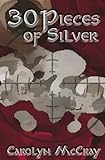
#. Promotions Discount !! Buy Cheap 30 Pieces of Silver For Sale

30 Pieces of Silver Deals Buy on Best Price


   Buy Lowest Price !! See Lowest Price Here Discount 30 Pieces of Silver. This Store is the best place to buy cheap 30 Pieces of Silver. If you want to buy 30 Pieces of Silver in the best price, try to see specail offers or read the best customer reviews from this page. That can help you to make easy decision to buy this product. This product Shipped and Sold by Amazon Shopping Store. N/A This item ships for FREE with Super Saver Shipping. Order The Best price From This Page - Read more Informations by Click at the Big Links.


30 Pieces of Silver


30 Pieces of Silver | Cheap Sale Discount Price By Amazon 
Helpful Reviews : ★★★★ Hot Price Product
Product By :
List Price : $3.99
Discount To : Very Low Price! Buy it Now!!
Shipping : N/A
  In Stock. & FREE with Super Saver Shipping
   
30 Pieces of Silver 30 Pieces of Silver
30 Pieces of Silver
30 Pieces of Silver


Overview 30 Pieces of Silver http://www.jp-game.com/images/stories/AmazonButtom/best-deals.gif


"Carolyn McCray's 30 PIECES OF SILVER proves that Dan Brown's crown is up for grabs. Part minefield and all roller-coaster ride, here is a story as controversial as it is thrilling. Hunker down for a long night because once you start this book won't be putting it down."

James Rollins, New York Times bestseller of The Doomsday Key

Early Reviews
5 out of 5 Stars
"30 Pieces of Silver? In a single word? Brilliant!"
Kenneth Weinart

5 out of 5 Stars
"This novel messed with my head, plain and simple."
John Hopkin

5 out of 5 Stars
"Wow! I am so impressed when a (relatively) new author creates such a compelling, exciting and potentially controversial novel. The action is non-stop, the locations are intriguing and the characters are appealing. There is tension, romance, harrowing escape after harrowing escape all weaved within a story that captures your interest and keeps you guessing until the very end when you are floored by a surprise hook followed by an even more unexpected uppercut of an ending. "
MrNeil98

"30 Pieces of Silver truly makes Brown's Da Vinci look like a Sunday school lesson!"
Greg Barton, Taxes007

Overview:
A Christian suicide bomber.
John the Baptist's bones inscribed in ancient Greek.
A secret carried from the foot of the crucifixion.
Can science solve the world's greatest mystery?
30 Pieces of Silver

For anyone who can't get enough of James Rollins, Dan Brown, Steve Berry, and Brad Thor... "30 Pieces of Silver" is your next thrill fix!

**If you were looking for Carolyn's mystery "Plain Jane: Brunettes Beware" (a Patterson-style thriller with a dash of Hannibal), it is under her pen name, Cristyn West.


Available : In Stock.


Lowest Price !! See Lowest Price Here Discount 30 Pieces of Silver Best Selling
FREE with Super Saver Shipping

N/A


  Best Price 30 Pieces of Silver. Most comprehensive list of 30 Pieces of Silver, Cowmooflage pricing, specifications, accessories, and reviews.


  • Digg
  • Del.icio.us
  • StumbleUpon
  • Reddit
  • RSS

What is the Secret to Horse Painting with Realism?

An artist’s first encounter with equestrian art may produce a stuffed-looking horse, with hair and mane that looks too perfect or stiff and eyes that stare lifelessly. In other cases, the artist may fail to get to grips with the horse’s elongated features, allowing an empty space to stretch between the horse’s eyes and snout. How does the artist paint horses convincingly?

Common Problems with Painting Horses

How to Paint Horse Portraits
Rachel Shirley
Horse portraiture may simply require practice, for pet and human portraiture are likely to occur more frequently. However, addressing the culprits of a poor horse painting is a good way of moving forward. It may be any of the following:

Making idealised assumptions about how a horse “should” look like and subconsciously allowing this dictatorial part of the brain to interfere with the creative process. For instance, a horse has four legs (from certain angles, only three may be visible); a horse’s mane resembles a fringe that festoons the length of the horse’s neck and emerges between the ears; all horses have long teeth; the horse’s snout is always black and has two nostrils of equal size (again, both may not be in view, and may appear to have different shapes), and all brown horses are chestnut in colour, etc.
  • Using poor photographic reference, forcing the artist to guess-work areas of the horse’s portrait or body, and allowing the aforementioned dictatorial part of the brain to fill the gaps.
  • Using only white to illustrate horses’ eyeballs around the irises and the teeth.
  • Illustrating the horse’s hair by linear strokes via a thin brush and using the same brush marks to cover the horse.
  • Using premixed pigments such as a particular brown, black, beige or white for the horse painting and using the same colour to illustrate various elements of the horse.
  • Leaving areas around the horse’s features blank, such as between the horse’s eyes and snout and the between the eyes and ears, resulting in a two-dimensional impression of a horse.
Producing Great Horse Artwork

Horse’s features often contain complex elements the novice artist may overlook in favour of the facial features alone, but which may be the key to painting a realistic horse. For instance, horses’ faces possess complex contours including little valleys, ridges and textures due to sinews, muscles and tendons just beneath the surface. Illustrating these in a tonal way will create a three-dimensional impression of a horse’s head or body and will also prevent the horse portrait from looking flat and unrealistic. This entails the following practices:
  • Not every contour appears as a line. Sensitive observation will reveal that some contours consist of abstract and subtle shifts in colour and tone. It is wise to half close the eyes in order to simplify these shifts into basic areas and to work from the simple to the complex. Stand back periodically to gain an overall impression of the horse painting.
  • Look out for reflected light on the horse’s face. Reflected light is when a shaded area is illuminated by reflections from a shiny surface, such as a wall or mirror. Reflected light might be most apparent around the horse’s snout or ear.
  • Horse’s eyes, snout, hair and ears should not be denoted by mere outline. Close observation, will reveal that eyes and ears have rims and tucks; hair has localised shadows and the nostrils are surrounded by undulating flesh.
  • The horse palette may possess the most unlikely colours, including blue, violet or crimson. Highlights often contain ultramarine, horse hair may contain maroons, and shadows over the horse’s teeth may require a little earth colour or blue.
Art Techniques for Equestrian Painting

The Allen Book of Painting and Drawing Horses
click to buy from Amazon
Many oil painting techniques are suitable for equine art, from impasto to alla prima, but to achieve realism in a horse painting, I will paint onto a toned ground, or imprimatura. This entails using a neutral-coloured ground rather than a white painting surface. I find this helps me judge tones more accurately. A thin wash of acrylic paint (usually blue or brown) should be applied over the canvas or primed art board.

It is vital to sketch the horse precisely, or the painting will be ruined. Paint from the large areas and work down to the detail. Soft sable brushes are vital for blending and applying glazes. Fine brushes of sizes 3 or 6 are good for detail, such as the horse’s eyelashes, hair and highlights. Wide soft brushes of size 9 upwards are ideal for blending areas around the mane and nose. Linseed oil can be added to thin the paint to apply detail or soft glazes.

I will often work from dark to light, which means rendering the dark colours on the horse first, and then finishing off with the highlights, which can be found on a shiny horse’s coat, eyes, ears and moisture around the snout.

Oil Colours for Horse Art

Numerous earth colours are not necessary for horse painting, and may even cause dirty or dull colours. The oil pigments I use most are: burnt sienna, burnt umber, French ultramarine, pthalo blue, permanent rose, cadmium red and white, but do look out for other colours.

Links Relating to Animal Painting

  • Digg
  • Del.icio.us
  • StumbleUpon
  • Reddit
  • RSS