RSS
Menampilkan postingan yang diurutkan menurut tanggal untuk kueri Zuckerman. Urutkan menurut relevansi Tampilkan semua postingan

Dissecting the Zambian Opposition Win

Ethan Zuckerman writes:
Africa is becoming a hotbed for democracy. Freedom House (whose methods I sometimes disagree with, but who offer a global view of political freedoms over a long period of time) identifies three “free” states in West Africa (Ghana, Benin and Mali), and three in southern Africa (South Africa, Botswana and Namibia) as well as three of the small island states. And more than twenty states meet Freedom House’s “partly free” criteria, including powerhouses like Kenya, Nigeria and Senegal. Zambia is listed as partly free, but this year’s successful election might lead to an upgrade. Nigeria, often dismissed as a basket case, had a pretty good election this year as well.
concluding:
There’s a danger that we miss a major story here: democracy is taking root in Africa and spreading rapidly. Nations like Zambia, which survived autocratic rule and then dominance by one party are now seeing democratic change. It’s important to cover African crises and tragedies, but not at the expense of the hopeful news of democratic success and change.
More here

Meanwhile Jimmy Kainja discusses how the Zambia result spotlights "a rare moment" in the history of African politics:
No one can say what future holds for Zambia under Michael Sata but Zambians can be assured that they have a man in power that majority of them voted for. Banda has shown that he is a true statesman. His loss is not only a victory for Sata, it is also a triumph and a rare moment for African politics and democracy. Let us hope this is not an isolated incident but a sign of maturing democracy...[continue reading]

  • Digg
  • Del.icio.us
  • StumbleUpon
  • Reddit
  • RSS

Who is covering the Gabon uprising?

Ethan Zuckerman on news and what gets coverage:
Protest in Meyo-Kyé, a small city in northern Gabon, 2 February, 2011. The banner reads: “In Tunisia, Ben Ali left. In Gabon, Ali Ben out.” From Global Voices’s coverage of the Gabon protests
The danger of ignoring Gabon’s revolution isn’t just that opposition forces will be arrested or worse. It’s that we fail to understand the profound shifts underway across the world that change the nature of popular revolution. The wave of protests that swelled in Tunisia may not break just in the Arab world, but across a much larger swath of the planet. The brave actions of ordinary Tunisians didn’t just capture the imagination of subjugated people in the Arab world – they were an inspiration to disempowered people everywhere. Social media gives a voice not just to protesters in Sidi Bouzid and Alexandria, but in Libreville and Port-Gentil. And as audiences around the world watch in wonder as Christian and Muslim protesters pray together in Tahrir Square, they wonder why struggles in Gabon can’t command at least a fraction of this attention.
More here
Enhanced by Zemanta

  • Digg
  • Del.icio.us
  • StumbleUpon
  • Reddit
  • RSS

“Kenya Matters”

Ethan Zuckerman writing about his recent visit to iHub Nairobi:

Kenya’s not just part of the narrative behind Ushahidi, a platform used globally but developed by Kenyans to respond to a domestic political crisis. Kenya matters because it’s one of the places where the future of technology is coming into focus, where a generation of creative people are building the future, one experiment at a time. iHub makes sense because it’s the physical manifestation of the creative collaboration that took Ushahidi from idea to project to platform within months. I had to go to Nairobi before I really got it. And now I don’t want to leave.
More here
Enhanced by Zemanta

  • Digg
  • Del.icio.us
  • StumbleUpon
  • Reddit
  • RSS

Lindaba Ziyafika "The News is coming"

Ethan Zuckerman reports on Lindaba Ziyafika a sms news creation and dissemination project:

Harry Dugmore of Rhodes University is working on a pioneering project to provide news and information into urban neighborhoods in South Africa via mobile phones. The project – Lindaba Ziyafika (the news is coming) – is designed to create and distribute news in the context of the “techno-social flux” that South Africa is experiencing...The journalists behind the Lindaba Ziyafika project are largely unemployed adults in their early 20s. They’re producing content that’s ending up in the 140 year old newspaper that serves Grahamstown. The content is distributed first via online media – SMS, messages through systems like MXit (an incredibly clever hack that uses the cheaper data connectivity available on African cellphones to evade the huge expenses of SMS messages)
More here
Reblog this post [with Zemanta]

  • Digg
  • Del.icio.us
  • StumbleUpon
  • Reddit
  • RSS

Building Cultural Bridges

Building cultural bridges and xenophilia etc. Ethan Zuckerman at BIF:


  • Digg
  • Del.icio.us
  • StumbleUpon
  • Reddit
  • RSS

Quick Hits

Plastic and Reconstructive Surgery centre, Noma Children's Hospital Sokoto
Energy in Africa – time to think across borders?
Jaynii StreetWise festival and Cultural Troupe via Kadmus Arts
Nigeria's history of violence Omotade Aina speaks via Opal Tometi
NGOs should let aid recipients decide how money is spent
Notes on Abuja's recent digital bridge conference-Ethan Zuckerman
The Infrastructure Consortium for Africa...What do they actually do?

  • Digg
  • Del.icio.us
  • StumbleUpon
  • Reddit
  • RSS

Quick Hits

An architect of Singapore's astounding economic growth-via Ethan Zuckerman
Investing and empowering farmers-Guardian
Nurturing an industrial renaissance in Ghana.
Africa,Business destination-TIME
Favoring poor governments over poor people-Aidwatch

  • Digg
  • Del.icio.us
  • StumbleUpon
  • Reddit
  • RSS

Death of a Kleptocrat-Omar Bongo

Gabon mapImage by Rachel Smith via Flickr

Ethan Zuckerman writes about Omar Bongo's passing:
You’d think that the passing of a man who systematically looted his country for four decades would be the cause for celebration. Unfortunately, there’s no reason to believe it’s going to get better any time soon. Several African big men have passed on in the past decade, and the situation hasn’t improved much for their beleaguered subjects. When Togo’s Eyadema Gnassingbe died in 2005, the military installed his son, Faure… who was “elected” soon after. Lansana Conté died in December 2008, and within six hours of the announcement of his death, a military government voided the constitution and took over in a coup d’etat. No one’s predicting a coup in Gabon - the minister of Defense is Ali Ben Bongo, Bongo’s son and almost certain successor

More Here
Reblog this post [with Zemanta]

  • Digg
  • Del.icio.us
  • StumbleUpon
  • Reddit
  • RSS

The Global Afropolitan-Xenophiles

Right-to-left: Barack Obama and Maya Soetoro w...Image via WikipediaEthan Zuckerman writes about the Global version of the Afropolitan-Xenophiles:

Xenophiles are people who are fascinated by the whole world, by things other than their ordinary experience. They’re people who want to connect with people who see the world very differently. Some of these people are born this way, lots more are made - a good recipe for xenophilia is to raise a child in a culture deeply different from that of her parents - people call these kids “third culture kids”. Third culture kids have one foot in each of two cultures - the culture of the country they grew up and the culture of their parents, and as a result they don’t really live in either, but a little bit in both. Some kids hate this - many love it, and they end up bridge figures, natural xenophiles who can help translate cultures for other people. Barack Obama’s one of them...[continue reading]
watch Hash's talk at Poptech

via White African
Reblog this post [with Zemanta]

  • Digg
  • Del.icio.us
  • StumbleUpon
  • Reddit
  • RSS

Artisinal Mining redux: The Sapphire Mines of Madagascar

The Big picture photo-journal reports on unregulated mining in Madagascar.One wonders if there are local efforts to organize the participants into local cooperative mining bodies of a sort?
(photo courtesy of ROBERTO SCHMIDT/AFP/Getty Images)

Update: Ethan Zuckerman at WorldChanging profiles the "Mines of Ilakaka"

  • Digg
  • Del.icio.us
  • StumbleUpon
  • Reddit
  • RSS

Mapping Electoral Fraud

Ethan Zuckerman reports on Sokwanele's mashup of electoral fraud in Zimbabwe:


Sokwanele announced..: a Google maps mashup of election-rigging incidents. Each icon on the map corresponds to a media report of an incident that controvenes SADC standards for a free and fair election. Clicking on an icon will take you to the issue of Sokwanele’s Zimbwbe Elections Watch newsletter, which summarizes media report on the elections, and to a database record, where each instance is coded as to which SADC rules it violates.

  • Digg
  • Del.icio.us
  • StumbleUpon
  • Reddit
  • RSS

Incremental Infrastructure

Ethan Zuckerman builds on his Incremental Infrastructure concept:

[T]he idea is to build essential facilities -- telephone networks, power grids, roads -- in small pieces using private investment, instead of relying on large, centrally planned, government-run projects.The rise of mobile phone networks linking more than 100 million Africans across the continent and the blossoming of cybercafes from Cape Town to Dakar are evidence that incremental infrastructure is already transforming the continent. But Africa needs go beyond telephones and computers. Many nations lack roads, electric power, schools, hospitals, clean water. If the lessons learned from building telephone and Internet systems can be applied to other types of African infrastructure, African entrepreneurs could find themselves wiring villages, paving roads, and perhaps even building airports -- building the new Africa while turning a profit in the process.

Entering the debate Ory Okolloh says:
I’m wondering whether he’s too quick to extrapolate the mobile phone phenomenon to other areas. I’m especially thinking about big ticket items like roads and power generation/transmission that don’t have the same option of being subsidized by the consumer. Also the incremental and even moreso the “pico” approach does not address needs on a macro-level that most countries in Africa need to address, having power in the village is great but if factories / business can’t operate at an optimal level because of power shortages or costs there’s still a big conundrum that needs be address (and unfortunately the role of government can’t be wished away).

For added coverage see Worldchanging

  • Digg
  • Del.icio.us
  • StumbleUpon
  • Reddit
  • RSS

Mobile phones & Social Activism

Ethan Zuckerman writes:

Blogs and online communities are great channels for information and citizen media dissemination, events organization, and fundraising, but they are popular, more prevalent and accessible in the developed world. In the developing countries the Internet is less present, while the mobile technology covers unexpectedly great areas and counts much more users comparing to landlines or Internet use. Mobile communications are still expending in a fast pace: by 2010 it is estimated that 50% of the world population will become mobile users (3.3 billion people).

Shortly put, when talking about social activism goals and means, mobiles have the following advantages: pervasiveness and accessibility, anonymity, viral connectivity and message propagation, personal authorship of citizen media content.

via SmartMobs

  • Digg
  • Del.icio.us
  • StumbleUpon
  • Reddit
  • RSS

Nigeria: Open for Business

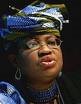
Ethan Zuckerman reports on Ngozi Okonjo-Iweala's presentation at TED that received a standing ovation,he states that:

She tells us about “a different Africa”, not the Africa we hear about all the time: poverty, hiv, malaria, conflict, disaster. “It’s true that these things are going on, but there’s also an Africa you don’t hear about very much, an Africa that’s growing and reforming itself....“We have to help Africa transform by creating jobs.” That means we don’t have to concentrate on making drugs cheaper - “We allow people to buy the antimalaria drugs themselves,” because they’ve got high-paying jobs.

  • Digg
  • Del.icio.us
  • StumbleUpon
  • Reddit
  • RSS

The West's 'Green' Protectionism

Rainer Chr. Hennig writes about the emerging 'green' protectionist policies of developed world:

Populist solutions that are to satisfy customers, politicians and the European industry alike are therefore surfacing all over Africa's neighbour continent and the main market of its products. And the solutions seem neat and nice - easy to understand and with the potential of creating more work locally. Even the industry starts propagating these solutions.
The victim mainly is Africa, because the message is that, as longer as a product or person is transported, the more energy is wasted unnecessarily. Worst of all is airborne transport, having the highest emissions of climate gases such as CO2. Unluckily, Africa is far away from European markets and poor transcontinental infrastructure puts most products and travellers on an airplane.
All over Europe, therefore, home-grown campaigns are being promoted, attacking Africa's newest and most successful export products. Anti-globalisation activists, "green" politicians, local industry and even occasional experts and scientists head these "buy local" campaign

See related coverage of this subject by Ethan Zuckerman and Alex Steffen
Photo courtesy of Afrol News

  • Digg
  • Del.icio.us
  • StumbleUpon
  • Reddit
  • RSS

Regional integration

Ethan Zuckerman writes:

For Africa to succeed economically, Birdsall(director of the Center for Development Economics) suggests, nations need to trade with each other more, creating larger, more attractive markets and reaping economies of scale. It makes very little sense for each state in Africa to build their own garment industry… and even less sense for each country to protect their industry against their neighbors with tariff barriers - if trade between countries was easier and cheaper, nations could specialize in sectors of the economy, begin trading to neighboring states, then grow and trade with the wider world. But at present, Sub-Saharan African nations levy tariffs on average of 17% on trade with each other; OECD nations have dropped these tariffs to an average of under 4%.

  • Digg
  • Del.icio.us
  • StumbleUpon
  • Reddit
  • RSS