RSS
Menampilkan postingan yang diurutkan menurut relevansi untuk kueri Babangida. Urutkan menurut tanggal Tampilkan semua postingan

How " Babangida betrayed his 'children'"

Tolu Ogunlesi in the Guardian:

Seventeen years after he left office, Babangida, now a 68-year-old widower, has become the first Nigerian to announce a presidential ambition for 2011. As you would expect, the disclosure has set Nigeria on fire – everyone is talking. Most of the voices are of anger, disbelief and surprise. How dare Babangida? A man who annulled the least controversial election Nigeria has had in its 50-year history, now turns around to say he wants to be elected into office?
More here
Reblog this post [with Zemanta]

  • Digg
  • Del.icio.us
  • StumbleUpon
  • Reddit
  • RSS

Against Babangida Website

AginstBabangida "... is a project by CITIZENS FOR NIGERIA, aimed at initiating action to stop Ibrahim Babangida from ever ruling Nigeria again.
Some of the participants in the project, mostly former journalists, lawyers and the like, wish to remain anonymous. They fear possible reprisals from the vengenful Babangida and his cohorts on them or their families, as exploits of this web site is bound to take its toil on the cabal.

Our mission is to wage a civilized intellectual battle against dangers to true and virile democratic development in Nigeria, symbolized by Ibrahim Babangida.Our vision is to provide a fertile soil for the germination of productive democracy in Nigeria. We will achieve this by internationalizing issues that threaten democracy in Nigeria, and make stillborn the ambitions of selfish power usurpers.One of our most potent tools is our newsletter, IBBWatch, which is intended to raise awareness among everyone interested in Nigeria's political development. Subscribe to the newsletter..."


  • Digg
  • Del.icio.us
  • StumbleUpon
  • Reddit
  • RSS

Speaking about Leadership and Responsibility-Sanusi Lamido Sanusi

Central Bank Governor Sanusi Lamido Sanusi, on a general lack of morality and leadership within Nigeria. He takes no prisoners:
“The Colonialists came, put that together and said it is now called the Northern Nigeria. Do you know what happened? Our grand fathers were able to transform to being Northerners. We have not been able to transform to being Nigerians. The fault is ours.
Tell me, how many governors has South West produced after Awolowo that are role models of leadership? How many governors has the East produced like Nnamdi Azikiwe that can be role models of leadership? How Many governors in the Niger Delta are role models of leadership? Tell me. There is no evidence statistically that any part of this country has produced good leaders.You talk about Babangida and the economy. Who were the people in charge of the economy during Babangida era? Olu Falae, Kalu Idika Kalu. What state are they from in the North?
More here
Enhanced by Zemanta

  • Digg
  • Del.icio.us
  • StumbleUpon
  • Reddit
  • RSS

Drug Czar

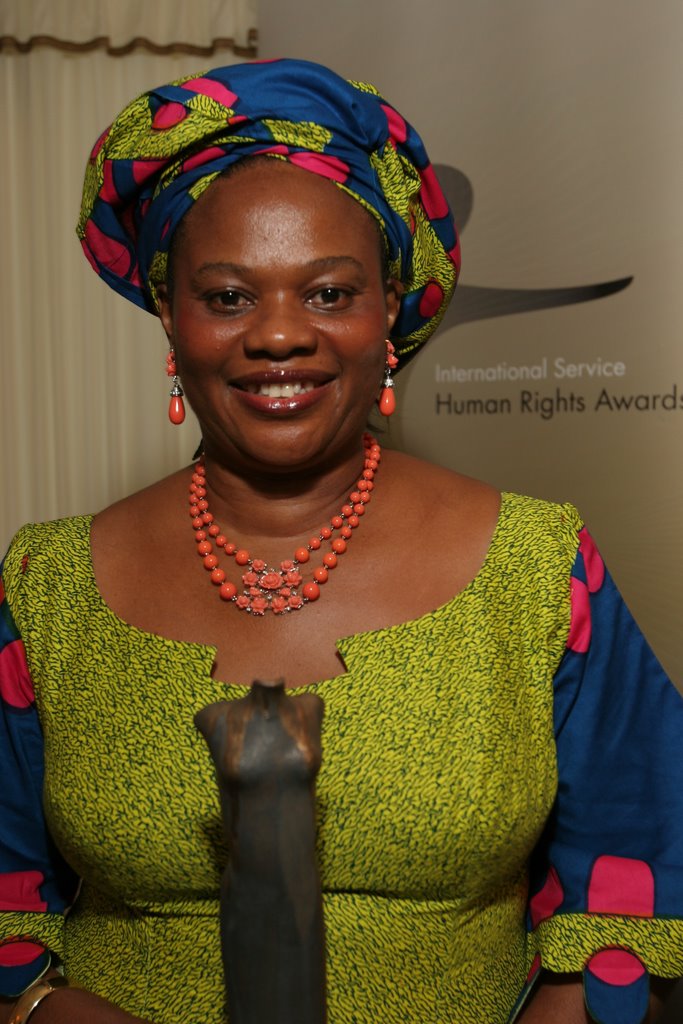
The FT reports on the work of Dora Akunyili,Nigeria's Drug Czar:

By the turn of the millennium, Nigerians had become among the world’s most frequent victims of fake drugs. The country’s reputation was so bad that its west African neighbors were refusing to import the medicines that came across its borders. An analysis in 2001 of 2,060 drug samples taken from the large wholesale markets where most medicines are easily bought showed that 62 per cent were not registered with the country’s National Agency for Food and Drug Administration and Control (Nafdac).
Akunyili started off by:
clamping down on hawkers and wholesale drug markets, and pursuing dodgy manufacturers and importers alike. Nor did she flinch from angering powerful people, reprimanding Nestle for importing out-of-date baby milk, closing the bakery of the wife of the former president Ibrahim Babangida for using a carcinogenic bread-enhancing chemical, and even fining one of the current president’s farms for importing chemicals without a permit. But the worst abusers were far more difficult to target. ”The drug people were like gods here,” she says. ”Since 1960, with independence, they became progressively entrenched and terrorised everyone unchallenged. Outside oil, there’s no business as lucrative as drugs.”

  • Digg
  • Del.icio.us
  • StumbleUpon
  • Reddit
  • RSS

Nigeria: In search of a Lula

Luiz Inácio Lula da Silva, 35th President of t...Image via WikipediaSalisu Suleiman writes:

When Nigeria’s former military president Ibrahim Babangida was forced to ‘step aside’ in 1993 after eight years in office, he retired to his palatial hilltop mansion in Minna. He left office as one of the most unpopular personalities in the country. Similarly, when former president Olusegun Obasanjo left office after eight years in 2007, he retired to another hilltop palace in Abeokuta, also highly unpopular. By contrast, when Brazil’s former president Luiz Inacio Lula da Silva or “Lula” left office after eight years with approval ratings of 80 percent, he retired to a nondescript apartment...[continue reading]
Enhanced by Zemanta

  • Digg
  • Del.icio.us
  • StumbleUpon
  • Reddit
  • RSS

The Opposition's Chance? - Nigeria

In Project Syndicate Ike Okonta on divisions within Nigeria's ruling party and the opportunity it may present for the opposition:

...The PDP, in power since military rule ended in 1999, is widely disliked. Corruption is widespread, and PDP politicians have been unable to deliver the prosperity and improved social services that Nigerians looked forward to following the return of democracy. Indeed, the PDP has been able to retain power only by rigging successive elections, most spectacularly in 2007, when the outgoing Obasanjo foisted Yar’Adua on the party hierarchy.
The poorly resourced opposition could benefit if the expected northern backlash divides the PDP. Nuhu Ribadu, the respected former chairman of the Economic and Financial Crimes Commission, has announced his intention to contest the presidency as the candidate of one of the opposition parties.
A Muslim northerner, Ribadu enjoys the support of youth and democrats nationwide. The latter are regaining confidence in the political process, following the recent appointment of a no-nonsense academic as head of the election commission. Muhammadu Buhari, whom Babangida replaced as military head of state in 1985, is also expected to run, as the nominee of the Congress of Progressive Change.
More here
Enhanced by Zemanta

  • Digg
  • Del.icio.us
  • StumbleUpon
  • Reddit
  • RSS

Corruption in Nigeria: A Historical Perspective (1947-2002) (Part 2 of 2)

We present the concluding part of Rina Okonkwo's article on corruption see part 1 here:

The military coup of January 15, 1966 was a direct response to the corruption of the First Republic. The popular support for the coup showed that people rejected corruption. Despite the brutality of killings of First Republic politicians, there was widespread rejoicing in the country for the acts. The assassinations of the Minister of Finance Chief FS Okotie-Eboh, who was notorious for flaunting his ill-gotten wealth, Premier of the Western Region, Samuel Akintola, nicknamed “rigging” and Ahmadu Bello, Sardauna of Sokoto, the Premier of the Northern Region, “whose wardrobe was the most elaborate in the world,” were applauded.13 The coup eliminated “the old brigade of politicians who were destitute of public spirit.” 14

The Ironsi government instituted a series of commissions of inquiry into affairs of the Nigeria Railway Corporation, the Electricity Corporation of Nigeria, Nigeria Airways, and the Nigeria Ports Authority. The report on the Ports Authority revealed that a number of ministers, including Okotie-Eboh, Ribadu, and R.Njoku had formed companies and used their influence to secure contracts.15 In Nigeria Airways, the minister, K. O. Mbadiwe had interfered with award of contracts to a company not registered in the register of companies. K.O. had gone against the board to send “Operation Fantastic,” the maiden flight of Nigeria Airways to New York. Friends and relations of the minister travelled free to New York. Many stayed on in the United States. Chief Dafe, the chairman of the board, was found guilty of hiring many unnecessary party workers in the airline. “Chief Dafe did not know the difference between Nigeria Airways and the party headquarters of the NCNC.” 16

Dr. Ikejiani, Chairman of the Nigerian Railway Corporation, was found guilty of misallocation of funds and disregarding the Board and recognized procedures of the NRC. When Ikejiani became the Chairman, he was in debt. Ikejiani left the NRC with a fleet of cars and buildings. The building of the Railway medical centre, which was estimated cost L75, 000, was inflated to L440, 000. The inquiry thought Ikejiani had diverted railway funds to build his private hospital. The architect for the medical center designed a building for Ikejiani in Lagos free of charge. The panel recommended that Ikejiani never again hold public office. 17

The zeal to punish the wrong doers of the First Republic died with the Gowon coup of July 1966. The politicians in detention were freed. Corruption increased. “Youths knew no other life than corruption.” “One could steal if he shared with those in the right places.”18

The coup of 1975 was an attempt to end corruption. Murtala Mohammed began by declaring his assets and asking all government officials to follow his example. Murtala instituted a series of probes of past leaders. The Federal Assets Investigation Panel of 1975 found ten of the twelve state governors in the Gowon regime guilty of corruption.
One of the exonerated military governors, Rotimi, was later appointed to head a commission of inquiry in 2000. The guilty persons were dismissed with ignominy and forced to give up property in excess of earnings.

The Belgore Inquiry investigated the “Cement Armada.” The Gowon government had imported sixteen million metric tons of cement at a cost of N557 million. Millions of Naira was lost in demurrage charges, as the cement rotted in the seas outside of Lagos. The ports were too congested to enable ships off-load their cargoes. The inquiry noted that the Ministry of Defence needed only 2.9 million tons of cement at a cost of N52million. The orders were inflated for private profit at great cost to the government.19

State governments held similar commissions of inquiry. Corrupt officials were dismissed with immediate effect and asked to refund the money they had stolen. Murtala was assassinated after only two hundred days in office. The Obasanjo regime did not show the same zeal in its prosecution of wrongdoers.

The Second Republic, under President Shehu Shagari, saw a resurgence of corruption. Shagari was ineffective in stopping the looting of public funds by the democratically elected officials. On December 31st, 1983, General Buhari led a popular coup with the aim of halting corruption. Buhari arrested the state governors and commissioners and brought them before tribunals of inquiry. All accounts of politicians were frozen.

In less than two years, Babangida replaced the reformist Buhari regime. The next fourteen years saw no serious attempt to stop corruption. Leaders found guilty in tribunals under Mohammed and Buhari found their way back to public life and recovered seized property. Wole Soyinka observed that for Abacha to launch a war against corruption was a “huge joke.”

The Third Republic has instituted numerous commissions of inquiry. The Oputa panel and the Akanbi Commission have investigated corruption. Yet all the commissions of inquiry and reports have not stopped corruption. The Transparency Index rated Nigeria the number two corrupt country in the world in 2001.

An historical look at corruption in Nigeria demonstrates that rhetoric against corruption does not end corruption. All the inspiring words of our leaders and journalists have not changed anyone. We have heard the most eloquent appeals and strongest language castigating wrongdoers to no avail. Azikiwe and Shagari were two excellent writers who did not act to stop corruption of their party members and colleagues.

From our survey of corruption in Nigeria, it would appear that change in Nigeria must come from the grass roots and not from the leaders. The British realized, as far back as 1947, that an educated, enlightened citizenry was the key to stopping corruption. Government could not legislate an end to corruption. Punishment of wrongdoers, while necessary, was not sufficient to stop corruption.

In his comparison of corruption in Nigeria and Britain, Ronald Wraith pointed to the need for education in good character and the importance of diffusion of wealth, power, and education in the society. There was need to build a tradition of disinterested public service. In Britain, responsible government began with the emergence of people who entered government service after they had amassed substantial wealth. They joined government, not to increase their fortunes, but to contribute to the country. When the people of Nigeria reject corruption, they will demand and receive good behavior from their leaders.

  • Digg
  • Del.icio.us
  • StumbleUpon
  • Reddit
  • RSS