RSS
Menampilkan postingan yang diurutkan menurut relevansi untuk kueri Swaziland. Urutkan menurut tanggal Tampilkan semua postingan

Swaziland's Monarchy faces Rising Unrest

In Think Africa William Clarke writes:
Mswati’s authority is challenged by a number of popular democratic movements. The most powerful of these is the People’s Democratic Movement, which is banned as a partisan political group. In 2008 Sipho Jele, a PDM member was arrested for wearing a t-shirt with the party’s slogan on it, and later died in custody. His funeral was disrupted by armed police. Meanwhile protests are stepping up, partially inspired by the Arab Spring uprisings to the north. A fall in cross border trade with South Arica, upon which the economy is heavily dependant, has caused the implementation of unpopular austerity measures, including the suspension of state pensions, unfortunately coinciding with the announcement of lavish plans to celebrate the royal jubilee. The biggest march in several years was held in March of this year, with public servants protesting against a pay freeze. Protestors demand the resignation of Prime Minister Subusiso Dlamini, and an end to the extravagance of Mswati and his family.

More here
Enhanced by Zemanta

  • Digg
  • Del.icio.us
  • StumbleUpon
  • Reddit
  • RSS

Traditional Autocracy:Mswati of Swaziland

Successful leadership ultimately depends on a leaders inherent abilities, the framework in which they operate and the effectiveness of associated checks and balances. Swaziland is an example of a traditional system gone awry, where a constitutional monarch has evolved into the worst type of destructive autocrat. As Babs Ajayi elucidates the slide into misrule began when the "...king was able to dissolve the Supreme Council of State (SCS), the Liqoqo. The legislative structure of the state was skewed in favour of the royal family and their sidekicks but a call for restructuring the legislature was rejected. The Swaziland Federation of Trade Unions (SFTU) have been on strike again and again pressing for reforms and demanding accountability, demanding that the state be separated from the palace and insisting that a people-oriented constitutional review be embarked upon. In 2001, the nation's Constitutional Review Commission enhanced King Mswati's powers. The Commission went on to extend the ban on all political parties in Swaziland..."

  • Digg
  • Del.icio.us
  • StumbleUpon
  • Reddit
  • RSS

Elusive dream of media freedom in Swaziland

Manqoba Nxumalo over at Free African Media:
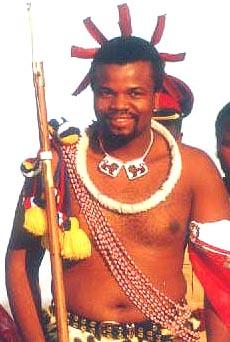
King Mswati III courtesy of Free African Media
The media in Swaziland operate under difficult conditions characterised by state-induced fear and censorship by a government that tolerates neither criticism nor different political ideologies. Although the constitution provides for freedom of speech and of the press, these rights may be waived by the king at any time. In addition, while there are no laws banning or restricting criticism of the monarchy or other officials, journalists have been warned that publishing any such criticism could be construed as treason, terrorism, sedition or fall foul of the many laws that govern the media environment in Swaziland.
Enhanced by Zemanta

  • Digg
  • Del.icio.us
  • StumbleUpon
  • Reddit
  • RSS

Quick Hits

  • Digg
  • Del.icio.us
  • StumbleUpon
  • Reddit
  • RSS

African Abortion Wars

Alexis Okeowo writing in the NYTimes:
Every sub-Saharan African state already allows pregnant women to abort when their lives are in danger, and in recent years Benin, Chad, Ethiopia, Ghana, Mali, Swaziland and Togo have been working at expanding their laws to allow abortions in more circumstances.

Still, in all of sub-Saharan Africa, abortion is legal only in Cape Verde and South Africa. And the number of unsafe abortions on the continent is staggeringly high: every year, there are over six million unsafe abortions conducted in Africa, and about 30,000 women die from the procedure. Unsafe abortions are among the leading causes of death for women admitted to hospitals around much of the continent.
More here

  • Digg
  • Del.icio.us
  • StumbleUpon
  • Reddit
  • RSS

Africa Needs Freer Markets – and Fewer Tyrants

Franklin Cudjoe writes "...Famine in the fertile climes of southern and eastern Africa, however, seems more shocking. But there's a common thread: centralized state rule -- incompetent at best -- marked by corruption and sustained by aid...more temperate southern and eastern African countries are on the edge of famine, too, with 10 million affected in southern Africa alone. Again, we find the same economic profile: Zimbabwe, Malawi, Zambia, Mozambique, Swaziland and Lesotho all lack economic freedom and property rights; all have economies mismanaged by the state; all depend on aid...Ethiopia's Prime Minister Meles Zenawi believes that allowing Ethiopians to own their land would make them sell out to multinationals. He seems to have overlooked a basic market principle: It demands a willing seller and a willing buyer at an agreed price. If that price is worth selling for, the farmer might have some money to reinvest elsewhere; if that price is worth buying for, the purchaser must have plans to make the land profitable. If there is no sale, owners might have an incentive to invest in their own land and future, having, at last, the collateral of the land on which to get a loan.After decades of socialism, Ethiopia's agricultural sector -- the mainstay of the economy -- is less productive per capita than 20 years ago when Band Aid tried to defeat famine. Although 60% of the country is arable, only 10% has been cultivated. Ethiopia is entirely dependent on donations; but instead of grasping reality, Mr. Zenawi, a member of Tony Blair's "Commission for Africa," is forcing resettlement on 2.2 million people..."
Also covered at PSD Blog

  • Digg
  • Del.icio.us
  • StumbleUpon
  • Reddit
  • RSS

Illegitimate Leaders-Mugabe and Mswati

Congress of South African Trade UnionsImage via Wikipedia A recent COSATU memorandum states:

That the principles of democratic governance, embodied in the SADC and African Union charters, were the birthright of every African....The key defining features of both Zimbabwe and Swaziland were electoral fraud, political manipulation by ruling elite, institutionalised oppression, state brutality and an environment of fear and oppression, the civil societies said in the memorandum...[continue reading]
Reblog this post [with Zemanta]

  • Digg
  • Del.icio.us
  • StumbleUpon
  • Reddit
  • RSS

Patronising Reporting or the Unvarnished Truth?

Kim McLarin at The Root writes:

The New York Times ran a story on its front page about the king of Swaziland, Mswati III, who leads a life of ostentatious luxury while the people of his small and proud nation struggle with poverty, malnourishment and HIV...In this political season of outrage, why get excited about a front-page story in the paper of record mocking the greedy king of some place in Africa? Because the story highlights how stereotypes and prejudices render real people in caricature, making it almost impossible to seriously assess their problems or devise real solutions to them; this is Africa's special affliction, and something very familiar to those in the Diaspora...[continue reading]
Reblog this post [with Zemanta]

  • Digg
  • Del.icio.us
  • StumbleUpon
  • Reddit
  • RSS