RSS
Menampilkan postingan yang diurutkan menurut relevansi untuk kueri autocracy. Urutkan menurut tanggal Tampilkan semua postingan

The Awkward Return of Democracy

In the FT:
It has taken just six weeks for the arrest of a fruit-and-vegetable seller in Tunisia to spark a chain of events that now threatens to topple the government of Egypt. Watching the revolt against autocracy spread across the Arab world is exciting, uplifting – and also deeply alarming for the world’s major powers, all of which are, in different ways, fond of the status quo.
The pendulum swings back:
It is ironic that the democratic movements in the Arab world broke out just as autocracy seemed to be coming back into fashion. Francis Fukuyama, whose “end of history” thesis epitomised the democratic triumphalism of 1989, recently wrote an article for this newspaper that lauded China’s ability to “make large complex decisions quickly, and to make them relatively well”, while lamenting that American democracy “will not be much of a model to anyone if the government is divided against itself and cannot govern”. This month has also seen the publication of Dambisa Moyo’s much-discussed How The West Was Lost, which laments the “economic folly” of western democracies and lauds the dynamism of China.
More here

  • Digg
  • Del.icio.us
  • StumbleUpon
  • Reddit
  • RSS

Why Bad Guys Matter

Paul Collier in Foreign Policy writes:

Sure, some of Asia's "benign" autocrats have turned their ambitions to building strong national economies. But not in Africa and many of the other countries that I call the bottom billion -- quite a number of which crowd the upper reaches of the Failed States Index. There, the most common form of autocracy is anything but benign. These leaders not only neglect to build the economy, they actively avoid doing so.
He contends that:
Bad guys matter, and when they rule, they make weak states weaker. And the countless anecdotes are backed up by numbers: In a celebrated study, economists Benjamin Jones and Benjamin Olken looked at whether the death of a country's leader altered economic growth. It did, sometimes for better and sometimes for worse. Recently, an Oxford colleague, Anke Hoeffler, and I sifted through their results again, distinguishing this time between democrats and autocrats. We found that in democracies, changing the leader does not change growth -- all leaders are disciplined to perform tolerably. But in autocracies, the growth rates are as unpredictably varied as the leaders' personalities. Here lies the difference between good leaders and great ones: Good leaders put right the policy catastrophes of bad leaders; great leaders, like the men who shaped the U.S. Constitution, build the democratic checks and balances that make good leaders redundant.
More here
Enhanced by Zemanta

  • Digg
  • Del.icio.us
  • StumbleUpon
  • Reddit
  • RSS

"Constitutional rule over Autocracy"-Obama

Excerpt from President Barack Obama's address to the Ghanaian Parliament:

Time and again, Ghanaians have chosen Constitutional rule over autocracy, and shown a democratic spirit that allows the energy of your people to break through. We see that in leaders who accept defeat graciously, and victors who resist calls to wield power against the opposition. We see that spirit in courageous journalists like Anas Aremeyaw Anas, who risked his life to report the truth. We see it in police like Patience Quaye, who helped prosecute the first human trafficker in Ghana. We see it in the young people who are speaking up against patronage, and participating in the political process.
Read complete speech here.
Obama preaches tough love.
Related coverage here.
A snub for Nigeria
Photo courtesy of Huffington Post


Reblog this post [with Zemanta]

  • Digg
  • Del.icio.us
  • StumbleUpon
  • Reddit
  • RSS

Lessons for Africa- How Turkey tamed its Army

FP reports on the evolutionary strengthening of Turkey's democracy:

Contrary to the views of some Turkish and Western analysts, the primary struggle within Turkey is not between Islam and secularism, but rather between a militaristic pseudo-autocracy and liberal democracy...What we see occurring in Turkey today is a process of democratization, spurred by growing civilian control over the military. However, due to problems deriving from the country's illiberal constitution, which is a product of a 1980 military coup, progress has not always been smooth...The solution is a comprehensive constitutional reform that includes the judiciary. Such a step would not only improve the role of law, but strengthen Turkey's case for European Union accession by harmonizing the country's judicial process with European standards.
More here

Enhanced by Zemanta

  • Digg
  • Del.icio.us
  • StumbleUpon
  • Reddit
  • RSS

Heart of a Tormented Continent

There is an appealing logic to the latest multimillion-dollar aid package for Africa announced last week by George Bush and Tony Blair. It is supposed to help rob terrorists of a breeding ground and, in a humanitarian spirit, relieve the continent of some of its misery. But anyone who has followed the fate of Africa over recent decades might wonder: Why should these millions of dollars have any better effect than the billions that have gone before? Why does the West feel the need to keep pouring money into Africa? One answer has to do with the underlying conventional wisdom, which blames Africa's miseries on the delayed effects of Western colonialism.
['Africa Unchained']
Yet as the decades pass it becomes apparent that, although there is some truth to the claim, there is more to Africa's problems than that: A solution will require radical changes in the way Africa is governed and in the way its economies function. George Ayittey makes such an argument in "Africa Unchained" (Palgrave, 483 pages, $35), a superb analysis of the continent and its recent ordeals................
................Colonialism plays a part in Mr. Ayittey's account, too, but in a different way. For him, the continent's problems stem from the characteristics of the governing elite. In "Africa Unchained," he draws a sharp distinction between African governments -- generally corrupt, socialist, centralizing -- and the informal sectors of the African economy, which the elite's misdeeds have impoverished. At independence in the 1960s, Africa was a net exporter of food; now it imports $18 billion of food per annum.
But where did the elites pick up their bad habits? Mr. Ayittey describes in detail the economics of precolonial African societies. Property was held in common among the extended family but not by the community as a whole, while economic activity was undertaken for profit, with prices set by hard bargaining. Government operated through consultation, with chiefs exercising power only after full discussion with a council of elders. Thus the modern pattern of one-party or one-person rule, state ownership and state controls over prices and distribution is an import from Europe, not an African tradition.
Free Institutions
Mr. Ayittey's claim that democracy and free markets, not autocracy and communal ownership, are a legacy of Africa's own past is important, since it provides a rationale for Africans to move toward a system that can work. It presents a striking parallel to the work of parliamentarian historians at the time of the English Civil War, who traced English civil liberties back before Magna Carta to the Anglo-Saxon "Witanagemot" -- a gathering of tribal eminences -- and to the free institutions ascribed by Tacitus to the Germans of the first century. These historians gave their liberal cause legitimacy; Mr. Ayittey's researches may give a similar legitimacy to free institutions in Africa.
As for what those institutions might be, Mr. Ayittey calls for independent judiciaries, independent media and, not least, independent central banks. He would like to see power devolve as much as possible to Africa's traditional leaders -- at the village and regional level -- who are closer to the people they rule and less able to escape abroad from the penalties for corruption and malfeasance. He notes that Africa's governments today too often divert what money they have -- from aid or from oil and mineral revenues -- to military spending, wasteful prestige projects and tax-haven bank accounts. Here, too, local control would help. Aid in particular -- Mr. Bush and Mr. Blair take note -- needs to be targeted locally and regionally, rather than nationally, and it needs to be dispensed much more quickly than it is now, and in much smaller amounts.
What chance is there of such reforms actually happening? Less than one might wish. Part of the problem still comes from the West. When the principal cadres of Westerners dealing with Africa are aid agencies, charities and NGOs, rather than the financiers and businessmen who predominate in India and China, one has to expect that Africans, elite and otherwise, will be exposed to a high level of economic illiteracy.
Still, capital and investment will not flow toward Africa until it has done more to shrink the power of its governments and provide havens, secure against tax, inflation and expropriation, for the savings of its striving peoples. And in this regard Western attempts at institution-building will be of little help. It is for Africans to build their own models of governance. Luckily, as Mr. Ayittey shows, they have a proud tradition to draw upon -- and never mind the colonizers.
Mr. Martin Hutchinson is the author of "Great Conservatives" (Academica Press).

  • Digg
  • Del.icio.us
  • StumbleUpon
  • Reddit
  • RSS

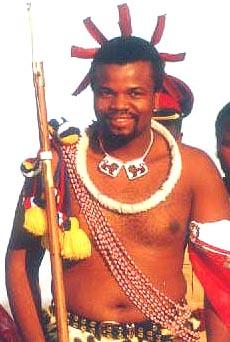
Traditional Autocracy:Mswati of Swaziland

Successful leadership ultimately depends on a leaders inherent abilities, the framework in which they operate and the effectiveness of associated checks and balances. Swaziland is an example of a traditional system gone awry, where a constitutional monarch has evolved into the worst type of destructive autocrat. As Babs Ajayi elucidates the slide into misrule began when the "...king was able to dissolve the Supreme Council of State (SCS), the Liqoqo. The legislative structure of the state was skewed in favour of the royal family and their sidekicks but a call for restructuring the legislature was rejected. The Swaziland Federation of Trade Unions (SFTU) have been on strike again and again pressing for reforms and demanding accountability, demanding that the state be separated from the palace and insisting that a people-oriented constitutional review be embarked upon. In 2001, the nation's Constitutional Review Commission enhanced King Mswati's powers. The Commission went on to extend the ban on all political parties in Swaziland..."

  • Digg
  • Del.icio.us
  • StumbleUpon
  • Reddit
  • RSS