RSS
Menampilkan postingan yang diurutkan menurut relevansi untuk kueri writers. Urutkan menurut tanggal Tampilkan semua postingan

Chez Gangoueus a compendium of Francophone Literature

Global Voices reviews Chez Gangoueus (fr) A blog about French African literature by Réassi Ouabonzi. Answering a question about literary trends he declared :

...in Congo, a new generation of writers is budding, inspired by award-wining writer and intellectual Alain Mabanckou. In Sénégal, I'm struck by the current emergence (empowering) of women writers, in the wake of  best selling author Marie Ndiaye. I notice writers from Cameroon write with the same “in your face” directness and energy that they are are famous for. I must confess that I am in awe of Nigerian writers,  like the great Chinua Achebe. Among francophone writers, I could mention so many: Abdourahman A.Waberi from Djibouti,  Jimi Yuma from Congo, Patrice Nganang and Leonora Miano from Cameroon…
Reblog this post [with Zemanta]

  • Digg
  • Del.icio.us
  • StumbleUpon
  • Reddit
  • RSS

"The Pilgrimages" contd

A CNN update on The Pilgrimages project covered earlier:

In an ambitious drive to promote African writing, 14 African writers have visited different cities across the continent to produce a series of travel books.The Pilgrimages project claims it will produce the biggest-ever collection of African travel writing by African writers.
It began during this summer's World Cup in South Africa, and it is hoped the books will be published to coincide with the 2012 Africa Cup of Nations football tournament...[continue reading]
Enhanced by Zemanta

  • Digg
  • Del.icio.us
  • StumbleUpon
  • Reddit
  • RSS

Saraba Magazine

"...Saraba is an imprint of Two Iroko Limited whose goal is to create unending voices by encouraging young, previously unheard writers to publish their works, assist emerging writers (i.e. those who have been published little or not at all, whose talent are recognizable and whose works are qualitative) in establishing their voices by creating a platform for their writing to be showcased. Through an actualization of these purposes, Saraba would ensure that there is no generational gap, that succeeding generations of writers in Africa have unending voices..."
Enhanced by Zemanta

  • Digg
  • Del.icio.us
  • StumbleUpon
  • Reddit
  • RSS

5 Stories to Inspire Teachers to Never Let Anyone Steal Your Joy

Stolen
Dry Erase Markers.
Yesterday, all the dry erase markers in my whole room were gone. Not a big deal, you say. If you knew that I always keep about 12 and 4 in reserve and that all, even the reserves were gone.
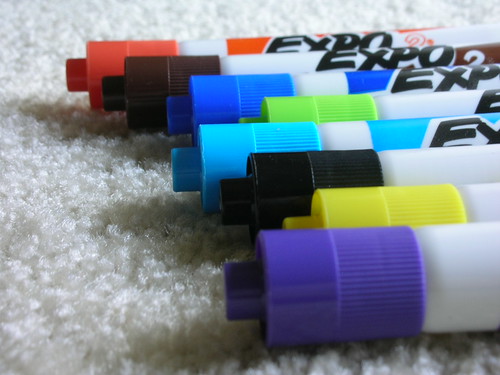
dry erase markers
Two Staplers.
How about that last week, both of my staplers with my name labeled on them were taken.

Favorite Pens.
Or the week before that - that all of my favorite ink pens went missing including those I buy with my own money because they are too expensive for the school to buy.

Pencils.
Or the week before that - it was all my pencils.

My Most Useful "Gadget": My LiveScribe SmartPen.
But to top it off, I have to admit something. Something I'm ashamed to tell you because a dear friend gave this as a gift to me. Someone who reads this blog. He gave me something I loved and treasured very much and as soon as I get back through this year, I will buy again. My liveScribe pen was taken and my students and I have isolated it down to a 5 minute period when it went missing.

Messing Around.
Someone is "messing with me" as they say.
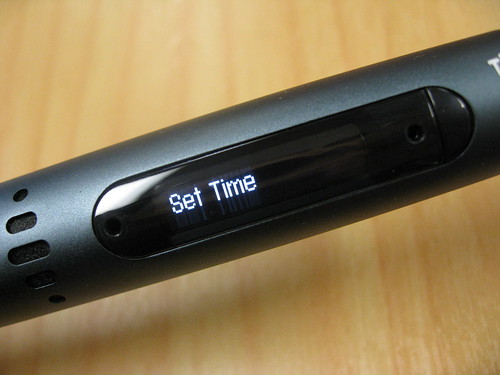
Set up
The Livescribe Pen is one of my favorite classroom tools.
I am Ashamed.
It is shameful to admit this because we'd all like to pretend that we captivate the hearts of all of our students and they sing our praises all day long. But that would be a lie. Every great teacher has some kids who just don't like them. And I've got one for sure this year. I have my suspicions.

I am somewhat ashamed but know that a child like that wants attention and the gratification to see me upset. I also know that the harm of a false accusation on my part would be more shameful than just moving on.

I got upset about my Livescribe and so they thought it was funny and gave me more of that. I'm ignoring it. The kids who love me will tell me eventually, they always do.

Found: My Dignity and Self Worth Amidst the Stories
But until this comes to light, as such things inevitably do, I have to hold onto the stories from this week.

  • Hold onto the senior who gave ME a gift on his last day of school yesterday for "what I've meant to him." 
  • Or the parent who called my house to say how she cried when she saw her 14 year old daughter's website. 
  • Or the parent who called my Daddy and told him how much I have meant to his daughter and family and how I changed her life. 
  • Or the three seniors who proudly brought me a "Cool Cat" mug that they had found for me. 
  • Or the senior who put "Thank you Mrs. Vicki for all you've done. This senior movie would not be possible without you" in the credits of the slideshow." 
 These are the stories I hold on to.In fact, I have a folder where I write down and keep these stories for the days I feel down. They can steal my markers, my gadgets, my pens and pencils, but they cannot steal my nobility and my joy for teaching them. This too shall pass.
    I know that you have your stories of meaning. You also have your secret shame that you think:

    "If I was a better teacher ___ wouldn't have happened."

    If you're such a great teacher why would someone be so hateful?

    Because no one is perfect. No one is liked by everybody and people (especially kids) can be mean. Sometimes those with the greatest anger most need your life and they fight you just before you break through!

    Everyone sings the praises of teachers but don't know that most of us have that one student or two who hurt us and cause us pain.

    Great Teachers Overcome Great Obstacles
    The greatest teachers often have the greatest obstacles to overcome! The greatest shames.

    When you watch movies like Freedom Writers or Mr. Holland's Opus you see the climax in your mind with everyone applauding. You don't really see the pain. You don't remember the heartache of the characters as they experience their own humiliation and failure. They are there. Watch the movies again.

    Stories from PopularAuthors.
    So, when eBook publisher Open Road media contacted me about sharing stories from their authors about the greatest teachers, I jumped at the chance.

    I want you to read these stories and picture the kids in your classroom writing about you in 20 years. What would they say?

    Look at the things that make great teachers. Keep your eye on the stories. Making a difference to just one child at a time. Knowing that the upset-ness you feel over that one situation went awry is lying to you. YOU CAN BE A GREAT TEACHER.

    And you also don't remember that often the praise of the teacher is sung when their career is OVER. When they are DONE. You're not done. You're here and now.

    So, hold onto these stories and BE the story. BE the living inspiration. And know that these stories were written by ONE person each. Don't let the ONE or TWO who enjoy making a sport of your consternation cause you to be less of a teacher to the other 95% of the students in your class. That isn't noble and it is beneath you.

    And remember that if you are a parent as our first author says, that perhaps the greatest need for teaching applies to you.

    College professors, parents, and all teachers. There is a story here for you.


    From Open Road media: Who would we be without the great teachers and mentors in our lives? In honor of Teacher's Appreciation Month, Open Road Media, an ebook publisher, asked authors to reflect on the teachers who actually "made" them the successful individuals they are today. From memories of beloved, bookish parents to appreciation of a friend who taught the importance of resilience, these stories are inspiring and worthy of sharing with friends, readers and our next generation of future writers. I'm excited to share them all for the first time on Cool Cat for you to read and share!

    Note from Vicki: I have added headings to the original article.


    The Teachers Who Made Me
    Stories from Successful Writers
    “First and foremost on the list of “teachers who made me” would be my father. At the time I was a little kid, my father had only a high school education, but he was always reading. He’s a history-buff; I think history-buffery is something that you pick up from someone else, some other person, who opens that door. He was that person. Second on the list would be my mother – also, at the time, with only a high-school education (though they both went back for college classes as soon as they had time – Dad got a couple of degrees). Mom looked on “what-to-read-your-children” lists and read to us, every night and sometimes in the mornings before we left for school. Reading is something that (I believe) people also learn primarily at home – a horrible challenge in these days when it takes two incomes to keep a family afloat and both parents (if there ARE two parents) come home exhausted. There’s a long list of teachers also – Liz Blair when I was a freshman in High School, Dr. Jeffrey Russell at UC Riverside – but it started with my parents. God bless them and all those who work to open their children’s minds!” 

    – Barbara Hambly is a New York Times bestselling author of fantasy and science fiction, as well as historical novels set in the nineteenth century. Read more about Barbara Hambly.

    Story #2 John Lutz. My Eighth Grade Teacher, Ms. Meyers

    “My eighth grade teacher, Ms. Meyers, understood that I loved to read, and made sure I got the opportunity. There was a cache of National Geographic magazines in the classroom (censored, of course) published before, during, and after World War Two, and I learned more history poring over them than I learned in any other class. (Came up a little short in math, though.) More importantly, as it turned out, I also learned that a picture wasn't necessarily worth a thousand words.” 

    John Lutz is the author of more than forty novels and over two hundred short stories and articles. His novels and short fiction have been translated into almost every language and adapted for almost every medium. Read more about John Lutz. 


    Story #3 Boston Globe Reporter, Johnny Diaz. His Tenth Grade English Teacher and His First Employer 

    “I found my calling thanks to a few simple inspiring words from my tenth grade English teacher, Mrs. Comeau. "Johnny, you're a good writer,” she said. “Your sentences are simple and concise. Your writing has rhythm. Have you thought about joining the school newspaper?"


    I took Mrs. Comeau's advice to heart. I joined the school newspaper staff, curious to see where this all might lead. At first, I didn't know what I was doing. Through the challenges, I kept remembering what Mrs. Comeau had said. These words were gentle nudges to keep writing.


    A few months later, our school newspaper mentor, Patty Shillington, hired me as a high school intern for our big local daily newspaper, The Miami Herald. My photo ran with each column called "Friends and Neighbors,'' which focused on unsung heroes in our community. Suddenly I found myself writing all the time, for the school newspaper and for the real world one. I was a writer, a journalist.


    If it hadn't been for Mrs. Comeau's encouragement and Patty's guidance at The Miami Herald in my early years, I wouldn't have explored my craft and found my calling. Twenty years later, I'm still writing new articles but I have expanded my craft by writing novels. And I teach journalism students whenever I can. In my lectures and when I grade their papers, I always encourage and hopefully inspire them to find their own voice. I also tell them what Mrs. Comeau told me so many years ago, "You're a good writer." And that has been the best gift any teacher has given me. I want to keep passing it on.” 

    – Johnny Diaz is an active reporter for The Boston Globe and the accomplished author of Boston Boys Club and Beantown Cubans. Read more about Johnny Diaz.

     Story #4 Dalma Heyn, How Inspirational Experts in the Field of Psychology Taught Her

    “I was working on my first book when I had the good fortune to interview many of the world's foremost educators in the fields of psychiatry and psychoanalysisamong them, Dr. Martin Bergmann, Dr. Otto Kernberg, Dr. Ethel Personsome of whom had indicting interpretations of why women did what they did and what deep problems had to be fixed to make them ‘good’ women instead of bad ones. As I interviewed women themselves, I had an epiphany: all the scrutiny in the world would not be as enlightening as the simple, poignant feelings expressed by the women who exhibited the behavior being interpreted by the experts. In this odd fashion, the most brilliant teachers taught me not how to analyze, but rather, how to listen. It is, I think, what I do best, and what readers seem to value most in my books.”

    –Dalma Heyn is a New York Times bestselling author and psychotherapist who has worked for over twenty-five years to help women develop the best possible intimate relationships, while still flourishing as individuals. Read more about Dalma.

    Story #5 Mary Monroe. A Teacher Who is a Best Friend, Shelia Simms
    “I didn’t meet the teacher who had the biggest impact on my life until almost twenty years after I’d completed high school and moved from a small town in Ohio to Oakland, California. I met her at a literary event that I almost didn’t go to because I had a deadline to finish some edits on the manuscript for my first novel, The Upper Room.  In addition to being an elementary school teacher, she was also an aspiring author, an avid reader, and a world traveler.  That evening, she regaled me for hours with stories about her fourth-grade students and all of the fantastic places that she had visited. We became friends immediately. Over a lot of dinners and drinks, and during hour-long telephone conversations, she encouraged me to travel more and she gave me tips on how I could do that on my meager salary. Even though she has only published one short non-fiction piece so far, she does not get discouraged about her writing. As a matter of fact, she is the one who keeps me going when I get discouraged. She is always upbeat and looks for the good in everybody and everything. She is the kind of woman that I would like to be when I “grow up.” We’ve been best friends since the night I met her. Her name is Sheila Sims.”

    –Mary Monroe is the first and only member of her family to finish high school. She received great acclaim for her first novel, The Upper Room, and received the PEN/Oakland Josephine Miles Award for her novel God Don’t Like Ugly. Read more about Mary Monroe.


    Please feel free to share your story in the comments below.
    Enhanced by Zemanta

    • Digg
    • Del.icio.us
    • StumbleUpon
    • Reddit
    • RSS

    African literature is better off without another Nobel

    Adaobi Tricia Nwaubani in the NYTimes

    Here, each successful seller of plantain chips spawns a thousand imitators selling identical chips; conformity is esteemed while individuality raises eyebrows; success is measured by how similar you are to those who have gone before you. These are probably not uniquely African flaws, but their effects are magnified on a continent whose floundering publishing industry has little money for experimentation and whose writers still have to move abroad to gain international recognition.
    More here
    Enhanced by Zemanta

    • Digg
    • Del.icio.us
    • StumbleUpon
    • Reddit
    • RSS

    The Chinua Achebe Center

    From their Site


    The Achebe Center will build a world class institution that serves a new generation of African writers; encourages literary/cultural entrepreneurship; positions our literature in its appropriate place in world literature; and always serves the highest of ideals and ideas. Our current projects include facilitating events featuring visiting writers, artists and scholars; publishing books and chapbook; facilitating writer/artist residencies, projects and collaborations; the creation of a new low-residency creative writing program; and more.

    • Digg
    • Del.icio.us
    • StumbleUpon
    • Reddit
    • RSS

    Pilgrimages: 14 Writers, 14 Cities, During the World Cup

    "...For one month in 2010, nearly a billion eyes will follow the wayward movement of one small ball, bouncing about haphazardly on a lawn—controlled by the feet of 22 men speaking a language billions understand very well...At a moment in time when the whole continent is more visible to its inhabitants and to the rest of the world than at any other since independence, PILGRIMAGES will reintroduce Africans to the literary world in the same form that so many outside writers have employed to create a distorted idea of us to the world..."-website

    • Digg
    • Del.icio.us
    • StumbleUpon
    • Reddit
    • RSS

    10 Commandments for African Intellectuals

    George Ayittey of the Free Africa Foundation writes:

    1) Never Forget Your Roots

    Africa's traditions, institutions, and customs are integral part of your heritage. This heritage includes participatory democracy based on consensus, free village markets, free enterprise and free trade. You cannot reject this heritage and remain African.

    2) Seek Ye First the Economic Kingdom in the Private Sector

    There is nothing wrong in wanting to be rich, but nobody became rich working for a wage/salary, unless he was prepared to steal or embezzle, like the African kleptocrats. But that does not pay in the long run. Earn your wealth in the private sector by actually producing something, even charcoal. If capital is a problem, do as the illiterates do by pooling savings as in the revolving credit schemes.

    3) Privatize the Universities

    Africa's universities should be privatized. They may be given a fixed annual government subvention and then allowed to raise their own revenue and manage their own affairs. This way, they can uphold academic freedom, which is currently not possible with the head of state, often a military imbecile, as the chancellor.

    4) Demand and Defend Freedom of statement/Media

    Recall that the first critical step in problem resolution is the exposure of the problem. Without freedom of statement this is nearly impossible... "African governments are responsible for the underdevelopment of African literature. Among the four main problems inhibiting the development of African literature is the expulsion of prominent African writers . . . the absence of African writers in international debates, absence of integrative policies and lack of publishing infrastructure" . All African intellectuals must demand the right to free speech and defend the rights of others for the freedom to speak, publish and write...

    5) Practice Intellectual Solidarity

    Respect and assist members of your own profession, regardless of differences of opinion. If one is under siege, all wherever they may be --- in or out of government, in or out of the country -- must go his or her aid. You may need group assistance yourself in the future. And extend this solidarity to other groups fighting the same cause as well...
    6) Demand National Conferences

    When a national crisis erupts, demand that a national dialogue or conference be set up to resolve it, as is done in African villages. The national conference must be sovereign and its decisions binding on all parties, including the government...

    7) Disband the Military or Cut It in Half

    No African intellectual with an iota of intelligence and a modicum of Pan-Africanist spirit would support, much less serve, a barbarous military regime. Ever! All those African countries that imploded were ruined by the military.

    8) Pan-Africanism

    Pan-Africanism, originating from the belief that African countries share common problems, common solutions, and common destinies will remain a dream unless you learn more about African countries other than your own.

    9) Set Up a Rival AU
    The time has come for the useless OAU(nowAU) to be disbanded or for a rival body, the Organization of Free African States to be set up. It should be made up of strictly democratic countries. OFAS can be set up under the aegis of President Nelson Mandela of South Africa.

    10) Selectively Repudiate Foreign Debt

    Insist that foreign aid be given only to democratic African countries. Time and again, foreign loans are taken by corrupt, illegitimate and repressive African regimes without the approval of the people.

    • Digg
    • Del.icio.us
    • StumbleUpon
    • Reddit
    • RSS

    Storybird

    Storybird is a free, online site that allows students to create their own children's book. They can also read books that other Storybird users have written, including classmates' work.


    These could be a great way to get unmotivated writers (or readers) to get excited about the subject! I actually think Storybird could be fun for any age student. Of course, the little ones would love the color and funny graphics, but the older students could also enjoy this unconventional and creative assignment.

    To do this in your class, I'd suggest signing up as a teacher. This allows you to let students work inside your account without asking each student to sign up with an e-mail account individually (which can take forever, or even be impossible with all the filters!).

    Once you sign in on your Storybird teacher account, you can create different classes for your students so everyone isn't mixed together.  This sorting feature might also make it easier to assess your students.

    One obvious difference between the teacher account and the regular account is that teachers can assign projects with due dates to their students. You can also control the amount of interaction your students have with other Storybird users and/or their classmates, which I like. I have yet to see any inappropriate material, but you just never know!

    Another Storybird feature is the ability to write a book collaboratively. Students don't have to create books alone; they can work in pairs or even groups. This might motivate even the most reluctant reader/writer to participate! And Storybird basically forces collaborators to contribute equally to the book; collaborative works get passed back and forth to its contributors so that everyone gets a turn.

    Artists draw and submit work to Storybird, and that is where students will get the illustrations. Students can choose illustrations based on a specific theme or from an artist whose work they really enjoy. There are some other customization features, such as choosing the color of the pages in your book, but there aren't too many options so that your students can't focus on reading and writing.

    A great feature for all users is that you can have your Storybird stories professionally printed and made into actual books. This would be a neat project for student writers, as they would be able to see their work "published" and take a copy home! Printing does cost money, but if your school (or students) can afford it, I think it would make a neat souvenir from your class.

    When I went to read some of the work submitted on Storybird, I found a story called "Seven Ways to Survive School." Take a look at this book that a user named Hunter wrote:

     Seven Ways to Survive School on Storybird

    If you're as impressed as I am, consider using Storybird in your classroom. Don't forget to let me know how it goes!


    • Digg
    • Del.icio.us
    • StumbleUpon
    • Reddit
    • RSS

    Beyond Superficial Indices

    In Saraba Orimolade Tosin issues a clarion call to the literary community:
    For writers it is time to start exercising power with responsibility. The responsibility we owe the common people whose hearts long for development. We must focus on the real people and the real issues that confront them. We must make the economy strong and vibrant and empower the state to stand for what is right and make it responsive to popular needs and desires. The state must be a state for all. We cannot live these people perpetually at the backwaters of development. Sustainable economic development means that we must put these peoples at the radar of our developmental efforts. For writers, these issues must receive adequate exposure in our writings, be it fiction or non-fiction. We must write the biography of our country not as hagiographers
    More here(pdf)

    • Digg
    • Del.icio.us
    • StumbleUpon
    • Reddit
    • RSS

    Literary Clusters-Lagos,Nigeria

    In 3QuarksDaily Tolu Ogunlesi on a re-energized literary scene in Nigeria:

    Chika Unigwe Biography: en.wikipedia.org/wiki/...Image via Wikipedia
    Lagos is suddenly a hot new destination for writers from all over the world – courtesy of the exploits and efforts of writers like Adichie. Her four-year-old annual Creative Writing workshop, sponsored by Nigeria’s oldest and biggest beer company (which before now appeared to be more at home with sponsoring music festivals and talent hunts) has brought Jason Cowley, Nathan Englander, Binyavanga Wainaina, Jackie Kay, Doreen Baingana and Dave Eggers to Lagos, to facilitate writing sessions. This year Ama Ata Aidoo, Niq Mhlongo...
    More here

    Reblog this post [with Zemanta]

    • Digg
    • Del.icio.us
    • StumbleUpon
    • Reddit
    • RSS

    'There was a Country' by Chinua Achebe

    A penguin profile of Chinua Achebe's personal history of Biafra, There was a Country:
    The defining experience of Chinua Achebe’s life was the Nigerian civil war, also known as the Biafran War, of 1967–1970. The conflict was infamous for its savage impact on the Biafran people, Chinua Achebe’s people, many of whom were starved to death after the Nigerian government blockaded their borders. By then, Chinua Achebe was already a world-renowned novelist, with a young family to protect. He took the Biafran side in the conflict and served his government as a roving cultural ambassador, from which vantage he absorbed the war’s full horror. Immediately after, Achebe took refuge in an academic post in the United States, and for more than forty years he has maintained a considered silence on the events of those terrible years, addressing them only obliquely through his poetry. Now, decades in the making, comes a towering reckoning with one of modern Africa’s most fateful events, from a writer whose words and courage have left an enduring stamp on world literature.

    Achebe masterfully relates his experience, both as he lived it and how he has come to understand it. He begins his story with Nigeria’s birth pangs and the story of his own upbringing as a man and as a writer so that we might come to understand the country’s promise, which turned to horror when the hot winds of hatred began to stir. To read There Was a Country is to be powerfully reminded that artists have a particular obligation, especially during a time of war. All writers, Achebe argues, should be committed writers—they should speak for their history, their beliefs, and their people. Marrying history and memoir, poetry and prose, There Was a Country is a distillation of vivid firsthand observation and forty years of research and reflection. Wise, humane, and authoritative, it will stand as definitive and reinforce Achebe’s place as one of the most vital literary and moral voices of our age

    • Digg
    • Del.icio.us
    • StumbleUpon
    • Reddit
    • RSS

    Beyond Superficial Indices

    In Saraba Orimolade Tosin issues a clarion call to the literary community:
    For writers it is time to start exercising power with responsibility. The responsibility we owe the common people whose hearts long for development. We must focus on the real people and the real issues that confront them. We must make the economy strong and vibrant and empower the state to stand for what is right and make it responsive to popular needs and desires. The state must be a state for all. We cannot live these people perpetually at the backwaters of development. Sustainable economic development means that we must put these peoples at the radar of our developmental efforts. For writers, these issues must receive adequate exposure in our writings, be it fiction or non-fiction. We must write the biography of our country not as hagiographers
    More here(pdf)

    • Digg
    • Del.icio.us
    • StumbleUpon
    • Reddit
    • RSS

    Daily Education and Technology News for Schools 12/05/2011

    Posted from Diigo. The rest of my favorite links are here.

    • Digg
    • Del.icio.us
    • StumbleUpon
    • Reddit
    • RSS

    Great Thinkers

    My nana says that in order to be a learned person, you need to make sure that you have read the wisdom of the past. It's a good saying, and I think that it is a shame that students today read so little of the wisdom of those who have come before them. It leads to a society that thinks that it knows everything, that thinks it is the center of the world, and that elects people into office who know little of history or the ideas of the past. These kinds of people do things that everyone knows failed in the past, and rather than stand on the shoulders of giants and make our society better, they jump off the giants back into the muck and make our society worse.

    So whose writings do I consider worthwhile reading? One of my readers wrote me and pointed out a list of the 25 greatest thinkers that every college student should read, and it's a good list. College students- or even high school students- should be familiar with these thinkers and have read some of their material at some point in their schooling. Go through the list yourself- have you read these great thinkers?


    Western Philosophers such as Ralph Waldo Emerson, John Stuart Mill, Immanuel Kant, Soren Kierkegaard, and Niccolo Machiavelli. Eastern Thinkers like Confucius, Avicenna, Laozi, Siddhartha Gautama, or D.T. Suzuki.

    Statesman like Winston Churchill, Thomas Jefferson, Ataturk, Mao Zedong, and Nelson Mandela. Writers and Artists like Mark Twain, George Orwell, Gabriel Garcia Marquez, Albert Camus, Khalil Gibran, Kurt Vonnegut, Gunter Grass, Marcel Proust, Issac Asimov, and Arthur Rimbaud.

    If you don't recognize any of these writers, and I confess that there are a couple on here that I have not read, check out the article in its entirely. It discusses who the person is and what contributions they made to society.

    Lastly, put this information to use. In your own life, try to read these works and draw on the thought and ideas that they present. Listen to others talk, and challenge them when their ideas are deficient or lacking in deep thought. Be a jerk and demand that people display their knowledge of past great thinkers, especially those who would lead you and pretend to rule you. Stand on the shoulders of giants and make our society better.

    • Digg
    • Del.icio.us
    • StumbleUpon
    • Reddit
    • RSS

    Learning about Learning: Research and Edreform News and Views 12/31/2011

    • This is a course for Spring Branch ISD which uses a blog as the framework. I also love how 9 hours of professional development is being given for the educators in this course. We need more embedded PD that gives teachers an opportunity to embed their learning in their daily activity. Embedded PD is the key to transformational learning. While there is a time and place for getting away, we have traditionally only used that "away" method when we also need to use the "learn right here" method of delivery as well.

      Take a look at what Karen is doing here as you evaluate your pd delivery methods. I also have to admit that Spring Woods High school is one that has been an outstanding contributor to Flat Classroom in the past, so I personally know they are walking the walk here.

      tags: education news elearning professional_development ird bestpractices

    • Although not updated for some time, this wiki has been helpful in my wiki research. This shows the advantage of moving the master's thesis research online. It becomes a useful part of scholarly research. This wiki is dedicated to wikis in writing education research.

      The one thing I'd love to see is eventually that such projects would become legacies where another student could build on what has already been created either through a template or handing it off like a baton, but so much of how academia is set up screams opposition to this. But why should a great wiki like this die when the creator graduates? 

      tags: education wiki learning research

    • Very interesting study on the effectiveness of Khan Academy on the scores of low performing students. The study thoerizes that the success is not the videos at all but the problems and rewards system that accompanies the videos which have a gaming feel. Like many, we assumed the videos would be the predominant learning mechanism for students tackling new material. In fact, the students rarely watched the videos. This result is consistent with some of the observations in the Los Altos pilot. The students greatly preferred working through the problem sets to watching the videos."

      tags: education research learning

    • John Seely Brown's PDF on the new learning environments for the 21st century based upon a 2005 presentation he did at the Forum of Higher Education's 2005 Aspen symposium.

      The quote I like best:

      "As the pace of change in the 21st century continues to increase, the world is becoming more interconnected and complex, and the knowledge economy is craving more intellectual property. In this environment, it is critical that we shift our focus from education to life-long learning."

      This is a great lead from a thought leader in this area.

      If you wonder why I'm digging into the research, it is as I work on my second book on collaborative writing. It is amazing to me that I can find so many more things online than I ever could in the Georgia Tech library when I was a research assistant for the then president of the national Economics Association, Dr. Danny Boston.

      I may not be in an institution of higher learning but I can institute higher learning in my daily practice. I want everything I write for publication to be well grounded. I hope that is why those of you who gift me with your presence on this blog will feel free to let me know in the comments if you have concerns or pointers to other work.

      tags: education learning edreform

    • This 2004 study on second-language writers determined that although students prefer oral feedback that e-feedback has a greater impact on the revisions process. Online feedback is a valuable tool in the revisions process.

      tags: education research learning literature composition

    Posted from Diigo. The rest of my favorite links are here.

    • Digg
    • Del.icio.us
    • StumbleUpon
    • Reddit
    • RSS

    "How to write about Africa - don't"

    In a Guardian review of Richard Dowden's Africa: Altered States, Ordinary Miracles John Ryle calls for a halt to generalizations:

    People shouldn't write books about Africa. Not the whole of Africa. When was the last time you read a book about Eurasia? Never. The vastness of the European-Asian landmass precludes useful generalisation. And Africa is just as various, if not quite as huge. There are almost as many countries, rather more languages and a comparable degree of environmental diversity...In an important sense, "Africa" is a western invention. Despite attempts by visionaries to promote unity among the states that inherited dominion from Europe's retreating empires, African politicians have never paid anything more than lip-service to the pan-African ideal. African writers have an uphill task reclaiming the term "Africa" from the mythic associations it has in western literature. Most of these writers don't write about continental aspirations but about the worlds within a single country, leaving generalisations to World Bank experts, grandstanding politicians and Hollywood stars...[continue reading]

    via Africa Works

    • Digg
    • Del.icio.us
    • StumbleUpon
    • Reddit
    • RSS

    Coon Hunting, A Bear Named Obama, Teleprompters, Queen Touching, and Bush Fighting Zombies

    Since my my last post (My Personal Experience Fighting the Worship of Earth Hour) was so serious, I'm going to follow it up with a lighter post today, about stuff that I find funny.

    First, take a look at the picture of the bear- according to the US Fish & Wildlife Service office in Kalispell, Montana, that little fella has taken to sitting every day at the picnic table apparently waiting to be fed and to have his winter den dug by government employees. Although he once was self-sufficient, he now begs for a handout every day from our generous government. Because of this, residents have taken to calling him Bearack Obama!

    Next, according to the Detroit News, a new industry is starting up in Detroit, and I suspect that it actually is the fast-growing industry in the city (other than working for the government). The new industry is urban hunting and skinning. Yes, like a scene out of I Am Legend, the wilderness is retaking the city of Detroit, and the animal population is moving into areas that were once inhabited by productive men. Years of Democrat control in action!

    The story in the Detroit News is the story of a young 69-year old entrepreneur, who has to supplement his Social Security checks by hunting raccoons in the city of Detroit. Apparently this guy kills coons with the help of his rifle and coon dog, butchers the meat, and sells it to local residents, and he also sells the skins- but doesn't pay taxes on these sales (must be a Democrat). The meat is not USDA approved (probably something to do with rabies), but the video about the story (go to the link for the article to watch it and howl with laughter) shows coon meat being served with liver and onions and Faygo red pop- just the way mom made it!

    In other news, Obama recently was in England, and since he had to talk to people over there, he brought with him 5 speech-writers and 12 teleprompters for the weekend. I don't think that was enough- I heard some of his stammering and stuttering in a press conference- but still- 12 teleprompters? Can't you just bring one and move it from place to place? Or do they have to put a separate one up everywhere he goes and load it with his thoughts?

    Sadly the teleprompter didn't let his wife know that you aren't supposed to touch the Queen of England- it's apparently a big no-no. Doesn't anyone on his staff do any research on this stuff? I guess not- Michelle put her arm around the Queen and gave her a noogie on national television- probably not a good idea, but at least her arms were fantastic!

    Lastly, least we forget how low the bar was for Presidents (and yet Obama still gets under it), here is a hilarious clip from a George W. Bush press conference where he is talking about fighting the biggest threat to our lives- zombies. That's right- laugh if you want, but apparently zombies are a big threat, and I am glad our President did everything he could to wipe them out- click on the link if you don't believe me. Enjoy!

    NOTE to NEW READERS: New readers, please feel free to also check out some of my recent good posts like Obama is a Caudillo, The Inside Deal: Obama's Economic Program, Employment-Population Ratio Drops to 58.5%, Earth Day: Is it just one big Communist Plot?, Gifted Programs in Schools Training Future Liberals, or Obama On Inner and Outer Circles of Leadership. Also feel free to link to blog-curhatanku.blogspot.com on your blog, and bookmark conservativeteacher.blogspot.com so you can become a regular reader of the battles of a conservative teacher's attempt to advance the principles of liberty and freedom.

    • Digg
    • Del.icio.us
    • StumbleUpon
    • Reddit
    • RSS