
Worldwrite has produced a "...film that will challenge the belief that fair trade is a panacea for poverty in the developing world. It claims that western consumers have been duped into thinking that fair trade is an effective poverty-alleviation tool, when in fact it does nothing to address the root causes of poverty...",ThirdSector."...The Bitter Aftertaste casts huge doubts on the capacity of chocoholics and shopaholics to transform the lives of farmers in the developing world through their supermarket trolleys. Shot in Ghana and the UK this hard-hitting documentary is sure to stir more than coffee and leave a bitter taste in the mouths of those who espouse fair trade as a mechanism for development. The film asks the questions often thought but never asked, does fair trade really change anything or just make Western consumers feel good? A must-see for everyone who believes the developing world deserves better..."
Via Loneliest Jukebox
FairTrade on Trial


The Ten Commandments for Developing Countries
 Kishore Mahbubani author of "Can Asians Think?" offers his ten rules for developing countries:
I. Thou shalt blame only thyself for thy failures in development. Blaming imperialism, colonialism, and neo-imperialism is a convenient excuse to avoid self-examination.
II. Thou shalt acknowledge that corruption is the single most important cause of failures in development. Developed countries are not free from corruption, but with their affluences they can afford to indulge in saving and loan scandals.
III. Thou shalt not subsidize any product, nor punish the farmer in order to favor the city dweller. High prices are the only effective signal to increase production. If there are food riots, thou shalt resign from office.
IV. Thou shalt abandon state control for free markets. Thou shalt have faith in thine own population. An alive and productive population naturally causes development.
V. Thou shalt borrow no more. Thou shalt get foreign investment that pays for itself. Thou shalt build only the infrastructure that is needed and create no white elephants or railways that end in the deserts. Thou shalt accept no aid that is intended only to subsidize ailing industries in developed countries.
VI. Thou shalt not reinvent the wheel. Millions of people have gone through the path of development. Take the well-traveled roads. Be not prisoners of dead ideologies.
VII. Thou shalt scrub the ideas of Karl Marx out of thy mind and replace them with ideas of Adam Smith. The Germans have made their choice. Thou shalt follow suit.
VIII. Thou shalt be humble when developing and not lecture the developed world on their sins. They listened politely in the 1960s and 1970s. they no longer will in the 1990s. [still relevant in 2000s]
IX. Thou shalt abandon all North-South forums, which only encourage hypocritical speeches and token gestures. Thou shalt remember that countries that have received the greatest amount of aid per capita have failed most spectacularly in development. Thou shalt throw out all theories of development.
X. Thou shalt not abandon hope. People are the same the world over. What Europe achieved yesterday, the developing world will achieve tomorrow . It can be done.
via State of Flux
Thanks Gilbert Porku!
photo courtesy The Globalist
Unleashing Entrepreneurship
Warrick Smith writes(PDF) about the potential of entrepreneurship in the developing world. "...Today, few informed commentators question that the private sector plays a critical role in growth and poverty reduction. The ideological debates of the past are giving way to more pragmatic discussions about how best to unleash and expand that contribution while preserving other social values. New research is also providing fresh insights into what works and what doesn’t...when assessing the contribution of entrepreneurship to development,we need a more encompassing view. We need to include peasant farmers toiling in their fields in Uganda and Bangladesh; street vendors peddling their wares in La Paz and Manila; and microenterprises in Cairo and Istanbul...The private sector is the principal source of investment, with domestic private investment substantially overshadowing foreign investment across the developing world...The private sector accounts for about 90 percent of jobs in developing countries, .and poor people rate self-employment and jobs as the two most promising ways to improve their situation. But employment is not the only mechanism. A vibrant private sector expands the availability and reduces the prices of goods in society, including goods consumed by poor people. And firms and commercial transactions are the main source of taxes from which governments can empower the poor through investments in health, education and other public goods, as well as through direct income transfers..."
The Global Rise of the Informal Economy by Robert Neuwirth
In "Stealth of Nations," Robert Neuwirth offers a fascinating tour of System D, a world largely ignored by academics and government officials but a world familiar to anyone who has visited developing countries. Step outside your beachfront resort in Cancun and you can't miss it. Usually foreign visitors treat the participants in this unofficial economy with either pity or distrust: pity because they assume that System D workers are on the verge of starvation, distrust because familiar guideposts—regulations, licenses, credentials—are lacking.Over at Bloomberg Robert Neuwirth himself on the 'Offbeat Economy':
Often neither prejudice is correct. Mr. Neuwirth introduces us to a woman named Jandira who for a decade has peddled coffee and homemade cakes to the unlicensed vendors at São Paulo's early-morning wholesale market for pirated movies. Her street-corner business, she proudly tells him, has enabled her to buy two cars and a house and to pay her children's fees at private school. Another of Mr. Neuwirth's sources, Chinese handbag designer Ethan Zhang, prefers to stay illegal. For him it's a matter of costs and benefits: "If I want to get a license, then I will need a bank account and an office in an office building." These are not people who lack the skills to survive through legal employment; they just see no good reason to join the legal economy...[continue reading]

Here, in the squatter community of Makoko, one of the waterside shantytowns of Lagos, Nigeria, Ogun Dairo smokes fish. Without a license, on land that she doesn’t own, she has created her economic future. The fish is imported from afar, caught in the North Sea, frozen and shipped to the cacophonous port city on the Nigerian coast.More here
After several hours in the concentrated smoke of her scorched sawdust --- the strong fumes have stained her wax-print dress, dulling the extravagant colors -- she packs the fish in boxes, readying them to be retailed for a tiny profit on the roadsides of this West African megacity.Economic development in Africa can be found all over, hidden in plain sight. It evades our gaze because our notions of growth and development are conditioned by Western rules. We expect development to be highly organized and regulated, to involve government, and to be anchored by big corporations. In Makoko, as in most of the developing world, the great engine of economic progress is different. It is unstructured, unofficial and, to most people, unfathomable.Academics call this sub-rosa sphere the informal economy, an attempt at objectivity that unfortunately links unlicensed markets with drug dealers and gun runners. But Ogun Dairo and the billions of other unlicensed businesspeople around the world are not criminals. So I propose a new name.Sculpted From French
In French, people who are particularly effective and self- motivated are known as “debrouillards.” Former French colonies have sculpted this word to their economic reality. People doing business on their own, without registering or paying taxes, are part of “l’economie de la debrouillardise” -- or, sweetened for street use, System D.
via Stealth of Nations
The NGO Economy Is Killing Entrepreneurship
R. Todd Johnson writing in Friends of Ethiopia:
Outside of direct relief aid and some of the amazing health and education research and development, much (perhaps most) of what is done in the developing world through non-profits and NGO's, could actually be accomplished through a business model, even if it would be harder to raise investment funding. Instead, someone begins selling tax subsidized and donor subsidized water pumps in Africa, because it is easier to raise the funding through tax deductible donations rather than through the rigors of proving out the business model for investment dollars, with the great result of increased deployment of inexpensive water moving technology in the developing world to aid rural farmers, but the negative results of (1) killing the market for future indigenous entrepreneurs attempting to sell water pumps at a profit and (2) locking a potentially valuable distribution channel in a non-profit, making it difficult for other for-profits to use.A friend of his an entrepreneur in answer to a question about how he was doing stated:
"Africans don't see a reward system in place for being entrepreneurial. In fact, they view it as a matter of survival, not an opportunity to lift themselves out of poverty. Rather, what they learn at a very early age, is that in order to make good money, they should learn to speak English incredibly well and then maybe, just maybe, they can get a job driving for an NGO. In a few years, if they play their cards right, they might be able to land an NGO job as a project manager and even advance further."More here
Learn to Earn
 Calestous Juma writes in Nature's "Where is Science in the Developing World" publication:
The key to economic prosperity is turning innovation into profits. A growing number of countries in the developing world are showing how this can be done. Their societies are benefiting as a result...He calls for entrepreneurial graduates:
The aim of this new species of university should be to produce entrepreneurial graduates who are likely to generate jobs in their communities while adding to the growth of the economy. This would be a departure from the present system, which focuses on providing technical skills to people who fill jobs rather than create them. All this will require those who regulate higher education to be proactive and flexible...[continue reading]
via SciDev
photo courtesy of Paolo Whitaker/Reuters
Turning Rwanda Around
 Image via Wikipedia
Rwanda is one of the few nations in the developing world spending more on education than on the military. Kagame re-wrote the constitution such that his party cannot have more than 50 percent of the seats in parliament. Though Kagame is from one ethnic group, his Prime Minister and 70 percent of his cabinet are from the other. Thirty percent of elected officials at the level of municipality, parliament, and cabinet are required to be women; and a world-leading 56 percent of parliament is now women. The country is secure and the World Bank's Doing Business report recognized Rwanda as the greatest reforming nation in the world last year.More here
![Reblog this post [with Zemanta]](http://img.zemanta.com/reblog_e.png?x-id=7a7edcaf-51cd-413f-90b6-674b9dba511c)
Developing Economies:Coming of Age
The Economist writes "...As developing countries and the former Soviet block have embraced market-friendly economic reforms and opened their borders to trade and investment, more countries are industrialising than ever before—and more quickly. During their industrial revolutions America and Britain took 50 years to double their real incomes per head; today China is achieving that in a single decade. In an open world, it is much easier to catch up by adopting advanced countries' technology than it is to be an economic leader that has to invent new technologies in order to keep growing. The shift in economic power towards emerging economies is therefore likely to continue. This is returning the world to the sort of state that endured throughout most of its history. People forget that, until the late 19th century, China and India were the world's two biggest economies and today's “emerging economies” accounted for the bulk of world production..."
A Parasite-Switzerland
Lord Aikins Adusei in Wikileaks:
However, of all the victims of Swiss banking secrecy laws and her shady banking practices, developing countries and Africa in particular seem to have suffered the most. The global infrastructure of international financial secrecy with headquarters in Switzerland has helped bleed trillions of dollars in illicitly generated money out of Africa and the rest of the developing world. The activities of Swiss banking institutions and real estate companies have plunged third world nations into debts, poverty, misery, malnutrition, diseases, economic meltdown, infrastructure decay and political instabilities through the help they give to corrupt politicians, civil servants, the business elite and corrupt multinational corporations who collude and connive with the corrupt entities to loot and hide the proceeds of their ill-gotton gains.More here.
A Flowering of Business Innovation in the Developing World
In the Economist:
...a combination of challenges and opportunities is producing a fizzing cocktail of creativity. Because so many consumers are poor, companies have to go for volume. But because piracy is so commonplace, they also have to keep upgrading their products. Again the similarities with Japan in the 1980s are striking. Toyota and Honda took to “just-in-time” inventories and quality management because land and raw materials were expensive. In the same way emerging-market companies are turning problems into advantages....the emerging markets are developing their own distinctive management ideas, and Western companies will increasingly find themselves learning from their rivals. People who used to think of the emerging world as a source of cheap labour must now recognise that it can be a source of disruptive innovation as well.More here
![Reblog this post [with Zemanta]](http://img.zemanta.com/reblog_e.png?x-id=1dbd8956-3c08-4121-9541-05865eb27b67)
Gordon Brown Deemphasizes Aid
 The British PM Gordon Brown, seems to have changed his position on Aid.In a speech on international development he stated that:
Some argue that it is the presence of big international corporations that is the cause of the problems in developing countries, but I disagree. Indeed, I believe it is the absence of business - and not the presence of business - that blights the lives of poor people, leaving them dependent on aid and denying them the opportunity to work, denying them the chance to support their families and denying them the means to ensure their children get the chance to succeed.
Economic growth alone has lifted more than 500 million people out of poverty over the last 25 years, accounting for over 80 per cent of poverty reduction.
And the countries whose economies are growing fastest, like Rwanda and Ghana represented here today, are those that are making progress on the Millennium Development Goals - with countries whose economies are growing more slowly falling behind.
So we need to fully acknowledge the critical importance of the private sector in driving development - focusing our attention not on an old one-dimensional welfarist approach but on enterprise, on free and fair trade and open markets, and on harnessing the power of innovation -- the building blocks of growth.
Developing countries - including Ghana and Rwanda - are already working hard to put in place the macroeconomic stability, supportive regulatory environment and measures to tackle corruption that are necessary for business and trade to thrive.
He expands on this and urges the strengthening of successful methodologies:
Today we need a new approach --- moving beyond minimum standards, beyond philanthropy and beyond traditional corporate social responsibility - important though they are - to develop long-term business initiatives that mobilise the resources and talents that are the central strengths of global business...From delivering financial services via mobile phones so that millions of people have access to basic bank accounts for the first time; to providing rural farmers with electronic price and weather information so they can decide when best to harvest and sell their crops; to sourcing ingredients from local supply chains to develop the base of the local economy --- each one of these initiatives is providing innovative solutions to the problems we face and spreading enterprise and opportunity across the developing world.
"Poverty a Bigger Problem Than Global Warming"
China states what many in the developing world feel, but have been uncomfortable to voice publicly,this and the developing green protectionism gives food for thought:
Most developing countries are in the process of industrialization and urbanization, and they face the arduous task of poverty reduction," Zhang (Vice Foreign Minister) said. "So they need a large period of time for continuous energy demand growth with the growth of greenhouse gas emissions.
Freedom and International Justice Foundation
The position of the Freedom and International Justice Foundation (FINJF) is that "...While the economies of developing states are declining, corruption, nepotism, and tyranny continue to thrive unabated. Meanwhile, billions of stolen taxpayers’ dollars are siphoned to the foreign Bank accounts of despotic leaders on a monthly basis. FINJF cultivates working relationships with international financial institutions to discourage the illegal transfers of stolen funds from developing states, and exposes the individuals involved with such crimes (be it a sitting African President or one of his cohorts). FINJF advocates the return to Africa (and the developing world at large) the stolen assets of past and present dictators..."
Extremophile Journalism
From a 2007 Seed Magazine piece:
...in many cases science journalists from the developing world face a series of hurdles that I, comfortably ensconced in Washington, D.C., simply never encounter. For some of these writers, basic research resources like cheap and reliable telephone service, libraries, and even dictionaries can be scarce. And while the physical act of researching and writing can present dramatic logistical challenges, science correspondents in some parts of the world are also faced with the worry that offending despotic or corrupt governments will result in retribution. The number of journalists imprisoned and killed worldwide every year is testament to the dangers implicit in the trade.More here.
The South emerges in Cross-Border Deals
The WSJ reports:
Western multinationals may have pioneered cross-border mergers, but the latest chapter in globalization is being written by a new breed of deal makers from places like Russia, China, Brazil and the Mideast with an appetite for acquisitions in the developed world...The recent deals mark a fundamental change from only a few years ago, when nearly all the investment flow went from the developed world to the developing one. This year could be on pace to be the first ever in which companies and investment funds based in developing countries spend more on mergers and acquisitions in the developed world than vice versa.
The New Titans
The Economist reports:
The developing countries also have a far greater influence on the performance of the rich economies than is generally realised. Emerging economies are driving global growth and having a big impact on developed countries' inflation, interest rates, wages and profits. As these newcomers become more integrated into the global economy and their incomes catch up with the rich countries, they will provide the biggest boost to the world economy since the industrial revolution...Rising exports give developing countries more money to spend on imports from richer ones. And although their average incomes are still low, their middle classes are expanding fast, creating a vast new market. Over the next decade, almost a billion new consumers will enter the global marketplace as household incomes rise above the threshold at which people generally begin to spend on non-essential goods. Emerging economies have already become important markets for rich-world firms: over half of the combined exports of America, the euro area and Japan go to these poorer economies. The rich economies' trade with developing countries is growing twice as fast as their trade with one another.via Emergic
"Noble Peasanthood", Climate change and Western Protectionism
Ross Clark writes about the protectionism built into the climate change business:
Increasingly the politics appear to be shifting the burden of cutting carbon emissions on to the world’s poor: they must be kept in a state of noble peasanthood so that we can carry on living pretty much as before. The attitude of the West can be summed up by Tony Blair’s remark when ‘offsetting’ the carbon emissions from his holiday last January to Florida: ‘It’s just not practical’ to ask people to give up their foreign holidays. Indeed not: far more practical that we assuage our environmental guilt by making the developing world give up their chance to aspire to our standard of living.
via My Heart's in Accra
"Fixing Failed States" and "Enlightened Self Interest"
Francisco Noguera at Next Billion writes:
Collier and Ghani/Lockhart emphasize the importance of engaging citizens in tackling the issue of governance in the developing world. Collier calls it "building a mass of informed citizens" without which "politicians will continue to get away with gestures," calling for the help of his techie TED audience to build ways for that to occur.
Ghani and Lockhart, on the other hand, go deep into describing what, in their opinion, should be the key functions developed by the state and a framework to spread this model across the world, acknowledging from the very beginning that "... the common people of failing states have no real stake in the success or failure of their countries" although, thanks to technological advance, "they can now truly become principals in state-building by making an agenda for accountability and transparency concrete".

New Global Challengers
The Boston Consulting Group has just released a report (PDF) listing companies that they consider the "New Global Challengers":
Until recently,only a dozen or so RDE(rapidly developing economies)-Based companies could have been described as emerging global challengers. Today these challengers number in the hundreds. Among them, the RDE100 will play important roles in shaping the global marketplaceIn a cautionary note to the developed world's incumbents:
These companies are no longer poised on some far horizon;they are globalizing fast and are determined to stay the course. The leaders of today's global companies must be prepared to meet their challenge
The "100 Top Companies from Rapidly Developing Economies that Are Changing the World" includes countries from the usual suspects, China, India, Brazil,Turkey etc.None of these 'Southern Multinationals' are from Sub-Saharan Africa. No SSA country was intepreted as a 'rapidly developing country' enough to have any of their companies on the list. The continents only listed company is Orascom of Egypt.
Who then could be seen as the rising contender/s of the future? Are they:Ocean and Oil, Globacom, Transcorp, Softtribe,Shoprite , ABC Transport and others? Which SSA companies can we perceive as having the right combination of dynamism, innovation, increasing global reach and market share to earn a place on future and other similarly based lists?
see coverage at PSD Blog
The Ten-Cent Solution
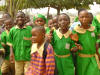
 "Cheap private schools are educating poor children across the developing world—but without much encouragement from the international aid establishment."
Clive Crook in The Atlantic writes about the research and experiences of James Tooley covered earlier.He poses the question, why have we not heard about this idea? :
This is not because his work is dull or unimportant. His findings are surprising, and they bear directly and profoundly on the relief of extreme poverty all over the world. (Name me a more important issue than that.) The reason you haven’t heard of James Tooley is that his work is something of an embarrassment to the official aid and development industry. He has demonstrated something that many development professionals would rather not know—and would prefer that you not know, either...On the whole, dime-a-day for-profit schools are doing a better job of teaching the poorest children than the far more expensive state schools. In many localities, private schools operate alongside a free, government-run alternative. Many parents, poor as they may be, have chosen to reject it and to pay perhaps a tenth of their meager incomes to educate their children privately. They would hardly do that unless they expected better results.
Better results are what they get. After comparing test scores for literacy and basic math, Tooley has shown that pupils in private schools do better than their state-school equivalents—at between a half and a quarter of the per-pupil teacher cost. In some places, such as Gansu, China, the researchers found that private schools serving the poor had worse facilities than comparable state schools; in Hyderabad, they were better equipped (with blackboards, desks, toilets, drinking water, and so on). Regardless, the tests so far show that private-school students do better across the board.
via NextBillion