RSS
Menampilkan postingan yang diurutkan menurut relevansi untuk kueri live performance. Urutkan menurut tanggal Tampilkan semua postingan

Selected Shorts: Timeless Classics (Selected Shorts: A Celebration of the Short Story)


Finalist in AudioFile Magazine's 2007 Audie Awards in the category "Audiobook Adapted from Another Medium"


This three-CD compilation features some of the best short stories from National Public Radio's Selected Shorts, an award-winning series of classic and contemporary short fiction read by distinguished stage and screen actors and recorded live at the Peter Norton Symphony Space in New York City. More than three hours of recordings in each collection capture the intimacy of live performance, with stories that are alternately exciting, poignant, and funny, making this the perfect accompaniment to any number of daily activities—driving, cooking, exercising, relaxing, or intently listening.

Timeless Classics includes, among others, James Thurber's "The Night the Ghost Got In," read by Isaiah Sheffer; Edith Wharton's "Roman Fever," read by Maria Tucci; Jack London's "Make Westing," read by Steven Gilborn; D. H. Lawrence's "The Rocking Horse Winner," read by John Shea; Shirley Jackson's "The Lottery," read by Marian Seldes; Richard Connell's "The Most Dangerous Game," read by Charles Keating; and Raymond Carver's "Cathedral," read by James Naughton.


Click here to buy from Amazon

  • Digg
  • Del.icio.us
  • StumbleUpon
  • Reddit
  • RSS

Should We Let Cell Phones Ruin Great Moments for People There?


It was one of the most moving events of the conference. Perhaps in my life. Or it could have been. My great seat didn't matter.

As soon as the talented South African storyteller entered the stage, it was all over. The cell phone mob rushed the stage. Jostling to raise their arms above each other and film the moment - ruining it for the other 1000+ people in the tent. Someone got some decent film, maybe.. On a low Rez camera that they may have shown someone who could barely appreciate it with shoddy garbled sound from being too close to the speakers.

Or maybe someone live streamed letting others see it (and likely breaking every copyright rule while at it.) Doubtful with the poor cell service in South Africa.

You know I believe cell phones have their uses but if you sense a rant coming on, that is because it is.

People at an event should take priority over virtual participants
We paid the money. We took the trip. We waited in line for tickets to the conference.

When you rush the stage with cell phones held high you are cheating and you are rude.

You are cheating us out of our experience.

You are rude because you are saying that your film shoot is more important than everyone behind you who is blocked from seeing ANYTHING. Your filming is less important than those who are there.

Even if you are a blogger with thousands of readers you are not more important than the people there.

I took the picture above and I am a blogger with thousands of readers and my hiney was in the seat.

The problem was that the event HAD cameras and you were even blocking those. You were rude. You were stealing. You were likely even stealing from the performers who could no longer see us -the audience but only the arms with the cell phones held high. They also have artistic rights to their music as did their client to this performance.

These are the things we need to start talking about. NOW. ENOUGH!!!!

Time To Talk Manners

I love cell phones. They are good for certain things but when I couldn't see the first pirates of the carribean movie because of the blinking blue tooth headset on the guy in front of me, I realized that we have to learn the POLITE way to integrate these tools into society

There are the kinds of things we talk about in our Digiteen project at school.

Like the wreck I had where a woman hit me when she ran the light. I had two witnesses both of whom had a foggy recollection because their cell phone conversations were more important than watching what was happening at the busy intersection.

Who is running who!?

Our devices are to improve our lives.

Don't blame it on the marketers. You don't have to answer every phone call, every tweet, and pay attention to people who aren't there.

Show me a nice restaurant and it is one where people don't sit there talking about Aunt Martha's hemmeroids or how Joe is messing up the business deal with his ineptitude. Take those conversations outside. Let the rest of us talk with our kids about their week or whisper sweet nothings in our boyfriend's ear.

Now you can sit in a restaurant and see kids gathered around an iPad watching tangled on their portable speaker system while the adults yell over the din and everyone 5 tables over is included in the racket.

Yes, good manners are important. I don't care if rug rats and the Simpsons and Tosh have made it seemingly ok to talk about bodily functions that made us blush in mixed company 10 years a go but I don't want to hear it at a restaurant.

The Bible talks about a time when people lose their ability to blush. God forbid we ever get to that point.

Everything is not ok and it is definitely not all good. I am making a call to bloggers and teachers out there to start having conversations about what is good for public behavior and not. Otherwise we sink to the lowest common denominator. People who don't care about others.

As for me:

  • If I am in public, I will go outside to have a phone conversation.
  • My ringer will be on silent in public.
  • I will pay attention to my family and ignore texts unless there is a life threatening situation.
  • I will not jump up to film a live event unless it is something I have arranged.
  • If I am running a live event people will want to film, I will have it filmed and make it available for those who want to share.
  • I will avoid blinking lights and bright devices in places that will impair the viewing of others.
  • I will work hard to treat others as I want to be treated.
  • I will be forgiving when others are rude but perhaps let the manager know after they have left so the manager can realize his clients would like peaceful places to dine and watch movies.
  • I will be a respectful, polite advocate for good manners knowing that the very word "good manners" will make many people who have a "to each his own" attitude angry. These people don't realize that each of us make up society.


Bottom line. Over one thousand people in a tent deserved to see that performance of a lifetime more than 20 people had a right to film it. If giving 20 people the "right" takes away the enjoyment of 980 others at the event, I have a problem with that.

It is time to talk Tech and it needs to start with those who use it most.


Posted using BlogPress from Vicki's iPad

  • Digg
  • Del.icio.us
  • StumbleUpon
  • Reddit
  • RSS

Spoken Word Artists go from Page to Podcast

CNN reports on Badilisha Poetry Radio covered earlier:
It began as an annual festival to host local poets in and around Cape Town but thanks to the power of technology the ancient art of African story-telling is spreading around the world.A poetry collective decided to set up Badilisha Poetry Radio, which in Swahili means change. Its aim is to celebrate the spoken and written word through online radio and live performance.Broadcasting from South Africa, poet Malika Ndlovu and her colleagues are spreading their reach far beyond this corner of the continent...[more]

  • Digg
  • Del.icio.us
  • StumbleUpon
  • Reddit
  • RSS

Citizen Scientist Rising: Why and 17 Great Places to Start

Mr. Robbo the PE Geek is an excellent blogger and incredible teacher. Located in remote Australia, he has these students using heart monitors and high definition cameras to understand their sport. (Read his It's Now Possible blog post from today. This PE teacher taught me about QR Codes. A neat person too.)

We can talk about getting kids interested in science, however, science is interested IN them because it can unlock higher performance in the things they love. Taking science to the ballfield is only the beginning

For those of you who saw my Daily Education & Technology News For Schools this morning know that I'm having a bit of a traipse into Citizen Science.

Citizen Science is Becoming "Legitimate" Science
Authentic citizen scientist research work is becoming very useful to high level scientists. When I sat down with Dr. Geoffrey "Jess" Parker from the Smithsonian last year and the Microsoft Innovative Educator Forum in South Africa, he said that it is pretty easy to use statistical analysis to filter out "noise" of readings that have been taken in err.

Josh Falk of the Smithsonian helps students band a tree.
Joshua Faulk helps students Treeband in south Africa at St. Cyprian's. Photo by Vicki Davis.

Dr. Parker is the scientist who discovered that trees in Maryland are growing faster than predicted. He and fellow scientist Joshua Faulk and the Smithsonian Environmental Research Center have partnered with Taking IT Global and Microsoft to create Shout Learning and the Smithsonian Tree Banding project where your students can participate.

Here are some important reasons you should have citizen science as part of your curriculum:

  • It introduces students to the scientific method and data collection responsibilities.
  • It introduces students to live science in action and makes it real. They can see questions before they have been answered and understand how science moves forward.
  • It adds meaning to their work. No longer answering the same questions answered hundreds of years a go, they are answering questions that help our world NOW! You and your classroom MAKE A Difference. (The principle of glocalization talked about in Thomas Friedman's work - Think globally act locally.)
  • As in the case of Mr. Robbo's lesson plan, they can use science to improve their performance which can show benefits on the field and also in their life as they realize science is in them, around them, everywhere.
  • It is project based learning in action and can lead to other cross curricular activities including math, writing reflections, technology (using spreadsheets) and more.
Citizen Science Websites
http://scienceforcitizens.net/
Here are some great places to start your citizen science journey. I personally believe that there should be a way to integrate citizen science at every grade level.

Most of these websites let you list your own project and join in. I'd also like to challenge educational researchers - where are the citizen science projects collecting data on how students learn and like different approaches to learning? Shouldn't there be citizen science projects about learning too?

17 Citizen Science Websites for Schools, Teachers, and Parents
  1. Science For Citizens.net - http://scienceforcitizens.net/
  2. CitSci.org for Monitoring Nature - http://www.citsci.org/
  3. NASA Citizen Scientist Website - http://science.nasa.gov/citizen-scientists/
  4. Space Hack - http://spacehack.org/ - Website targeting teens and space exploration.
  5. Collaborative Research for Humanities and Social Sciences - http://www.h-net.org/ (for top level researchers but open and collaborative)
  6. The Monarch Butterfly Migration Project by Journey North (one of the projects that started it all) - http://www.learner.org/jnorth/monarch/
  7. Citizen Science Alliance - http://www.citizensciencealliance.org/projects.html
  8. The Society for Amateur Scientists: Helping Ordinary People Do Extraordinary Science - http://www.sas.org/
  9. iDo Science - created by the Society for Amateur Scientists this website targets linking educators and scientists - http://www.idoscience.org/
  10. Citizen CyberScience Center - http://www.citizencyberscience.net/
  11. Sci.spy - Download the Science Channel App to your smartphone and make scientific observations and upload to their website - http://scispy.discovery.com/pg/scispy/assignment/
  12. Scientific American Science Projects including the Bee Spotter project helping map what seems to be the declining population of bees - http://www.scientificamerican.com/citizen-science/
  13. Bird Sleuth - http://www.birds.cornell.edu/birdsleuth/ - Investigate facts about birds.
  14. Cornell Lab of Ornithology has many activities involving birds - http://www.birds.cornell.edu/celebration
  15. Community Collaborative Rain Hail and Snow Network - A network of people who are measuring weather patterns in their own backyard - great for parents to do with children - http://www.cocorahs.org/
  16. Lost Ladybug Project - http://www.lostladybug.org/ Help find the lost ladybugs - many species in North America have become rare. Help researchers understand why.
  17. Project Budburst - another one of the original citizen science projects - http://neoninc.org/budburst/
See everything tagged citizen science at Diigo. To add to the list, just tag it citizenscientist - http://www.diigo.com/tag/citizenscientist.

Please, share how you are doing citizen science and the projects you've done in the messages below. In many ways, I guess our Flat Classroom projects are citizen science as well.

For those of you looking for answers to STEM education, perhaps we should look in our own backyards and basketball courts.

Enhanced by Zemanta

  • Digg
  • Del.icio.us
  • StumbleUpon
  • Reddit
  • RSS

5 Wonderful Ways to Be Weird

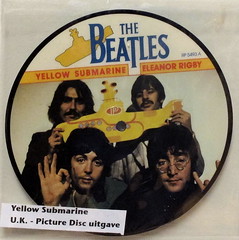
Beatles Museum AlkmaarImage by FaceMePLS via Flickr

“I used to think that anyone doing anything weird was weird. I suddenly realized that anyone doing anything weird wasn’t weird at all, and it was the people saying they were weird that were weird.” Paul McCartney
What makes you, you?

What makes normal, normal?

What if "normal" just another word for boring? 


I love Lisa Durff’s cat in the hat and the funny avatars of some people. There are those who love virtual worlds and others who just love to banter on Twitter. We all bring something different to the table.


My Dad has always told me about criticism that the only people who are criticized are those who are actually doing something. He’ll say to me, 


“Hey, you’ve arrived. If someone thinks you’re worth taking the time time criticize then you’re doing something that someone has noticed. Don't be so upset.”
 Daddy, when will I really listen?


The only consistent  thing you and I have in common between this side of the monitor and that one is that we’re different. Let’s celebrate the things that some would say make us “weird.”


In Camilla, they used to think that this blogging thing is “weird” - now not so much. But I did go stick a foursquare cling up in the front office and I’ve emerged into weird again. I don’t care. Part of me needs to be experimenting, learning, and pushing the envelope and learning! If that is weird , then so be it. That is me.


That is you too!


I agree with Paul McCartney - how often do you hear the extraordinary person ever take time to call another person weird?


It usually comes from those who want to keep others “in line” - status quo, wanting to do the same thing the same way forever. Don’t be different from us - don’t do anything new - that’s weird - come back over here with “us” and be “normal.” Stay the same. Don’t move forward.


Celebrate being YOU! If someone criticizes you or calls you “weird” - hats off - you’re in good company. 


Think of those in history who were very different - most often it is the punctuation marks - the exclamation points of history - the leaders, the creators who have this label and also the joy of leaving a legacy of change and leadership. (And certainly, some with negative legacies as well.)

“We all live in a yellow submarine.”

Who would picture that as a great song - kinda weird? 


Nope. Not after McCartney and his Beattle Buddies sang it. No longer weird. 


After you sing your tune and people see how it is put together, you might not be weird either! You might just be a visionary.

(Oh, by the way, Paul McCartney has written his first ballet, to debut in September.)

5 Ways to be Weird (in a good way ;-)

  1. Break your routine. Go somewhere different. Go outside when you usually go inside. Eat a different kind of food.
  2. Associate with people who are different than you. Find someone who is not in your “circle of friends” this week and spend some time getting to know him/her. Ask him about his childhood. Ask her about her favorite things to do. Listen.
  3. Find something that inspires you. Search for your favorite creative pasttime on Youtube and learn something new.
  4. Do something creative. Art. Poetry. A Blog. Tweet a haiku. Take 15 minutes to create something out of the ordinary. Take a photograph.
  5. Turn off the technology. Take an hour, a day or a week and turn it ALL off. All of it. TV. Radio. (did I just say radio - who listens to that any more?) Cell phone. Computers. Twitter. All of it. Go somewhere to be alone without it. Or just sit in your house Clear your mind and think. Use a mindmap or your journal or whatever to just think about your life, something creative, anything. Just take a mental vacation. Tackle something you’ve been wanting to spend time thinking about. Just be. 

    So, you say you "can't" turn it off. Let me ask you - if it is so important who is going to answer your phone when you die? Well, as the book I'm reading The Way We're Working Isn't Working says that people who take vacations live longer AND actually get better performance reviews. The more vacation they take, the higher the reviews!

To Zero
To finish up, I dedicate this post to a dear, talented, super bright someone I know that has named himself "zero." He thinks that everything multiplied by zero makes zero, but what he doesn't know is that people like him make others better and lives more interesting. 


When I have a student like him - he takes my 1 and ads a zero on the end to make the interest level in my classroom into a 10! He takes me to a whole new place!


Often people who think they are zeroes are just that - they take us to new places!!


Letter to my Zero
My dear zero, I identify with you because here are times in my life, more recent than you might think, that I thought I was a zero too. Celebrate that you are different and be who you are. You are dear, smart, and amazing and this too shall pass. I pray that I can be a magnifying glass for your soul to see the talent and wonder you bring into this world. You take me to new places.


Find the Zeroes - Help them see their 10-ship
Teachers, remember your noble calling. Look for the student who names himself "zero" and find what makes him/her great. YOU can and should do it. This is your noble calling. No one will ever pay you enough nor understand that this calling isn't a job it is the mission of your very soul. It is what you are put on this earth to do. 


Love those kids in your classroom. They are your legacy and no, not a one of them is a zero. 

You're not either. You may be tired. You may be disheartened. If you are, your emotions are LYING to you. YOU, my friend, are a vital link to our future!! You are the nobility of the modern generation - ACT like it!


In fact, if you're a teacher, educator, principal, IT director, parent volunteer - anyone giving their life to this generation - you're a perfect 10 to me!


Remember your noble calling!
    Enhanced by Zemanta

    • Digg
    • Del.icio.us
    • StumbleUpon
    • Reddit
    • RSS

    The Washington Teacher Responds To Allegations

    I do hope that as readers of my blog that you will read today's Washington Post's article in which I have responded to allegations recently made by the Washington Teachers' Union President, George Parker. I encourage all of you to focus on the larger issues at hand that impact teaching and learning.


    Rather than accept personal responsibility for not having negotiated a union contract over the past two years as the chief negotiator, George Parker scapegoats union members while using members dues monies in order to do so. As many of you may be unaware, Mr. Parker shared with all WTU Building Representatives that negotiating a contract with Chancellor Rhee is an elusive proposition. In Parker's words to city-wide Building Reps. in an August 29 meeting at AFT, the real reason there is no teachers contract proposal is because as he stated there were 4 sticking points that prevented him from finalizing our teachers' contract proposal with Rhee. Going to impasse was an option that Parker reiterated to members was a real possibility for the Washington Teachers' Union.


    Please be mindful that as we face a possible reduction in force or outright termination of teachers, now is not the time for teachers and concerned others to be at odds with one another. This divide and conquer mentality is counterproductive for all of us.


    I thank many of you for your kind words, emails of enouragement and support, text messages and phone calls on this subject. I encourage all of us to stay informed about what is happening on our educational landscape. I remain committed to the transparency of our union and providing all of you with relevant information as I learn of it as I believe that information is power. I have never at any point violated union confidentiality because there is no confidentiality agreement binding me nor teacher members of our negotiations team.

    In solidarity,
    Candi Peterson
    (The Washington Teacher)


    Rhee, Union May Be Close to Deal
    Chancellor Might Drop New Pay Idea To Get Other Teacher-Removal Powers

    By Bill Turque
    Washington Post Staff Writer
    Friday, September 11, 2009

    D.C. Chancellor Michelle A. Rhee and the Washington Teachers' Union are close to an agreement that would give the District more power to remove ineffective teachers, but both sides say the negotiations could still collapse, and the union's president places the chances of actually closing a deal at no better than 50-50.

    Neither Rhee nor Washington Teachers' Union President George Parker would elaborate on the unresolved issues, citing a confidentiality agreement. Interviews in recent weeks with sources on both sides of the bargaining table emphasize that nothing is final and that any agreement would require the approval of teachers. But they also say that the deal taking shape has evolved substantially over the past year, with both Rhee and the union poised to yield ground on key issues.

    Gone, for example, is the two-tiered, "red-and-green" salary plan that garnered Rhee national attention when she unveiled it last summer. It would have paid some teachers as much as $130,000 annually -- with help from private foundations -- but required them to relinquish tenure protections for a year to qualify for the top pay scale, exposing them to dismissal without possibility of appeal. Gone also, city and union sources say, is Rhee's attempt to weaken tenure provisions as they are currently written, which grant teachers with at least two years' experience due-process rights in the event they are fired.

    The nearly two-year negotiations are widely viewed as a potentially precedent-setting showdown between an aggressive new generation of urban education leaders, led by Rhee, and the American Federation of Teachers, WTU's politically potent parent organization. Although the major players decline to disclose details, they agree that their bargaining has reached the endgame.

    "There are a few very critical issues that both sides have very strong opinions about," Parker said in an interview Wednesday. "The question is whether we can craft language that both sides can live with. We're at 50-50."

    Rhee said the two sides are "very close" and characterized the talks as "down to a couple of smaller issues."

    "Would either side say it is definitely going to happen? No," she said in an e-mail Wednesday. "However, we're further than we've been."

    The pay package under discussion calls for a 20 percent increase over five years, including 3 percent retroactively for each year teachers have worked without a contract since it expired in September 2007. Under the terms being discussed, teachers with good records would be eligible to earn extra money under a pay-for-performance program that would begin in 2010.

    Tenure protections are likely to remain in place despite Rhee's outspoken criticism of the provisions as a major obstacle to reform. As recently as July 5, she told an audience at the Aspen Ideas Festival: "Right now, the culture within education and within the teaching ranks is once you have tenure, you have a job for life. I believe that mind-set has to be completely flipped on its head and that we have to move out of the idea that a teaching job is a right. . . . And unless you can show you are doing positive things for kids, you cannot have the privilege of teaching."

    But Rhee is close to securing other new powers that would allow her to eventually remove ineffective teachers from classrooms. The proposal, first reported by teacher and WTU trustee Candi Peterson in her "Washington Teacher" blog, would allow the District to remove teachers from schools -- because of closure, consolidation, declining enrollment, budget cuts or takeover by an outside organization -- with minimal regard for seniority. Under current rules, teachers with the least amount of service are "excessed" first.

    Under the proposal, teachers would be cut according to a formula that gives greatest weight to the previous year's performance evaluation, "unique skills and qualifications" and other contributions to the school community. Length of service would be weighted the least.

    The proposal would also give principals more latitude to select staff from the pool of cut teachers. Currently, teachers in that group who don't find spots are assigned to schools by the school district's human resources department. If there are more excessed teachers than open slots, teachers at other schools can be bumped from their jobs on the basis of seniority.

    Under a proposed "mutual consent" provision, principals would have more power to pick and choose teachers. Teachers who failed to find new assignments would have three options. They could remain on the payroll for a year, accepting at least two spot assignments as substitutes or tutors or in some other support role. If they can't find a permanent job after a year, they would be fired. Teachers could also choose to take a $25,000 buyout or, if they have at least 20 years' service to the city school system, retire with full benefits.

    The proposals have triggered new tensions within the union's leadership. Executive Vice President Nathan Saunders, a longtime critic of Parker's, said the proposals all but eliminate job security for teachers.

    "This contract looks to be another approach to diminishing teachers' employment rights," Saunders said.

    Peterson's decision to publish draft documents from the contract negotiations drew an unusual public rebuke from Parker, who sent a letter and a voice mail message to members denouncing her for having "maliciously undermined" the confidentiality of the talks.

    Peterson, who said she is not bound by any confidentiality agreement, said teachers have grown frustrated with the lack of information available about the protracted negotiations.

    "He's promised to tell members about the contract, but he never follows through," she said.

    Posted by The Washington Teacher


    • Digg
    • Del.icio.us
    • StumbleUpon
    • Reddit
    • RSS

    Smart Aid for Africa

    Mired in grinding poverty and social destitution, Africa cries for help. A cacophonous galaxy of rock stars, anti-poverty activists, and heads of state are calling on the G-8 countries to cancel Africa’s $350 billion crippling foreign debt and double aid to the continent. British Prime Minister Tony Blair will make aid to Africa the centerpiece in Britain's presidency of the G-8 meeting in Gleneagles, Scotland in July. Live 8 is planned for July 2. After meeting with President Bush on June 10, modalities are being worked out to cancel at least $34 billion in debt of 27 of the world’s poorest nations, mostly African. Will this African Marshall Aid Plan work?

    Africa’s plight follows a ten-year attention deficit cycle. Every decade or so, mega-plans are drawn up and rock concerts held to whip up international rescue mission for Africa. Acrimonious wrangling over financing modalities ensues. Years slip by, then a decade later, another grand Africa initiative is unveiled. Back in 1985, there was Live Aid and a “Special Session on Africa” held by the United Nations to boost aid to Africa. Then in March 1996, the U.N. launched a $25 billion Special Initiative for Africa. In September 2005, the plight of Africa will again take center-stage at a U.N. conference with clockwork precision. Expect another major initiative for Africa in 2015.

    Helping Africa of course is noble but has now become a theater of the absurd – the blind leading the clueless. A recent IMF study estimated that Africans in the diaspora remit $32 billion annually back to Africa, with the main destinations being Ghana, Nigeria, and Kenya. About $7 billion is sent to southern Africa (Ghana News Agency, Accra, May 31, 2005). The amount Africans abroad remit back exceeds the $25 billion Tony Blair seeks to raise.

    Nigerian President Olusegun Obasanjo says corrupt African leaders have stolen at least $140 billion (£95 billion) from their people since independence. The World Bank estimates that 40 per cent of wealth created in Africa is invested outside the continent. Even the African Union, in a stunning report last August, claimed that Africa loses an estimated $148 billion annually to corruption – or 25 percent of the continent's Gross Domestic Product (GDP). Rather than plug the huge hemorrhage, African leaders prefer to badger the West for more money. And the West, blinded by its own racial over-sensitivity and guilt over the iniquities of the slave trade and colonialism, obliges. This is the real tragedy of Africa.

    Between 1960 and 1997, the West pumped more than $450 billion in foreign aid – the equivalent of four Marshall Aid Plans – into Africa with nothing to show for it. Contrary to popular misconception, foreign aid is not free but a soft loan. Outright debt relief and massive inflow of aid without any conditionalities, safeguards or monitoring mechanisms is absurd. It is akin to writing off the credit card debt of a drunken sailor and allowing him to keep the same credit cards. No African government has been called upon to give a full public accounting of who took what loan and for what purpose since many of Africa’s foreign loans taken in the past were misused and squandered. No government official has been held accountable; instead, irresponsible past borrowing behavior is being rewarded.

    More distressing, much of the new aid money will flow directly into an African government budget – a huge black maze of vanishing tax receipts, extra-budgetary expenditure items, perks and off-budget “presidential privy accounts,” redolent with graft, patronage and waste. Over the past few decades, African budgets have careened out of control. State bureaucracies have swollen, packed with political supporters. Back in 1996, 20 percent of Ghana's public sector workforce was declared redundant by the Secretary of Finance and Guinea’s 50,000 civil servants were consuming 51 percent of the nation's wealth. In Kenya, civil service salaries take up half the budget; in Uganda, it is 40 percent. Zimbabwe has 54 ministers; Uganda with a population of 35 million has 70, while Ghana, with a population of 22 million, has 88 ministers and deputy ministers. With bloated bureaucracies, soaring expenditures and narrow tax bases, budget deficits have soared.

    They are covered with World Bank loans and foreign aid (Ghana’s budget is 50 percent aid-financed and Uganda’s is 60 percent). If the aid is insufficient, the rest of the budget shortfall is financed by printing money. Even when is aid available for “budgetary support”, there is no guarantee that it will be used productively to generate a return to repay the soft loan. It could well be “consumed” when it pays for the salaries of civil servants. Writing off Uganda’s debt does not eliminate the aid dependency. In fact, when the World Bank canceled $650 million of Uganda’s debt in 1999, the first item President Yoweri Museveni purchased was a new presidential jet!


    British Prime Minister thinks he can cajole or browbeat African leaders into curbing corruption and ensuring that resources released by debt relief are put to some good use – such as increased spending on education and health care. But the push for good governance and reform must come from within – from African civil society groups, organizations and the people. However, in country after country, chastened by diabolical restrictions, these groups have no freedom or political space to operate.

    Carlos Cardoso, an investigative journalist, was murdered in November 2000 for uncovering a bank scandal in which about $14 million was looted from Mozambique's largest bank, BCM, on the eve of its privatization. The official in charge of banking supervision, Antonio Siba Siba, was also murdered while investigating the banking scandals. Such was also the fate of Norbert Zongo, a popular journalist in Burkina Faso, who was gunned down on Dec 13, 1998, while investigating official corruption. In September 2001, President Isaias Afwerki closed down all the independent media and arrested its staff, quashing calls for democratic reforms. In all, the government shut down eight private newspapers and arrested its journalists, picking them up in their newsrooms and homes and from the streets. They were held in a central jail until April, 2002, when they threatened to begin a hunger strike to protest their detention. They were then transferred to an undisclosed location.

    In neighboring Ethiopia, President Meles Zenawi, a member of Tony Blair’s Africa Commission, just held fraudulent elections. Anticipating public outrage, he banned street demonstrations for one month and assumed full control of the country’s security forces. When the opposition rallied to protest the results dribbling in, the police opened fire, killing 26; opposition leaders have been placed under house arrest. Witness the election machinations in Egypt.

    The paucity of good leadership has left a garish stain on the continent. Worse, the caliber of leadership has distressingly deteriorated over the decades to execrable depths. The likes of Charles Taylor of Liberia and Sani Abacha of Nigeria even make Mobutu Sese Seko of formerly Zaire look like a saint. In an unusual editorial, The Independent newspaper in Ghana wrote: "Most of the leaders in Africa are power-loving politicians, who in uniform or out of uniform, represent no good for the welfare of our people. These are harsh words to use on men and women who may mean well but lack the necessary vision and direction to uplift the status of their people (The Independent, Ghana, July 20, 2000; p.2).

    The crisis in leadership remains a major obstacle to poverty reduction and has many manifestations. It is characterized, among others, by the following dispositions and failings: The "Big Man" syndrome, subordination of national interests to personal aggrandizement, super-inflated egos, misplaced priorities, poor judgment, reluctance to take responsibility for personal failures, and total lack of vision and understanding of even such basic and elementary concepts as "democracy," "fairness," "rule of law," "accountability," and "freedom" -- among other deficiencies. In some instances, the leadership is given to vituperative utterances, outright buffoonery, stubborn refusal to learn from past mistakes, and complete absence of cognitive pragmatism.

    Believing that their countries belong to them and only them only, they cling to power at all costs. Their promises are worth less than Al Cappone’s. They stipulate constitutional term limits and then break them: Angola, Chad, Gabon, Guinea, and Uganda. African leaders themselves drew up a New Economic Partnership for Africa’s Development (NEPAD) in 2001, in which they inserted a Peer Review Mechanism (PRM), by which they were to evaluate the performance of fellow African leaders in terms of democratic governance. What happened? To be fair, they acted in reversing the “military coup” in Togo in February but went on vacation when elections were stolen in Zimbabwe and Togo.

    Ask them to cut bloated state bureaucracies or government spending and they will set up a “Ministry of Less Government Spending.” Then there is the “Ministry of Good Governance” (Tanzania). They set up “Anti-Corruption Commissions” with no teeth and then sack the Commissioner if he gets too close to the fat cats (Kenya) or issue a Government White Paper to exonerate corrupt ministers (Ghana in 1996). To be sure, multi-party elections have been held in recent years in many African countries but the electoral process was so contumaciously manipulated to return incumbents to power. Four such “coconut elections” have so far been held this year: Zimbabwe, Togo, Congo (Brazzaville), and Ethiopia.

    Ask them to place more reliance on the private sector and they will create a Ministry of Private Enterprise (Ghana). Ask them to privatize inefficient state-owned enterprises and they will sell them off at fire-sale prices to their cronies (Uganda). Or ask them to move a foot and they will demand foreign aid in order to do so. In 2003, some 30,000 ghost names were discovered on the payroll of the Ministry of Education, costing the government $1.2 million a month in salaries heisted by living workers. When Ghana demanded foreign aid to purge the payroll of these ghost names, Japan coughed up $5 million.

    The reform process has stalled through vexatious chicanery, willful deception, and vaunted acrobatics. Only 16 out of the 54 African countries are democratic, fewer than 8 are “economic success stories,” only 8 have a free and independent media.

    No amount of debt relief and increased aid will help Africa until Africa cleans up its own house. But the leadership is not interested in reform. Thus, without new leadership and genuine reform, debt relief and increased aid would compound Africa’s problems and more African countries will implode. The continent is stuck in a veritable conundrum. What can Western donors do?

    Smart aid would do one of two things. One, bypass the vampire state and target the people, who produce Africa’s real wealth. An African economy consists of three sectors: the traditional, informal, and the modern sector. The people who produce Africa’s real wealth – cash crops, diamonds, gold and other minerals – live in the traditional and informal sectors. Meaningful development and poverty reduction cannot occur by ignoring these two sectors. But in the 1960s and 1970s, much Western development aid was channeled into the modern sector or the urban area, the abode of the parasitic elite minority. Industrialization was the rage and the two other sectors – especially agriculture – were neglected. Huge foreign loans were contracted to set up a dizzying array of state enterprises, which became towering edifices of gross inefficiency, waste and graft. Economic crises emerged in the 1980s and billions in foreign aid money were spent in an attempt to reform the dysfunctional modern sector. Between 1981 and 1994, for example, the World Bank spent more than $25 billion in Structural Adjustment loans to reform Africa’s dilapidated statist economic system. Only 6 out of the 29 “adjusting” African countries were adjudged to be “economic success stories” in 1994. Even then, the success list was phantasmagoric. Ghana, declared a “success story” in 1994, is now on HIPC life-support system.

    At some point, even the most recklessly optimistic donor must come to terms with the law of diminishing returns: That pouring in more money to reform the modern sector is futile. Greater returns can be achieved elsewhere – by focusing on the traditional and informal sectors.

    Second, smart aid would empower the African people (African civil society groups) to monitor how the aid money is being spent and to instigate reform from within. Empowerment requires arming the African people with information, the freedom and the institutional means to unchain themselves from the vicious grip of poverty and oppression.

    Africa already has its own Charter of Human and Peoples’ Rights (the 1981 Banjul Charter), which recognizes the right to liberty and to the security of his person (Article 6); to receive information, to express and disseminate his opinions (Article 9); to free association (Article 10); to assemble freely with others (Article 11); and to participate freely in the government of his country, either directly or through freely chosen representatives in accordance with the provisions of the law (Article 13). Though the Charter enjoins African states to recognize these rights, few do so. When President Thabo Mbeki called on June 3, President Bush should have handed him a signed copy of this Charter to be delivered to President Robert Mugabe of ‘Zimbabwe.

    The institutional tools Africans need are an independent central bank (to assure monetary stability and stanch capital flight), an independent judiciary (for the rule of law), a free and independent media (to ensure free flow of information), an independent Electoral Commission, an efficient and professional civil service, and a neutral and professional armed and security forces.

    Recent events in Ukraine (November), Ghana (December), Zimbabwe (March), Lebanon (April), and Togo (April) unerringly underscore the critical importance of these institutions. Without them, President Bush’s plan to spread democracy may stall. Democracies are not built in a vacuum but in a “political space” in which the people can air their opinion, petition their government without being fired on by security forces and can choose who should rule them in elections that are rigged by electoral commissions packed with government goons.

    On May 13, thousands of Egyptian judges, frustrated by government control over the judiciary, agitated for full independence from the executive in their oversight of the electoral process. “The institutions are presenting Mr. Mubarak with an unexpected challenge from within, one that will be difficult to dismiss. The fact is, major changes in this country are going to come out of those institutions, not from the streets," said Abdel Monem Said, director of the Ahram Center for Strategic Studies in Cairo.

    In the past 24 years, Egypt has received more than $55 billion in U.S. aid in direct government-to-government transfers. Smart aid would assist civil society in instigating institutional reform. Since this approach carries some risks, the same objective can be achieved by funneling aid through diaspora Africans and their organizations, as was the case with Soviet dissidents during the Cold War.

    Africa’s long term growth prospects do not lie in rock concerts and increased dependency on Western aid but on the ability of the African people or civil society groups to instigate reform from within. Assistance to such groups – both at home and abroad – constitutes much smarter aid to Africa than all the LIVE AID concerts Bob Geldof can organize.
    ______________

    The writer, a native of Ghana, is a Distinguished Economist at American University and President of the Free Africa Foundation. His new book is Africa Unchained (Palgrave/MacMillan). This article is culled from his May 10 testimony before the Standing Committee on Foreign Relations of the Senate of Canada.

    • Digg
    • Del.icio.us
    • StumbleUpon
    • Reddit
    • RSS

    Vote for the Candidate with the Sense of Humor

    Not to over analyze things, but sometimes the most disturbing thing about liberals is their sense of humor. They refuse to laugh at themselves. They will laugh at others and make fun of other people, but in my experience, liberals laugh at themselves a lot less than conservatives do. Maybe it is because conservatives know they are not God, whereas liberals think they are?

    This election season, SNL has ripped into the Republicans over and over again. SNL refuses to rip into the Democrats, knowing that to do so would provoke the wrath of the Chosen One, and that they might get death threats like those now coming in to Joe the Plumber. But SNL has ripped the Republicans time and time again, usually in a very non-clever way- laugh at how dumb they are, laugh at how stupid they are, etc.

    Even so, Governor Palin went on SNL last week and Senator McCain did this week. I thought Palin's appearance wasn't that funny, and felt like SNL was using her by having her on the show. But with McCain, they were a lot more respectful, and consequently, McCain's appearance actually was pretty funny. Watch it here.

    When I was reading the coverage of it over on the AP story, I came across this quote:

    Obama said Sunday that McCain was funny. Addressing supporters in Ohio, he said the performance was an example of how politicians can fight on the issues but bring civility to politics by having a sense of humor.

    Yes, McCain was once again setting an example how politicians can be civil. Obama likes to talk a lot about leadership, bipartisanship, civility- but never is there an example of him doing those things himself. America is about to elect a guy that talks admiringly about other people doing things that he doesn't do.

    Vote for the person with a sense of humor- straight-ticket Republican. It is a better, more funny world in which to live.

    • Digg
    • Del.icio.us
    • StumbleUpon
    • Reddit
    • RSS

    Rhee's Legacy Of No Accountability

    There is a double standard within Chancellor Michelle Rhee's administration. What we are seeing is a chancellor who is not being accountable when it matters most to be accountable. Most of us can agree with the Post writer who said that Rhee overplayed her hand this time in laying off hundreds of teachers. News releases show teachers recounting horror stories of their dismissals despite years of positive performance evaluations. Most have yet to be informed about the real reasons for their imminent layoffs. Students following the lead of their teachers and school counselors report that these untimely dismissals have led to changes in class schedules, dropped classes and worries about their education. Despite unending news coverage of recent layoffs, Rhee digs her heels in and refuses to provide data to substantiate her claims of an education budget shortfall now down to 12 million dollars from earlier reports of 40 million.


    I wanted to share an email that I received from a newly hired DC teacher on her dismissal from DC public schools. Her words illustrate better than I can how DC students are the real victims in this tragedy.


    “After devoting the past six years of my life earning a Bachelor’s and Master’s Degree in Early Childhood Education, I applied to the DC Public School System (DCPS), hoping to make a difference in the lives of students living in urban areas. I was especially interested in DCPS given its efforts to implement an IMPACT program throughout each school to maximize the educational experience and better students’ test scores. Being a recent graduate, I was fortunate to have the IMPACT program implemented in my own curriculum.

    I was delighted to receive a call from offering me the position of 3rd grade teacher. I eagerly signed my contract and retracted all other outstanding applications. I quickly set forth preparing myself for this fantastic opportunity, which involved a number of major investments including signing a new lease, moving into my apartment, and purchasing a car. Readying myself for the start of classes, I also acquired my DC teaching license, school supplies, “extras” to help incentivize my students, and all the bells and whistles needed to create a welcoming classroom environment.


    Of course, no amount of effort fully prepares oneself for a new life experience. Indeed, the past five weeks of teaching have been eye-opening for me. I quickly realized that the students in my class needed tremendous support to ensure that they were emotionally and intellectually ready for the challenges of third grade. I saw this as an exciting opportunity– one that I felt well qualified to fulfill with the academic and hands-on experience I have immersed myself in for the past six years. Translating my knowledge to meet the needs of these students – children who have lived difficult lives – required nothing short of complete dedication. This has meant starting early each day and working into the evening hours to write and review lesson plans, focusing on the needs of the entire class and the individual needs of each student.


    On Friday afternoon, I learned that I had been laid off. Apparently in a last-minute attempt to balance the budget, Michelle Rhee and the District of Columbia opted to lay off 200 or so teachers during the most critical period of the academic year – just when students are becoming acclimated to their new environment. My immediate concern was what would happen with my students because I was the only third grade teacher at my school. My principal has informed me that some students will move up to fourth grade and some will move down to second grade. In these tough economic times, the solution should not be to provide a poor educational experience for these children who, arguably, need extra attention. Simply assigning them to another grade greatly degrades the educational opportunity for my third grade students and the classes into which they are integrated. While I am obviously upset with losing my job, many more individuals will suffer due to this shortsighted decision.

    We live in a great city in a wonderful country. We must remain competitive and teach our students at the highest standards. The decision to lay teachers off weeks into the school year is disruptive to the lives of the children and dishonest to the teachers who made a commitment to DC Public Schools. I am floored by this decision, and I cannot help but to draw conclusions about the long string of mishandlings that must have led to this situation. I have to ask, what is Ms. Rhee’s accountability in the situation? "

    Posted by The Wash. Teacher featuring Candi Peterson, blogger in residence

    • Digg
    • Del.icio.us
    • StumbleUpon
    • Reddit
    • RSS

    Kenyan Stock Market

    The Guardian reports on the Kenyan Stock Market:

    Kenya has gone share crazy. The incredible performance of the Nairobi Stock Exchange (NSE) - which is next to the public auditorium and provides the live share-price feed - is the talk of the country. From 2002 to 2007, the main NSE index rose 787% in dollar terms, according to Standard & Poor's, the investment research firm, making it one of the world's best-performing markets.

    via Investing in Africa

    • Digg
    • Del.icio.us
    • StumbleUpon
    • Reddit
    • RSS

    David Sedaris Live at Carnegie Hall

    At David Sedaris' sold-out performance at Carnegie Hall he debuted five new stories, all captured on this CD. They include a parrot who mimics an ice maker, lovers quarrelling over a rubber hand, and a Santa Claus who moonlights from his job as bishop of Turkey.


    Click here to buy from Amazon

    • Digg
    • Del.icio.us
    • StumbleUpon
    • Reddit
    • RSS