RSS
Menampilkan postingan yang diurutkan menurut relevansi untuk kueri manufacturers. Urutkan menurut tanggal Tampilkan semua postingan

More on Clustering - From Tailors to Mini Manufacturers

A paper by John E. Akotena and Keijiro Otsuka on Kenyan Garment clusters shows:

...that the well educated and highly socially networked tailors who are capable of producing a certain product quality standard are likely to link up with traders to become mini-manufacturers over time. This suggests that transactions with traders enable mini-manufacturers to outperform tailors, thereby contributing to the transformation of the mode of industrial production in developing economies.
Photo courtesy of Donkey Crossing
Reblog this post [with Zemanta]

  • Digg
  • Del.icio.us
  • StumbleUpon
  • Reddit
  • RSS

Why are My Colour Mixes Dirty?

Colour mixes in oil painting could end up looking dirty if the colour theory is poorly understood. The most common problem occurs when painting shadows, silhouettes or trying to darken a bright colour. The resultant colour mix ends up looking muddy and lifeless which could ruin a painting. How can muddy colour mixes be avoided, and how can this problem be put right?

The Causes of Muddy Colours

Understanding the cause of dirty colours will help find a solution. The following bad practices will create dirty colour mixes:
  • Trying to darken a colour with black
  • Using more than four colour within a colour mixture
  • Overworking a painting or fiddling too much within a particular area
  • The inclusion of too many earth colours, ochres and greys within the artist’s palette
  • Introducing too much dark colour in a colour mix at once and trying to lighten it again with white, causing the colour mix to lose life
How to Avoid Dirty Colour Mixes

The following simple tips on colour mixing will help prevent muddy colours:
  • Dispense with black altogether
  • Try to use no more than three, or at the most, four pigments to attain a colour mixture
  • Darken a colour with its complimentary colour instead of black or a dark colour. The complimentary colour is the opposing colour on the colour wheel to a given colour. Red’s complimentary is green; yellow’s complimentary is violet
  • Try not to overwork the painting. Allow streaks of colour to remain in the brushwork to retain its vibrancy
  • Don’t over-mix a colour, or it will end up as a solid lifeless block
Darkening Colours for Shadows

A summer’s sky will appear darker at the zenith than at the horizon. Darkening blue can be achieved by introducing a little violet or even crimson into the blue mix, as red is an opposing colour to blue on the colour wheel. Introducing this complimentary colour in increments will help get the best result. Similarly, darkening green foliage can be achieved by introducing a little red.

Painting shadows as pools of black or dark brown is a common mistake and will kill the life out of any painting. Looking closely will reveal a multitude of colours within shadows, including crimsons, greens and violets.

A Cure for Dirty Colour Mixes with Tonking

Confident Color: An Artist's Guide To Harmony, Contrast And Unity
click to buy from Amazon
A muddy splodge on a painting cannot be put right. The best thing to do is start again. This does not mean starting the painting again. The area can simply be wiped off or carefully blotted out by a process known as “tonking.” This is an oil painting technique where the oil paint is lifted off by placing a newspaper over the area concerned, pressing it down and lifting it off. This can be repeated several times until little of the paint can be lifted from the painting.

With the paint lifted off, the area can be wiped gently with a clean rag to rid of any oily residue, and allowed to dry over a day or two. The area can then be begun again.

Essential Art Materials to Prevent Dirty Colour Mixes

Oil pigments in primary colours, which will be labelled differently according to the manufacturers. In oil, this will be pthalo blue, permanent rose and cadmium yellow (pale). In other mediums, this could include the word “process” or “permanent” with the colour label, such as “permanent yellow.” Winsor & Newton and Daler Rowney are established and trusted manufacturers in oil painting pigments.

Related Articles on Colour Mixing

  • Digg
  • Del.icio.us
  • StumbleUpon
  • Reddit
  • RSS

DNC Chair Wasserman Shultz: Another Bizzaro World Invader?

An invasion of America is taking place, and every day it is becoming more clear that the fabric of space-time has been ripped open and denizens from Bizarro World are settling here and joining the Democratic Party. The evidence of this can be seen in the increasingly disconnect between what Democrats say and what they do and the fact that they no longer even pretend that 2+2=4. In Bizarro world, society is ruled by the Bizarro Code, which states that you must do the opposite of all normal things, and when residents of Bizarro world come to America and join the Democratic Party, you can see that they still operate under this code, stating the exact opposite of the truth in their words and deeds.

Take for example new Democratic Party Chairwoman Representative Debbie Wasserman Shultz. Chosen by the Democratic Party to represent their party, she has recently stated two strong opposites- one, that Republican presidential candidates supposedly favor foreign auto manufacturers, and two, that the GOP agenda is "anti-women" and "a war on women". Let's take a look at those two statements and see how they are in reality the exact opposite as stated.

First, the accusation that Republican presidential candidates supposedly favor foreign auto manufacturers is remarkable coming from someone who drives a 2010 Infiniti FX35, a Japanese car whose parent company is Nissan, another Japanese company (and the car appears to be hers, since its license plate includes her initials).

On one hand you have Republicans, many of whom opposed the taxpayer-bailout of the domestic auto industries (for reasons ranging from comparative advantage, creative destruction, corruption in the process, unaccountability of the money, or lack of constitutional authority) but yet use their own personal money to buy domestic auto products. On the other hand, you have Democrats, who voted to use taxpayer money to bail out struggling domestic auto companies to subsidize rich investors (who had preferred stocks) and labor unions and yet used their own personal money to buy foreign made cars.

To me, it is clear that the person who makes the personal choice to support something supports it more strongly than the person who uses other people's money to support something while personally supporting something else.

Wasserman Shultz second point was that the GOP agenda is "anti-women" and "a war on women", but this is clearly not true as well. The Republican Party has several outstanding women candidates in office or running for President, at least on par with the Democratic women, and although Democrats hold a slight marginal edge in women voting, it is not large and is perhaps related to other factors other than gender.

Besides- if Democrats are unwilling to recognize that terrorists are at war with us or that Hamas/Hezbollah are at war with Israel, then I really don't think that they understand what the word 'war' means so that they can use it effectively in a sentence.

The Democratic Party Chair must simply be another Bizarro world refugee, saying the exact opposite of reality.

  • Digg
  • Del.icio.us
  • StumbleUpon
  • Reddit
  • RSS

The BRIC threat to Manufacturers

BRIC Countries (Brazil, Russia, India and China).Image via WikipediaA recent report from Cambridge University on the rise of BRIC manufacturers:

“highlights the threat to western business growth from a new breed of companies emerging onto the global stage.”
Quoting Zhang Ruimin, CEO of Haier:
“In the globalisation era, there are two categories of companies. One is the international company, and the other is the one taken over by the former group. There isn’t a third choice.” As a result, further rationalisations within industries are likely with the emerging multinationals often in the role of acquirer, but the targets will include MNCs (or parts of MNCs) as well as national and regional players...[continue reading]
The question then becomes when will we see the African EM manufacturer's join the race?
via Seeking Alpha
Zemanta Pixie

  • Digg
  • Del.icio.us
  • StumbleUpon
  • Reddit
  • RSS

I Can Never Mix the Colours I Want

In a bid to recreate the luscious greens of foliage, the artist may reach for any blue and green pigment and blend them together, but murky brown materialises. Hopes for a vibrant purple, as seen on grapes could be quashed when a blend of blue and red yields a dingy grey. In other cases, the colour is too garish, too dark or too wishy-washy or just doesn’t hit the mark. How can the artist mix any colour required for subject matter in painting?

Colour Theory in Art

The Language of Colour Explained
Rachel Shirley
If asked what the primary colours are, the automatic reply might be red, yellow and blue. However many pigments containing these labels contain other pigments. Lemon yellow, for instance, has a greenish cast. Cadmium red contains a lot of yellow. Ultramarine blue contains a lot of violet. Since Ultramarine is biased towards red, it would not be a fitting blue counterpart if a piercing green mixture was the objective.

The true definition of a primary colour is one that cannot be made by the mixture of two other colours. By this definition, magenta, yellow and cyan, as found in printing ink, is the most fitting answer, although no pigment can truly match the purity of filtered white light.

The Best Colours for the Artist’s Palette

Despite this, pigments closely approximating this purity exist on the market and which will produce clean secondary colours. Paint manufacturers use varying labels to denote these primary colours. Some may refer to them as “process” or “Winsor” colours. Gleaning colour charts and making comparisons with the primaries of printing ink is how I chose my primary pigments.

Cadmium yellow (pale) is a vivid yellow and is pretty close to the primary yellow of printing ink. Pthalo blue, like cyan, is a sharp blue, although is deeper in tone. Red is not in fact a primary colour, but a secondary colour for it can be achieved by mixing magenta with yellow. Magenta for this reason is a primary colour of an intense rose hue. In terms of oil pigment, resembles permanent rose, which will produce clean violets and indigoes.

Cadmiun yellow (pale), pthalo blue and permanent rose will enable the artist to mix just about any colour needed for painting. More accurate colour judgments can be achieved by examining three factors of the subject matter:
  • The colour temperature,
  • The degree of the colour
  • And the tonal value of the colour.
Colour Temperature in Painting

As well as the hue, observe the colour temperature of the object, as red can be warm or cool, as can blue. The warm blues found on a summer sky can be achieved by using ultramarine and white, or introducing a little cadmium red or burnt sienna into the blue mix. Cool blues, as seen in lake reflections can be achieved by introducing pthalo blue and a little burnt umber into the mix.

Degrees of a Colour

Of course, few objects are simply “red” or “purple”, but degrees of a hue. This involves toning down the colour with earth colours and neutrals. The subdued blues of distant mountains can be achieved by toning down blue with burnt sienna. Dusty pinks as seen on pansies can be recreated by adding a little burnt sienna, ultramarine and white with the red mix. When it comes to neutral pigments, many are not required. Burnt sienna and burnt umber are the only earth colours I include in my palette, as too many can often result in dirty and lifeless colour mixes.

Tonal Values of Colour

Colours can get in the way of what is light and dark. This interference can cause tones to be overlooked. To filter through this chromatic interference, half-close the eyes. This will break the setting down into areas of light, dark and mid-tones.

Color Mixing Bible: All You'll Ever Need to Know about Mixing Pigments in Oil, Acrylic, Watercolor, Gouache, Soft Pastel, Pencil, and InkRather than use black or dark grey to darken a colour, try mixing opposing colours, also known as the “complimentary colours.” The complimentary colour to a given colour can be found on the opposing segment on the colour wheel. The complimentary colour of magenta (not red), for instance is green; the complimentary colour of violet is yellow. Introducing a colour’s complimentary to a given colour will produce rich darks rather than dingy blacks.

An evergreen houseplant that harbours lots of shadows can be darkened with any colour on the opposing segment to green. In terms of pigment, this can be permanent rose, cadmium red or burnt sienna, depending upon the intensity and the colour temperature of the darks. Similarly, the shaded areas of a banana can be achieved by adding violet or any colour containing violet, (perhaps ultramarine, or a blend of pthalo blue and permanent rose) to yellow.

Accurate Colour Mixing for Painting

With the above in mind, the artist can recreate any colour with reasonable accuracy, but the real key is to observe the objects in front. Look for slight colour shifts in temperature, intensity and tone. Try out the colour mix on a scrap piece of card before applying it onto canvas. Lastly, look out for colour relationships. How does one colour of an object compare to another? Is it paler, softer, cooler, deeper? Keying in each area of colour with another in a still life will help the painting make sense.

Relevant Articles on Colour Mixing

  • Digg
  • Del.icio.us
  • StumbleUpon
  • Reddit
  • RSS

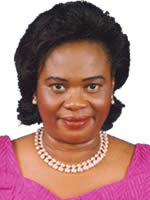
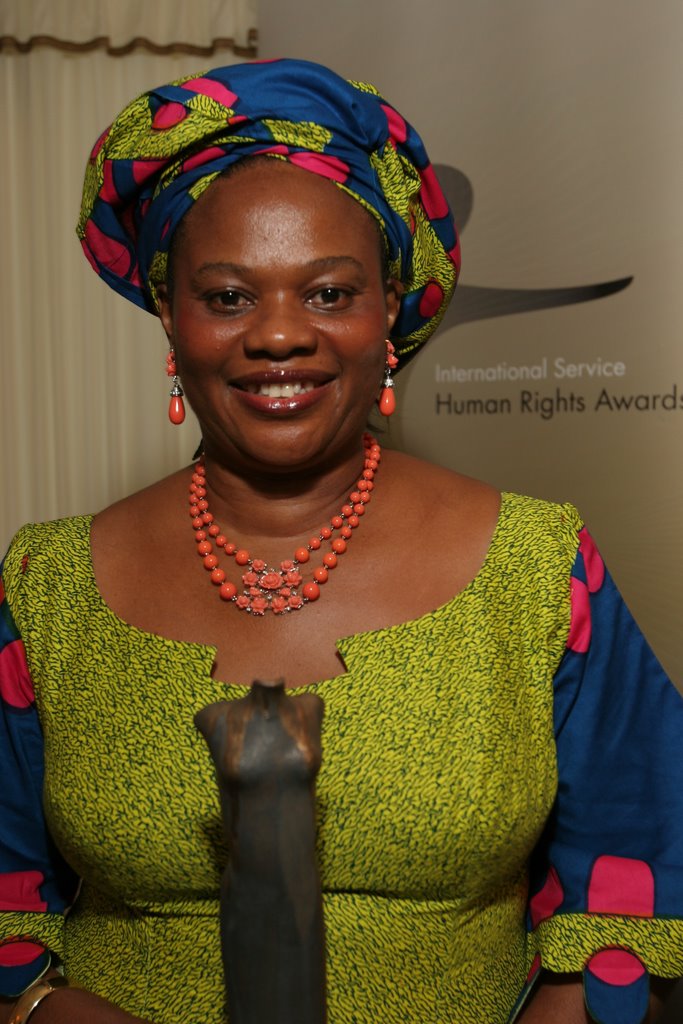
Africa's Women: Dora Akunyili

Dora Akunyili Director of Nigeria's NAFDAC "...has defied death threats and assasination attempts while tackling corrupt practices in the manufacturing, import and export of drugs, cosmetics and food products. Since taking up her position in April 2001, Dr Akunyili has earned nationwide respect for her persistence in prosecuting illegal drug traders and in imposing strict standards on multinational companies. In particular, she has pursued manufacturers and importers of counterfeit drugs, deemed to be a leading cause of deaths by stroke and heart failure in Nigeria...",Transparency.

  • Digg
  • Del.icio.us
  • StumbleUpon
  • Reddit
  • RSS

Micro-Entrepreneurs: Challenges of moving up the Ladder

Efam Dovi reports on the importance of access to credit for micro-entrepreneurs looking to ascend into manufacturing:

About 80 per cent of women-owned businesses are stuck at the “micro” level. They are unable to expand because they lack properly coordinated support, cheap and long-term credit and sufficient access to new technologies. They face poor infrastructure, low capacity and sometimes obstructive government policies

Christy Banya (a UNDP analyst)
notes that the banks appear more willing to give loans to importers of cheap products than to local manufacturers. The importers sell their produce quickly, at higher returns. But home-grown businesses require more time to turn a profit and to repay their loans, so the financial institutions shy away from them.
via African Renewal

  • Digg
  • Del.icio.us
  • StumbleUpon
  • Reddit
  • RSS

My Flowers Look Garish in My Paintings

The beginner’s floral artwork may portray flowers as having bright colours such as pinks, oranges and reds. The flower heads look flat and idealistic, the same flower head shapes echoing throughout the painting. In an attempt to give the flowers form, the artist may introduce black or dark brown into the colour mix, resulting in dirty colours.

Troubleshooting Floral Art

The culprit of an unsatisfactory oil painting of flowers will often result from the following practices:

  • Painting flowers with the preconception that flower heads always contain bright colours
  • Representing the foliage around the flowers with one green pigment, or a mixture of one blue and yellow throughout
  • Trying to darken a bright colour with black
  • Painting flowers with preconceptions about the shapes of the flower heads, resulting in an idealised flower shape
  • A profusion of too many bright colours may rob the painting of any focal points
  • A cheap artist’s selection box that does not contain the true primary colours is often insufficient to create all the colours required for flower painting, resulting in inferior colour mixes
  • Trying to paint flowers from memory, if the resource at hand is insufficient
The Secret to Painting Flowers with Realism

Dispelling beginner’s mistakes as described, will take the floral artist a long way towards painting more satisfactory botanical art.
  • Never try to darken a bright colour with black. It is better to darken a colour with its complimentary colour, which is the opposing colour on the colour wheel to a given colour. The complimentary colour of red, for instance, is green; the complimentary colour of yellow is violet.
  • Flower heads often contain sombre colours, such as dark earth colours and neutrals which can be seen if the flower heads are in shade
  • Fluorescent colours often seen when sun shines through petals can be emphasised if the background around the bright colour is dark
  • Applying a neutral-coloured wash of diluted acrylic paint prior to painting flowers will help the artist measure the tonal values of flowers, as opposed to applying bright colours straight onto a white painting surface.
  • Observing flowers out of their normal context, such as next to rusty tools or from an unusual viewpoint, such as from above, will help the artist get a fresh view of flowers.
  • Sensitive observation of the shape of flowers will often surprise. The robust shapes found in a painting of sunflowers, or the graceful loops found in the clematis deserves exploration
Oil Painting Mediums for Painting Flowers

How to Paint Roses and Other Flowers, Book No 130
click to buy from Amazon
Experimenting with different artist painting mediums will provide a multilayered feel to a painting of flowers. Mixing linseed oil into a colour mix and applying it over a dry area of paint will provide an effect like tinted glass. This oil painting technique is known as “glazing.” To emphasise texture, impasto medium can be mixed with the oil paint and applied onto the flower heads to make them appear to stand out of the painting.

Essential Art Materials for Floral Art

The primary colours must be included within the artist’s palette when painting flowers. These are labelled differently according to the paint manufacturers. Some include the word “process” or “permanent” with the hue name. In oil paint, permanent rose, cadmium yellow (pale) and pthalo blue will provide clean colour mixes.

White with a hint of burnt sienna will provide brilliant creams often seen in bedding plants. Viridian green, a garish green on its own, will provide beautiful greens if muted with burnt sienna, burnt umber or permanent rose. However, keen observation will reveal that any colour can be found in flowers, some of which will surprise.

Links on Painting Flowers

  • Digg
  • Del.icio.us
  • StumbleUpon
  • Reddit
  • RSS

Analysis of Obama's Speech: Straw Men and False Choices

Micheal Barone, writing for the Washington Examiner, from his article The Unhappy Warrior, best sums up President Barack Obama's much touted speech on jobs yesterday:

Barack Obama looked and sounded angry in his speech to the joint session of Congress. He bitterly assailed one straw man after another and made reference to a grab bag of proposals which would cost something on the order of $450 billion—assuring us on the one hand that they all had been supported by Republicans as well as Democrats in the past and suggesting that somehow they are going to turn the economy around. He called for further cuts in the payroll tax (which if continued indefinitely would undermine the case of Social Security as something people have earned rather than a form of welfare) and for a further extension of unemployment insurance (perhaps justifiable on humanitarian grounds, but sure to at least marginally raise the unemployment rate over what it would otherwise be). He called for a tax credit for hiring the long-term unemployed (unfortunately, these things can be gamed). He gave a veiled plug for his pet project of high-speed rail (a real dud) and for infrastructure spending generally (but didn’t he learn that there aren’t really any shovel-ready projects?). He called for a school modernization program (will it result in more jobs than the Seattle weatherization program that cost $22 million and produced 14 jobs?) and for funding more teacher jobs (a political payoff to the teacher unions which together with other unions gave Democrats $400 million in the 2008 campaign cycle). “We’ll set up an independent fund to attract private dollars and issue loans based on two criteria: how badly a construction project is needed and how much good it would do for the country.” Yeah, sure. Like the screening process that produced that $535,000,000 loan guarantee to now-bankrupt Solyndra. And Congress should pass the free trade agreements with Panama, Colombia and South Korea. Except that Congress can’t, because Obama hasn’t sent them up there yet in his 961 days as president.

Obama assured us that this would all be paid for. But as far as I could gather, he punted that part of it to the supercommittee of 12 members set up under the debt ceiling bill. He now blithely charges it with coming up with more than its current goal of $1.5 trillion in savings by Christmas. Oh, and he’s going to announce “a more ambitious deficit plan” that will “stabilize our debt in the long run”--11 days from now.

In the meantime, he called for higher taxes on “a few of the most affluent citizens”—as if this could pay for all the spending he’s been backing...

...Straw men took a terrible beating from the president. He assailed “tax loopholes” for oil companies, the chief one of which is that they are treated like other companies classified as manufacturers. The administration proposal is that the five largest oil companies shouldn’t be, because—well, because we want to get our hands on more of their money. Today’s Republicans, he gave us to understand, want to “eliminate most government regulations” and “wipe out the basic protections that Americans have counted on for decades.” And, he suggested, they would never have created public health schools or the G.I. Bill or research universities.

When Barack Obama says, “This isn’t political grandstanding,” you have a pretty good clue that that is exactly what it is. Lest anyone doubt that, consider this from the third-to-last paragraph. “You should pass it. And I intend to take that message to every corner of the country.”

In other words, this was a campaign speech...
When I asked my students what they thought of Obama's speech, they said it sounded good but that they wanted to see the details and felt that the price tag for this sort of 'jobs bill' was going to be way too high for our nation to afford. The students also thought that this sort of stuff has already been tried and did nothing to help and only added more debt to our nation- you see, young people frequently are concerned with the amount of debt that older people are dumping on them to live their wonderful lifestyles of leisure and retirement. Hearing comments like these give me hope for our future; on the other hand, my students are being trained to think and reason and look at things critically and are less apt to fall for the straw man and false choice rhetoric that has come to characterize the President's speeches.

  • Digg
  • Del.icio.us
  • StumbleUpon
  • Reddit
  • RSS

The Challenges of Informal Economies

In Foreign Affairs Nicolas van de Walle reviews Kate Meagher's new book "Identity Economics: Social Networks and the Informal Economy in Nigeria":

Within development circles, conventional wisdom has it that successful manufacturing sectors often develop in low-income countries thanks to identity-based social networks made up of producers working together. These networks are said to generate the social capital that can be used to overcome many of the shortcomings of underdevelopment. Meagher's careful study of two such networks in southwestern Nigeria -- of small, undercapitalized garment and shoe manufacturers -- suggests that the advantages for producers within the networks are being undermined by an increasingly dysfunctional state. Meagher shows that these networks, whose roots go back to the colonial era, bring in hundreds of millions of dollars in revenue and export their goods to states throughout West Africa. But in recent years, they have proved vulnerable to Asian imports and have largely failed to develop economies of scale, invest in new machinery, or generate new lines of production; these networks, it turns out, stifle innovation and consolidation, even as they protect their members. Informed by theory as well as sustained fieldwork, Meagher's study is a useful antidote to the purveyors of magic-bullet solutions for African development. It should be read by anyone interested in Africa's industrialization.
via Loomnie
Enhanced by Zemanta

  • Digg
  • Del.icio.us
  • StumbleUpon
  • Reddit
  • RSS

Why do My Art Brushes Wear Out so Quickly?

A mere few paintings after investing in costly fine art brushes such as Kolinsky sable or horse hair, the bristles splay, become brittle or lose their springiness. How can the artist make the art brushes last longer and therefore save money on art materials?

How to Make Art Brushes Last Longer

Durable Artist Brushes
Rachel Shirley
Having to purchase art brushes frequently will add to the cost of oil painting. The causes of art brushes wearing out too quickly are due to bad painting practices, which are:
  • Constantly using a thin brush of size 6 or smaller to cover a large area of oil painting.
  • Using a fine sable to apply paint onto a rough surface such as coarse canvas, dried impasto or a montage.
  • Being heavy-handed with the fine art bristles such as when scumbling, scrubbing on paint or pressing too hard.
  • Using cheap household turps or white spirits to clean the brushes.
  • Not cleaning the paint brushes properly at the end of the painting session and allowing a residue of oil paint to dry near the ferrule (the metal collar where the bristles meet the handle) causing the bristles to splay.
  • Allowing the paint brushes to dry bristle-end down, causing the hairs to lose their shape and damage the flags (the split ends on the bristles that allow the brush to hold more paint).
  • Buying poor quality art brushes or brushes that are unsuitable for oil painting such as watercolour brushes, which are not designed for heavy paint.
How to Save Money on Oil Painting Brushes

To avoid art brushes from unnecessarily wearing out quickly, the following advice on care of the art brushes will double or even triple the life span of the bristles.
  • Never use fine sables, such as kolinsky for impasto, rough paintwork or for covering large areas of a painting such as skies or water.
  • Reserve such an art technique for hog hair brushes or similar stiff brushes. Impasto brushes need not be purchased from art shops, but DIY stores at the fraction of the price. Household brushes can be used for covering large areas of an oil painting or for glazing.
  • Use sable brushes only for what they are designed for, which is fine detail, delicate oil washes and soft blending.
  • Never use household turps to clean art brushes. Not only are the odours powerful, the brushes will lose their natural oils and become brittle. It is best to use Sansador, Turpenoid or similar artist white spirit.
  • At the end of each painting session, clean the brushes thoroughly. Massage neat washing up liquid into the ferrule and run under a warm tap until the water runs clear.
  • Once clean, massage a little Vaseline into the bristles and press the hairs back into shape; in the case of round sables or riggers, to a point. Other nourishing agents such as conditioner or olive oil can also be used.
  • Store the brushes in a jar with the bristles pointing upwards.
  • It is false economy to purchase cheap oil painting brushes. Recommended art brush manufacturers such as Daler Rowney and Winsor & Newton will last longer and are worth the investment.
Tips on Using Oil Painting Brushes


Old Masters Brush Set- Eight Hog Bristle Brushes
Hog hair brushes
click to buy from Amazon
  Using just one or two brushes during a painting session will force the artist to frequently clean the bristles between colour mixing, causing unnecessary wear and tear. To avoid constant washing, use several brushes in one go. Reserve one brush for pales, another for darks and others for different colours. This will dispense with the need to constantly washing the brushes.

Tips on Art Brush Care

Buying fine art brushes such as sables can be costly, but with simple care the bristles will last longer. Reserving impasto and large glazes for stiff brushes such a hog hairs will save unnecessary wear and tear on sables which should be reserved for detail and blending. The brushes’ life-span can be further increased by cleaning them properly with artist agents and nourishing the bristles with Vaseline or conditioner afterwards. Storing the brushes appropriately is also important. Using several brushes during a painting session will dispense with unnecessary washing in spirits between colour mixing.

Links Relating to Art Brushes

  • Digg
  • Del.icio.us
  • StumbleUpon
  • Reddit
  • RSS

How do I Erase a Mistake from My Painting?

An otherwise effective oil painting could be spoiled by a garish tree, a black splodge or a grey expanse of water that is not in keeping with the vibrant colours of the painting. In an attempt to put the painting right, the artist may fiddle with the area, overworking the paint until it looks a muddy mess. How can the painting be put right?

Culprits to Making Mistakes in Oil Painting

Correct an Oil Painting
Rachel Shirley
Few things are more frustrating for the artist than completing a satisfactory oil painting, except for a particular area. The view holds true that an oil painting is only as good as its weakest point. No matter what the artist does, the offending area of oil paint will continue to draw the eye unintentionally. The undesirable option of scrapping the painting and starting again may seem to be the only option. The following may have brought the artist to this point:
  • Completing the painting in one go causing the final part to be rendered when tired or in a rush
  • Guesswork an area of painting by trying to paint it from memory, for instance by using green paint neat from the tube for grass or trees
  • Trying to work from a poor photograph
  • Fiddling too much with an area of the painting, causing the area to lose life and become muddy
  • Trying to erase a mistake by adding ever thicker layers of oil paint
  • Having insufficient colours within the palette to express the colours required, causing the artist to use substitute colours which are unsatisfactory
  • Using cheap brushes, which do not control the paint sufficiently
  • Not thinking through the composition properly until the paint has been applied when it is too late
How to Put an Oil Painting Right

Scrapping the painting need not always be the only option, unless the overall painting is unsatisfactory. If only one area is at fault, the following may be worth trying:

If the area is quite large, such as a lake painting or area of sky, for example, carefully wipe the paint off with a clean soft rag. Keep wiping the area with a clean area of cloth until most of the paint is removed.
With a little linseed oil on a clean rag, wipe the last remnants of the oil paint from the painting surface
Leave the area to dry for two days or so, or until the painting surface is dry

If the offending area of the oil painting has completely dried, the area can be lightly sanded down with fine glass paper to remove any impasto effects and paint ridges until smooth. Using a dust buster or vacuum will prevent the dust from lodging into another area of the painting.

Tonking an Oil Painting

If the offending area is close to an intricate area of detail, the artist may use a method known as “tonking,” named after sir Arthur Tonks, who came up with the idea. It is quite simple and is akin to blotting.
  • Cut or tear a piece of clean paper (newspaper will do) into roughly the size and shape of the offending area of the painting
  • Place the paper over the area and press down with the palms of the hands
  • Gently lift the paper off
  • Repeat with more clean paper
  • Lift off again
  • Repeat until no paint can be seen lifting off with the paper
  • The painting can be left to dry over a day or so and new paint can be reapplied over the area
Essential Art Materials for Successful Oil Painting

Old Masters Brush Set- Eight Hog Bristle Brushes
click to buy from Amazon
Mistakes are unavoidable and are part of learning how to oil paint. However, the following will help minimise mistakes from spoiling an otherwise effective oil painting:
  • Good quality artist’s resources, such as clear photographs or sketches
  • Including the primary colours for colour mixing
  • Having good quality sable brushes or bristles
  • Stick to recommended oil painting manufacturers such as Winsor & Newton or Daler Ronwey
  • Composing the picture properly before applying the paint
When tired or time is running short, don’t rush it, put the painting away. It can be completed the next day.

Links to Advice on Oil Painting

  • Digg
  • Del.icio.us
  • StumbleUpon
  • Reddit
  • RSS

Africa's Dark Ages?

Eddie Cross of Zimbabwe Pundit speculates that Africa may well be experiencing an equivalent of the European Dark Ages. However within ""...any "Dark Age" you have your islands of enlightenment and hope. And so it is in Africa and in places like Zimbabwe. You can find such places by visiting our private schools where dedicated teachers and administrators are maintaining a small but effective system of education that continues to produce outstanding athletes, sportsmen and women and fine academics. Above all they produce achievers - men and women who go out into the world and succeed wherever they go. You can find them by visiting certain business organisations - I have a friend here who runs a globally competitive clothing factory - he exports the great majority of his output to the most sophisticated markets in the world. Another friend manufacturers fruit drinks and chemicals - walk through the doors of his business and you are in a clean, modern environment, which is comparable to any in the world. Staff are motivated and work hard and their product is expensive, but always good quality..."

  • Digg
  • Del.icio.us
  • StumbleUpon
  • Reddit
  • RSS

Farmers Reap Rewards

The Ft reports:

Historically, there have been tenuous links between farmers and food producers, with many companies having scant knowledge of how and where their ingredients are grown.
But as the prices of raw materials soar – from the barley used to make beer or the cocoa used to make chocolate – leading brewers and food manufacturers from Cadbury Schweppes to Diageo are increasingly recognising their businesses will benefit from investment in agriculture.

  • Digg
  • Del.icio.us
  • StumbleUpon
  • Reddit
  • RSS

Drug Czar

The FT reports on the work of Dora Akunyili,Nigeria's Drug Czar:

By the turn of the millennium, Nigerians had become among the world’s most frequent victims of fake drugs. The country’s reputation was so bad that its west African neighbors were refusing to import the medicines that came across its borders. An analysis in 2001 of 2,060 drug samples taken from the large wholesale markets where most medicines are easily bought showed that 62 per cent were not registered with the country’s National Agency for Food and Drug Administration and Control (Nafdac).
Akunyili started off by:
clamping down on hawkers and wholesale drug markets, and pursuing dodgy manufacturers and importers alike. Nor did she flinch from angering powerful people, reprimanding Nestle for importing out-of-date baby milk, closing the bakery of the wife of the former president Ibrahim Babangida for using a carcinogenic bread-enhancing chemical, and even fining one of the current president’s farms for importing chemicals without a permit. But the worst abusers were far more difficult to target. ”The drug people were like gods here,” she says. ”Since 1960, with independence, they became progressively entrenched and terrorised everyone unchallenged. Outside oil, there’s no business as lucrative as drugs.”

  • Digg
  • Del.icio.us
  • StumbleUpon
  • Reddit
  • RSS

A Children's Letter Book on How to Regulate Freedom, from Doug Ross

Doug Ross has put together a wonderful gift for the holidays- a letter book of US regulations for children! Sure to by a favorite for future czars and bureaucrats! Over at the original link you can see all the pictures that go with each letter, but if you want to just use your imagination, here are the letters:

The Obama Administration's Official Alphabet Guide for Learning Government's Role in Your Life

Hi, I'm Omar, the Obama administration's official kid's ambassador. Today I'll be guiding you through some of the many necessary regulations that government imposes on us for our protection -- and we'll learn the alphabet at the same time!
  • A is for auto. The size, speed, fuel and bumpers of autos must be regulated to protect us from ourselves!
  • B is for business. Government must levy taxes, regulations, fees, surcharges and paperwork on businesses, lest they take advantage of workers.
  • C is for cupcakes. Every aspect of child nutrition must be controlled -- because we can't leave it up to the parents!
  • D is for doctor. Health care guidelines make sure every doctor practices medicine the same way.
  • E is for electricity. Americans must expect to do without electricity from time to time, because we use so much of the world's resources. That is why American coal, nuclear, gas and other sources of energy must be restricted.
  • F is for fare. Cab fares must be tightly controlled down to the tenth-mile because small business owners simply can not be trusted.
  • G is for ginkgo and other medicinal herbs, which can not be sold without oversight by the FDA, state and local agencies. They're looking out for us!
  • H is for Happy Meals. Selling toys with food is an evil marketing tactic, which kids and parents should not be exposed to!
  • I is for immigrants, documented or not. We must welcome everyone into our country, because open borders and a welfare state promote tolerance and unity.
  • J is for junk-mail. No longer can marketers promote their products without a complete review by federal, state and local authorities.
  • K is for knives. Even pen knives and bottles of shampoo represent threats to airline safety and must be confiscated for our protection!
  • L is for lollipop. Only organic lollipops that contain less than 25 grams of sugar can be sold in the U.S. It's for our protection!
  • M is for MRI machine. Overrated tests and diagnostics aren't always needed for seniors, based upon the government's "Complete Lives System", which ensures fair and equitable treatment for most healthy Americans.
  • N is for NEA, the teacher's union that has its first priority educamating us kids (after electing big government politicians, that is)!
  • O is for oil, the source of automotive energy around the world. Government must prevent drilling for oil because cars represent freedom to move around the country.
  • P is for prescription drugs. For safety reasons, government must put drug manufacturers through decades of testing and regulatory hoops even if certain patients could use experimental drugs. These dying patients could actually die if they're exposed to drugs that aren't ready for the market!
  • Q is for QWERTY keyboards, the electric current, operation and safety for which must be reviewed by multiple agencies for our protection.
  • R is for the rich. At some point, they've made enough money. Those who have grown too wealthy on the backs of the workers should have their excess riches confiscated for redistribution.
  • S is for shower-head. Unrestricted flow wastes water, which is why government must regulate how all shower-heads work.
  • T is for toilet. All toilet designs must be reviewed by federal officials to ensure less wasted water.
  • U is for unions. Unions are collectives of workers who band together to protect workers and elect big government politicians.
  • V is for vending machine. Government needs to set standards for what kinds of drinks and snacks may be sold to gullible consumers.
  • W is for warmal colding, the climate change phenomenon caused by humans which results in crazy streaks of hot and cold weather.
  • X is for X-ray machine. X-rays are discouraged in medical settings (for cost reasons) but used extensively in airline security.
  • Y is for yacht. Democrat leaders like John Kerry use yachts to visit constituents, but others who own them should be considered overly rich.
  • Z is for zebra-suits -- the nickname for federal prisoners who violate the hundreds of thousands of regulations that protect us 24 hours a day!

  • Digg
  • Del.icio.us
  • StumbleUpon
  • Reddit
  • RSS

Why is My Oil Painting Cracking?

Weeks after completing an oil painting, hair cracks begin to form on the paint layer. The dry paint may begin to flake off or become powdery to the touch. The upper layers seem to become brittle and dull. The reason for a cracking oil painting can go back to improper preparation.

Why Cracks Appear in Oil Paint

Reasons for a Cracking Oil Painting
Rachel Shirley
I believe oils are the most robust and durable of all art mediums and little attention is required. But a cracking oil painting is a problem the artist most fears. The cause of cracking often goes back to poor practices in oil painting and associated materials. How can the artist prevent cracks appearing in an oil painting?

Oil Painting Do’s and Don’ts

Investing a lot of time in an oil painting deserves the best art materials, or the time will be wasted. The following advice will help prevent the frustration of a cracking oil painting.

As with anything, never use a substitute product for the one that is designed for oil painting. For instance, avoid using household emulsions or cheap primers to prepare the painting support. Some of these may not provide a sufficient barrier against the absorbent properties of the canvas or board. The result of this is that the still-absorbent support will suck the oil vehicle from the paint, causing it to brittle, and cracking may result. Stick to a recommended oil painting primer, such as Winsor & Newton or Daler Rowney, although a good quality acrylic primer is fine for oil sketches or quick studies.

Do not use mediums and solvents designed for household or industrial use in place of those specifically designed for oil painting. They can affect the permanence of the pigments. Turps, paint strippers and household varnishes will also ruin art brushes and emit powerful odours. Stick to artist’s agents such as Sansador or artist oil painting varnishes.

Never combine mediums with varying drying rates, such as stand oil (which dries slowly) with alkyd mediums (which dry quickly) in the same painting. This will cause stresses in the painting layer as it dries and inevitable cracking. Stick to the same medium in any one painting.

What is the Fat Over Lean Rule?

When working in layers such as when glazing with oil colours, introduce a little more oil medium into your oil paints. This practice merely entails mixing a little oil with the pigment before applying it to the painting. Known as “fat over lean” or “flexible or inflexible,” this practice provides flexibility to the upper layers of paint and will prevent it from cracking.

Linseed oil is most commonly used for fat over lean, but other oils are suitable, such as stand oil, safflower oil or oil of spike lavender. However, it is best to stick to the same oil medium for each painting as this will prevent conflicting drying rates in the paint.

Proper Use Of Oil Painting Products

Always read the manufacturers’ instructions properly, as some art products might require special preparations. Items such as rabbit skin glue or oil primers often need to be used in a specific way.
Never varnish an oil painting until it is thoroughly dry. Oil paint that is not quite dry could adhere to the varnish layer and cause it to “move” with the varnish as it dries and contracts, causing the oil paint to crack. Further problems may present themselves in the future when it comes to removing the varnish for cleaning, as some of the oil paint may come off with it the varnish.

Art Materials to Prevent Cracking in Oil Paint

Winsor & Newton Refined Linseed Oil 75ml
Linseed oil
click to buy from Amazon
It is essential to use proper artist products for oil painting rather than those designed for industrial use. Linseed oil, Sansador, Stand oil or Turpenoid are suitable for thinning the paint and cleaning the brushes. Similarly using proper artist primer for sizing will prevent the absorbent painting support form sucking the oil from the oil paint. Artist’s gesso or acrylic polymer primer is most often used.

Any oily art medium can be used for the fat over lean rule to prevent the upper glazes of oil paint from cracking but linseed oil is most often applied. Artist varnishes are available for any finish from matt to gloss, so long as the oil paint is thoroughly dry (after six months or so). With this in mind, oil paint is a very forgiving medium, and few artists have encountered cracking in their oil painting, even with short cuts.

Links Relating to Oil Painting Practices

  • Digg
  • Del.icio.us
  • StumbleUpon
  • Reddit
  • RSS

Rising Wages in China, Africa's Opportunity?

The bette noir of manufacturers worldwide - Chinese Industry is experiencing the inevitable result of breakneck economic growth-rising labour costs. What took much smaller industrialisers longer to achieve is finally lapping at the shores of the latest economic miracle. Businessweek writes:
"...Doesn't China have an inexhaustible supply of cheap labor? Not any longer. From the textile and toy factories of the south to the corporate headquarters and research labs in Beijing and Shanghai, the No. 1 challenge today is finding and keeping good workers. Turnover in some low-tech industries approaches 50%, according to the Institute of Contemporary Observation, a Shenzhen labor research group. Guangdong Province says it has 2.5 million jobs that remain unfilled, while Jiangsu, Zhejiang, and Shandong provinces say they, too, face shortages of qualified workers. "Before, people talked about China's unlimited labor supply," says Zhang Juwei, deputy director of the Institute of Population & Labor Economics at the Chinese Academy of Social Sciences in Beijing. "We should revise that: China is facing a limited supply of labor..."
The next league of industrializers like Vietnam have already risen to the challenge, the question that needs to be asked is Whither Africa?

  • Digg
  • Del.icio.us
  • StumbleUpon
  • Reddit
  • RSS

Was it like this with Reagan and Bush?

The media is doing a lot of reporting on the changes Obama has in store for our country- one that I just found out about today was the change Obama is going to make to his own limo. Courtesy of Barking Moonbat comes this story about Obama's new Presidential limo

Clink here for the picture.

At first glance, the unfinished limo looks a lot like the current model used to ferry President Bush around town: an armored Cadillac sedan with a modest stretch job, raised roof line, and mounts on the front fenders to carry the American and presidential flags. But eyewitnesses say the new vehicle is actually much larger, and rides on large wheels similar to those found on commercial grade GMC TopKick trucks. The vehicle was being escorted by two of those big boys at the time it was spotted, leading to speculation that the car is in fact one of them in disguise.

Photos show doors that appear to be nearly 8 inches deep, with thick, fixed windows. Only the driver’s window has a small slot that can slide open, which we assume is for paying tolls. With so much armor on board, it would be no surprise if GM needed to resort to using the bones of a truck to support the added weight.

A source at one of the world’s premier security vehicle manufacturers says that armored cars of this magnitude are capable of withstanding not only armor-piercing bullets, but also attacks from IEDs. A number of electronic countermeasures are known to exist that can do things like jam enemy communications and prevent them from detonating roadside bombs remotely, but many others remain top secret and are available only to customers at the highest levels of government.

  • Digg
  • Del.icio.us
  • StumbleUpon
  • Reddit
  • RSS

John Stossel Evaluates Cash for Clunkers

If you talk to Americans, most of them loved the Cash for Clunkers program, and support similar programs. But a further evaluation of this program proves that in the end, it achieved little good at great cost. John Stossel evaluated the program in a recent column on Real Clear Politics:

"The art of economics consists in looking not merely at the immediate but at the longer effects of any act or policy; it consists in tracing the consequences of that policy not merely for one group but for all groups."

If you only look at the immediate effects, Cash for Clunkers appears pretty good. People traded in gas-guzzlers for more fuel-efficient new cars. The program cut carbon emissions slightly and gave the auto industry a boost.

"Manufacturing plants have added shifts and recalled workers. Moribund showrooms were brought back to life, and consumers bought fuel-efficient cars that will save them money and improve the environment," Transportation Secretary Ray LaHood bragged. American consumers and workers were the clear winners thanks to the Cash for Clunkers program."

But wait. Shouldn't that be some consumers and some workers? And only in the short run?

Let's start at the beginning. The government paid car owners to trade in their old cars, which will be destroyed. But the government is running a deficit. So it doesn't have $3 billion to hand out. It must borrow the money, which reduces the amount of money for other investments. Moreover, the government must raise taxes in the future to pay back the principal and interest -- or the Federal Reserve will monetize the debt through inflation. Either way, we pay.

That isn't all. Those car buyers were either going to trade in their used cars soon or they weren't. If they were, Cash for Clunkers simply moved up the schedule. The stimulation of the auto industry occurred earlier. Big deal. But if buyers planned to keep their cars longer, the program imposed costs that are less visible. Without the government incentive to buy cars, consumers would have bought other things -- computers, washing machines, televisions. The manufacturers and sellers of those products didn't get to make those sales. Why should the auto industry get privileges at the expense of others?

Then there are the mechanics who would have serviced those used cars. They've lost business. Some will be laid off. Nor should we forget low-income people who depend on the used-car market for their transportation. The cheap cars they would have bought were destroyed.

What about the alleged environmental benefits? Assuming that cutting carbon emissions is worthwhile, was Cash for Clunkers helpful? It's hard to see why. People who traded in inefficient cars for efficient ones will likely drive more and therefore use more gasoline. Even if carbon emissions are cut by a lot, economist Christopher Knittel says the program will cost more than $365 per ton of carbon saved.

Finally, there is something revolting about the government subsidizing the destruction of useful things. It reminds me of the New Deal policy of killing piglets and pouring milk down sewers to keep food prices from falling.

Leave it to politicians to think we can prosper by obliterating wealth.

Hat tip to Toxic Taxation for pointing out this article.

  • Digg
  • Del.icio.us
  • StumbleUpon
  • Reddit
  • RSS