
Julius Court and Toru Yanagihara suggest strategy alternatives for African countries in a world of globalisation "...Most countries in Africa are small and poor, making an inward looking strategy unattractive. Significant advances in economic development in Africa in the future will depend in no small part on the success with which countries can exploit the opportunities and avoid the risks presented by globalisation. A viable outward oriented strategy for countries in Africa will have to reflect the structure of the economy and endowments relative to other parts of the world. On the first point, the primary sector dominates most economies in Africa. On the second, Africa has low levels of human capital in comparison to other regions. The familiar proposition seems to hold – for most countries in Africa comparative advantage lies in primary production and unskilled labour-intensive primary processing...Given the long gestation period of investments in human capital, this is likely to remain the situation for many years to come..."


The African Woman and Invention
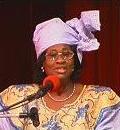 Speaking at the Pan-African Women Invent and Innovative (PAWII) Exhibition Hajia Alima Mahama stated that "...Several trends in global restructuring present challenge for African women in particular, challenges of competitive pressures of globalisation, rapid changes in technology and emerging dominant pressures of IT...it is most appropriate as it (GWIIN) provides a platform to showcase and market ideas, innovations and inventions initiated and implemented by women in Africa who contribute immensely to the socio economic development of their countries...This potential is largely constrained and their ingenuity mostly go unnoticed and un-rewarded..."

The Collapse of Zimbabwe
In a recent report(PDF) the Cato institute analysed how the loss of property rights contributed to Zimbabwe's downward spiral "...While in the short term governments may see the expropriation of private property as a viable policy option, in the long term this will only harm the economy. Rational investors will demand a risk premium for investing in developing countries (if rates of return are the same then why invest where your money is not secure?).This risk premium will cause the interest rate to be higher than it would otherwise be, thereby reducing inflows of capital. This causes the opportunity cost of a short term gain to the government to be the loss of investment that would provide jobs, income, improved life expectancy and a plethora of other indicators. Even worse capital could flee the country totally, leaving the economy in ruins..."
Via Globalisation Institute
Sharing Globalisation
 Image via WikipediaAmartya Sen wrote in the Little Mag:
It is not difficult to see that the economic predicament of the poor across the world cannot be reversed by withholding from them the great advantages of contemporary technology, the well-established efficiency of international trade and exchange, and the social as well as economic merits of living in open rather than closed societies. People from very deprived countries clamor for the fruits of modern technology (such as the use of newly invented medicines, for example for treating AIDS); they seek greater access to the markets in the richer countries for a wide variety of commodities, from sugar to textiles; and they want more voice and attention from the rest of the world. If there is skepticism of the results of globalization, it is not because suffering humanity wants to withdraw into its shell.
In fact, the pre-eminent practical issues include the possibility of making good use of the remarkable benefits of economic connections, technological progress and political opportunity in a way that pays adequate attention to the interests of the deprived and the underdog.[1] That is, I would argue, the constructive question that emerges from the anti-globalization movements. It is, ultimately, not a question of rubbishing global economic relations, but of making the benefits of globalization more fairly distributed.
via 3quarksdaily

Soaring Corruption
The BBC reports on increased corruption levels in Africa "...Unlike their Asian counterparts, Africa's robber-barons prefer to take their booty to Europe or the United States, far from prying eyes.It's a system run by an international network of criminals, involving corrupt bankers laundering money, lawyers and accountants setting up 'front companies' and trusts to collect bribes, contract-hungry company directors, local middlemen in Africa and the corrupt officials in African governments..."
Via Globalisation Institute
The West's 'Green' Protectionism
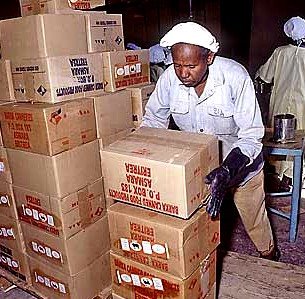 Rainer Chr. Hennig writes about the emerging 'green' protectionist policies of developed world:
Populist solutions that are to satisfy customers, politicians and the European industry alike are therefore surfacing all over Africa's neighbour continent and the main market of its products. And the solutions seem neat and nice - easy to understand and with the potential of creating more work locally. Even the industry starts propagating these solutions.
The victim mainly is Africa, because the message is that, as longer as a product or person is transported, the more energy is wasted unnecessarily. Worst of all is airborne transport, having the highest emissions of climate gases such as CO2. Unluckily, Africa is far away from European markets and poor transcontinental infrastructure puts most products and travellers on an airplane.
All over Europe, therefore, home-grown campaigns are being promoted, attacking Africa's newest and most successful export products. Anti-globalisation activists, "green" politicians, local industry and even occasional experts and scientists head these "buy local" campaign
See related coverage of this subject by Ethan Zuckerman and Alex Steffen
Photo courtesy of Afrol News
Baobab Connections
"...Baobabconnections is a non-profit internet based media project of Both-ENDS. We encourage youth from across the world to get together on our website and exchange ideas about globalisation and sustainable development..."
A recent project of theirs is a film by Petna Ndaliko Katondolo,Mad-ia:
Globalization Alternatives For Developing Countries
Writing about globalisation Kevin Alcena asserts that developing countries "...need to establish public-private partnerships, both domestically and internationally... so as to be able to manage the various dimensions of globalization and their interrelationships to mutual advantage. This effort will help developing countries to develop adequate Research and Development perspectives, sustainable technological innovation that will make them less reliant on the developed countries..."
Covering Revolutions-The African Egypt versus the Arab Egypt
"Egypt is in Africa. We should not fool about with the attempts of the North to segregate the countries of North Africa from the rest of the continent," says Firoze Manji, the editor of Pambazuka Online, an advocacy website for social justice in Africa. "Their histories have been intertwined for millennia. Some Egyptians may not feel they are Africans, but that is neither here nor there. They are part of the heritage of the continent."More here
And, just like much of the rest of the world, Africans watched events unfold in Cairo with great interest. "There is little doubt that people [in Africa] are watching with enthusiasm what is going on in the Middle East, and drawing inspiration from that for their own struggles," says Manji.
He argues that globalisation and the accompanying economic liberalisation has created circumstances in which the people of the global South share very similar experiences: "Increasing pauperisation, growing unemployment, declining power to hold their governments to account, declining income from agricultural production, increasing accumulation by dispossession - something that is growing on a vast scale - and increasing willingness of governments to comply with the political and economic wishes of the North.

The Need to Speak Up
Chandran Nair writes in the FT about the need for Asians (ditto Africans) to speak up robustly on matters that directly impact them:
As globalisation changes the world, having a worldview of Asia that is essentially shaped by western outlooks and prejudices is not just narrow-minded, it is also potentially highly dangerous. It is a view that sees economic advances by Asian countries as threats and Asian business practices as inferior. We saw this with Japan in the 1980s. We are seeing it again today with China and India.Ory Okolloh in a similar vein states that:
Such an outlook alienates Asian leaders, encouraging them to take nationalist positions in response. What is needed is the emergence of a confident body of Asian intellectual leaders. Not ones who speak on behalf of Asia as a whole – that leads to the kind of “Asian values” nonsense that we heard far too much about in the 1990s.
I’m tired of the Bono’s and Sach’s of this world articulating my views as an African. It’s one of the reasons I’m very quick to respond to media requests for interviews, profiles, etc. (I really could be a media slut) - I think it’s important for Africans to get our views out thereShe wonders whether:
“Will No One Let Africa Speak for Itself?
The BRIC threat to Manufacturers
 Image via WikipediaA recent report from Cambridge University on the rise of BRIC manufacturers:
“highlights the threat to western business growth from a new breed of companies emerging onto the global stage.”Quoting Zhang Ruimin, CEO of Haier:
“In the globalisation era, there are two categories of companies. One is the international company, and the other is the one taken over by the former group. There isn’t a third choice.” As a result, further rationalisations within industries are likely with the emerging multinationals often in the role of acquirer, but the targets will include MNCs (or parts of MNCs) as well as national and regional players...[continue reading]The question then becomes when will we see the African EM manufacturer's join the race?
via Seeking Alpha

Globalisation in West Africa
Kate Meagher writes on the need to incorporate and formalise informal networks "...Although West African cross-border networks have facilitated global trade and private wealth accumulation, they have tended to undermine regional manufacturing, financial stability, and infrastructural investment. Thus instead of integrating West Africa into the global economy, in many respects cross-border trade has reinforced West Africa’s global economic marginalisaton. Policy-makers are left with two choices: cross-border trade can be suppressed and criminalised, or it can be brought into the formal economy.
For West African development, criminalisation is not the best option. For all it faults, cross-border trade remains the most efficient, organised and deep-rooted system of trade in the sub-region. The commercial skills, experience and organisational infrastructure of cross-border networks represent invaluable resources for the development of effective West African trade. What is needed is the incorporation of cross-border trade into the formal economy through more appropriate policy incentives to guide and redirect its activities..."
Ghanaian farmers respond to Market forces
 The Globalisation Institute reports on adjustments being made by Ghanaian tomato farmers in the face of cheaper imports:
"The challenge,” says Kofi Ampah, a Ghanaian tomato producer facing competition from cheap imports, “is for our farmers to produce a high yield per acre so that we can sell them at a price to compete with imported tomatoes.” Kofi is apparently one of 500 farmers being trained in efficient techniques to produce good quality tomatoes. Since the DFID-funded project started, harvests have tripled and are still rising.
photo courtesy of traveladventures.org