
In today's Detroit News, there was a story about the police breaking up protests at a recent World Trade Organization meeting. The WTO is a group that is determined to make a more peaceful and prosperous world by lowering tariffs and removing barriers to trade, and there are people out there that do not like peace and prosperity, instead preferring anarchism and nationalism, and so every time the WTO has a meeting, there are protests.
These protesters typically pull themselves into what is called a Black Bloc. A black bloc is a tactic for protests and marches, whereby individuals wear black clothing, ski masks and motorcycle helmets with padding, steel-toed boots and often carrying their own shields and truncheons. The clothing is used to avoid being identified, and to theoretically, appear as one large mass, promoting solidarity, and creating a clear revolutionary presence. Tactics of a black bloc can include vandalism, rioting and street fighting, demonstrating without a permit, misleading the authorities, assisting in the escape of people arrested by the police, building barricades, and attacking police.
In Geneva, these 'peaceful protesters' set fire to cars, broke shop windows and committed other acts of violence. An 80-year-old women was knocked over and fell and had to be hospitalized, police said. These are the tactics of these 'far left' or 'far right' or 'middle way' groups who demonstrate against the WTO.
You can tell the quality of a person by the company they keep. These Black Bloc groups oppose lower tariffs, oppose capitalism, oppose the war in Iraq, and support Earth Day. Do you?
These anti-WTO protester's are an interesting mix of left-wing groups ranging from the outright communist (Autonomism) to the clearly fascist (National-Anarchism). Many of the issues and causes these groups promote are very close to the causes and issues that the Democrats support today- the main difference is in the methods used, not the goals. These left wing fascist and communist groups blame the United States for being at the root of most bad things in the world, want the US to pull out of Iraq and Afghanistan and let the terrorists win, want to have the government play a larger and larger role in 'combating global warming' and 'supporting gay rights,' and even believe in free state-provided healthcare for everyone.
Yes indeed, there are many similarities between these Black Bloc groups and the Democratic Party. What there isn't is any similarities between the goals, methods, and agenda of this blog and those who support Black Blocs. We are clearly different in our agenda's, as I am a conservative teacher who supports lower tariffs, loves capitalism, supports the War on Terror, opposes government control to fight the myth of global warming, and loves freedom and liberty more than violence and revolutionary zeal.
Change might live on the left, but so does the Black Bloc. Pick your side.
Black Bloc, Fascists, and WTO Protests


Does the Mo Ibrahim Foundation Foster Leaders or Bureaucrats?
The Mo Ibrahim Foundation, in partnership with three of the world’s most influential multilateral organisations, announces the launch of the Ibrahim Leadership Fellowships programme. Working with the African Development Bank (AfDB), the United Nations Economic Commission for Africa (UNECA), and the World Trade Organization (WTO) the Fellowships Programme will help to prepare the next generation of outstanding African leaders by providing them with unique mentoring opportunities.Some of us are our scratching our heads AFDB,UNECA & WTO? These aren't leadership fostering organizations unless you mean the bureaucratic, red-tape entangling kind. The widely admired Mo Ibrahim is largely applauded for building a company and giving back.Something he is able to do because he was very successful at creating wealth. Perhaps the nurturing of younger builders,entrepreneurs and makers is something the Mo Ibrahim foundation should be focusing on.

Industrialization and Sub-Saharan Africa:The Asian Experience
It is evident that the development challenge facing Africa requires major strategic, creative thinking. The SSA needs to do certain things very differently, but the question is how? A dominant view is that the best chance of sustained development in Africa should be pursued within the framework of a growth-promoting and market-accelerating model, but which is human-centred to address the pervasive poverty of the region...via IDRC
With regard to specific area of strategies for rapid industrialization, several questions emerge. For example, where would Africa’s comparative advantage lie in the future, and how can such comparative advantage be “created” — a la the Asian way — without being constrained by the GATTified world? Should Africa start small (with little things that have lost competitiveness, and as Ojimi(Yoshishisa Ojimi a former vice-minister of MITI) argued in the case of Japan — areas that have lowest productivity and lowest returns), or, should it go high-tech. and seek to compete all the way? In the latter case, how would SSA do it, and with what technology and market penetration strategies?
It has become fashionable to suggest diversification of the export base into manufactures, but the challenge is to demonstrate how such an option is viable and that chosen sectors/products are potentially competitive. In essence, while it is important to learn how the Asians dealt with the past, it is even more important to understand how some of the countries (especially those in “transition”) are coping with current constraints and opportunities. For example, a lot of lessons could be learnt from other emerging industrializers (e.g., China, Vietnam, etc.) in terms of their innovations in interpreting and exploiting the provisions of the GATT/WTO and their strategies for “economic diplomacy.”
African Renaissance: Roadmaps to the Challenge of Globalization
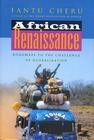 Khalil Tian Shahyd reviews African Renaissance by Fantu Cheru he "...calls on us to rethink the concept of “decolonization of the African mindset”. Africa’s dependence on foreign aid, he says, has done the opposite of its claimed mission, but in fact has been used to keep Africa’s people disempowered through the support of dictatorships and undemocratic regimes. Further, the habits of import consumption and the rejection of products produced in Africa is the highest example of how deep the colonial ingraining has been.Further along, he challenges African universities, scholars and heads of state to commit to strengthen their people’s capacity in “all the relevant specializations” and improve the ability for sub-Saharan trade negotiators to engage in meaningful dialogue during WTO meetings, and other international negotiations..."
Intellectual Property as framed by the West- Noam Chomsky
The World Trade Organization proposed new, enhanced intellectual property rights, patent rights, which means monopoly pricing rights, far beyond anything that existed in the past. In fact they are not only designed tomaximize monopoly pricing, and profit, but also to prevent development.That’s rather crucial. WTO rules introduced product patents. Used to be you could patent a process, but not the product. Which means if some smart guy could figure out a better way of doing it, he could do it. They want to block that. It’s important to block development and progress, in order to ensure monopoly rights. So they now have product patents.More here
Well if you take a look at, say, US history. Suppose the colonies after independence had been forced to accept that regime. Do you know what we’d be doing now? Well first of all there’d be very few of us here. But those of us who would be here would be pursuing our comparative advantage and exporting fish and fur. That’s what economists tell you is right.Pursue your comparative advantage. That was our comparative advantage. Wecertainly wouldn’t have had a textile industry. British textiles were way cheaper and better. Actually British textiles were cheaper and better because Britain had crushed Irish and Indian superior textile manufacturers and stolen their techniques. So they were now the preeminent textile manufacturer, by force of course.
The US would never have had a textile industry. It grew up around Massachusetts, but the only way it could develop was extremely high tariffs which protected unviable US industries. So the textile industry developed,and that has a spin off into other industries. And so it continues.