RSS
Menampilkan postingan yang diurutkan menurut relevansi untuk kueri Thailand. Urutkan menurut tanggal Tampilkan semua postingan

What the World Needs Now

Just got this email from Julie Lindsay with a list of schools coming to the Flat Classroom Conference in Beijing the end of February. This is very exciting!

  • Changchun American International School
  • Guangzhou Nanhu International School
  • RDFZ Xishan School
  • International Academy of Beijing
  • Hua Shi Yi Fu Zhong High School
  • Tsinghua High International School
  • Yokohama International School, Japan
  • International School Beijing
  • Gyeonggi Suwon International School, Korea
  • Western Academy Beijing
  • Beijing City International School
  • Beijing Normal University
  • University of Nothern Iowa, USA
  • Livingston American School, China
  • Al-Azhar Islamic Senior High School, Indonesia
  • Dalian Maple Leaf Foreign Nationals School
  • American International School of Guangzhou
  • Dulwich College Beijing
  • Kaohsiung American School, Taiwan
  • Shanghai American School
  • British School of Beijing -Shunyi Campus
  • International School of Tianjin
  • International School Yangon, Myanmar
  • Cebu International School, Philippines
  • Nanjing International School
  • British School of Beijing
  • The Illawarra Grammar School, Woolongong, Australia
  • Nishimachi International School, Japan
  • Stonehill International School, Bangalore, India
  • International School Bangkok, Thailand
  • Shekou International School
  • Yew Chung Intern. Beijing
  • Harrow International School Beijing
  • St Andrew's Cathedral School, Sydney, Australia
  • Westwood Schools, Georgia, USA
  • Minerva Special Needs School, Australia
  • Kristin School, Auckland, NZ
  • Vientiane International School, Laos
  • Teda International School
  • St. Michael's International School, Japan
  • Osama Bin Zaid School, Oman
  • Senri Osaka International School, Japan 
 There are many schools that understand that what their students need now is not only a world class education where the students know math, literature, writing, reading but also that students need to know this whole new subset of communication skills: technopersonal skills. More than that, they need to know how to relate and work with one another and that we need to have our students working together and co-creating with one another on an ongoing basis.

Our students need so much but they also need each other. They have an uncanny desire to relate. Let's social-network their learning in powerful ways.


I believe that those coming understand that the world is changing and they want to be part of it. In fact, so many of the schools coming are coming because of Twitter, Blogging, and Social networking. Pretty much all of the speakers involved came in to the program through our network.


Project based conferencing as we do it with very very short speeches (when they are given - we call them Flat Learning Action Talks or FLATs) and several projects that run through the conference is still a somewhat "experimental" method of conferencing in the eyes of many. But for those who have seen it in action it is tremendously powerful and transformational.


Wish you call could come - meanwhile, feel free to join the Conference Network and participate virtually. We'll send out instructions through the Ning.


Enhanced by Zemanta

  • Digg
  • Del.icio.us
  • StumbleUpon
  • Reddit
  • RSS

"How to Start a Revolution"-Gene Sharp

From We Make Money Not Art:
Gene Sharp believes that non-violent struggle has a greater chance of success than violent resistance, because violence is typically the most powerful weapon used tyrannical regimes and they will always have the upper hand. His booklet From Dictatorship to Democracy (which you can download as a PDF) provide a list of 198 "non-violent weapons", including mock awards, alternative communication system, wearing of symbols, pray-in, boycott of elections, withdrawal of bank deposits, consumers' boycott, renouncing honours, etc.

The book was first published in 1993 to support the opposition movement in Burma and was circulated among dissidents. Anyone seen carrying the book around was sentenced to seven-year prison terms by the regime. This kind of manual for toppling dictators has since inspired opponents of oppression in places as far apart as Thailand, Ukraine, Serbia, Estonia, Iran, China, Indonesia, Zimbabwe, and more recently in Syria, Egypt and elsewhere in the Middle East.
More here

  • Digg
  • Del.icio.us
  • StumbleUpon
  • Reddit
  • RSS

Shaping African Prosperity

Benard Wasow writes"...It was not access to foreign aid or special access to Northern markets that gave Asia its advantage over Africa...The external conditions facing these two great regions were similar. The North looked out for its own interests in its dealings with Thailand as much as with Kenya...Asian success was not made in Washington — nor in G8 summits. It was made in Asia. Likewise, we have to recognize that African success ultimately will be made in Africa...the burden of stimulating economic development, the burden of allowing economic development to happen without draining it away through corruption and authoritarian regulation, does not lie in Europe or the United States...The leaders of the G8 cannot bring democracy to the Middle East, nor can they bring prosperity to Africa..."

  • Digg
  • Del.icio.us
  • StumbleUpon
  • Reddit
  • RSS

Adaptive Diasporan Communities - The Mourides

The Economist reports on a thriving resourceful expatriate Senegalese community- The Mourides:

At his home in Touba, a pious but cosmopolitan place where local businesses boast of branches in every corner of the earth, one of Bamba's (founder of the Mourides) grandsons, Cheikh Ka, explains the doctrine of self-reliance. “If you depend on others,” he says, “you are not free—it is our philosophy of life.” Before he died Bamba expressed several wishes: in particular he hoped Touba, which he founded, would be a holy city. His extended family, the Mbacke, includes many marabouts, or religious teachers. What they teach includes hard work, self-reliance and solidarity. These ideas have propelled his followers out of their country in search of work, to send money back to their families, to support their marabouts (many of whom tour the world to visit disciples) and to develop Touba.

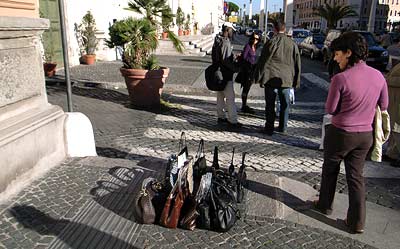
All these factors have helped make the Mourides one of the more successful African communities, at home and abroad. Wherever they are, they club together to acquire a mosque and community centre. Their networks help migrants leave Senegal, find work and procure documents. Far from being helpless victims of fate, many Mourides are shrewd operators in a complex, cross-border network. Take Alioune Ka, the owner of a wholesale shop close to Rome's Termini station: he is a brother of Cheikh Ka in Touba, who takes care of the Senegal-based members of the family. Alioune sells “ethnic” items to Senegalese (and others) who hawk them on streets or beaches. Some stock is from Senegal; a lot from Indonesia, Thailand or India.
The formalization of informal networks and institutions such as these must be pursued. Too often what really works is is ignored because it doesn't wear the cloak of 'legitimacy'.

photo courtesy of the Economist

  • Digg
  • Del.icio.us
  • StumbleUpon
  • Reddit
  • RSS

Learning from Bangkok’s Fashion Markets

In Thailand a presentation by Adam Arvidsson & Bertram Niessen:
Image courtesy of bkk fashion
The prevailing 'creativity paradigm' has been accused of misrepresenting the dynamics of socialized processes of value creation, of imposing an ideological conception of intellectual property and of providing a neoliberal justification for unequal or precarious relations of production. While the critics are often justified, none of them have developed an alternative model of understanding the dynamics and potential politics of socialized processes of immaterial production. This public lecture uses the experience of Bangkok's fashion markets to begin to articulate an alternative understanding of creativity. The aim is not so much to articulate an 'asian' or even 'bangkok' model of creativity, but to investigate what diverse aspects emerge when viewed from an empirical context different form that of the US or UK. The speakers will suggest that the Bangkok experience highlight three dimensions of creativity that not only apply to many forms of socialized innovation process sin the East as well as in the West, but that the speakers suggest are particularly pertinent to understanding the new relations of socialized immaterial production that are presently made possible by information and communication technologies. These are, the emergent, intrinsically social or 'mass' nature of innovation and the concomitant fusion of innovation and imitation; the fusion of 'creativity' and everyday life, and the 'small and networked' nature of production chains.
More here
via b3rtramni3ss3n

  • Digg
  • Del.icio.us
  • StumbleUpon
  • Reddit
  • RSS

The 'Africa effect'

A research team led by Robert H. Bates of the Africa Research Program found that:

African governments were instrumental in inhibiting the growth of their own economies in the late 20th century, according to a decade-long project conducted by African scholars and economists. Robert Bates, professor of government in Harvard’s Faculty of Arts and Sciences, has been immersed in this economic survey, helping the economists to understand that governmental role....whatever the material situations of various African states — whether resource-scare or resource-rich, land-locked or coastal — each economy grew more slowly in Africa than it did in counterpart economies elsewhere in the world. In fact, without the “Africa effect,” they found that no natural obstacle would have prevented coastal African countries from growing at the same rate as Asian countries such as Mauritius or Thailand

  • Digg
  • Del.icio.us
  • StumbleUpon
  • Reddit
  • RSS

Transitioning to Emerging Market Status?

From the IMF's Regional Economic Outlook for Sub-Saharan Africa,2008(PDF):

The term “emerging market” was coined in 1980 to refer to countries that had stock markets and were in transition toward having the features of the mature stock markets in industrial countries.This box suggests that some African countries fit within the emerging market group and supports this view by benchmarking these African economies of 2007 against the ASEAN countries (Indonesia, Malaysia, Philippines, Singapore,and Thailand) of 1980, when the term “emerging market” entered the lexicon.
Selected African countries compare favorably with the ASEAN countries of 1980. The ASEAN countries were already experiencing strong economic growth. Yet, in many other respects, the ASEAN countries looked quite different from what we see today. Inflation rates were still high in some cases, the depth of their financial sectors was limited, foreign direct investment had yet to accelerate, and their financial
resources, reflected in international reserves, were adequate but not high. Many African countries have perhaps reached broader macroeconomic stability than the 1980 ASEAN benchmark. Growth is strong, inflation moderate, and international reserves relatively high. Like ASEAN, financial depth remains limited.Foreign direct investment is quite high, although this is in large part a reflection of the larger share of naturalresources such as oil in the case of African countries.2 Debt-to-GDP ratios are low.

  • Digg
  • Del.icio.us
  • StumbleUpon
  • Reddit
  • RSS