RSS
Menampilkan postingan yang diurutkan menurut relevansi untuk kueri index. Urutkan menurut tanggal Tampilkan semua postingan

Ibrahim Index of African Governance

The Mo Ibrahim foundation has announced the Ibrahim Index of African Governance

The Ibrahim Index of African Governance has been created in recognition of the need for a more objective and quantifiable method of measuring governance in the 48 countries of sub-Saharan Africa. The Ibrahim Index provides both a new definition of governance, as well as a comprehensive set of governance measures. Based on five categories of essential political goods, each country is assessed against 58 individual measures, capturing clear, objective outcomes.

  • Digg
  • Del.icio.us
  • StumbleUpon
  • Reddit
  • RSS

Data Shows Democrat Presidents Leads to More Inequality and Rich Getting Richer?

Progressives and Liberals and the Democratic Party that they've seized control over frequently claim that it is under evil right-wing Republicans that the 'rich get richer' and that there is 'rising inequality.' These groups suggest that having the government seize more power over the free people of our nation through increasing taxes and regulations and increased government spending results in a more equitable distribution of wealth and a more equal society. By having the government make choices for people and take property away from others, they argue that a more fair society can be created and that the playing field can be evened; liberals say that government social programs will stop inequality in our nation; and that religion, class structures, education, and traditions make the rich richer and cause inequality and therefore these social structures must be attacked and broken down. The problem though is not that liberals are ignorant of their policies and their arguments- it is that their policies and arguments are just not true.

From Investors Business Daily article Income Inequality Rose Most Under President Clinton:

In his weekend radio address, President Obama decried that "over the past three decades, the middle class has lost ground while the wealthiest few have become even wealthier." Although he was trying to leverage the Occupy Wall Street movement, the income gap has been a longstanding concern of his. During the 2008 campaign, Obama said, "The project of the next president is figuring out how do you create bottom-up economic growth, as opposed to the trickle-down economic growth that George Bush has been so enamored with."

But it turns out that the rich actually got poorer under President Bush, and the income gap has been climbing under Obama.

What's more, the biggest increase in income inequality over the past three decades took place when Democrat Bill Clinton was in the White House.

The wealthiest 5% of U.S. households saw incomes fall 7% after inflation in Bush's eight years in office, according to an IBD analysis of Census Bureau data. A widely used household income inequality measure, the Gini index, was essentially flat over that span. Another inequality gauge, the Theil index, showed a decline.

In contrast, the Gini index rose — slightly — in Obama's first two years. Another Census measure of inequality shows it's climbed 5.7% since he took office.

Meanwhile, during Clinton's eight years, the wealthiest 5% of American households saw their incomes jump 45% vs. 26% under Reagan. The Gini index shot up 6.7% under Clinton, more than any other president since 1980...
That's right- like most liberal policies that have addressed poverty, energy, unemployment, deficits, and helping out minorities, the results of their policies have resulted in the exact opposite of what they have tried to do. The reason for this is quite clear- liberal policies are wrong.

When government takes power and property away from individuals and transfers that power and property to those it favors, of course it results in rising inequality- the rich are of course more connected, and those who are connected prosper and make more money, resulting in the rich getting richer and rising inequality. But when people make free decisions and earn and keep their own property to do what they wish with, it doesn't matter what sort of connections people have and it doesn't matter what their previous status or station or wealth is, and so the rich don't get richer and inequality doesn't rise. As evidence, I submit to the jury real evidence- read the IBD article and you'll see it quite clearly there.

  • Digg
  • Del.icio.us
  • StumbleUpon
  • Reddit
  • RSS

Gary Peters Scores a 90% On the Pelsoi Index- A Vote by Vote Analysis of Peters Liberal Record in Congress

The National Republican Trust has created something called "The Pelosi Index." It measures how closely each Democratic Representative in the House of Representatives is sticking to Pelosi's agenda by looking at where these Representatives voted on 10 key pieces of legislation. A lot of Democrat talk about being bipartisan, about being independent, about being fiscally conservative, about crossing over the aisle, or about being a 'Blue Dog', but the proof about what sort of America they support is in their votes on the House floor.

Out of the 10 Key Votes used to determine the Pelosi Index, Michigan Congressman Gary Peters, a Democrat representing Michigan's 9th District, voted in support of Pelosi on 9 of those votes. 9 out of 10 votes were for key Democrat issues. Peters voted 9 out of 10 times for left wing liberal pieces of legislation. Peters is not a moderate, he is not bipartisan, he is not independent, and he is not conservative in any way- he is a 90% reliable left wing vote for California liberal Democrat Nancy Pelosi.

Gary Peters voted for the massive $787 billion “Stimulus Bill” that has been blown on pet projects of little value to society while soaking up valuable funding. There was no money for this bill, so your children will have to pay for it someday.

Gary Peters voted for a $33 billion increase in funding for the children's health insurance program, so that it can be expanded to provide insurance to non-children, rich children, and illegal immigrants. It also included a 61-cent tax increase on tobacco products, which disproportionately impacts poor working families and is declining source of revenue.

Gary Peters voted for the Lilly Ledbetter Fair Pay Act, which creates a new litigious business model of trolling for decades old employee complaints, redefined “discrimination”, opens businesses up to lawsuits beyond outright discrimination, and opens business to lawsuits from decades ago over unintentional acts of pay discrimination. Trail lawyers love it, but it will lead to higher labor costs, lower wages and loss of jobs- thanks Gary for your vote!

Gary Peters signed on to the irresponsible 2009 omnibus budget bill, which was an unrestrained government spending spree that totals $410 billion and includes more than 9,000 earmarks. This bill represents an 8.3% increase in domestic spending, dwarfing the rate of inflation, and when combined with the recently passed stimulus bill (HR-1) which Peters also voted for, it results in an 80% total increase for discretionary programs this year.

Gary Peters voted in favor of the Cap and Trade bill, which would be the largest tax increase in the history of the world. The cap and trade scheme would place a cap on carbon emissions, which would ultimately drive up the cost of production of every item produced, transported and consumed in America. The whole point of this scheme is to significantly increase the price of electricity and gas so that Americans will use less. If implemented companies in his district would be crippled by regulation and unable to compete in the global marketplace.

Gary Peters voted against Michigan Congressman Stupak's Anti-Abortion Amendment. I'm not sure what Peters position was when he ran for office last year, but I doubt it was on supporting attempts to funnel your taxpayer money to run abortion clinics. This amendment, which bans the federal government from supporting abortion clinics with taxpayer money, passed with Democrat and Republican support- but Gary Peters was against it because he wants to take money from you to abort babies.

The Pelosi version of Obamacare represents a $1.3 trillion government takeover of the health care system that will raise insurance premiums, increase the overall cost of healthcare and raise taxes. Gary Peters supported it.

Gary Peters supported the “death tax” legislation that would permanently impose a 45 percent inheritance tax on estates larger than $3.5 million. Small businesses and family-owned farms are often hit the hardest by this tax, and this legislation is not adjusted for inflation, which means more and more American families will be subject to this tax every year. Gary Peters want to tax you and then tax you again when you die.

After supporting raising the US debt ceiling over and over, Gary Peters finally voted against Nancy Pelosi and voted against raising it by another $1.9 trillion to a record high $14.3 trillion. I guess he doesn't support raising the debt ceiling, but yet he supported all the spending that makes that necessary. If the debt ceiling would not have been raised, the US would have defaulted on loans and been faced with higher interest rates- so what was Peters thinking with this one? He supported the spending- at least be a consistent left-wing liberal and do the responsible thing, Peters, and vote for my children to pay for your schemes.

  • Digg
  • Del.icio.us
  • StumbleUpon
  • Reddit
  • RSS

Frontier Markets contd.

The Economist writes about emerging markets being the flavor to the moment,are they?:

Back in 2002, emerging-market bonds offered a yield a full ten percentage points higher than American Treasury bonds. This year, although spreads have widened from the historic lows seen in May, they have settled at a modest two percentage points or so.
The performance of the equity markets has also been impressive. The MSCI emerging markets index has risen by nearly 40% so far this year, a remarkable achievement given the credit crunch and geopolitical worries. Although China's stockmarket has more than doubled, this is not all about the People's Republic; the Polish, Indian, Brazilian and Pakistani markets are all up by more than 40%.
Indeed, investor focus is now shifting towards what Michael Hartnett of Merrill Lynch dubs “the emerging emerging markets”, such as Botswana and Kazakhstan. MSCI is in the process of launching a benchmark for such exotica called the “frontier market” index.

  • Digg
  • Del.icio.us
  • StumbleUpon
  • Reddit
  • RSS

10 Tips for Surviving and Thriving in the Last Two Weeks of School

Sometimes we have to go on autopilot. Knowing that we are too tired to trust our emotions.

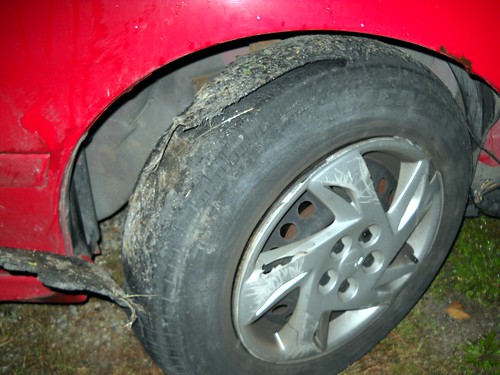
Emotions are like tires on a car. Too many miles and they just get out of round.

Attribution Some rights reserved by TheDarkThing

We can't replace our emotions but we can renew them.

People who have never been in the classroom cannot understand the stress of winding up the school year. It is kind of like explaining having a baby to one who hasn't done it. But we don't have to explain. We don't have to justify.

Do what it takes to get through the last weeks.

Tip #1 Focus on the Most Important Thing

  • Make a list of the three most important things you need to do.
  • Put them in order of importance.
  • Log out of email. Only open ONE tab in your browser if it requires your browser.
  • Start on #1 Now.
  • Work on that one thing and stay focused. If you need to write that one thing on an index card and keep it on your desk do it.  (I use the Next Thing app on my iPad.)

Tip #2: Outline Your Projects

But what if my most important thing is a project?

The time spent planning a project cuts down on the time it takes to do the project. Break it down into steps. Figure out the first thing you need to do to keep that project moving forward and put it on your most important thing list.

A checklist will help you here.

Tip #3: Focus on One Thing at a Time
Attribution Some rights reserved by austinevan

But I need to do a ton of things! How can I get it all done?

Start 3 other lists.
  • After school is out
  • Classroom work to do over summer
  • Preplanning

I have over 100 things on my list. If I see something that absolutely doesn't have to be done before May 27th - it comes off.

Remove the date put it on one of those three lists and don't look at it until after school is out.

You can get this work done. One thing at a time.

You can't eat a watermelon whole. You have to eat it in small bites. Same with this watermelon of a workload you have during the last few weeks of school.

Tip #4: Make a "Finish the Year Well" List
What helps me is to list my classes and list every thing I have to do to close out that class for the year. Every grade left to take. Every school supply list to create.

Every project that needs to be done with a checklist.

All on ONE piece of paper. Yes, I have this list in my 2do app but when I overload. This is how I handle it.

Every day use a different highlighter. Highlight what HAS to be done that day. Write MIT(s) on my index cards (in the Next Thing app) so I will do those first BEFORE everything ESPECIALLY email.

Tip #5: Resist the Desire to Hide
Some teachers cope like students who aren't doing well. They hide in the bathroom or teacher's lounge just waiting for time to blow over and wash everything away in a tide of irrelevance.

But things like book inventories, curriculum updates, final grades - these things are important.

Those who win the race are those who finish well. You've come this far, finish well.

Tip #6: Put One Foot in Front of the Other
If you want to have a panic attack think of everything you have to cram in today. It is probably too much! Just look at the next thing you need to do. And the next. And the next. You can do it.

Tip #7: Let the Rough End Drag
Granny Martin always said "sometimes you gotta let the rough end drag."  The roughest end of teaching is definitely the last 2 weeks of school.

My Mama, a veteran teacher gave me some sage advice my first year of finishing the year. She said,

"If you've got the money, order out. Don't give yourself any grief about cooking dinner every night. Just make it through May, it will pass."

I remember crying,
"But Mom, no one has any clothes because I haven't had time to do laundry."

She said,
"Just go to Walmart and buy the cheapest of what you have to have in clothing. You gotta make it through, cut yourself some slack. Let it go, it is OK."

Tip #8: Don't Make Any Life Changing Decisions
Today, this morning. I feel like a failure. Last night I felt fantastic for a moment when a parent called excited about her child's website. Yesterday afternoon when a child forgot what his c drive is, I felt like a failure.

I look at all the things these kids need to know! I swear that they do their best to forget during the last week of school just to frustrate me. I feel like I've taught them nothing because there is so much left to do! I'm worn out and not very rational. No one except other teachers really understand.

Tired decisions are often WRONG decisions. Be careful and don't make them unless you have to.

Tip #9: Love on Your Other Teachers
I love my friend Pam our Science teacher. Her daughter is getting married next Saturday and she had an unexpected death in her family and had to plan the funeral this past Monday and Tuesday.

She'll ask how I'm doing and we'll just look at each other. She looks into mine with her snappy smart doe brown eyes and says, "I know." And she Does. She knows.

So do the other excellent teachers. The ones who care about finishing well. We are running around on the verge of hyperventilation frustrated at those with their feet up on the desks and leaving early because they checked out two weeks a go.

Teachers, we've got to stick together. 

 Look for your friend who is drowning and reach out and help her up.

Yes, you have too much to do. So does she. If we rescue everyone who is drowning then when you are drowning you'll find four or five hands pulling you out of the whirlpool. Don't let a good teacher go down for the count.

If there is a time when teachers break it is now. Look out for your friends. Love them for who they are and what they give.

Don't let them walk out and never come back because if they get to that point, they will. This is what happened to my mom. In post planning, she packed up her stuff and left and no one except the principal really knew it was coming until she was gone and they could do nothing about it.

A kind word. A loving gesture. Even looking at their papers and saying, is there something I can help you with?

Tip #10: Keep Your Eye on the Main Thing
These kids aren't finished. Don't expect them to be finished little perfectly polished gems of knowledge if you know that you aren't either.

We're never finished, we just move on to another circumstance of life that will add luster to our learning.

Know that you are part of something. The best thing you can do right now is to get good feedback from your students both with an anonymous form and through "focus groups" of sorts. Ask them what they liked, what they learned, and what they felt was pointless. They will tell you. But they will also appreciate and respect your rapt attention and the fact you want to improve! (Lots of good teachers do this, like Glenn over at History Tech.)


Let's Finish Well!
And now for a poem! ;-)

This is a reprint a poem I wrote that I plaster on my wall every May. First published in May 2006 on this blog:


Living in May

Lord, let me live through May
as underclassmen stress and seniors play
Help me stay positive
no matter how they act
Let my emotions be calm
and my attitude intact.
Lord, please let me live through May.

Lord, help them live through May
as they tend to act up all day
When temperatures rise
and tempers flare
As younglings try wings
and rebels dare.
Lord, please help them live through May.

Lord, let me teach through May
not just biding time all day!
Each day is a gift
as is each precious one.
This may be my last chance
to reach someone!
Lord, please let me teach through May!

Lord, let me live in May
sharing knowledge all the way
Enjoying the ride and laughing a lot
Cause in this school year
May's all I've got!

I do not want to waste a day
even the waning days of May
I do not want to miss a chance
to make their cerebellum dance!

I really want to leave my mark
to fan the flame and kindle a spark!
For as I use each second of time
I make a deposit in their mind.

It is now, when I unselfishly give

that now, in May,

I truly live!
Enhanced by Zemanta

  • Digg
  • Del.icio.us
  • StumbleUpon
  • Reddit
  • RSS

Portfolio Investing Solely in African Markets

Ryan Shen-Hoover writing in the Cheetah Index asks the question:

Would a portfolio consisting of equal allocations to each of these 10 African markets be exposed to unacceptable levels of risk? To find out, I back-tested such a portfolio and compared it to the S&P500 and EEM using the most recent 16 months of returns.
The S&P500 returned an average of –0.04% per month with a 3.42% standard deviation. The Emerging Market Index posted better returns of 1.71% but was more volatile with a 6.31% standard deviation. Our Africa portfolio returned 2.90% with a 2.36% deviation. Better returns and less volatility. Could Africa be an investor’s safest and most rewarding bet?

  • Digg
  • Del.icio.us
  • StumbleUpon
  • Reddit
  • RSS

Money Talk for Teachers


An example of street markets accepting credit ...Image via WikipediaThere are times I don't know what to say to you. Not that you're that intimidating. In many ways, I think of you as my friends. People who I enjoy talking to over a warm cup of coffee with a floating remnant of the fat free Redi whip that I sip and chat with over breakfast.

But sometimes I'm working so hard or am so spent. To me, I write when I know I have something to say. When I read or think of something and think,
"Yes, that will improve a teacher's life" 
That is when I write.

So,  why am I writing today?

Well, I've really been wanting to write a blog post about something that I think every teacher should be working on this summer: creating a realistic spending plan for this next school year. Now is the time to do it, when you're fresh, less likely to be defensive, and more able to look at this past year from a distance.

A losing formula
The fact is that we all have to spend less than we make and the likelihood is that most of us are spending more than we make. This is a losing formula.
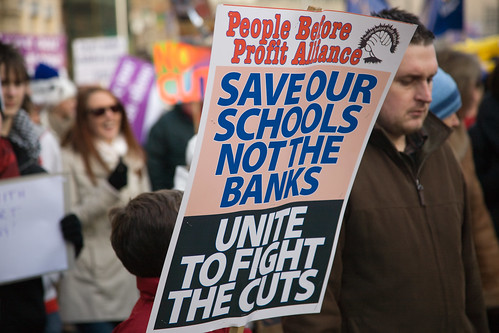
Protest March By Teachers and Students
Why do people not like to talk about money?
The reason that money is in the room with educators like the big old elephant no one talks about is because there is never enough. Never enough money.

That is because money can't make you happy and the more you make the more you spend.

Sure, teachers are underpaid, but this is more than that.

If you read about money for long, one pattern emerges: more money does not make you happier. (A recent psychology article says if you want to be happy look at how you spend your time NOT your money.)

After you have basic needs of food, clothing, and shelter met, you typically aren't going to be made happier by money.

Technology Can Separate Us From Our Money
This is the problem with technology. Technology tends to separate us from our money. Automatic everything, automatic balancing and we don't know where it goes.

I've gone back to index cards, a pen, and a calculator. (Should I share this?) But then again, I'm not sure if I want to write a full post on how Kip and I are working to balance things and prepare for the year ahead. Part of me thinks that all of you read this blog about technology and teaching and to invade the money space is too much.

The Journey of Progress is Useful
And yet, there are many blessings that have happened in my life that I've shared here. Five years a go, I set forward to improve my home organization skills. I read over 30 books and saw similar patterns and started applying what I learned. I know where everything is.My house isn't perfect but I can clean it up in a snap. I use those same productivity techniques in my classroom and to blog and Tweet. They might just be helpful to someone.

Then, two years a go, I began to get my physical house in order. I started running. Last year, I joined weight watchers. Now, 40 pounds later, I'm felling great and those habits are part of my life. I know for a fact some of you have gotten healthier because of it like Heidi Chavez and her family pictured below. If Heidi taught me one thing it is to never underestimate the power of telling your own story.

Heidi Chavez's Family 5K run from some inspiration from this blog see 8 Principles for Being Thank-full for their story.


With home organization and fitness habits now in place, the year 2011 for me I christened "the year of the habit."  Putting the habits in place to help me be more excellent in what I do in all areas of my life.

So, now, I've been turning to the area of money management.

I've talked about before how Kip and I pretty much lost all our life savings and went mega in the hole (as did some of our family) with a pecan grove that went under water in the flood of 1994. We lived on credit cards for nine months as we were both transitioning jobs. Well, we've applied many principles and savings to slash down debt over the past 10 years to a mere fraction of where it once was,but it is still there and more than it should be. Mary Hunt's Debt Proof Living has helped us a lot.

A New Journey
But, we've done and are doing some things that are helping us cut our expenses down some more. (Buy prepaid credit cards to use on those pesky Amazon and iTunes accounts that get out of control.)I'm not sure I'm going to share more about that, though.

A New Blog?
If you stray too far from the mission of your blog then you can lose readers. And, although I definitely write for teachers and to inspire teachers, is giving tips for how to handle this appropriate here? I've also wanted to write about some of the productivity/ organization things that have zipped my house from disaster to pleasure. But, I don't really want to start another blog. I want people to know what they are getting when they read here.

Intentionally, I've NOT done the guest blogger thing here. Everyone, I mean everyone, says that bloggers should have tons of guest posts on their blog. It builds traffic., Well, for me, I'd rather write really good blog posts that help my readers so that when I write it is helpful. Do I really want to dilute the message for the sake of traffic?


Say, Say, Say
So, sometimes I don't know what to say. I don't know what to say because I've got other things to say that are different from what I typically talk about on this blog. Do I put these on Tumblr? Do I make a different blog? But I don't really want to start a blog unless I'm going to do it well. These are the things that I think and consider as I turn to write this blog.

I think it is helpful to hear your thoughts.

The purpose of my blog is to inspire and encourage teachers, administrators and parents of an amazing generation of students.

The Lessons we Teach our Children
But part of me says that the lessons we are teaching with our lives are so loud that our kids are learning the wrong things.

  • If Mom and Dad are hiding from bill collectors and screening phone calls.(Been there.) 
  • If credit card companies are taking so much money that you have to run through the house finding quarters to buy milk (been there too) then what does that say to the children? 
  • If you work and work to get more money only to spend it by getting the new cable HD package or getting a new cell phone with a data plan - what have you done? 

You don't have to live this way.

What are Schools Teaching?
One of the most valuable lessons we can teach our children is how to handle their money well. And those money lessons begin at home. They also extend to schools.

  • Kids see that you bought twenty computers and hid them in the closet until they could be used just so you could spend that money. (True story.) 
  • They see when you throw away all those textbooks on being environmentally friendly.
  • When teachers take class time getting students to protest budget cuts because the teacher can't be happy with less money. 
 What are we saying?

The need to spend less than we make is a key challenge of today's society. It is OK to talk about it. It is time to talk about it.  

We spend more time teaching kids how to have sex safely and how to drive than how to manage their money. 

That is a shame.

Wasting money is a waste of a valuable lesson that we all need to learn.

We can have pretty much anything we want but it means to give up the vain notion that we can have everything. Spending less than we make is where it all begins.

OK, so I'm giving you a challenge anyway
So, my challenge to you today is to sit down and total by category your spending for the last four months. (I use index cards.) Do it by hand so you can feel and inhale every expense and know what you're doing. Then, total it and take a hard look with your family. Then, get ready.


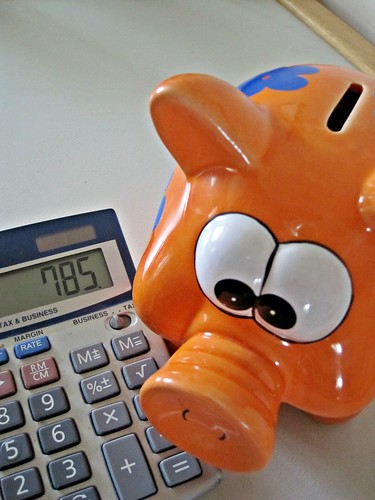
Piggy Bank and Calculator
Used with permission from http://beingselfemployed.org/


I don't know what to write. I've written a lot for someone who wasn't sure. I guess I have a lot to write.

It is just that sometimes that the things I have to tell you aren't pleasant. They might be invasive. They probably make you uncomfortable and may even make some people unsubscribe. I hope that is not the case, but if it is, then, if this can nudge some of you to know that there is hope then that is a price I'm willing to pay. Some of you are great at managing money and the fact that we lost our life savings in a farming operation fills you with distaste. It must be because Vicki's an idiot, you say.


Lots of good people are in bad financial situations. It is OK. But it is time to make progress. (Come to think of it, lots of good countries are in bad financial situations.)

You CAN start moving ahead to managing your money. You don't have to live in fear. You can move ahead and get things straight but it takes time, work, and wisdom.

Here are some books that I've read that have helped me the most:
I find it funny that in sharing my reticence about talking about money that it also says that most of us are unwilling to talk about money. See the hypocrisy? We talk about sex. We talk about just about everything. But spending less than we make is not one of those.

It is time to talk money in schools and society in ways that are rational, planned, and realistic. It is definitely time for all of us teachers to take stock and make  money plan this summer. Start today.

Related Articles:
    Enhanced by Zemanta

    • Digg
    • Del.icio.us
    • StumbleUpon
    • Reddit
    • RSS

    Government Aid vs Prosperity

    Not that I'm telling you anything you don't know, but I always love it when statistics generally bear out my crazy theories that the way to create a prosperous free economy is to have low government regulation and low taxes. For my unit on state and local government, I found this article on Variations in Government Aid Across the Nation that was put together by the New York Times. This report looks at welfare, unemployment, housing assistance, food stamps, health insurance for poor adults, and health insurance for poor children, and measures them from state to state.

    The top states in terms of providing generous benefits to their citizens- in other words, those that take money from taxpayers and re-distribute that wealth to those who did not earn it are (in descending order): Vermont, Maine, Massachusetts, DC, Pennsylvania, West Virginia, Iowa, and Michigan.

    Out of curiosity, I decided to pull up some information on GDP growth, and provided by the Department of Commerce. The results are interesting. Here are the GDP growth rates for those states, with numbers from 2006 and 2007: Vermont (2.8, 1.5) , Maine (1.9, 1.3), Massachusetts (2.9, 2.5), DC (4.1, 4.3), Pennsylvania (1.7, 1.6), West Virginia (0.6, 0.1), Iowa (2.6, 1.7), and Michigan (-0.5, -1.2).

    Those states that let citizens keep their wealth and freely make their own decisions are: Colorado, Texas, Utah, Florida, Nevada, Arizona, Oklahoma, and Virginia.

    Here are their GDP growth rates (2006, 2007): Colorado (4.3, 2.0), Texas (4.3, 4.1), Utah (7.2, 5.3), Florida (4.2, 0.0), Nevada (4.1, 0.6), Arizona (6.8, 1.8), Oklahoma (6.7, 4.0), and Virginia (3.2, 1.9).

    As you can see, the results are pretty conclusive. States that redistribute wealth from the rich to the poor, divert money from taxpayers to nonworkers, subsidize poor quality housing, give people food, and provide government-paid healthcare are less prosperous, less successful, and less free.

    Those states that follow these unsuccessful public polices have GDP growth rates significantly and consistently lower, and over several generations destroy the wealth and productivity of their citizens. If our whole nation were to adopt those same policies, our children and children's children- our posterity- would grow up less free, less happy, and less prosperous than we are today.

    The conclusion, as demonstrated with this limited amount of research, is clear- our public policies should emphasize self-sufficiency, less public welfare, and lower unemployment benefits, and should keep the state out of building structures for people just because of their income status, and should teach a man to fish instead of giving him fish, and should not provide as a right of birth state-supported healthcare.

    UPDATE: Today I saw a report from the Mercatus Center at Georgetown called Freedom in the 50 States: An Index of Personal and Economic Freedom. Earlier I pointed out that many of the states that provided the most social welfare services to its citizens also are less prosperous. Looking over this report, I notice that those states that provide healthcare to poor, housing subsidies, and food stamps also are less free. I guessed this fact (see above), but it's nice that my guess is now backed up in numbers that show that.

    According to the rankings in the report (1 is most free, 50 is least), the least free states- the states with the most tyrrany and oppression by government- compare favorably with my list of states that had the highest social welfare.

    Here are the states that provide the most social services and their rankings on freedom- Vermont (40), Maine (39), Massachusetts (43), DC (NR), Pennsylvania (20), West Virginia (33), Iowa (16), and Michigan (14). Here are the states that provide the least social services and their rankings on freedom- Colorado (2), Texas (5), Utah (11), Florida (22), Nevada (24), Arizona (8), Oklahoma (18), and Virginia (9).

    There you go- states that encourage conservative values are more prosperous and more free. The data doesn't lie.

    • Digg
    • Del.icio.us
    • StumbleUpon
    • Reddit
    • RSS

    Celebrating miserable African leaders

    Dennis Matanda at the Sub-Saharan African roundtable comments on the Mo Ibrahim prize:

    In a classic case of “African solutions for African problems,” Mohammed “Mo” Ibrahim, a successful London-based Sudanese entrepreneur and multimillionaire with more than $ 500 million to his name - he owned Celtel in Uganda until last year - is offering present and future African leaders the richest annual prize in the world. Announced on October 25, 2006 in London, the prize challenges African heads of state to govern and lead their people properly, which is where the Professor Rotberg index will come in...I agree that there is need to reward honesty, but to reward an African leader to do his job is like pouring milk on a fire when you can use water!

    via GlobalVoices

    • Digg
    • Del.icio.us
    • StumbleUpon
    • Reddit
    • RSS

    Lessons from Economic Recessions II- The Forgotten Recession of 1920

    Last week I wrote in my post Lessons from Economic Recessions- Introduction and Great Depression:

    History teaches lessons- it allows those of us in the present to see how results in the past worked. Economic recessions are a great teaching tool for policy makers and average citizens, because they teach us how the recession may have happened and how to emerge from the recession and therefore inform us as to the policy actions that we must take and those that we as citizens must support.
    In that post, I talked about the lessons from the Great Depression. The lessons that I drew from the Great Depression are based though not on just data from that event, but from other recessions that our nation has entered and exited. Most liberals simply say 'government spending got us out of the Great Depression', but when I ask them about all of the other recessions that the United States entered, they have a blank look, as they do not have any knowledge of other recessions or how we emerged from them as a nation.

    One of my friends in the media should try this sometime- ask a liberal policy maker- President Barack Obama, or Nancy Pelosi, or Carl Levin, or Debbie Stabenow, or Gary Peters- ask them what lessons they have personally learned from the Great Depression. I am sure they will roll off some long-winded answer that sounds educated and learned but basically boils down to 'spend more money.' Follow-up that question with a question on what lessons they learned from the Depression of 1920-21, or The Panic of 1907, or the Long Depression of 1873–79, and you'll be sure to get blank looks from these policy makers, as they don't have any knowledge about those recessions and have learned no lessons from them. They might even snap back some response to you about how unimportant it is to learn about other recessions- but they are wrong, because if you only draw your lessons on economic policy from one recession, the Great Depression, and your lessons are wrong at that, than you are sure to be wrong about very big and important policy decisions that have real effects on our nation.

    Of course, my blog should not be the source for your education- I would advise you to spend some real time studying some real economists- but at least the knowledge that I display here and the lessons that I draw here are likely more educated than those of the above policy-makers, including our Harvard-trained President of the United States. So let's discuss today the The Forgotten Depression of 1920.

    The Depression of 1920–21, which was an extremely sharp deflationary recession in the United States that lasted from January 1920 to July 1921, which at 18 months in duration is longer than any of the recessions after WWII, and which saw a GDP decrease of anywhere from 3% to 7%. The recession of 1920–21 was characterized by extreme deflation- anywhere from 13% to 18% — the largest one-year percentage decline in around 140 years of data. Unemployment jumped anywhere from 4 to 6% in one year, the AT&T Index of Industrial Productivity showed a decline of 29.4%, and stocks fell dramatically during the recession. It was a very bad recession that led many in society to question the stability and future of the American system of capitalism.

    At the time, Secretary of Commerce Herbert Hoover — later President Hoover- urged President Harding to consider an array of interventions to turn the economy around. Hoover, as we all know now, was a progressive Republican who believed that active government response by government officials who were smarter than the rest of us could shorten a recession and led to economic growth. Hoover advocated the same policy responses in 1920 that he implemented in 1929- increased spending by the government, increased taxes especially on the evil rich, increased regulation of businesses, bailouts for banks and 'too big to fail' companies, continued support to labor unions, and more government agencies and boards to organize and improve our existing economic system.

    As you can see, the responses that Hoover advocated in 1920 and implemented in 1929 are very nearly the same policies that President Obama implemented in 2009. The results of these policies are seen today and were seen in 1929- but not in 1920 because President Warren Harding ignored Hoover and did the exact opposite as what he recommended. Whereas Hoover pushed for more government spending, Harding decreased it; when Hoover wanted more regulation, Harding put in place less; for every board of smart elites that Hoover proposed to control human action, Harding cut boards and agencies so that the common man could be more free; and Harding ignored demands to raise taxes and instead slashed taxes.

    The result of Harding's more conservative approach to the severe recession of 1920-1921? The recession ended quickly and ushered in an amazing period of robust economic activity the continued throughout the 1920's as Harding and Coolidge continued conservative policies. It is no surprise that the limited government, balanced budget, low taxes, low regulation, and unleashing of human freedom led to the Roaring Twenties, an amazing period in American history of social, artistic, and economic dynamism, while the active government, increased taxes, massive government spending, and more regulation of the progressive Hoover and liberal Roosevelt led to the Great Depression.

    Thomas E. Woods (author of The Politically Incorrect Guide to American History, Meltdown: A Free-Market Look at Why the Stock Market Collapsed, the Economy Tanked, and Government Bailouts Will Make Things Worse, and Rollback: Repealing Big Government Before the Coming Fiscal Collapse) recently wrote a great post on this subject called The Forgotten Recession- I advise you to read the whole article, but here are several important pieces of it:
    ...It is hardly necessary to point out that Harding's counsel — delivered in the context of a speech to a political convention, no less — is the opposite of what the alleged experts urge upon us today. Inflation, increased government spending, and assaults on private savings combined with calls for consumer profligacy: such is the program for "recovery" in the 21st century.

    Not surprisingly, many modern economists who have studied the depression of 1920–1921 have been unable to explain how the recovery could have been so swift and sweeping even though the federal government and the Federal Reserve refrained from employing any of the macroeconomic tools — public works spending, government deficits, and inflationary monetary policy — that conventional wisdom now recommends as the solution to economic slowdowns. The Keynesian economist Robert A. Gordon admitted that "government policy to moderate the depression and speed recovery was minimal. The Federal Reserve authorities were largely passive.… Despite the absence of a stimulative government policy, however, recovery was not long delayed."...

    ...There was nothing at all unusual about the pattern of American wealth in the 1920s. Far greater disparities have existed in countless times and places without any resulting disruption.

    In fact, the Great Depression actually came in the midst of a dramatic upward trend in the share of national income devoted to wages and salaries in the United States — and a downward trend in the share going to interest, dividends, and entrepreneurial income. We do not in fact need the violent expropriation of any American in order to achieve prosperity, thank goodness...

    ...Harding's inchoate understanding of what was happening to the economy and why grandiose interventionist plans would only delay recovery is an extreme rarity among 20th-century American presidents. That he has been the subject of ceaseless ridicule at the hands of historians, to the point that anyone speaking a word in his favor would be dismissed out of hand, speaks volumes about our historians' capabilities outside of their own discipline.

    The experience of 1920–1921 reinforces the contention of genuine free-market economists that government intervention is a hindrance to economic recovery. It is not in spite of the absence of fiscal and monetary stimulus that the economy recovered from the 1920–1921 depression. It is because those things were avoided that recovery came. The next time we are solemnly warned to recall the lessons of history lest our economy deteriorate still further, we ought to refer to this episode — and observe how hastily our interrogators try to change the subject....
    Read the whole article- the logic, the understanding, the theories, and the explanation are all in there, and go into economic terms and theories that I am only beginning to gain an understanding of.

    The lessons that I drew regarding the Great Depression are supported by the lessons that one can learn from the Recession of 1920-1921- that economic recessions are worsened and lengthened by a government that takes away human liberty, treats people as numbers to manage, takes wealth and property from those who have earned it, and that in every other way violates the Founding Principles of our nation (limited government, federalism, and separation of power). It is up to policy makers to learn those lessons and to vote accordingly on future legislation facing our nation.

    Keep reading my blog regularly for future posts on this subject, and I continue becoming educated and drawing lessons from other past economic recessions that our nation faced and overcome.

    • Digg
    • Del.icio.us
    • StumbleUpon
    • Reddit
    • RSS

    The Need for Managerial Expertise

    Apoorva Shah asks?

    The question is not whether there should be more innovators and entrepreneurs in Africa, but how? What concrete steps must be taken in order to develop the business sector?
    He believes that part of the answer lies in building managerial expertise:
    The importance of governance, financial institutions, and the overall "enabling environment" has already been proven by the widely referenced World Bank Doing Business Reports. By measuring the difficulty of starting and sustaining business, the report allows for governments to know where to direct and manage reforms. However, an assessment of business know-how and expertise is less frequently discussed, and some over-enthused optimists, especially those on the microfinance bandwagon, insinuate that skills like balancing a checkbook or managing organizational structure are inherent in all entrepreneurs, even budding ones in Africa and South Asia.
    Yet studies show that many times it is not the availability of funding or even government reforms that hold back business development, but simply business expertise. Management skills are especially important when entrepreneurs look to scale their businesses and employ more workers
    via more business schools
    The Association of African Business Schools (AABS), organized by the International Finance Corporation's Global Business School Network, is a quiet but crucial voice in a sector where passions thrive on shirtsleeves and megaphones. The AABS member schools collaborate to improve the standards and increase accreditation of business schools in Africa. Right now, only one school, the University of Cape Town in South Africa, ranks within the Top 100 Business Schools on the 2007 Financial Times Global MBA Index.
    But more entrepreneurial Africans in the middle and lower-middle classes should also have the opportunity to attend decent business schools close to home, preventing brain drain and catalyzing larger-scale local business development. As the AABS addresses the quality of business schools, private donors can look to increase the quantity of these schools

    • Digg
    • Del.icio.us
    • StumbleUpon
    • Reddit
    • RSS

    Rising Investor confidence

    The FT continues its focus on the fund landscape within the continent:

    Signs of a more favourable investment climate are emerging as economies strengthen and diversify, fuelled by the commodity price boom and lower debt levels, currency stability improves and fiscal governance begins to tighten...Many challenges still face the investment community and each country needs to be assessed separately in terms of risk, political instability and economic drivers. Many African countries do not have stock exchanges yet and those that do are largely typical of frontier markets, lacking in liquidity and ease of trading. But their number has grown dramatically in the past few years, as has the number of companies listed.
    As yet there is no internationally recognized pan-African index, although this may change as the local stock exchanges grow.

    • Digg
    • Del.icio.us
    • StumbleUpon
    • Reddit
    • RSS

    The AU and the Tragedy of a New Headquarters

    More on the vacuous institution called the African Union, Chika Ezeanya writes:
    The New AU Building Courtesy of Chinadaily.com.cn
    On the 28th of January, 2012 African countries will collectively descend to a new low on the global index of state sovereignty, territorial integrity and actual independence of nations. On that day, Chinese President Hu Jintao will be in Addis Ababa, Ethiopia to commission the new $124 Million African Union Headquarters built and donated to the continent by China. Termed “China’s gift to Africa”, the edifice was constructed by the China State Construction Engineering Corporation with over 90% Chinese labor.

    According to Zeng Huacheng, a special councilor to the AU headquarters project from China’s Ministry of Commerce, “The panoramic view of the conference center is like two hands holding each other, signifying the strengthening friendship between China and Africa.”

    It is to the discredit of the African Union and therefore, every individual and country within that regional body that in 2012, a building as symbolic as the African Union Headquarters is designed, built and maintained by a foreign country, it does not matter which country...[continue reading]

    • Digg
    • Del.icio.us
    • StumbleUpon
    • Reddit
    • RSS

    Tooling Education

    "...The Intsimbi National Tooling initiative has as a national objective, the rehabilitation of the South African Tool, Die and Mould Making (TDM) industry and thereby contributing to a strategic growth stimulator for Manufacturing and Technical skills development..."This is an initiative that deserves emulation across a continent that has a non-existent but critically needed machine tool industry.
    via Cheetah Index

    • Digg
    • Del.icio.us
    • StumbleUpon
    • Reddit
    • RSS

    Africa: The Last Investment Frontier

    John H. Christy reports in Forbes:

    The economies of sub-Saharan Africa are in the best shape in several decades. Africa is on track to deliver economic growth of nearly 7% in 2008. Inflation, which measures below 7%, is high by the standards of the developed world, but nowhere near crisis levels. Record oil prices have certainly helped stabilize African economies, but the International Monetary Fund notes that improvements have also been broad-based, attributable to better macroeconomic policies in recent years...[continue reading]

    via Cheetah Index

    • Digg
    • Del.icio.us
    • StumbleUpon
    • Reddit
    • RSS

    9th Congressional District Republican Primary Debate

    North Oakland Republican Club and Let Freedom Reign hosted a debate for the Republican candidates for the 9th Congressional District. The candidates are Rocky Raczkowski, Richard Kuhn, Paul Welday, and Anna Janek. The winner of the primary will move on to face Gary Peters in the general election. This is an important election- Gary Peters needs to go (for more details, see my posts Gary Peters Scores a 90% On the Pelsoi Index- A Vote by Vote Analysis of Peters Liberal Record in Congress, or Oppose Gary Peters, or Peters Hasn't Done Any Independent Thinking- Congressman Gary Peters Votes 96% of Time with Liberal Democrats).

    The debate was well-attended- the Oakland County Commissioners Auditorium was filled with about 250 people (including Peter's hired thug Paul Spurgeon). Jim 'J.J.' Johnson moderated the debate. Candidates began with a prepared statement and then answered a series of questions and ended with a concluding statement. The following are my impressions of each candidate, based on my best recollections, as well as further commentary by me.

    Richard Kuhn is a judge who worked in the House- from 1943-1946. That should give you some indication as to his age. He was is a Reagan conservative, and has a solid judicial record of conservative decisions. He wants to cut spending and put in place a balanced budget, is strong on the 2nd amendment, wants to win the wars overseas, and thinks Gary Peters needs to go. He is a good judge, but may lack the energy and political savvy necessary to deal with being a Congressman.

    Anna Janek grew up in Czechoslovakia, and was motivated to run for Congress because she sees our nation going down the same path to communism that she fled from years ago. She is a strong economic conservative who wants to abolish the federal reserve and get the government out of healthcare, and also was non-interventionist and wants the US to pull its military out of nations abroad. She is a Ron Paul supporter, and shares some of his conspiracy theories about international bankers running the world and cars that run on water, and wasn't familiar with many of the hot-button issues of the day.

    Paul Welday is a politician whose biggest accomplishment appears to have been one of the chief legislative aides to ex-Congressman Knollenberg, who Peters soundly defeated. Welday feels that his 10 years working in Washington and with Washington elites gives him the ability to be a good Congressman for the 9th. I feel that being part of a moderate GOPer who spent big bucks and had a lot of bad votes isn't a positive this election, and perhaps he shouldn't run on that alone. Welday approaches everything as a politician should- when asked about Obamacare or Cap-and-Trade, he feels those are bad pieces of legislation that were poorly crafted. When asked how he would fight Democrats, he says he knows procedural gimmicks to combat them. He is a conservative, but I think that he is a conservative more so because it is popular rather than because he feels it in his gut. Welday throws out a lot of hot-button words, and obviously listens to Rush and Sean and reads the blogs and papers, because he uses a lot of the same lines and reasoning on issues. I got the feeling sometimes that he is approaching this as a big game of political power- not that it isn't, but it is more than that too. For example, when asked what Welday would do with social security, he repeated over and over that he would make the tough decisions if he got elected, but never once said anything tough that he would do. He wants to be the kind of candidate that others want him to be, and that's okay- it's just that there is another candidate who is the kind of candidate that others want. Lastly, Welday interrupted the moderator and others several times, and was the only candidate who launched negative attacks on the others, and I didn't like that.

    Rocky Raczkowski is a former legislator (House Majority Leader) and military veteran (enlisted at age 17, recently called to duty as Major in Army Reserves). During his opening statement, he went out into the crowd and told them that he wanted to represent them- that he wanted to listen to them and serve them in Congress. He mentioned the Constitution quicker than any candidate, and came back often to it. He is a solid conservative on a range of issues- pro-life, pro-2nd amendment, lower taxes, control spending, balance budget, repeal Obamacare, stop Cap-and-Tax, against regulation, against taxes, etc.- and wants to expand nuclear power in the US and approaches the War on Terror from a warrior perspective (he quoted Sun Tzu!). Although Welday knew his stuff, Rocky quoted Animal Farm, the Heritage Foundation, the New York Times, and other sources, demonstrating his much larger range of knowledge. To me, he approaches things a true conservative should- he doesn't oppose Obamacare because it is a bad bill, he opposes it because it is against life, liberty, and property (my words). His parents were immigrants, and they obviously raised him on the old-school myths of our founding fathers, on being proud to be an American, on believing in the old-fashioned American dream, and on doing your duty, and now he has dropped everything to go all-in to defeat Gary Peters. Watching him speak, I saw our next Congressman from Michigan's 9th.

    These are my thoughts and impressions, for what they are worth.

    • Digg
    • Del.icio.us
    • StumbleUpon
    • Reddit
    • RSS

    Africa’s Singapore or Uganda waiting to happen?

    Opalo highlights an Economist article:
    Yet Rwanda has one huge advantage: the rule of law. No African country has done more to curb corruption. Ministers have been jailed for it. Transparency International, a watchdog, reckons Rwanda is less graft-ridden than Greece or Italy (though companies owned by the ruling party play an outsized role in the economy). “I have never paid a bribe and I don’t know anyone who has had to pay a bribe,” says Josh Ruxin, one of the owners of Heaven, a restaurant in Kigali, the capital.

    The country is blessedly free of red tape, too. It ranks 45th in the World Bank’s index of the ease of doing business, above any African nation bar South Africa and Mauritius. Registering a firm takes three days and is dirt cheap. Property rights are strengthening, as well—the government is giving peasants formal title to their land.

    • Digg
    • Del.icio.us
    • StumbleUpon
    • Reddit
    • RSS

    Africas Stock Bargains Dwindle

    Ryan Shen Hoover writing in the the Cheetah Index states:

    It’s great to see such confidence in Africa’s capital markets. It will encourage additional companies to go public and ultimately improve African exchanges’ liquidity. But it makes uncovering a “screaming buy” each month much more difficult. Instead of “40% off everything in the store,” value investing in Africa is now more akin to rummaging through the clearance section.
    Still, retail investors can thrive in such an environment. They’re able to pick up deals that the big guys can’t touch. Large institutions find it difficult to invest in opportunities like Fan Milk because of the lack of liquidity, and great companies like SAB&T Ubuntu are too small for them to buy without moving the market. Moreover, most of Africa’s IPOs and secondary offerings tend to favor small-time investors. Like scooping up “Midnight Madness” deals, investing in African stocks isn’t convenient, but it can be rewarding and fun.

    • Digg
    • Del.icio.us
    • StumbleUpon
    • Reddit
    • RSS

    National Journal Rating Tool

    It is important that when you call your Congressman or Senator a 'liberal' or a 'conservative' or a 'moderate' that you be accurate. National Journal has put together a pretty neat interactive tool that rates lawmakers, on a conservative-to-liberal scale, based upon their Congressional voting record throughout 2009. Lawmakers are assigned scores for each of their roll-call votes on leading economic, social and foreign-policy issues.

    As a side note, Coffee Milk Conservative drew my attention to the fact that the magazine also determined that “long-standing ideological divides have persisted – and even deepened – in President Obama’s Washington”- in other words, the election of Obama made American more partisan, more divided, and more bitter than even under George Bush!

    It is a neat tool, but keep in mind, it does not rate the importance of various votes- foe example, my Congressman, Democrat Gary Peters, had a composite liberal score of 57.3, placing him very close to Congressman Bart Stupak on the spectrum, which seems to imply that Peters and Stupak are moderates. But on the 10 most important issues facing our nation today, including healthcare, stimulus, cap and tax, etc, Peters and Stupak voted party-line liberal 90-100% of the time (see my post Gary Peters Scores a 90% On the Pelsoi Index- A Vote by Vote Analysis of Peters Liberal Record in Congress). I guess one way to look at it is that if you look at all the meaningless votes, Peters is simply a liberal, but on the important issues of the day, Peters is a super-liberal.

    • Digg
    • Del.icio.us
    • StumbleUpon
    • Reddit
    • RSS

    Peters Votes for Gov/Union/Business Partnership, They Pony Up Campaign Funds

    Although Michigan's US House of Representatives 9th District has historically been a Republican district, in 2008 it elected a Democrat named Gary Peters. According to CQ Politics, in order to defend his seat, Peters has raised a whopping $2 million in receipts through the first quarter of 2010, which is considerably more than any of his GOP challengers (Raczkowski, Welday, Goodman).

    People give money to candidates for two main reasons. One reason that people, businesses, and organizations give money to candidates because they believe in the candidate personally or support their policies. The second major reason that people, businesses, and organizations give money to candidates is because they feel that by giving the candidate money it buys them access to power or control over the candidate.

    Although Gary Peters is one of the few elected officials who refused to take the Project Vote Smart Political Courage test (a test where a candidate makes known where they stand on important issues), and he has sponsored very little legislation in Congress, and has refused to meet with constituents or hold town halls, we do know some things about his positions on the issues.

    As I discussed in my post Gary Peters Scores a 90% On the Pelsoi Index- A Vote by Vote Analysis of Peters Liberal Record in Congress, Peters has voted in favor of the stimulus bill, cap and tax, Obamacare, bloated budget bills, increased taxes, and raising the debt ceiling. He voted against Stupak's Anti-Abortion Amendment. With this information, we can now begin to look at who is supporting Peters in the 2010 election and think about what sort of policies they might be supporting or what sort of influence over the Congressman they might be buying.

    According to OpenSecrets.org, the top industries that have currently donated to Michigan Democratic Congressman Gary Peters to support his re-election bid are (in order): Lawyers/Law Firms, Democratic/Liberal Groups, Industrial Unions, Real Estate Firms, Health Professionals, Building Trade Unions, Insurance Companies, Securities and Investment firms, Retired People, Public Sector Unions, Hospitals/Nursing Homes, Transportation Unions, Finance Companies, Lobbyists, Automotive Companies, Commercial Banks, and Finance/Credit Companies.

    You make your own decisions, but my rough take on that is that Peters has consistently voted to support 'too big to fail' in a range of industries, and is getting paid back for that. Peters has voted to support government/industry/union partnerships in banking, healthcare, and automotive industries, throwing billions of dollars at the big politically connected firms to bail them out and protect them from competition from smaller, less connected companies.

    That's wrong- Peters has got to go.

    • Digg
    • Del.icio.us
    • StumbleUpon
    • Reddit
    • RSS