RSS
Menampilkan postingan yang diurutkan menurut relevansi untuk kueri food. Urutkan menurut tanggal Tampilkan semua postingan

My Painting of Food looks Like Plastic Toys

Painting food in a still life study will present challenges for the artist trying to make them look edible. Instead, a loaf of bread looks more like cardboard, fruit like plastic or a slice of cheese like Plasticine. How can the artist paint food that looks as though it can be plucked from the canvas it and eaten?

Problems with Painting Food

Tackling the problem of inedible looking food in a still life painting means recognising the practices at that lie at heart, which could be any of the following:
  • Pigeonholing food regarding colour and tone, and then illustrating them thus; cheese is pale yellow, tomatoes are deep red, apples are green and fish is bluish-grey.
  • Using the aforementioned colour in a simplified fashion, applying it neat and evenly in a uniform layer to represent perishable goods.
  • Darkening the colour of the food with black or dark grey for shadows.
  • Illustrating detail of the food with harsh lines, such as the blue veins found in stilton or the layers within an onion.
  • Similarly, using heavy lines to outline the food.
  • Using blobs of neat white for highlights.
Still Life Food Painting

Incorporating food into a still life setting can be a challenging yet satisfying experience if the painting is successful, but can be frustrating if the food fails to convey softness or suggest flavour. And this is often where the problem lies. Because food is experienced on many different levels, such as taste, smell and texture, the artist wishing to express all these qualities in paint may feel overwhelmed. The secret is to forget all other senses, but the visual. Observe food simply as a series of shapes, tonal areas and hues. Above all, dispel preconceptions about how food should look. The following tips may help:

Tips on Painting Food

An item of food often contains different colours and tones rather than just one pigment. A ripe tomato will appear red, yet under other lighting conditions may contain violet, orange, earth colours or even black. When illustrating other such shiny orbs such as apples, lemons or eggs, blend away abrupt tonal shifts to rid of dark crescents. Look out for reflected light. This is light bouncing back from a bright surface into the dark side of the object. Reflected light will make the food appear to inhabit space rather than appear flat. Soft blending will also suggest the waxy surface of fruit.

Art Techniques for Still Life

Intricate areas of detail such as the surface of crusty bread or the texture of cheese can be simplified and build over in glazes. This means blurring the vision in order to break down the area into basic tonal areas rather than illustrating every line and wrinkle. Allow imperfections to remain in the brushwork. Once the paint is dry, dragging a little neat paint over selected areas will enhance the crusty texture in a technique known as “scumbling.” Remember that highlights can often be found on raised areas next to dark crevasses or pits within bread or cheese.

The Colour of Food

Taking the time to mix colours accurately will convey the essence of food effectively. White with various amounts of burnt sienna is ideal for mixing the colour of crusty bread, eggshells and onion skins; viridian, a little pthalo blue and lemon yellow, for rich broccoli, Savoy cabbage and spinach. Cadmium red and various amounts of permanent rose can be found in red peppers, tomatoes, ripe apples and cherries.

Painting Fish Textures

The Encyclopedia of Oil Painting Techniques: A Unique Step-by-Step Visual Directory of All the Key Oil-Painting Techniques, Plus an Inspirational Gallery Showing How They Can Be Put into PracticeThe ribbed patterns found on fish often have soft and variegated edges. Softening harsh outlines will suggest the smoothness of fish skin. Silver fish can be captured with white, burnt umber and a little pthalo blue. A little ultramarine and permanent rose can be used for violet hues often found on cold water fish. Applying translucent white pigment is good for soft highlights found on fish scales. Protein foods will often contain sharp highlights, where neat white will do the trick, but look out for highlights of other colour temperatures, such a bluish or creamy whites.

How to Paint Food Effectively

Painting food often entails heightening visual awareness. Look out for different types of outlines: sharp or blurred, which can be found on the skins of meat and poultry. Look out for reflected light, often found on orb-shaped fruit, which will suggest form. Look out for different types of highlights, warm or cool, as found on fish scales, fruit or bread. Look out for different textures, which can be captured by either soft blending or scumbling. Stripping away preconceptions about how food looks and narrowing down the senses to the visual will help with painting food more honestly and therefore suggest flavour and texture by itself.

Relevant Links

  • Digg
  • Del.icio.us
  • StumbleUpon
  • Reddit
  • RSS

How do I Darken the Colour of Tomatoes?

The bright colours of vegetables and fruit in a still life may sometimes appear garish when rendered in paint. Any red at the artist’s disposal might have been used to portray tomatoes, peppers or pomegranates and then neatly applied in the fashion of colour-by-numbers. Darkening such a bright colour may cause further dissatisfaction when dirty colours result. How can the artist recreate bright-coloured food in still life with deep colours and intense shadows?

Garish Colours in Fruit

Still Life with Fruit
Rachel Shirley
Portraying bright fruit in painting may prove difficult if the artist has poor understanding of the colour theory, ruining what could be a great focal point to a still life. Before improvements can be made, the following culprits need to be identified, which could be any of the following:

A poor selection of oil pigments, which do not contain the true primary colours means the colour needed for a still life cannot be mixed. Using any red pigment for red fruit, or any yellow for bananas may result in colour mixes that do not quite hit the mark.

Using one pigment for the entire fruit or vegetable concerned may result in flat looking perishables in the still life, that do not appear to inhabit three-dimensional space.

Applying bright-coloured oil paint alla prima, or in one layer can sometimes result in colours that lack saturation or depth. The effect can be made worse if applying paint in a thin layer, which will reveal the whiteness of the painting surface beneath.

Trying to darken a bright colour with black or dark grey for shadows often results in dingy colours that make the fruit look dirty rather than obliquely-lit. If poorly blended, crescent moon shadows appear to inhabit spheroid food such as apples.

How to Darken Bright Colours for Shadows

Darkening bright colours is a common problem for beginners getting to grips with colour mixing. Rather than use black, dark grey or brown for shadows, use the colour’s opposing colour. In the case of red food such as tomatoes, cherries or strawberries, this will be any colour that lies in the blue spectrum or any colour containing blue. Depending upon the lighting conditions and reflections, this might be violet, Prussian blue, ultramarine, midnight blue, or a “cool” earth colour such as burnt umber.

In the case of yellow food, such as bananas and sweet-corn, any color in the violet spectrum would be suitable, which might be indigo, violet or a blend of ultramarine and burnt sienna.

Bluish-green foods such as cucumbers and spinach can be darkened with warm reds, oranges or earth colours, which may be cadmium red, vermillion or burnt sienna. Yellowish-green foods such as green grapes and peas require cooler-deeper reds, such as permanent rose or alizarin crimson.

How to Paint the Colour of Food

How to Paint Like the Old MastersIn fact, “bright” food can contain a lot of subdued colours, without which the food would not appear so deep. Tomatoes often contain burnt umber, cucumbers, a lot of blue and cherries may contain burnt sienna. Shadows on food will often contain a lot of blues, neutrals and earth colours as well as red or yellow.

Exploit the bright colours of food by placing them against a somber or deeply-shadowed background. An obliquely-lit pepper cannot fail to draw the eye when set against dark blue curtains. Bright colours will further draw the eye if not too many are used throughout the painting. Intersperse bright fruit within a dark setting or one that contains subtle colours.

Light on Still Life with Fruit

Experiment with lighting on bright fruit. Rather than place the light source in front, try the side. Lowering the light source will cause shadows to stretch out across the work surface creating the ideal stage for bright colours. When it comes to effective use of bright colours in a painting, less is often more.

Working in glazes is a good way of enriching the colours in a still life with fruit and vegetables. Glazing entails the application of a translucent layer of oil paint over an under-glaze completed alla prima. Placing a thin layer of red oil paint over a preliminary painting of tomatoes for example reinforces the red colour, adds depth or modifies the colour beneath. Remember to keep observing the colour of fruit and vegetables to dispel any inaccurate presumptions. Colour tags for food are best avoided when it comes to mixing the colour of such perishables sensitively.

Relevant Links on Painting Fruit

  • Digg
  • Del.icio.us
  • StumbleUpon
  • Reddit
  • RSS

Becoming a Local Food Content Activist

Ndidi Nwuneli founder of AACE Foods writes:
Image courtesy of Alhaji's Groove
In my current status as a local food content activist and food processor, I have become a keen observer of the activities of restaurants, caterers and food processing companies. Sadly, my observations reinforce the Minister’s assertions – at least 60% and in some cases, up to 90% of the food on our shelves and in our tummies is imported. For example, I visited a local restaurant outside Lagos early in the month and decided to run the same test. I asked the chef for the sources of the different food being offered to the clients. What surprised me was that in a relatively “local” joint, owned by Nigerians and focused on catering to our local taste buds, the menu was tilted in the favor of imported products or products that were imported and repackaged in Nigeria. Interestingly, the chef did not seem to give much thought to the issue of the source of food. In her mind, she was looking for the most convenient and cost effective options. When I asked her why the restaurant used imported instead of local chicken, she simply said that “they purchased it in the local market.”

  • Digg
  • Del.icio.us
  • StumbleUpon
  • Reddit
  • RSS

Street Foods in Africa

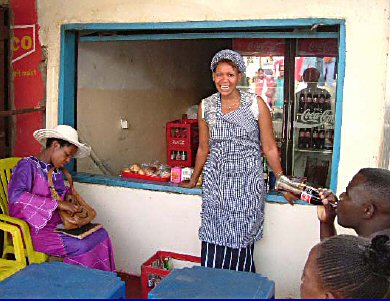
Underappreciated "...Street-vended and informally vended food can contribute significantly to the food security of those involved in its production, particularly suppliers of raw produce, food processors and vendors. Women are often owners or employees of street food businesses. In certain countries (Benin, Ghana, Lesotho, Togo and Democratic Republic of Congo), they represent 70 to 90% of vendors. In Ghana and most developing countries, most women sell food in the street primarily to improve the food security of their household and also to have some degree of financial independence.Despite its growing presence, it is a sector that has rarely been the focus of strategic research initiatives that determine the importance and potential hazards of street-vended food, and what contribution it makes to the livelihoods of the urban and peri-urban poor (both producers and consumers)..."
via Natural Resources Institute

  • Digg
  • Del.icio.us
  • StumbleUpon
  • Reddit
  • RSS

Why Fast Food Thinking Harms Learning (and Life)


David Warlick tweeted about this amazing video from Martin Warlick's video a day blog. It is an incredible on-building animations of the Astronomical Clock for the 600th anniversary of Prague.

Listen at the very beginning, you here someone quickly snipping at the beginning:

"How anticlimactic."


They were wrong. What emerges is a phenomenal on-building animation that will take your breath away even half a world away here in Camilla, Georgia.

Do we jump to conclusions and prevent learning?

This reminds me of a Tweet Jon Becker made at ISTE where he stated that he overheard a conversation from a teacher who said something like:

"I give a presenter two minutes to get my attention and then, if they don't give me what I want, I'm out."

Fast food learning. 

We want a big Mac learning experience with a greasy side of 80 tools that provide us with very little nutrition but a satiated feeling that we've packed in everything we can.

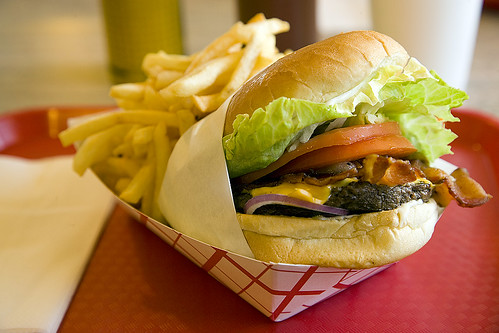
1/3 lb. Bacon Burger with fries at HegenburgerThis fast food mentality is what has gotten our waistlines in horrific shape and this mentality can also harm our learning.

Sure, we have boring presenters and need to do a better job of it. But to honestly think that you can sum up what you will learn in the first two minutes is taking it to an extreme!

As Jon replied back to me:

"What if that teachers let her students do this?"

We'd probably have one or two packed classrooms and the rest might be empty!

Social Media Doesn't Mean Social Skills
There are people behind presenters. All of us start off pretty rough. But presenters are presenting for a reason. (We hope?) If you want to kill their self confidence, walk out.

We need to have social skills. If one or two people exit a room it is disconcerting. But, you literally sap the energy from a room when you leave en masse.

En Masse Keynote Exodus
The ISTE 2010 mass exodus was embarrassing but I heard it happened again this year as well. I'm sorry, but if you go hear a keynote, unless you're about to embarrass yourself in a more primeval, physical way, you should stay to hear the keynote. It is rude to those who are around you and the speaker. How much learning are we missing by sucking the energy from the room? And what are these prominent people going to think about educators because of our unbecoming behavior?  

I can say this because I was one of the people who left the ISTE 2010 keynote and I was later ashamed that I did. I should have stuck it out even though the presenter's slides were unbelievably wordy and impossible to read from the back of the room.

Two Faces
Two Faced Tweeters Harm their Credibility
When you tweet behind someone's back - IT ISN'T BEHIND THEIR BACK. Say constructive comments that help a person improve and learn. I have had one person who truly treated me in a nasty way as I was speaking. He tweeted out over 20 tweets during my speech berating me for my thoughts to teachers and how they should face the future in education. The fact was he wasn't and has never been a teacher but his comments were over the top, but it is OK, if you do anything in this world, someone won't like you - and some people don't like anybody. It is OK.

But when I got offline and tried to re-address what he'd said on Twitter, his terse response was,

"This debate is too long for being on Twitter."

So, he can insult me on Twitter all day long, but will not do anything to be accountable for his actions? Is it any wonder when he dm'd me several weeks later to beg for a retweet to help him get an award, I wouldn't retweet. It isn't that he disagreed, it was how he disagreed (in a way intended to humiliate) that I had a problem with. He wouldn't even engage in a discussion so I could right the misquotes to his audience. Such a person is not admirable and I do not respect him for it. In every disagreement is a learning experience. I learn a lot from those who disagree with me and often email them when it happens. He denied me and others a learning experience and only intended to act ugly.

I'm fed up with rudeness. Technology is no excuse.

I will protect you from the Bokeh!
Protect those you love with your habits.

Protect Your Family's Privacy Online
I know of a prominent tweeter in educational technology who often says disparaging things about his sister in law, his wife's food, and the company he keeps. If the people he is face to face cannot trust him, then why should I? He is making them a laughing stock on Twitter and when they see it, he is going to permanently damage the relationships he holds most dear.

My husband could tweet and thousand dumb things that I do a day! (Well, maybe not a thousand but a lot!) I trust him to love me anyway -- perfect love is really when imperfect people love each other anyway.

When we were on vacation in June, the kids kept saying "is this going to be on your blog?" Because they wanted to be themselves. I told them NO - they are protected. I didn't even tell anyone we were going.

Don't Jump to Conclusions: Stay the Course
So, when I heard the person on the video above immediately say:

"How anticlimactic" before the show even started it hit me wrong.

It is a symptom of fast food thinking.

Fast Food Actions Don't Fix Problems Caused by Long-Term Habits
Every major problem in my life that I've had to tackle: my weight, my debt, being a good mom, managing my time, organizing my office, organizing my home and classroom, managing the over 20 roles I play in my life - it has taken concerted work. Study. Habits. Hard work.

I'm working on understanding and putting habits in place to help me with my email problem. I'm on my fifth book. I've spent hours doing Inbox Detox and Bit Literacy and every concept I can take that will help me with this problem.

If something took a lifetime to mess up - you can't fast food yourself out of it.

Schools do this all the time. Teachers tell me that if the front office would do ONE thing it would improve learning at their school:

Never use then all-call intercom during class. 

(At our school you can only go on the intercom the first two minutes of class or during the last five. No one breaks that rule.) This one thing is messing up the flow of several dozen classrooms. It is a fast food mentality. I need them now, I'll get them now. In a school, front office efficiency is not as important as learning efficiency. Class time should be SACRED. STOP IT!

Fast Food Learning Doesn't Work
Everyone wants a quick fix to education. They have one class to implement a new strategy and someone tries it once and says

"oops, it doesn't work, try something else."

You haven't given it a chance. You haven't stuck to it.

Teachers are sick of the "flavor of the month" tactics. Oh, now we're going to emphasize this and next month it is going to be that. Change happens with consistency.

Don't Confuse Tactics with Strategy
Dr. Adler my prof in strategic management stressed that a tactic is less than a year and a strategy is over the course of a year or more. It isn't a strategy if you're hopping from thing to thing. You are fast fooding your problems and it DOESN'T WORK. Your tactics add up to a strategy of NOTHINGNESS. Zip.
Strategy - It's game of life

This blog and my Twitter account and Facebook account and even Tumblr - these are things I WORK on. I consistently apply myself every day to sharing in the very best way that I can. To improve the lives and classrooms of teachers. I have certain things I do every day.

Do something long enough and you reap it. The iron law of the universe is that you reap what you sow. (Brian Tracy and the Bible.) Whatever you do, you reap the results of it.

Don't balance your checkbook and you'll overdraw (most likely.) Don't exercise and eat right and you'll get fat. Think short term and you'll not like your long term.

Time to Think Slow, Steady, and Consistent
It is time for some consistency, some staying power, some manners, and some hard work.

I'm sick and tired of fast food living in any area of my life. Are you?

Enhanced by Zemanta

  • Digg
  • Del.icio.us
  • StumbleUpon
  • Reddit
  • RSS

Ed Schultz: Racist and Sexist?

This post was halfway written last week before I got bored with it and moved on... but it appears that my point was very relevant. My original point was that Ed Schultz, a liberal and a Democrat who supports Barack Obama, as a small man who wants to use the power of the government to control your life, liberty, and property, and demonstrates his smallness in his thoughts and actions, which are thuggish, racist, and sexist.

Last week, Ed Schultz heard the word 'food stamps,' and immediately pictured a black guy! Schultz, like many liberals and demonstrates, screams racism at everyone because in their hearts, people are divided by color and you can stereotype their personalities based on their color and (to him) the job of government is to protect the weaker/poorer/lesser people in society which (to him) are always people of color. No need for Thuggie Eddie to actually get to know people and judge them based on the quality of their character- nope, instead he sees a black guy and thinks 'food stamps', and vice-versa, whenever he hears 'food stamps' he thinks 'this is code for black people 'cause all black people are the kind of people who are all on food stamps and white people are too good for food stamps so food stamps must mean black people.' Ed Schultz is a racist.

Today I heard that Ed Schultz called a woman radio host a 'slut'. Laura Ingraham, a popular conservative radio host and author, criticized President Barack Obama for taking a trip to Ireland and enjoying a Guinness and taking in the sights and going to fancy parties while the Midwestern United States was being hit by severe weather. She felt that this was yet more evidence that Obama was out of touch with the common man.

Soon after, on his radio program (which I sometimes listen to on 1310AM when I want to hear what bizzaro world sounds like), Ed Schultz said

And what do the Republicans thinking about? They’re not thinking about their next-door neighbor. They’re just thinking about how much this is going to cost. President Obama is going to be visiting Joplin, Mo., on Sunday but you know what they’re talking about, like this right-wing slut, what’s her name?, Laura Ingraham? Yeah, she’s a talk slut. You see, she was, back in the day, praising President Reagan when he was drinking a beer overseas. But now that Obama’s doing it, they’re working him over.
Ed is a great example of liberalism- not even pretending to understand the other side, personally attacking the other side, using offensive language that puts down minorities and women and Jews and anyone outside of the ruling elite white class that he wants to empower, getting everything wrong (Ingraham wasn't even on the radio when Reagan was President), and never even failing to address Ingraham's whole point (that Obama is out of touch with the common man).

Ed Schultz is a liberal and a Democrat and supports Barack Obama and is employed by MSNBC and frequently is invited as a guest to speak at liberal events, and demonstrates through his actions just exactly what a liberal Democrat really is- people who want to use the power of the government to control your life, liberty, and property, and aggressively attack with personal and vulgar actions anyone who does not bow to their thuggish, racist, sexist, anti-Semitic demands. It isn't your father's Democratic party anymore.

Laura's books can be found here- check out The Obama Diaries or Shut Up & Sing: How Elites from Hollywood, Politics, and the UN are Subverting America.

  • Digg
  • Del.icio.us
  • StumbleUpon
  • Reddit
  • RSS

Has Anything Changed since Live Aid?

Ethiopia, as its borders were in 1985.Image via Wikipedia From Alex Perry and Kassahun Addis at TIME:

Nearly a quarter-century ago, an outright famine led to Live Aid, an international fund-raising effort promoted by rock stars, which produced an outpouring of global generosity: millions of tons of food flooded into the country. Yet, ironically, that very generosity may have contributed to today's crisis.
Over time, sustained food aid creates dependence on handouts and shifts focus away from improving agricultural practices to increase local food supplies. Ethiopia exemplifies the consequences of giving a starving man a fish instead of teaching him to catch his own. This year the U.S. will give more than $800 million to Ethiopia: $460 million for food, $350 million for HIV/AIDS treatment — and just $7 million for agricultural development. Western governments are loath to halt programs that create a market for their farm surpluses, but for countries receiving their charity, long-term food aid can become addictive...[continue reading]
Reblog this post [with Zemanta]

  • Digg
  • Del.icio.us
  • StumbleUpon
  • Reddit
  • RSS

An Indigenous West African Food Culture

In light of the continued spike in food prices we take a look at Ifeyinwa Fransesca Smith's 1995 paper on the need for an Indigenous West African Food Culture. She made a strong case for educating the public on the benefits of under-recognized foods then,a point which remains relevant today:

There is a dire need for well planned and executed popularization campaigns of foods produced both within countries and the subregion. The many food technology institutes and food industries have roles to play in ensuring easy availability of our local foods in nutritionally adequate and culturally acceptable forms. Their roles must not end with the production of such foods, there is need for continuous research aimed at evolving better, versatile and more acceptable products. These new products should in turn be subjected to intense recipe development, be aggressively popularized through their use in the preparation of locally acceptable and nutritionally adequate meals. Finally, there is a need for continued research into newer and better ways of utilizing the partly processed foods and popularizing new recipes evolved.

  • Digg
  • Del.icio.us
  • StumbleUpon
  • Reddit
  • RSS

Establishing Food Security


Nnena Nwoke Kalu's Food Security Magazine examines issues which include food production,sustainability and commercialization.Its aim is to "...assist in achieving increased food availability and increased purchasing power and in addition the attainment of the overall goal of sustainable household and national food security..."

  • Digg
  • Del.icio.us
  • StumbleUpon
  • Reddit
  • RSS

Government Thugs vs Bacon-Wrapped Hot Dog Vendors

Reason.tv has some interesting videos on its site. The one that I found the most fascinating is called "Food Fight." In this video, which is hosted by Drew Carey, we a battle between private businesses and government officials. In what is only to become more common with the passage of legislation giving more government power over controlling the health care and energy industries, the video shows how public officials paid for by citizen taxpayer dollars spend their time going around Los Angeles seizing bacon-wrapped hot dogs.

Yes, amid the hustle and bustle of downtown Los Angeles, there exists an underground world of illicit trade in bacon-wrapped hot dogs. The Department of Health has made it illegal to sell a hot dog wrapped in bacon, and if they catch any street vendors doing so, they will use their police powers to hassle these private businesses, shut them down, seize their goods, or even destroy their businesses. It is all seen on the video- there is actually camera footage of government thugs confiscating a food cart and dumping the bacon-wrapped hot dogs into the trash.

"Bacon is a potentially hazardous food,” says the LA County Health Department. Personally, I think a government that can throw a food vendor in the in the slammer for 45 days for selling bacon dogs is a bigger threat to our lives, liberty, and property. Which do you want- a dangerously powerful government or a street vendor who pays taxes and sells consumers products they want?

A government bureaucrat, supported by no data at all, feels personally that bacon-wrapped hot dogs are not safe, and put in a rule that makes it illegal to sell them. Apparently he feels he is the business of stopping people from doing what they want because he doesn't agree with it- sounds like more government officials in the business of tyranny.

Be prepared for more of this- is your home or business going to be up to the new Green Codes or the new Health Codes that government officials come up with every day? With Democrats in office, you really need to ask yourself- are you really living in a free country any more?

If you thought I was joking, you should have been paying more attention to the news- Government tightens food standards is only the beginning. Obama and the Democrats have just decreed that the bureucratic agencies that rule us now have more power over private businesses and can decide what temperature eggs must be kept at and who you are allowed to buy chickens from.

This new system for 'monitoring eggs' was coupled with 'other steps' gives federal monitors more authority and more force with which to respond when you break their rules. These new powers are designed to combat salmonella in eggs, but are only the first step- the Department of Agriculture is soon to be created similar powers to those who raise cows for meat and milk, and the FDA is developing ways to control those who grow tomatoes, melons and leafy greens.

Democrats, liberals, and Obama are only about one thing- controlling your life. Now they are even trying to control what you eat! Will the attacks on property, liberty, and life never end?

  • Digg
  • Del.icio.us
  • StumbleUpon
  • Reddit
  • RSS

Cities Feeding People


Cities Feeding People: a book published by IDRC highlights:

The importance of urban food production as a source of both income and food. It stresses the wide socioeconomic spectrum of urban farmers and the critical importance of self-grown food for the poorest urban dwellers, particularly those living in households headed by women. The studies also emphasize the growing commercial importance of certain foods such as vegetables, poultry, and eggs.
It goes on to say that:
Government response to urban food production has generally been one of neglect if not harassment. Land-use regulations for both public and private land are needed for urban food production to flourish. Improved information about crops and fertilizers, water, and pesticides could greatly increase crop production while immunization and advice on feeding would improve livestock and reduce the wastage by premature death. To encourage such governmental reconsideration of policies toward urban and peri-urban farming, however, careful quantitative comparative studies must be completed to understand current practices.

photo courtesy of RUAF foundation

  • Digg
  • Del.icio.us
  • StumbleUpon
  • Reddit
  • RSS

We need an African Common Agricultural Policy

Aboyeji E Iyinoluwa writes in Project Diaspora:

...when one looks closely at the CAP, the objectives are very Euro-centric - and rightly so. The entire point of the subsidies are to enable Europe be self sufficient in the production of its food. For food import loving Africans, this might seem like a strange idea, but in a world of genetic modification, bio terrorism and Monsanto, food is becoming a national security issue and there are several good reason for keeping its production domestic. In fact, a lot of the developed countries we aspire to (including the United States) have subsidies in the spirit and style of the CAP. In a perfect world, much of Africa’s chronic food shortage problems could be solved by adopting a CAP style arrangement for Agricultural production. There is no sense is trying to open a European market for African agricultural products when even with huge volumes of food imports, we can barely satiate the starving people on our own continent.
More here
Enhanced by Zemanta

  • Digg
  • Del.icio.us
  • StumbleUpon
  • Reddit
  • RSS

Food Aid Distortions: Malawi

Alex Renton reports on the damaging effects of US food aid to Malawi.He quotes Charles Rethman who stated:

It's very short-sighted - it doesn't make any sense. It's going to short-circuit the effort to improve nutrition here, it undermines farmers, households. It's not sustainable and it won't bring about any long-term change to malnutrition rates,'

It has been shown that this type of assitance
can and does often do more harm than good. The very promise of free food can cause disaster-hit populations to leave their homes and move to refugee camps. They may become dependent on it, making it harder for them to take up their lives again when the disaster or danger has passed. Farmers leave their fields, prices fall and local traders lose their businesses. Clearly, while food aid saves lives in a disaster, it can hamper the return to normality.
It has done more insidious damage, as detailed by some aid agencies. Food aid can permanently damage the economies of nations it was sent to help. Vast tonnages of rice donated by the USA and Japan to Indonesia after the country's economic collapse in 1997 caused damage to farmers and distributors that has never been repaired: having been one of the world's largest producers, Indonesia is now a net importer of rice.

via African Agriculture

  • Digg
  • Del.icio.us
  • StumbleUpon
  • Reddit
  • RSS

Let Food Range Free

Douglas Southgate and Caroline Boin write

When food does not cross borders, hunger does. Politicians and experts meet in Rome this week at the UN Food and Agriculture Organization to address “How to Feed the World in 2050,” building up to World Food Day on Friday. But famine looms right now in Kenya, Ethiopia and their neighbours, as many governments continue to reject the UNFAO's recipe for success: free trade in food.
More here

  • Digg
  • Del.icio.us
  • StumbleUpon
  • Reddit
  • RSS

Since Obama Won, Every Month More and More People Need Foodstamps to Survive Change

From Reuters, via Sweetness & Light, Food-stamp tally nears 40 million, sets record:

Nearly 40 million Americans received food stamps — the latest in an ever-higher string of record enrollment that dates from December 2008 and the U.S. recession, according to a government update. Food stamps are the primary federal anti-hunger program, helping poor people buy food. Enrollment is highest during times of economic distress. The jobless rate was 9.9 percent, the government said on Friday.

The Agriculture Department said 39.68 million people, or 1 in 8 Americans, were enrolled for food stamps during February, an increase of 260,000 from January. USDA updated its figures on Wednesday.

Enrollment has set a record each month since reaching 31.78 million in December 2008. USDA estimates enrollment will average 40.5 million people this fiscal year, which ends Sept 30, at a cost of up to $59 billion. For fiscal 2011, average enrollment is forecast for 43.3 million people.

In November of 2008 we voted for change... and the change was increasing numbers of people who have been forced to humiliate themselves and accept the forced charity of other taxpayers just to eat. Read that article again- every single month that Democrat President Obama is in office more and more people need foodstamps- the records started when he was elected, and every month that he is in office, more and more and more and more people are forced to go into a government office and admit that on their own they just can't make it and that they want to take charity from others who are forced to provide it.

The word to describe this is disgusting. Wrong. Unjust. Immoral. Sad. Obama. Democrat.

  • Digg
  • Del.icio.us
  • StumbleUpon
  • Reddit
  • RSS

Adapting Post Harvest Food technologies

In a paper(PDF) Silou Thomas made assertions which include the following:

  • a gap exists between what the official education system proposes in terms of training (profiled on the modern food large scale industry) and the actual demand of the market
To address these challenges he made the following recommendations:
  • due to centrality of research in the delimitation of job requirements, it is essential that it be very innovative in concepts and methods

  • Digg
  • Del.icio.us
  • StumbleUpon
  • Reddit
  • RSS

Hooked on Aid:Ethiopia

The BBC reports on Ethiopia's addiction to Aid.
"...For most of the past three decades, it has survived on millions tonnes of donated food and millions of dollars in cash.It has received more emergency support than any other African nation in that time.Its population is increasing by 2m every year, yet over the past 10 years, its net agricultural production has steadily declined.Even in good years, some 5m people need food aid just to survive...Why, with so much international support, have things gotten worse and not better?...Woldu Menameno, a farmer in the Tigre region of northern Ethiopia, believes he knows at least part of the answer."For years things were very bad. There was plenty of aid, but people were lazy. They just had the food and sat in their places," he says."They didn't participate in anything, but just counted the days. They sat in their houses, dreaming of how to get more food..."

  • Digg
  • Del.icio.us
  • StumbleUpon
  • Reddit
  • RSS

Retailers Head for Exits in Detroit

Yahoo Finance carried an article from the Wall Street Journal called "Retailers Head for Exits in Detroit.' The story details how there are no more big box stores or major retailers left inside the city limits of Detroit- not a single major car dealership, no Borders, no Starbucks, no chain grocery stores, no outlets to sell fresh produce and meat, and no Home Depots or Lowes.

The city of Detroit has been hammered by years of liberal Democrat rule (it is getting increasingly tough to blame all this on Bush in Detroit), and now there are very very people buying goods- the city's has a 22.8% unemployment rate among the highest in the U.S. and 30% of residents are on food stamps- and there are fewer people selling goods now. High taxes, high regulation, easy access to welfare, poor crime fighting, government handouts, and government directed building projects- the very platform of Obama- have destroyed capitalism in the city of Detroit, and now its residents have to travel to the suburbs (which are still run by Republicans) to buy goods and services.

How did Detroit get in this mess? Buried in the middle of this article, we discover the real reason why residents of Detroit are unable to buy food and consumer goods- GOVERNMENT. The barrier to a better life is government. The thing that stands in the way of eating good food for cheap prices is government. The people of Detroit can only blame themselves, because they elected liberal Democrats on a message of hope and change, and now live poor and solitary and brutal lives as a result.

After the usual 'it's the white people in the suburbs fault' line, the real reason why Detroit is suffering comes out- the reason why there are no stores in Detroit is because the city is inept and negligent in keeping track of who ones what property and now there are hundreds of buildings were left vacant with unclear property ownership. The other reason that residents of Detroit have to travel twice as far to get food is because zoning rules and other red tape to develop land for big-box stores that might cater to a low-income clientele is daunting.

What is the solution? One approach is to go green, and start village gardens and markets and revert back to the middle ages. Another approach is to tax the pants off any rich person the government can get its hands on, and squeeze more blood out of rocks. Another approach is to spend tax money trying to talk people into relocating their businesses to Detroit. These are all bad ideas though.

The solution is for residents of Detroit, Wayne County, Oakland County, the State of Michigan, and the United States of America to vote straight ticket Republican next election. That is the easiest way to affect positive change and restore hope for Detroit. Do it.

UPDATE: I want to respond to some of you who emailed me because you don't like my solution (vote Republican). First, government is power, and it is very important who is in power, and the best way to affect government is by voting. Voting is the easiest way. Voting is the most direct way. Voting is the quickest way. So voting is the best solution. As to voting Republican, Republican politicians usually are closer to the advocating the correct policy decisions than Democrats, and if you vote Republican you have a much better chance of voting for conservatives than if you vote Democrat. And voting independent or third party is an utter waste of a vote because we have a two party system.

So that's why I just suggest voting straight-ticket Republican. That is the easiest, quickest, and most direct way to change our nation for the better. Keep that in mind next election when there are Congressman and State Senators up for election- it is because of people like you who didn't vote straight ticket Republican that our country is in this mess.

  • Digg
  • Del.icio.us
  • StumbleUpon
  • Reddit
  • RSS

The One Habit that Will Immediately Reduce Your Stress

One of the most unbelievably annoying things in my house is to run out of cat food. We have two cats and they just go crazy.

"Good morning, Boots."

"Meow."

"Morning, Crispy."

"Reow" (Yes, he has an "r" sound instead of the "m")

Then all I hear is

"Meow. Reow. Meow. Reow."

It escalates until it is is unbelievable.

You can't get anything done. Don't pass Go. Don't collect $200. Don't even breathe.

GET CAT FOOD, STAT.

This Saturday I jumped up out of bed at 7am ready to write and there they were with eager paws and whiskers twitching.

They descended in feline fury upon me and, you guessed it, I ended up going to Wal-Mart before being able to fire up my computer and start writing. Then, I saw I needed toothpaste and Cascade and several other things. I went ahead and started laundry while I was at it. So, I started at 9:30 am after one thing that led to another.

That is what happens when a little thing is allowed to slip until it becomes a big thing. The cats will nag when they aren't fed. It is a law of nature. Then, you will lose focus. It is a habit of humans who have let the urgent usurp the important.

Avoiding the Cat Nag
This is what we call the "cat nag" in my house.

It means that we haven't taken care of business and have let something get to a critical state so that everything else comes to a stand still until that one need is met.

Paper in the printer. Ink in the printer. Getting behind on grading. Running out of Milk.

I"ve blogged about these things before when I talked about applying the Pareto principle to your life but this is sort of different.

What are the things that bring your life to a standstill? Index cards for the kids? Pens. Pencils?

What about in your classroom? Dry erase markers? An eraser? What are the things that bring your life to a halt?

These things should go on a checklist.

Step 1: Prepare Your Punchlist
Sit down at your table now and make two lists. Make a list at home of the things that "bring the cats running."

What things bring everything to a standstill forcing you to go to the store or interrupt your schedule?

Do the same for your classroom. What are the things that bring the classroom to a standstill and force you to attend to that problem? (And we know what happens when the students know you're distracted or you have to go to the copy room to get more paper!)


It is tough enough to teach but when a small thing keeps you from teaching, that small thing is a big thing.

Look at your two lists and work to figure out how much of those things you need a week. If you're not sure (like dry erase markers) then your list would say:

"Clean board. Check dry erase supplies."

Step 2: Make a Weekly Appointment to Punch Out Your Punchlist
Now, make an appointment with yourself where you will do the items on your punchlist. For me, at school I do my list every Wednesday at 11 am and at home, I do it every Saturday morning. My goal is to handle those items once a week.

So, at school this punchlist looks sort of like this:

  • Check ink in printers (If I'm below 50% in ink, I go ahead and order more.)
  • Get paper from copy room (I keep 4 reams of paper which is more than enough now that my student work doesn't require paper.)
  • Wash and clean board. (I throw away dry erase markers that don't work as I find duds and keep a certain number at my board.)
  • Check my dropbox and make a list of all things I have to have graded by Friday (Grades are due Monday and my goal is to not grade on the weekends)
My "Home" (Saturday) punchlist includes:
  • Restocking my fridge at school (after I get groceries I drive straight to the school and put the bottled water in my small fridge.)
  • Check toilet paper and make sure there is enough for the week everywhere.
  • Buy enough milk for the week (OK, this is a problem. On a good week it is 3 gallons - some weeks I admit the kids have had 8 gallons - I have three very tall kids who are growing a lot!)
  • Making a list of chores for the kids to do that day based upon a run through of the house.
  • Check cat food and dog food and buy more if needed.
  • Check pens, pencils, and paper by the telephones.
  • Check laundry detergent, check dishwashing detergent, shampoos, etc.
Not a lot of things. Just the things that will add to stress in my life. Who wants to leave the house at 9:30 pm to go get one thing at the store?

This one thing has helped me a lot. I know that stress will happen, but why waste my time and anxiety on the doggone cats?

I had that epiphany on Saturday and thought I'd share it with you. Sounds like I need to follow my own guidelines more closely or just realize that my cats may have started eating like my kids and I need to buy a little more. ;-)

Remember your noble calling, teacher. Do what you can to plan ahead so you have less stress in your life and can focus on the most important thing in your classroom: your students.


  • Digg
  • Del.icio.us
  • StumbleUpon
  • Reddit
  • RSS

The "Colonialism-Imperialism" Paradigm Is Kaput (2 of 2)

PART II (see part I)

Modern Grievances against the West

External Props of African Despots

Historically, every foreign entity that goes to Africa does so to pursue their own interest, not those of Africans. Witness the scramble for Africa in the 1880s. The Chinese do not go to Africa because they love black people soo much. They go there to pursue their interests. Exactly the same can be said of the Cubans. This competition for influence in Africa became pronounced during the Cold War, when super-power rivalry led to the establishment of client states across Africa. The West supported the likes of Mobutu Sese Seko, Samuel Doe, Hastings Banda, Felix Houphouet-Boigny, etc. etc. The East supported the likes of Mengistu, dos Santos, Mattieu
Kerekou, Sassou Nguesso, Samora Machel, etc. etc. Arab countries also backed their clients in Africa: Sudan, Mauratania, Chad, etc.

Cold War Intrigues and Machinations

Each side in the Cold War provided billions in aid to their clients to protect their security interests in Africa. Angola, Ethiopia, and Mozambique all received substantial amounts of Soviet military hardware. For example, Mengistu Haile-Mariam of Ethiopia received more than $11 billion in military weapons between 1975 and 1990. Angola received at least $2 billion annually
in military assistance from the Soviet Union in the 1980s (The Independent, London, Feb 19, 1992). In 1991, $4 billion of Angola's $8.7 billion foreign debt was owed to the former Soviet Union. On July 1, 1991, President Eduardo dos Santos said: "military debts were not usually honored," implying that Angola would not pay it (The New York Times, July 8, 1991). Soviet aid was stingy.
The economic aid the Council for Mutual Economic Assistance (Comecon) provided to sub-Saharan Africa in 1985 was $300 million. Of this, Ethiopia received by far the most (57.9 percent). Next were Mozambique (13.8 percent), Egypt (6.6 percent), Madagascar (4.2 percent), Angola (2.8 percent), and Tunisia (2.1 percent) (West Africa, Dec 12-28, 1988; p. 2320). Angola and Mozambique benefited more from arms supplies. The $300 million aid was only 5 percent of total Comecon bilateral disbursements and only 3 percent of the total aid flow to sub-Saharan Africa.

Furthermore, the little Soviet economic aid that did flow to Africa had strings rigidly attached. Loans and trade credits supplied could only be spent in the Soviet Union and Comecon countries (100 percent tied aid). In addition, the Soviets supplied the technical personnel and the equipment for project construction. Repayments of loans were often by barter, but to the
decisive advantage of the Soviet Union. For example, in Guinea, Soviet help in building a bauxite plant at Kindia was to be repaid with deliveries of two million tons of bauxite ore a year for 30 years.

Barter arrangements also hurt Soviet clients in Africa in a different way. For example, repayments of loans Nkrumah of Ghana took from the Soviet Union were to be made in kind with exports such as cocoa. But the Soviet Union had little use for Ghana's cocoa. Re-export of cocoa by the Soviet Union helped depress the world market price of cocoa in the mid-1960s.

China, an active player in Africa, sought to win adherents to the Chinese brand of socialism. Zhao Ziyang, China's foreign minister in the early 1960s, reminded African leaders of the presence of Chinese coolies in Africa. China's perception was that Moscow, not Washington, was its principal enemy. Its strategy was therefore to weaken "social imperialism at the expense of monopolistic capitalism" (Snow, 1988). West Africa observed that "in Africa, China increased assistance to old friends such as Tanzania and Zambia. The 2000km Tan-Zam railroad was meant to overshadow the Soviet-built Aswan High Dam in Egypt. China also made friends with old enemies such as Mobutu, helping him during the Shaba uprising in 1978-79; in 1980 they helped him build a naval base at Kinkuzu in southern Zaire to threaten Angola" (Aug 15, 1988; p. 1473).

China's fortunes in Africa quickly turned into mirages, however. At first, China's anticolonial stance was welcomed by African liberation movements. But as independence was gained, China's emphasis on subversion and its intense enmity toward the Soviet Union became less and less appealing or relevant to Africans. In fact, as early as 1963 Julius Nyerere of Tanzania
complained of a new scramble for Africa between the Soviet Union and China. Because their actions were anti-Soviet rather than pro-African, the Chinese themselves did not achieve much by way of influence.

Furthermore, China was no less immune to blunders than the Soviets. Less wisely than the Soviets, China meddled in Burundi ethnic feuds. In 1963 China backed the Tutsi expedition by training a number of Tutsi in guerrilla warfare in China. The subsequent massacres in Burundi earned China much opprobium. China also supported the Biafran secessionists in Nigeria's civil
war (1967 to 1970) simply because Moscow backed the Federal Government of Nigeria. Similarly, in Angola, China supported the FNLA (National Front for the Liberation of Angola) because Moscow was backing the ruling MPLA.

In Mali and Congo-Brazzaville, China made some headway. But a spate of military coups brought to power new rulers distrustful of China. Only in Tanzania did China achieve some diplomatic and ideological success. China agreed to fund and build the 1,200-mile Tan-Zam railway line at a cost of 166 million pounds sterling, free of interest. The railway was both an
engineering and a political achievement. It was completed two years ahead of schedule and was much touted as a model of what foreign aid could do for Africa. But it was one thing to build the railway and quite another to run it efficiently. Maintenance was poor, services degenerated, and the Dar es Salaam terminal became chronically clogged to the point of immobility. Although the Chinese had nothing to do with these shortcomings, their reputation suffered.

Zimbabwe received technical and military aid from North Korea and China. For its part, the West also poured billions into Zaire, Liberia, Kenya, Nigeria, and other African countries.

Each side also sought to undermine African regimes that were hostile to it. Lumumba was assassinated by the CIA operatives and the 1966 coup against Nkrumah was orchestrated by the CIA. In this sphere, the French were the worst, intervening directly to remove African leaders they did not like in Francophone Africa. For the French, independence did not mean a retreat from Africa. France left hundreds of officials in Africa as advisers. Behind the doors of many key ministries in the Ivory Coast and Senegal or Gabon, discreet but powerful French officials kept a close eye on policy. The French also sent teachers to Africa and brought African students and civil servants to France for training. France secured the right to maintain a
heavy military presence in Africa. In 1989, for example, France had a significant number of military advisers in 16 African countries and permanent Forces d'Intervention in seven. Total strength of French troops in Africa exceeded 12,000 in 1990. In France itself, the Forces d'Action Rapide, numbering 47,000, could be mobilized in less than 48 hours for action anywhere in Francophone Africa. These forces played an economic policing role and backed up French diplomacy and paternalism. They supported "approved" Francophile governments such as those of Leopold Senghor of Senegal and Felix Houphouet-Boigny of Cote d'Ivoire.

After 1960 the French intervened on many occasions to prop up unpopular African regimes against internal dissatisfaction and disorders. The most notorious such occasion was in Gabon in 1964, when French troops were used to reinstate President Mba after a coup. Noting that the French did not intervene to save President Youlou in Brazzaville in 1963, critics charged that intervention was predicated on mineral wealth. (Gabon is rich in oil.)

Now, each foreign entity operating in Africa pursues its own interests. It was ONLY the West which propped up hideous dictators in Africa. A foreign prop is a foreign prop is a foreign prop, regardless of its origin. An African leader is supposed to pursue the interests of his PEOPLE. If he doesn t, remove him from power but did we? Instead, we argued ad nauseam that, since the West put Mobutu, for example, in power, it was the responsibility of the West to remove him. This was ridiculous because if Mobutu was serving Western interests, why would the West remove him? And even if the West removed him, who do you think the West would have installed as a replacement? Another Mobutu !

It is clear that we have drawn no historical lessons from our dealing with the West and other foreign blocs. Here s a popular adage: If someone cheats you once, he is the fool but if he cheats you again, you are the fool. If you agree, then why are we talking about the Second Scramble for Africa ? And have we not learned that if you give an African problem to the Americans, Brits, French or the Chinese to solve it, each would solve it to their advantage? Does the mantra, African solutions for African problems, make sense to you?

Again, prop or no prop,

You cannot claim that it was the West which told Mobutu to loot the Zairean treasury. Nor claim that it was the North Koreans who told Mugabe to butcher over 20,000 Ndebele in 1980 (Matabeleland massacre). Neither can you claim that it was the Arabs who ordered Idi Amin to
butcher over 200,000 Ugandans. Nor can you claim that tell me it was the French who ordered Gnassingbe Eyadema to cling to power for 34 years and amass a personal fortune worth $3
billion.

True, the French and indeed the World Bank knew these African despots were stealing money and looked the other way. But who is an African leader accountable to? To the French, the World Bank or his PEOPLE? Prop or no prop, these leaders must be held accountable for their actions.

In fact, these days the charge of foreign meddling in African affairs and the specter of sinister and greedy multinational corporations lurking in the dark, waiting for a chance to pounce and exploit Africa confute reality. Foreign investors have fled Africa as the continent remains unattractive. Is it not African governments who have been drawing up elaborate and fancy
investment codes to ATTRACT them back? And is it not African governments themselves who take their budgets to foreign capitals for approval in order to get foreign aid? So who ALLOWS the meddling in African affairs?

Even then, the West has shown little interest in meddling in African affairs in the past few decades. If anything, the West has been in retreat from Africa! Recall the statement by presidential candidate, George Bush, that Africa was not of strategic importance to the U.S. And was it not the same African leaders who were complaining after the Cold War that Africa was
being marginalized ? So which is which: Is the West meddling in African affairs or the West marginalizing Africa?

In case you did not know, the West is thoroughly fed up with Africa, which it regards as a cry-baby, hopelessly incapable of solving any of its problems and is constantly crying out for help. What do you think the expression donor fatigue means? That is the diplomatic way of saying that the international community is fed up with incessant African appeals and begging. Today, there is famine in Ethiopia, tomorrow, there is a refugee crisis created by war in Liberia, or Somalia. Then there is genocide in Rwanda, starvation among refugees in eastern Congo, Ivory Coast, and on and on. Haba. Africa is now synonymous with war, destruction, famine, refugees, starvation, instability and chaos. Year after year since 1985, one African country after another has imploded, scattering refugees in all directions: Ethiopia (1985), Angola (1986), Mozambique (1987), Sudan (1991), Liberia (1992), Somalia (1993), Rwanda (1994), Zaire (1996), Sierra Leone (1997), Congo DRC (1998), Ethiopia/Eritrea (1998), Angola (1999), Ivory Coast (2000), Togo (2005).

The implosion of these countries had nothing absolutely nothing to do with the slave trade, nothing to do with Western colonialism or imperialism, nothing to do with artificial colonial borders, nothing to do with an unjust international economic system; in short, nothing to do with so-called external factors. They all had to do with one thing: POWER the adamant refusal to relinquish or share political power. If GENERAL Siad Barre of Somalia, GENERAL Juvenal Habryimana of Rwana, GENERAL Pierre Buyoya of Burundi, GENERAL Mobutu Sese Seko of Zaire, GENERAL Samuel Doe of Liberia, GENERAL Joseph Momoh of Sierra Leone, GENERAL Robert Guie of Ivory Coast, GENERAL Gnassingbe Eyadema, etc. etc. had been willing to step down or put in place power-sharing arrangements, each of their countries would have been
saved. Note the frequency of the title, GENERAL.

The rule is this and you can call it Ayittey Law: "The adamant refusal of an African head of state to step down or share political power will ultimately lead to the destruction of his country." If Mubarak of Egypt, Museveni of Uganda, Mugabe of Zimbabwe, Ghaddafi of Libya refuse to leave the political scene or share power, their countries will be destroyed. This is not rocket
science and it has nothing to do with the West. It is a personal or political failure that cannot be blamed on Americans, Chinese or Martians.

Back in 1986, President Museveni of Ugana said that no African leader should be in power for more than 10 years. What happened to him? He has been in power for more than 16 years and still counting. Finally in the late 1990s, African leaders wrote Constitutions in which they inserted the two-term limits. What happened? They are the very same ones who are now using their parliamentary majority and various devious maneuvers to override or repeal the two-term limits in Chad, Guinea, Namibia (Nujoma before he retired), Uganda, and even Nigeria.

Benin, Cape Verde Islands, Sao Tome & Principe, South Africa and Zambia all saved themselves from implosion because their leaders agreed to power-sharing arrangements crafted out of sovereign national conferences. South Africa would have blown up if the whites had not sat down with the blacks in a Convention for a Democratic South Africa (CODESA) to craft a new
political dispensation for the country. Rwanda blew up because the Hutu-dominated government of GENERAL Juvenal Habryimana refused to share power with the Tutsi minority and, instead, decided to exterminate them. "No Tutsis, nobody to share power with" was the macabre and brutal logic. More than 800,000 Tutsis were slaughtered in a orgy of violence and brutal massacre. That, in itself, was an excellent example of "intellectual astigmatism".

We could see with eagle-eyed clarity all the repugnant and inhumane brutalities of the white apartheid system in South Africa but we were hopeless blind to the equally heinous tribal apartheid regime in Rwanda. If the racist apartheid regime in South Africa had butchered just 2,000 blacks, even Idi Amin, who himself slaughtered more than 200,000 Ugandans, would
have arisen from his grave to attack South Africa with 3 dilapidated helicopters! But we said nothing when 800,000 Tutsis were slaughtered. Instead, we blamed the WEST for NOT intervening to stop the genocide. In fact, at its July 2000 Summit in Lome, Togo, the defunct OAU demanded a Marshall plan style compensation package for Rwanda. The demand for
compensation was part of the OAU inquiry into the 1994 Rwandan genocide, which blamed Western powers for failing to intervene to stop the mass slaughter. Naturally.

The OAU inquiry singled out France and the United States for particular blame for failing to prevent the genocide in addition to the United Nations Security Council as a whole. France was culpable because, having high level contact within Rwanda s Hutu-led government, the OAU report argued, could have exerted pressure to prevent the death of 800,000 people. The OAU
enquiry also blamed the US for failing to use its influence in the Security Council to authorize a military intervention to prevent the killing. The report argued that the West failed Africa despite the availability of copious evidence that the mass killing had been about to begin. In
conclusion, the report noted, a simple apology as already made by the United Nations was not enough and called for compensation, alluding to the $13 billion Marshall Aid plan the U.S. launched for the reconstruction of Europe after World War II. And what did these self-righteous leaders do to prevent the killings going on right under their very noses? And how can these
leaders complain about foreign meddling in African affairs and at the same time blame the West for NOT INTERVENING in an African problem to stop a massacre?

These days appeals by African leaders fall on deaf ears. OECD aid to Africa fell by 22 percent between 1990 and 1996, decreasing by 18 percent to sub-Saharan countries between 1994 and 1996 alone. (DeYoung, 2000a; p.A1). Even humanitarian aid to Africa has been shrinking. Contributors to United Nations aid and development programs have provided slightly more than half of the $800 million requested in 1999 for African countries suffering from "complex emergencies" -- the term is applied when war and failed institutions, often combined with a natural disaster, leave vast numbers of people homeless and starving. Specific programs for some particularly problematic areas, such as the Great Lakes region of Central Africa
including the two Congos, Rwanda and Burundi, have fared even less well (DeYoung, 2000b; p.A1).

In Sept 1999, the U.N.'s World Food Program announced it would curtail its feeding program for nearly 2 million refugees in Sierra Leone, Liberia and Guinea after receiving less than 20 percent of requested funding. An emergency appeal during the summer to feed and shelter at least 600,000 Angolans who had been displaced in that country's long-standing civil war
brought minimal initial response and predictions of mass starvation. In Africa's Great Lakes region of Congo, Burundi and Rwanda, where wars have produced nearly 4 million refugees, the United Nations estimated it would need $278 million to take care of them. By Oct 1999, only 45 percent of that amount had been donated. Nearly 80 percent of the United Nations humanitarian appeals in 2004 were to address African problems, but the response was disappointing as to be non-existent. "I remember sitting in this very room last summer (2004) asking for five helicopters to save thousands of lives in Darfur (Sudan). In the end we had to hire helicopters commercially as no Member States were willing to provide them," Under-Secretary-General Jan Egeland, head of the UN Office for the Coordination of Humanitarian Affairs (OCHA), the chief of the UN humanitarian office told the Security Council meeting on humanitarian challenges in Africa in January 2005 (http://www.un.org/apps/news/story.asp?). Even Irish rock star, Bob Geldof, who organized Band Aid and Live Aid to provide famine relief to starving victims in Ethiopia in 1985 is now fed up with Africa. He said this on Jan 31, 2005, of his work in Africa: "I'd dearly love not to have to go there the day after tomorrow. More often than not, it bores me profoundly - the pace of change is far too slow, and Africans excuse their own complicity in exactly the same way as our politicians (http://news.bbc.co.uk/1/hi/entertainment/music/4222373.stm).

Private organizations are also having difficulty raising funds for African relief operations. According to Mario Ochoa, executive vice president of the Maryland-based Adventist Development and Relief Agency (ADRA), which operates relief projects out of its own donations and under contract with donor governments, If I were to go now and make an emergency appeal for, say, Rwanda, for $500,000 for food, I'd probably get about seventy or eighty
thousand" in contributions (The Washington Post, Nov 26, 1999; p.A1).

True, every now and then, a major effort is launched in the West to help Africa. Africa s plight follows a ten-year attention deficit cycle: 1985 (Live Aid to save famine victims in Ethiopia), 1996 (a Special U.N. Session to boost aid to Africa to $25 billion), and now (2005). It is so humiliating to have the salvation of Africa tied to the success of rock concerts. And 20
years later, Ethiopia still can t feed itself and is appealing for food aid. Who do you blame: The white kids who did not give enough charity at the rock concerts or the stupid policies of Ethiopia s leaders?

Unjust International Economic System

Back in the 1950s and 1960s, this argument had much validity: The international economic system, dominated by western multi-national corporations, was rigged in favor of the rich countries. Prices of cash crops were fixed at artificially low levels; markets were cornered by giant western corporations, paying low wages and raking huge profits. While prices Africa received for its exports remained low, the prices Africa paid for imported manufactures soared astronomically (declining terms of trade). But today, with the onset of globalization, this argument carries little validity.

First, there is much competition on the international market. Asian corporations are now some of the big players. Second, African governments have done next to nothing to add value to their exports. Ghana still exports much of its cocoa in raw beans form. Third, every market has its ups and downs. We complain when the markets are down but conspicuously silent when
the market booms. Did we complain about an unjust international economic system when copper prices reached record levels in the late 1970s? When gold prices soared in the 1980s, cocoa prices in the 1990s? May I mention oil prices? By the way, what did we do with the windfall we reaped from the high prices? We squandered it!

Fourth, Africa s share of world trade fell from more than 3 percent in the 1950s to less than 2 percent in the mid1990s and to only 1.2 percent, excluding South Africa (The World Bank, Can Africa Claim the 21st Century;p.20). This erosion of Africa s world trade share in current prices between 1970 and 1993 represents a staggering annual income loss of $68 billion. This loss is not due to an unjust international economic system. Fact is, Africa has not been producing and you can t trade on the international market if you have nothing to sell. The physical volume of exports has been declining and therefore it is not a question of Africa not being able to earn enough because of low prices. Burundi s coffee exports, Ivory Coast's cocoa exports, and Sierra Leone s diamond exports have been devastated not because of low world market prices but by senseless civil wars. Even with food, we don t produce enough to feed ourselves and spend $19 billion a year on food imports. Nigeria spends $3 billion a year on food imports and has now brought white Zimbabwean farmers to teach it how to become self-sufficient in food production. What a disgrace!

Much of the decline in agricultural production in Africa is due to price controls, naked exploitation of Africa s peasant farmers, and senseless civil wars that have devastated the countryside and uprooted millions of people. Refugee camps are full of women and children, who produce the bulk of Africa s foodstuffs. State marketing boards fixed at ridiculously low
prices to milk the peasant farmers and they REBELLED. In Senegal, peanut (groundnut) farmers were receiving less than 20 percent of the world market price for their produce; in Ghana, cocoa farmers were receiving less than 30 percent for their produce in the 1980s. Those who complain about the Western conspiracy to fix prices for African exports at artificially low levels obviously do not see the ridiculously low levels their own State Marketing
Boards fix prices for peasant farmers.

Unfair Trade Practices, Trade Barriers and Subsidies

To be sure, unfair trade practices -- trade barriers and agricultural subsidies -- are legitimate issues of concern for the Third World. It is hypocritical for the West to preach free trade to the developing countries and yet put barriers in its place. But there is hypocrisy on both sides.
According to Columbia University economist, Jagdish Bhagwati, there is greater tariff protection on manufacturers in the poor countries . . . and autarkic trade barriers make domestic markets more lucrative than exports, leading therefore to an incentive bias against exports. So even when the rich country markets are opened further, one s own trade barriers can prevent the penetration of these markets (The Wall Street Journal, Jan 18, 2005; p.A16).

More importantly, the rich countries protect themselves against unfair trade practices, so why shouldn t African countries? A case in point is U.S. s anti-dumping law. Known as the Byrd Amendment for its chief author, Senator Robert Byrd (D-W. Virginia), the law passed by Congress in 2001 provides that when foreign manufacturers are found to be dumping goods in the U.S. market that is, selling at unfairly low prices any anti-dumping duties that are imposed can be handed over to the U.S. companies that brought the dumping case, rather than to the Treasury. It has benefited U.S. firms in industries including steel and pasta, with one of the largest beneficiaries being Timken Co., an Ohio maker of bearings, which collected about $40
million in 2004 (The Washington Post, April 1, 2005; p.A4). So, what have African governments done to protect their countries against dumping? NOTHING!

Even then, trade barriers are peripheral to the core issue of Africa's under development. Africa s exports consist mainly of cash crops (cocoa, cotton, coffee, bananas, sisal, etc.) and minerals (gold, diamonds, oil, titanium, cobalt, copper, etc.). Trade barriers and agricultural subsidies in the West affect only a few African exports, such as cotton (Burkina Faso, Mali, Sudan), peanuts or groundnuts (Gambia, Senegal, Sudan), sugar (Mauritius, Mozambique, South Africa), tobacco (Malawi, Zimbabwe), and beef (from Botswana, Namibia). Only a few African countries such as Ivory Coast, Mauritius, and South Africa export manufactured goods, which can encounter
trade barriers in the West.

It is not Western agricultural subsidies, however, that have hurt African food agriculture. Food production per capita has been declining and Africa's food import amounts to some $19 billion annually. The recent civil war in Ivory Coast, for example, cut the country's cocoa exports by half and disrupted agricultural exports of neighboring countries that pass through Ivory Coast. In Burundi, coffee production has dropped by more than 50 percent because of civil war/strife that has engulfed that small country of 8 million people since 1993. In Malawi, crime has risen so sharply that some farmers have refused to grow crops. And while the U.S. maintains import
quotas against Zimbabwe's tobacco exports, the industry has virtually been destroyed by President Robert Mugabe's violent seizures of white commercial
farmland to remedy "colonial injustices .

Wailing over agricultural subsidies in rich countries amounts to shedding crocodile tears since it gives the false impression that African governments care much about agriculture. The erosion of Africa s share of world trade was caused not so much by trade barriers but rather a host of internal factors. Among them are the neglect of agriculture occasioned by the over-emphasis on industrialization, raging civil wars, crumbling infrastructure, and misguided socialist policies that exploited Africa's farmers through a system of marketing boards and price controls. For example, trade barriers do not block exports of oil, diamonds, gold, col-tan, and other minerals from Africa. Yet, paradoxically, countries that produce them -- Angola, Congo, Equatorial Guinea, Gabon, Nigeria, Sudan, among others -- have been wracked by war, poverty and social destitution. In fact, Africa's diamonds have fueled such barbarous civil wars in Angola, Congo, and Sierra Leone that human rights activists in the West have called for a boycott of Africa's "conflict diamonds.

A key note speech by the new African Union (AU) secretary-general, Amara Essy, to mark the New Year on Jan 3, 2002 in Addis Ababa, Ethiopia, did not provide Africans with hope or assurance. He "accused the international community of failing the continent; their refusal to alleviate Africa's huge
debt burden continues to compromise its development" (IRIN, Jan 03, 2002). Same old drivel. Rather, it is African leaders who have failed the continent. The externalist paradigm by which African leaders blame everyone else but themselves for Africa s woes, is now KAPUT. The African people no longer buy it. Why then does this paradigm still have avid adherents? Four
reasons.

First, it is naturally the credo of most African leaders since it exculpates them from any blame for the current mess. Some evil external force did it! But the people don t buy it. Witness the huge credibility gap between the rulers and the ruled. Second, advocacy or veneration of the externalist paradigm constitutes a passport to career advancement. Those African scholars and intellectuals who rail against the World Bank, IMF and other external enemies are often rewarded with ministerial posts and government appointments. Rail against British colonialists and President Robert Mugabe will reward you with a government post. Such was the case of Jonathan Moyo.

Outside Africa are the third and fourth groups. Black Americans, drawing upon their own horrific experience, unfortunately have a radically different perception and understanding of Africa s woes. Most black Americans do not distinguish between African leaders and the African people and see Africa as a victim of Western neo-colonialism and imperialism just as they see
themselves as victims of racism, white supremacy and the lingering effects of slavery. Given their history and experience, black Americans tend to see only white devils because their oppressors and exploiters in the past were all white. Black Americans have never lived under brutal tyrants such as Idi Amin, Samuel Doe or Sani Abacha and therefore cannot relate to black
tyranny. This partly explains why black American leaders led the campaign against the heinous apartheid system in South Africa but were conspicuously absent in the campaign against the equally heinous de facto apartheid regimes in Rwanda, Burundi, Uganda and elsewhere in Africa. It also explains the tendency of black American leaders to embrace those African leaders that spit venomous anti-West vitriol: Minister Louis Farrakhan and Moammar Ghaddafi of Libya. Thus, black American perspective on Africa often clashes with that of the people. In fact, when President Clinton appointed Rev. Jesse Jackson as special envoy to Nigeria in 1994 activists threatened to stone him if he ever stepped foot in Nigeria. Five years later, Sierra Leonians were outraged when Rev. Jackson compared Foday Sankoh to Nelson Mandela. Sankoh was the late leader of RUF (Revolutionary United Front), the murderous gang of savage rebels whose signature trademark was to chop off the limbs of those even children and breasts of women who stood in their way.

The final group of strict adherents to the externalist doctrine consists of some African scholars and intellectuals in the diaspora. They are mostly in academia and have made heavy emotional, personal and professional investment in the externalist paradigm. Their bible continues to be How Europe Under-developed Africa. Their careers have been advanced, promotions secured and books written, propagating the externalist doctrine. It would exceedingly difficult for them to admit that their books and scholarly works are no longer relevant to the immediate needs of Africa. Political correctness pervasive in academia and black American influence also make
it difficult and embarrassing for these African scholars to admit that African leaders have failed their people. They erroneously think such an admission would amount to washing Africa s dirty linen in public and provide ammunition to racists. But who is fooling who?

The African people know that the leadership and/or government are the primary obstacles that stand in the way of poverty reduction in Africa. Said a tribal chief in a rural farming community in Lesotho: "We have two problems: rats and the government" (International Health and Development, March/April 1989; p. 30). Amina Ramadou, a peasant housewife, came up with a
creative way of solving Zaire s economic crisis: "We send three sacks of angry bees to the governor and the president. And some ants which bite. Maybe they eat the government and solve our problems" (The Wall Street Journal, Sept 26, 1991; p. A14). When the presidents of Algeria, Nigeria, Senegal and South Africa traveled to Kananaski, Alberta (Canada) on June 26,
2002, to present NEPAD to the G-8 Summit for funding by the rich nations, Mercy Muigai, an unemployed Kenyan was irate: All these people [African leaders and elites] do is talk, talk, talk. Then if they do get any money from the wazungu [white men], they just steal it for themselves. And what about us? We have no food. We have no schools. We have no future. We are just left to die (The Washington Times, June 28, 2002; p.A17).

In July, African leaders will be heading to another G-8 Summit in Gleneagles, Scotland, to beg, beg, and beg for more foreign aid. I will be going there myself to represent Mercy Muigai. Let the other African scholars continue to read How Europe Under-developed Africa by Walter Rodney.

  • Digg
  • Del.icio.us
  • StumbleUpon
  • Reddit
  • RSS