RSS
Menampilkan postingan yang diurutkan menurut relevansi untuk kueri natural resources. Urutkan menurut tanggal Tampilkan semua postingan

Wealth Creation and Freedom

Agwu Amogu writes

"...When men are free to develop their self-interest, when they are free to use their minds in pursuit of what will make them happy, better their lives the wonderful creativity of the mind glows...the mind is the incubator of prosperity it is a costly ignorance to subject it to any form of coercion, as such coercion will paralyse productivity. The system of free minds, freemen and free market is a system of prosperity, growth and wealth creation...Wealth is actually created when enterprising individuals discover new ways to use existing resources. Since the possibilities of human creativity is infinite, then wealth too must be limitless. One idea leads to the next so one invention leads to the other.
The amount of wealth a nation has or produces does not depend mainly on the availability of natural resources, instead it is dependent upon human resources, the self-determined thoughts and creativity of its populace. The realization that natural resources does not limit creation of wealth is a very liberating one. For instance Switzerland and Japan have little or no mineral resources, while Nigeria and Mexico are greatly endowed with mineral resources, yet people in Switzerland and Japan are more comfortable that those in Nigeria and Mexico..."
via IPPA
photo courtesy freemarket.net

  • Digg
  • Del.icio.us
  • StumbleUpon
  • Reddit
  • RSS

A Conservative Approach to Energy Development

One of the cornerstones of modern-day conservatism is the belief that America's energy resources can and should be responsibly exploited. This means that the United States should allow private companies to drill for oil, mine coal, build nuclear power plants, tap into natural gas reserves, get shale oil, and utilize whatever other energy resources that these companies wish to use, provided that they respect the property rights of others.

Oh, I know what liberals and left-wingers will say- the horror of pollution! But the faults of energy development do not lie with the companies themselves, but rather with the government for not establishing clear and defined property rights- for example, rather than having the government act as police to safeguard public water, the water rights should be more clearly defined and if companies destroy or harm the property (the water) of others, they should be forced to pay in a court, much as if they destroyed other private property. The faults with 'pollution' then lie not in the companies for breaking ever expanding government rules and regulations over ever expanding public lands, but for the government for not putting in place limited and clear rules regarding private property rights and then divesting itself of public lands by selling these lands off to private entities that can then do a better job of protecting. Like most problems in our society, the solution is less government, not more.

With the main liberal concern out of the way, our nation would be free to exploit and use its vast resources- enough oil for 30 years, enough natural gas for 575 years, enough coal for 500 years, etc. With oil, gas, and coal be utilized to its fullest extent, our nation will have cheap and plentiful energy, enabling it to develop some of the most amazingly energy intensive industries there are- 'renewable resources'. The horse needs to go before the cart here- we  need to have cheap and plentiful energy in order to build the energy intensive operations and industries like building solar panels, developing batteries, building geothermal plants, etc. A wealthy, productive society thriving on cheap energy can afford to become environmentally friendly, as opposed to a cheap, declining society that the liberals and Democrats appear to be pushing us towards with their anti-energy policies.

In a free market, one in which the government is not subsidizing any of the industries (and this includes cutting subsidies for oil and gas and coal), the most efficient energy resources will be developed in an environment that encourages private property ownership and protection. American can be great again, if it moves away from the liberal model of public ownership of lands and public protection of the environment with restrictive regulations and rules and taxes on energy production combined with subsidies for 'favored' industries and campaign donors. It can be great again if it moves towards a more conservative model of private ownership of lands and private protection through impartial courts of the environment, with few restrictions and regulations and subsidies on energy production, encouraging the most efficient producers and users of energy in a free market.

Via Powerlineblog's post AMERICA’S VAST ENERGY RESOURCES I read this quote from the Institute for Energy Research. IER describes the problem (and the opportunity) bluntly:

Access to affordable, abundant energy is, fundamentally, a means of freedom. But for those seeking to create a crisis that provides an opportunity to direct the way we live, work and act, affordable, reliable, abundant, domestic energy is a threat. In a very real sense, the more energy we have, the less power they will have. Energy abundance ends the justification for central energy decision-making.

As it turns out, many of the problems of energy scarcity and rising costs in the United States have been caused by the government itself. In 2004, the U.S. Department of Energy issued a report that outlined many of the policy and regulatory constraints that impact domestic energy production. While the report focused on natural gas specifically, many of the laws and procedures also represent roadblocks to any form of safe and responsible energy production. The list of energy barriers included the following policies, all of which can limit access to U.S. resources, increase delays related to exploration and production, and/or increase costs of development:

(John from Powerlineblog)The list of statutes and other legal impediments that follows is three pages long. Only liberal politicians stand between the American people and development of our vast energy resources.

  • Digg
  • Del.icio.us
  • StumbleUpon
  • Reddit
  • RSS

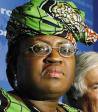
Ngozi Okonjo-Iweala

Nigeria's Finance Minister Ngozi Okonjo-Iweala is representative of a new type of African leader.A reformer and technocrat commenting on Nigeria's Oil based economy she stated "...The fact also that you have a natural resource-based economy that is highly dependent on one commodity - oil. I think that is not the best thing that has happened to us as a country because it is difficult to apply the resources that come from this natural resource in a way that takes into account this complexity or groups, religion and so on. And I don't think that the country can really move forward until a good formula is worked out to be able to apply the country's human and natural resources in the best way possible that can be accepted by everybody as being fair...any development in the country has to take into account the need to diversify from oil. I don't think the country can really move forward unless we are able to find a way to develop other sources of income or find other sources of growth for the economy apart from oil...Thus there are two issues - one, applying the resources that we have appropriately and secondly finding means to diversify the economy, which is very vital. And part of managing the resources that we have appropriately is also trying to deal with the enormous burden of debt which the country has, that amounts to $28 billion..."In a paper presented at the The Global Economic Governance Programme she listed the continuing challenges facing Nigeria they include Sustainability,Vested interests,Quick results and Globalization.

  • Digg
  • Del.icio.us
  • StumbleUpon
  • Reddit
  • RSS

Increasing Africa’s Value for its products

Joshua Wanyama writes in the Cheetah Index:

When a continent as rich as Africa sells its natural resources to the rest of the world. I call that a basic economic market. When African economies and companies start keeping these resources at home and produce world quality products, then they have added value and ensured better prices for their commodities...Until Africa increases the value for its natural resources consistently, the continent keeps fueling outside economies while playing second fiddle to world markets.

  • Digg
  • Del.icio.us
  • StumbleUpon
  • Reddit
  • RSS

Rise of the BRIC Nations

Chamberlain S. Peterside analyses the rise of the BRIC(pdf) nations and its relevance to Africa. "... There are a myriad of socio-political issues confronting them, but the potency of these countries (Brazil,Russia,India and China) transcends merely the labor market and natural resources into value-added productivity through utilization of technological tools that are easily accessible and cheaper to acquire. As free trade and globalization erodes barriers and diminishes competitive advantage of industrialized nations (such as financial wealth, developed infrastructure, high productivity and bargaining power), opportunities are gradually shifting to these erstwhile-impoverished countries...The Rise of BRIC the nations is dispelling the myth about archaic political doctrines and development models. The countries in question cut across all ideological spectrum and continents (except Africa). They all seem to agree on one thing - that the "market" is king. Another common denominator is size and natural resources, but today what counts is how countries deploy their human and material resources.You can identify amongst them, developing countries (all but Russia), former colonies (India and Brazil), former/current communist countries (Russia and China respectively) and of course poor or debt-ridden countries (all but Russia). Their experience could serve as a road map for most developing countries in Africa and other places..."
Via NigeriaWorld

  • Digg
  • Del.icio.us
  • StumbleUpon
  • Reddit
  • RSS

Strengthening African Leadership

Africa has long been saddled with poor,even malevolent, leadership: predatory kleptocrats, military-installed autocrats,economic illiterates, and puffed-up posturers. By far the most egregious examples come from Nigeria, the Democratic Republic of the Congo, and Zimbabwe—countries that have been run into the ground despite their abundant natural resources. But these cases are by no means unrepresentative: by some measures, 90 percent of sub-Saharan African nations have experienced despotic rule in the last three decades. Such leaders use power as an end in itself, rather than for the public good; they are indifferent to the progress of their citizens (although anxious to receive their adulation); they are unswayed by reason and employ poisonous social or racial ideologies; and they are hypocrites, always shifting blame for their countries’ distress. Under the stewardship of these leaders,infrastructure in many African countries has fallen into disrepair, currencies have depreciated, and real prices have inflated dramatically, while job availability,health care, education standards, and life expectancy have declined. Ordinary life has become beleaguered: general security has deteriorated, crime and corruption have increased, much-needed public funds have flowed into hidden bank accounts, and offcially sanctioned ethnic discrimination—sometimes resulting in civil war—has become prevalent. This depressing picture is brought into even sharper relief by the few but striking examples of effective African leadership in recent decades. These leaders stand out because of their strength of character, their adherence to the principles of participatory democracy, and their ability to overcome deep-rooted challenges. The government of Mozambique, for example, brought about economic growth rates of more than ten percent between 1996 and 2003, following the economic catastrophe wrought by that country’s civil war (which ended in 1992). And in Kenya, President Mwai Kibaki has strengthened civil society, invested in education, and removed barriers to economic entrepreneurship instated during the repressive rule of Daniel arap Moi.The best example of good leadership in Africa is Botswana. Long before diamonds were discovered there, this former desert protectorate, which was neglected by the British under colonialism, demonstrated a knack for participatory democracy, integrity, tolerance, entrepreneurship, and the rule of law. The country has remained democratic in spirit as well as form continuously since its independence in 1966—an unmatched record in Africa. It has also defended human rights, encouraged civil liberties, and actively promoted its citizens’ social and economic development.
GOOD APPLES
What has enabled Botswana to succeed where so many other African nations have failed? Some observers point to the relative linguistic homogeneity of the country. But Somalia, which remains unstable despite a similar uniformity, shows that this factor is far from sufficient.Others point to the century-old teachings of the congregational London Missionary Society—the peaceful, pragmatic outlook that is inextricably bound up in the country’s political culture. But this explanation also fails to explain why the same positive effects have not been witnessed in other countries with a history of Christian teaching, such as in neighboring Zambia. Nor are Botswana’s plentiful diamond reserves responsible:Angola, Gabon, and Nigeria all have abundant natural resources, but none has seen comparable returns for its people.It is Botswana’s history of visionary leadership, especially in the years following independence, that best explains its success. Sir Seretse Khama, Botswana’s founding president, came from a family of Bamangwato chiefs well regarded for their benevolence and integrity.
When Khama founded the Botswana Democratic Party in 1961 and led his country to independence, he was already dedicated to the principles of deliberative democracy and market economy that would allow his young country to flourish. Modest, unostentatious as a leader, and a genuine believer in popular rule, Khama forged a participatory and law-respecting political culture that has endured under his successors, Sir Ketumile Masire and Festus Mogae. Although operating in very differerent circumstances, Mauritius’ first leader,Sir Seewoosagur Ramgoolam, held to the same leadership codes as Khama.Ramgoolam gave Mauritius a robust democratic beginning, which has been sustained by a series of wise successors from different backgrounds and parties.Both Khama and Ramgoolam could have emulated many of their contemporaries by establishing strong, single-man, kleptocratic regimes. But they refused to do so.Effective leadership has proved the decisive factor in South Africa, too: without Nelson Mandela’s inclusive and visionary leadership, his adherence to the rule of law, his insistence on broadening the delivery of essential services, and his emphasis on moving from a commandeconomy toward a market-driven one, South Africa would probably have emerged from apartheid as a far more fractured and autocratic state than it did.Too few African leaders have followed the examples of Mandela, Khama, and foreign affairs . Ramgoolam. Ghana, Lesotho, Mali, and Senegal are all showing promise. But in many other African countries,leaders have begun their presidential careers as democrats only to end up, a term or two later, as corrupt autocrats: Bakili Muluzi of Malawi, Moi of Kenya,and, most dramatically of all, Robert Mugabe of Zimbabwe. Other leaders, such as Sam Nujoma of Namibia and Yoweri Museveni of Uganda, may be heading in the same direction.
A BOLD INITIATIVE
To build on the positive leadership examples, a select group of prominent past and present African leaders who met over the last year decided to confront the continent’s pathology of poor leadership with deeds as well as words. At the conclusion of a series of private meetings(the final one of which was held in Mombasa, Kenya), they established the African Leadership Council, promulgated a Code of African Leadership with 23 commandments, issued a Mombasa Declaration promoting better leadership,and proposed a series of courses to train their political successors in the art of good government.Members of the council believe that absolute standards of leadership are both appropriate and attainable. Good leaders deliver security of the state and of the person, the rule of law, good education and health services, and a framework conducive to economic growth. They ensure effective arteries of commerce and enshrine personal and human freedoms. They empower civil society and protect the environmental commons. Crucially, good leaders also provide their citizens with a sense of belonging to a national enterprise. Conscious that Africa’s poor are getting poorer and that good governance is essential for successful economic development, the council sees itself at
the vanguard of fundamental reform in the continent. Its approach certainly goes far beyond the New Partnership for Africa’s Development (nepad) and proposals for the African Union. The Code of African Leadership, for example, says in its first commandment that leaders should “offer a coherent vision of individual growth and national advancement with justice and dignity for all,” implying that most leaders today do not. Other commandments demand that African leaders encourage “broad participation,” adhere to the letter and spirit of their national constitutions (especially term limits), encourage dissent and disagreement, respect human rights and civil liberties, strengthen the rule of law, promote policies that eradicate poverty and improve the wellbeing of their citizens, ensure a strong code of ethics, refuse to use their offices
for personal gain, oppose corruption, and bolster essential personal freedoms. This uncommonly bold agenda seeks to avoid renewed patrimonial leadership debacles, such as those presided over by Mobutu Sese Seko in Zaire, Moi in Kenya, Idi Amin in Uganda, and Jean-Bedel Bokassa in the Central African Republic. The council is highly conscious,too, of the hijacking of Zimbabwe’s government by Mugabe, which has resulted in starvation and drastically reduced living standards.The council is chaired by former President Sir Ketumile Masire of Botswana and includes former Nigerian head of state General Yakubu Gowon,Vice President Moody Awori of Kenya, former Prime Minister Hage Geingob of Namibia, and a dozen other present and former prime ministers and cabinet ministers from Sierra Leone to Kenya, Malawi, and Uganda. All are regarded throughout Africa as men of unusual personal probity and esteem and as accomplished proponents of good governance. The council intends to recruit additional members from the ranks of Africa’s outstanding democratic leaders, Francophone and Anglophone, female and male. Together they will serve the continent by advising international organizations, individual countries, and donor agencies on how to improve leadership. The group stands ready to assist civil societies in countries undergoing serious leadership crises. It will also urge greedy national leaders to attack corrupt practices and adhere to term limits (the current presidents of Gabon, Malawi, Namibia,Uganda, and Zambia, for example, have all had pangs of desire for illegal third terms). Next year(2005), it expects to begin holding special seminars for cabinet ministers and others. The council’s curriculum emphasizes constitutionalism, the rule of law, ethics, accountability,diversity, good fiscal management, coalition building, and the fundamentals of modern micro- and macroeconomics. Training courses will soon be launched.Whether the efforts of the African Leadership Council will reduce bloodshed,diminish corruption, and encourage more prosperity for citizens across Africa is by no means certain. But as a unique African response to the continent’s immense needs, this innovative endeavor is a promising, dramatic step forward.

By
Robert I. Rotberg

Reprinted with permission
Copyrighted 2004 Council on Foreign relations Inc. All Rights Reserved

  • Digg
  • Del.icio.us
  • StumbleUpon
  • Reddit
  • RSS

Time to Focus on Invisible Wealth

James Shikwati writes about Intellectual Property Rights "...The West have always sought systematic knowledge that can be replicated and refer to that knowledge as 'science'. It is for this reason that they have moved from focusing on natural resources such as 'land' to resources such as transistors, radios, fiber optic cables from sand. Most third world countries on the other hand have focused only on the 'visible wealth' and 'tribal organization'. This structure instead of fostering wealth, promotes war over resources.The list of inventions and innovations rarely indicates participation from Africa, falsely creating an impression that Africans are not creative and innovative. On the contrary however, long before the colonialist came to Africa, the African people had started ventures in medicine, iron smelting, arts, music, house building, and bead making and curving. The power of innovation was also exhibited in the way they preserved fire for later use, stored foodstuffs and the very fact that they could light a fire by rubbing two sticks together.
However the lack of systematic recording and beyond a collective level of property right recognition(PDF), robbed many innovators in Africa the ability to have their ideas improved upon and made economically viable. More so, the lack of a property rights regime that could measure to the countries that later colonized Africa made it easier for both physical and intellectual property to be seized by the occupying powers..."

  • Digg
  • Del.icio.us
  • StumbleUpon
  • Reddit
  • RSS

The Six Principles on Which America Became Exceptional

A principle is a fundamental law of nature or a code of conduct that you should follow, and America was built on principles. In particular, our nation was built on six specific principles, which are sometimes called the 'First Principles' or 'Founding Principles', and throughout our history we have followed these fundamental laws of nature or codes of conduct. In no particular order, here they are, with some discussion and things to think about.

Popular Sovereignty. If you have trouble remembering what popular sovereignty is, first think to yourself "What does the word “popular” mean?" (people) and then think to yourself "What does the word “sovereignty” mean?" (king). Popular sovereignty (or sometimes called the sovereignty of the people) is the belief that the legitimacy of the state is created by the will of its people- or in other words, that the state needs the consent of the people to rule, because the people of the state are the source of all political power. Benjamin Franklin expressed the concept when he wrote, "In free governments the rulers are the servants and the people their superiors and sovereigns." Our Preamble begins by specifying that the power for our government comes from "we the people." But it is important to ask whether America still follows this principle today? Do government officials today behave as if they are working for you- or you are working for them? Does our government still do the will of the people? Who is the servant and who is the master in America today?

Limited Government. This is an easy one to figure out- limited government is a government where any more than minimal governmental intervention in personal liberties and the economy is not allowed. Also called constitutionalism- government must limit itself to the constitution on which it is based  Another way of thinking about it is that in a limited government, government can ONLY do those things which it is specifically given the power to do. Our nation wasn't based on 'weak' or 'strong' government, or 'active' and 'inactive'- it was based on a limited government that can only do those things that are given to it to do. If it isn't a limited government, that means it is an unlimited government, and an unlimited government is a scary thing. This principle was so important, our founding fathers built in many features of our government to promote it- checks and balances, separation of powers, federalism, and even the Bill of Rights. Does America still follow this principle today? If you said yes, show me where in the Constitution the government is given the power to....make schools take assessment tests? Regulate and control healthcare? Regulate companies in the name of fighting global warming? Control banks? Buy stock in housing companies? Punish baseball players for taking steroids? Make someone join a labor union? Speculate on windmills? Tell an executive he/she is making too much? You can debate whether these things are desirable or not, but it is much harder to debate whether or not a limited government has the power to even do these things.
 
Federalism. Self-government was important to our founding fathers, so they put in place a federal system of government, where the power is shared between the national and state governments. Think about it yourself- who should control your behavior- your local township/city? Your state? Your nation? The world? Who should be telling you what you should and should not do? Our Founding Fathers (correctly) believed that your local friends and family and coworkers in your state know best how to run some aspects of your life, yet other aspects should be run in Washington DC- and yet other aspects of our lives should only be run by ourselves. So they put in place a federal system of government to reflect where power should properly lie. Does America still follow this principle today? Do you ever hear this principle mentioned by any government officials, especially national leaders? Do they ever talk about letting states decide major issues, or do they always push for the national government to decide everything? Who should decide (state or national)…healthcare- who is covered, how much, etc? Education- what is taught, what standards, etc? Transportation- where roads, speed limits, etc? Natural Resources- parks, drilling, etc? Before any discussion can be attempted on what to do, you need to ask 'who should be doing it'.
 
Separation of Powers. One of the ways of preventing tyranny is to set up government so that one branch or one person doesn’t have all the political power. So the basic powers of government are distributed among three distinct separate independent branches of government- the legislative (who makes laws), executives (who executes laws), and judicial (who judges laws). In the US, this is Congress, President, and Supreme Court. There are problems with this system- by putting political power in 3 branches, it takes political power from the branch closest the people- the legislative- and give it to branches more prone to tyranny- the executive and judicial. It also creates an inefficient government that can never seem to get anything done, and some people doubt whether or not we have the luxury of following this principle in in times of war? Because of this, this principle has been under attack for years. What do you think- does America still follow this principle today?

Checks and Balances. Although it is important to create three separate and distinct branches of government, you don’t want them to be totally separate or else there will be no way to check them and balance their power. So, in reality, the branches are not completely separate or independent of one another. Each branch is subject to another of restraints, or checks, on it by the other branches. These restraints work to balance the three branches, so that one branch does not become more powerful than the others. The good thing about this principle is that our founding fathers spelled these checks out pretty clearly in the Constitution, and it is rather tough to get around them. But one does wonder- does America still follow this principle today? Are all the branches still balanced? If not, which branch of government has emerged as the most powerful branch today?
 
Judicial Review. One check is so important to our political system, it is elevated to a founding principle soon after our nation was created. What if Congress or the President uses their power in a way that the Constitution does not allow them to do? Or, who decides if everyone is following the Constitution? Judicial review is the idea that the judicial branch can review laws of Congress or actions of the President and judge whether they are following the Constitution. Careful though- judicial review doesn't mean that judges get to decide whether Congress and the President are 'right' or 'wrong'- only whether they are in fact following the Constitution. Is it right that the Supreme Court (9 unelected old lawyers with lifetime terms) get to decide what our Constitution says- shouldn’t the Congress or President do this? What if judges decide to read things into the Constitution that are not there- do we have to follow what they say? Who rules America- judges/lawyers or elected officials? Does America still follow this principle today?

These questions and these thoughts are important, because for some reason, America grew from thirteen little tiny poor states crowding the Atlantic to conquering a continent, and then dominating the world in a way that has never been done before. A lot of nations have a lot of different advantages, but for some reason, America is strangely more powerful then any nations before or after, whether you judge by military power, economic power, cultural impact, or anything else. Why is America Exceptional? What is it about America that makes it different from any other country in the world- different from any other country ever- that makes it exceptional. What is it that makes America exceptional, and not just another country? Is it religious- are we blessed by God? Is it genetic- racial traits or brain drain? Is it environmental- fertile lands, mild climate, rich natural resources? These may play a role, but I would advance that what makes America Exceptional is our our continued belief in the basic principles on which our nation was established. Popular sovereignty, limited government, separation of powers, checks and balances, judicial review, and federalism- our ancestors fought and died to build a government based on these foundational principles behind our Constitution, and by following these codes and fundamental laws, our nation has become the greatest ever.

One last question to leave you with today- what will it mean for our country if we stray from these principles?

You've all been great! Class is over.

  • Digg
  • Del.icio.us
  • StumbleUpon
  • Reddit
  • RSS

Innovations that are Working to Empower Women

Worldwatch reports:
Image courtesy of CIDSE
Although women comprise 43 percent of the agricultural labor force in developing countries, they typically aren’t able to own land. Cultural barriers also limit women’s ability to obtain credit and insurance.Strengthening women’s rights can help strengthen the global food system. According to the World Food Programme, allowing women farmers access to more resources could reduce the number of hungry people in the world by 100-150 million people. Nourishing the Planet highlights five innovations that are helping empower women farmers around the world,they are:
-Vertical Farming
-Food, Agriculture & Natural Resources Policy Analysis Network’s (FANRPAN) Theatre
-Self Employed Women’s Association (SEWA)
-Women’s Collective
-GREEN Foundation
Read here for details

  • Digg
  • Del.icio.us
  • StumbleUpon
  • Reddit
  • RSS

Investing in emerging markets

Chamberlain S. Peterside writes

At the end of the day it’s a question of making strategic cost-benefit analysis that stretches beyond your comfort zone. For one, companies/entrepreneurs must constantly strive to uncover new grounds rather than rest on their laurels or else they will soon become extinct. For companies looking to scale higher altitudes in sectors like natural resources, technology outsourcing, telecommunication, low-cost manufacturing, consumer goods/services retailing, infrastructure development and the like, some of the emerging countries present stupendous growth prospects that are impossible to ignore, as reflected in the colossal volume of potential consumers and resources – China is estimated to have more mobile phone users than the whole of US population, India’s middle class is almost equivalent to the total population of Western European, while phone subscription in Nigeria grew from less than 700,000 to over 25 million within 5 years (2001-2006), according to published data.

  • Digg
  • Del.icio.us
  • StumbleUpon
  • Reddit
  • RSS

Presenting African Architecture

Bombastic Element covers MIT student presentations on African Architecture:

MIT student, Nancy Demerdash's "Before the scramble for Africa: tracing African architecture through trade" goes back to 1200 to understand the historical development of various architectural forms as a function of natural resources in the complex changing societies and trading economies that depended on these resources. Also, how different architectural typologies evolved and were impacted by environmental and climatic changes.
More here
Enhanced by Zemanta

  • Digg
  • Del.icio.us
  • StumbleUpon
  • Reddit
  • RSS

Quick Hits

Sierra Leone's tourism promise and more-Tony Blair
Barclays Bank up to more fishy stuff?
A bid to strengthen Think Tanks.
Is corruption in Nigeria's DNA?
A tour of Nairobi.
Writing off sovereign debt and hampering growth-Thompson Ayodele in the Telegraph
Can we rein in the destabilizing effects of Natural Resources? Perhaps with the Natural Resource Charter contends Paul Collier.
Taju Tijani asks, where are the Black British Millonaires?
How Corporate America Really Views Africa.
The Guardian compares their Katine village project with MVP's. They should take a look at the Working Villages and learn from the successes of Songhai Centre.

  • Digg
  • Del.icio.us
  • StumbleUpon
  • Reddit
  • RSS

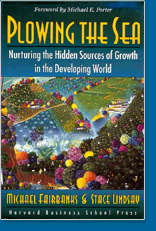
Plowing the Sea

In Plowing the Sea "...Michael Fairbanks and Stace Lindsay argue that the tremendous advantages developing nations have in natural resources, inexpensive labor, and fertile soil have actually kept these nations poor. Their advantages — easily imitated in other areas around the world — have not been sufficient engines for growth. Billions of dollars have been spent to eradicate poverty; still these regions remain as dependent as ever on volatile natural resource exports and foreign aid. Plowing the Sea is the authors’ attempt to unearth and nurture the hidden sources of growth — knowledge, innovation, and human capital — that remain untapped in developing countries..."
via On The Frontier

Thanks Gilbert Porku!

  • Digg
  • Del.icio.us
  • StumbleUpon
  • Reddit
  • RSS

Big Green Machine Rewards Democrats in Cash for Cash Deal

In The Inside Deal: Obama's Economic Program I wrote:

The Inside Deal is Democratic President Barack Obama's domestic economic program and is characterized by extensive government spending for politically connected groups within American society. It is aimed to reward those groups that supported Obama's campaign for the Presidency in 2010, such as labor unions, public employee unions, teachers unions, environmentalists, anti-war protesters, Wall Street, and big businesses. Some of the programs that were passed by the Democratic Congress at the time to reward these groups include the stimulus bill, the healthcare bill, and massive annual budgets. Increasingly during the height of the Inside Deal, there is a link between who receives taxpayer money from the federal government and their political connections. Called by some crony capitalism.
The Inside Deal continues to pay off for some groups and those companies and individuals and special interest groups recognize that in order for them to continue to be provided with political and economic support, they need to keep in power a group of politicians who will continue to steer money to them in spite of whether they deserve it or produce anything of value. That group of politicians in the Democratic Party, and so it is not surprising that the Inside Deal is creating a tight relationship between those groups that the Democrats steer money to and those groups rewarding Democratic politicians in the form of campaign finance.

One such group that has benefited from the Inside Deal is the Big Green Machine. Via theblogprof comes this story from the Washington Examiner did a little bit of journalism and reported on the suspected corruption between Democrats and Big Green Machine:
Officials of a dozen top Big Green environmental groups contributed more than $14.5 million to congressional and presidential candidates in 2008 and through the second quarter of 2010 with 96 percent of the total going to Democrats, according to an Examiner analysis of federal campaign data.


...Six of the dozen collectively received more than $160 million in federal grants and contracts, according to their 2008 or 2007 IRS tax returns, with the Nature Conservancy's $110.6 million being the highest, followed by the Trust for Public Land ($28 million), Audubon Society ($17.5 million), the Environmental Defense Fund (parent of the EDF Action Fund) with $3.6 million, Natural Resources Defense Council ($358,072) and Defenders of Wildlife ($205,021).

President Obama was the biggest recipient by far of contributions with a total of more than $2.4 million. Secretary of State Hillary Clinton, who was Obama's main 2008 primary rival, got $86,500. ...Obama's biggest groups of environmental supporters came from the Sierra Club ($917,965) and Defenders of Wildlife ($905,375).
This is the definition of corruption- they give campaign money to candidates who then support their companies and interests with tax money for 'research' or 'oversight' or 'awareness' or some sort of garbage. The relationship is one that use my labor and your labor to strengthen relationships between politicians and those who are politically connected, and that is not what America was about. Republicans do it too, especially with Big Oil and Big Defense, but it appears to be worse under Democrats since they pass bigger spending budgets and spend more money on discretionary items and appear to be a little less ethical about it all. That means anyone with a "D" in front of their name this election should be thrown out- it'll lessen the corruption, although then we need to go after "R"'s that are corrupt too.

  • Digg
  • Del.icio.us
  • StumbleUpon
  • Reddit
  • RSS

Farming First

From Lindiwe Majele Sibanda in the Guardian:

Farming First calls on world leaders to take action by developing a locally sustainable value chain for global agriculture. It emphasizes the need for knowledge networks and policies centred on helping subsistence farmers to become small-scale entrepreneurs, and it proposes six interlinked imperatives for sustainable agriculture: safeguarding natural resources, sharing knowledge, building local access, protecting harvests, enabling access to markets and prioritising research imperatives...[continue reading]Watch related videos here

  • Digg
  • Del.icio.us
  • StumbleUpon
  • Reddit
  • RSS

State Capitalism, Crony Capitalism, Corrupt Capitalism, Syndicaliam, Corporatism... Obamaism

In my post Crony Capitalism Booming Under Obama Rule in February of 2010, I wrote:

One of my biggest fears about the Obama administration is not that it is liberal and not that it is communist, but rather that it is the beginning of a renaissance of National Socialism. One of the common misconceptions that people have about National Socialism is that it was against big business, or that big business opposed it. Free markets oppose national socialism, and individuals oppose national socialism, but Big Business, threatened by government, does the logical thing, and joins in. National socialism leads to an alliance of Big Business, which enjoys government protection against challenges to its market share and in exchange transforms itself into a tool of government control over the economy. Top executives and lobbyists do very well under a National Socialist regime, while the people suffer.
At the time, I was responding to a post that I found on powerlineblog called Crony Capitalism, which itself was a response to the article from Michael Barone called: "Under Obama, crony capitalism again rules the day."

That was several months ago now, and with the passage of time, we can re-evaluate my thesis- that the Obama administration is putting place a version of fascism that you can nicely called Crony Capitalism or State Capitalism, whereby the government subverts the free market for the good of the 'state' and makes alliances with Big Business to crush smaller companies through regulation and taxation.

Gregory Scoblete updates the situation with his article Will Free Markets Give Way to State Capitalism:

State capitalism, Bremmer writes, "is a system in which the state dominates markets primarily for political gain." From state-owned corporations operating in strategic industries like natural resources or defense, to enormous sovereign wealth funds in the hands of autocrats with opaque operating principles, state capitalism has enabled the world's autocratic states to reap the benefits of capitalist enterprise while maintaining a vice-grip on political freedom.

In Bremmer's telling, the world's autocratic states learned a valuable lesson from the implosion of the Soviet Union: command economies do not work and when they fail, they can bring down the over-arching political system with them. They also watched the post Soviet experiment in crash liberalization with horror. To protect their hides and preserve their privilege, autocratic rulers in China, Russia, Saudi Arabia and elsewhere have created a "hybrid" system that leverages many of the tools of capitalism to generate wealth while the heavy hand of the state ensures that wealth is put to the service of the elites and rulers of each country.

Here in America, we have a ruler who wants us to emulate China, Russia, or Saudi Arabia- he wants to create a 'hybrid system' here where the fascist state can leverage capitalism for the good of the all-powerful state through the heavy hand of a tyrannical government. I'd love to sugar coat this, but the evidence is piling up that this is his intention.

  • Digg
  • Del.icio.us
  • StumbleUpon
  • Reddit
  • RSS

Obama Can Help with Gulf Oil Spill

I'm getting sick and tired of the increasingly amount of articles written by liberal bloggists and journalists who argue that Barack Obama can't do anything at all to help the situation with the Gulf Oil Crisis. There is article after article, blog post after blog post, all arguing the same thing- this was a natural disaster, the responsibility for the containment and cleanup is entirely on BP, Obama had nothing to do with it, Obama has nothing to do with it, and Obama and the Democrats in Congress who are running our nation right now are not to be blamed for it. They are wrong though- Democrat President Barack Obama and the Democratic Congress running our nation can and should be blamed for their failures during the Gulf Oil Crisis.

First, as I wrote in Obama: Didn't Waive the Jones Act, Made Gulf Spill Worse that:

Don't kid yourself- there is a lot that the government can do to help the situation in the Gulf- like getting the heck out of the way of people who want to help. Obama could have waived the Jones Act and allowed foreign ships to assist in transporting goods (like oil-skimming booms) in order to help clean up the mess. But he didn't. Obama refused to waive the Jones Act.
Second, as I wrote in Mitt Romney on Leadeship that:
Romney is right- what we need right now is someone who will use what power and authority and resources that the federal government has to help, and other than that stay out of the way. Attacking BP isn't going to help anything, and there will be plenty of time for that later if that is what is called for. And sitting down with lawyers, labor union leaders, watermellons, and anti-war activists isn't going to help him come up with any new ideas to solve this issue. It's Day 52- what sort of leadership has he demonstrated from his position as most powerful leader in the world?
Third, New York Times columnist CAMPBELL ROBERTSON wrote in Efforts to Repel Gulf Oil Spill Are Described as Chaotic:
From the beginning, the effort has been bedeviled by a lack of preparation, organization, urgency and clear lines of authority among federal, state and local officials, as well as BP. As a result, officials and experts say, the damage to the coastline and wildlife has been worse than it might have been if the response had been faster and orchestrated more effectively.

“The information is not flowing,” Senator Nelson said. “The decisions are not timely. The resources are not produced. And as a result, you have a big mess, with no command and control.”
Obama should not be held responsible for the Deepwater Horizon Rig blowing up, but after it did, he should have been on the situation, providing leadership. This was federal waters, the federal government has extensive resources available, and the one thing that the President of the United States can do better than anyone else is act as a crisis manager. Once the rig blew up, Obama doesn't have to go out there with a straw to suck up the oil, but he does have to put in place a team who can organize federal, state, and local officials and put in place clear lines of command and clear lines of communication. That's his job. The President's job is to step in when there is a disaster and lead. He doesn't have to do anything- man a rig, visit the Gulf Coast, clean pelicans- but he does have to LEAD, or at least delegate that leadership to someone else who can then lead (like a crisis manager or something).

Fourth, lawmakers passed the federal Oil Pollution Act in 1990 to ensure that plans were in place for oil spills, so the response effort would be quick, with clear responsibilities for everyone involved. This means that Congress and the President are responsible for making sure that these plans were in place and ready to go. Oh, I know Obama has only been President for a couple years now (it seems like a lot longer), but the Democrats have been running Congress for years longer than that- at what point do we hold them responsible for not making sure that that laws in our nation are being followed? If the government can't take responsibility for something like this, passed almost 20 years ago, on what leap of faith can you expect them to take responsibility to do anything right as their responsibilities expand under Democratic leadership?

Obama CAN help to contain and clean up and prevent future Gulf Oil disasters- but he isn't doing that. He isn't helping to contain the spill- in fact, it appears that he is not repealing regulations that hinder fighting the spill and he is hindering efforts by states to build reefs and other means of protection. He isn't helping to clean up the spill- he has created a vacuum of leadership at the top of our nation, a vacuum that is sucking the oil right out of the ground and spewing it everywhere in a potent symbol of his inadequacy for the Presidency. And he isn't helping to prevent future Gulf Oil disasters, unless you consider his attempts to drive the US back into the Stone Age by killing energy production a way to help prevent future spills like this one. Obama can help the Gulf Oil Spill... but he isn't. The same things could be said for the Democrats who are running Congress as well.

Voters need to hold these people responsible and throw them out of office. Unlike a lot of conservatives, I'm not calling for big government and all powerful government to solve the situation, but I am calling for a government that shows leadership during a crisis and works to get out of the way of people trying to help. That's something that is possible, but not happening, under President Obama and the Democrats in Congress.

  • Digg
  • Del.icio.us
  • StumbleUpon
  • Reddit
  • RSS

Only US State With Booming Economy: Texlahoma

There is one state in the United States that has continued to boom in spite of Democrat policies. Obama, Reid, Pelosi, and Peters high-tax, high-regulation policies haven't managed to take a dent out of this state's booming economy, even though they have deepened and lengthened the current US recession and damaged the economy of every state in the union except it. Truly, this state is the one state that has managed to prosper even through the mandates and controls and commissions and regulations and bureaucracy that has bogged down the rest of the United States and is destroying our economic drive.

The one state that is still booming, the one US state still growing, the one state in the United States that continues to have a booming economy: Texlahoma.

You see, Texlahoma has defied Democrats and avoided their snake-poison prescriptions for economic disaster, liberalizing their economy rather than socializing it, and championing human liberty in the face of increasing centralization, bureaucracy, and communism that marks the modern day Democratic Party.

Texlahoma cut taxes, at all levels, which led to increased revenue for the state, as predicted by the Laffer Curve. Texlahoma allows sensible energy exploration and development, letting the most environmentally friendly citizens in the world explore and develop natural resources rather than having its citizens importing them from other much-less environmentally friendly nations. Texlahoma has disbanded the public employee labor unions, since these unions are designed to correct for the corruption and abuse by private employers and are not needed when union employees work for a government of the people, by the people, and for the people. Texlahoma has allowed private schools to compete for customers in their educational system, awarding each student a certain amount of dollars that will go to the school that they want to go to, and further awarding monetary bonus' for grades, sports, achievements, clubs, and many other merit-based reasons. Texlahoma does not play games with race, sex, religion, or sex, and treats everyone equally, and judges them based on their conservative character only. Texlahoma has toll roads competing with public roads, creating an efficient, vibrant, dynamic transportation grid in what were once known as 'Forgotten Counties.' Texlahoma does not have any business taxes, excise taxes, or sales taxes- only the income tax.

The people of Texlahoma are blessed with freedom and liberty. Defying the Supreme Court as much as possible, they have restricted the right to abortions and championed a lifestyle that looks to human life as the next hope of the world. They have relaxed gun control laws, everyone has a concealed weapon, and crime rates are non-existent. Cops don't harass citizens, real criminals are kept in prison, and it is a truly great place to live and work.

Sadly, Texlahoma isn't a real state. As designed by Oklahoman A. P. Sights in the early 1900's, forty-six counties in Texas and twenty-three in Oklahoma would join to form Texlahoma. People in rural places such as northern Texas and western Oklahoma were especially desperate for decent roads, but politicians in the faraway state capitals weren't listening, so the Texlahoma proposal was created. Legislators of the new state could focus on building better roadways and providing all the other services that these "forgotten" counties believed they weren't getting. "Cactus Jack" (John Nance Garner IV) championed the idea. Sadly, it never came to be, but sometimes, it is fun to imagine a state where the people still believe in the Founding Principles of our nation and practice life, liberty, and protection of property. It is a happy fantasy much different then the increasing tyranny of our current government as set up by liberal Democrats.

  • Digg
  • Del.icio.us
  • StumbleUpon
  • Reddit
  • RSS

Getting it wrong in Liberia and How to get it right

In the NYTimes Daniel Bergner writes about the rule of Africa's first female president.
On corruption:

“We can’t stamp it out, not yet,” Sirleaf said to me, clenching her fists in frustration over the country’s bone-deep corruption. She spoke of being torn between firing every transgressing official and keeping enough ministers and staff members at their desks so the government can go on operating, no matter how badly it is compromised. And meanwhile, unemployment in the country, whose population shifted heavily to Monrovia during the war, stands as high as 85 percent by some estimates. Instilling faith that Liberia’s economic wasteland can be redeemed, however gradually, may be the only way to ensure long-lasting peace, especially with the U.N. troops expected to start pulling out after next year’s elections. Over the radio, Sirleaf put the emphasis on gradually. “I beg you I no magician,” she said, letting a plea seep into her lecture. “I can’t just wave a magic wand.”
Regarding the country's options from a value-add perspective:
Liberia’s natural resources just aren’t in high-enough demand around the world to spur the economy and generate much public revenue. Firestone is providing the government with $4.7 million this year, Sirleaf estimated. To truly take advantage of its iron, rubber and timber, Liberia would have to manufacture things with them; it would have to export finished products rather than raw materials. And it can’t; the country is all but pre­industrial...[continue reading]
We would disagree on this last point of being "preindustrial". Liberia does have innovation assets that lie in plain view. Like every other African country its makers and innovators are largely overlooked while emphasis is placed on largely unsustainable initiatives. From building up is nascent market gardeners, training a techie workforce to building its tourist assets we dispute the uninformed claim that that salvation lies in oil based resource extraction.

  • Digg
  • Del.icio.us
  • StumbleUpon
  • Reddit
  • RSS

Virginia Tech Prof to Skype with Burma's resistance leader on Monday

 Tomorrow, Monday, December 7 at 7pm Eastern Standard Virginia Tech professor and his World Regions class will be interviewing Burmese resistance leader,Aung Sun Sun Kyi, via Skype. Boyer managed to turn a YouTube video  request into the interview.

I received a letter from a former student of his that tells the story very well and have decided to print this letter in entirety. I like the letter because it not only shows how his students value this but his students are using their social media knowledge to help their former professor and I want to help them and help him. We look forward to viewing the video and learning.

And thus, is great teaching in action. Great teachers are now syndicators (sp?) of content. Great teachers share. Great teachers teach us all.

A Letter About My Favorite Professor
from former student Jessy Irwin

I'm writing because I want to publicize the incredible work that one of my favorite college professors is doing with social media in his World Regions class at Virginia Tech. He is John Boyer, an instructor in the Department of Geography in the College of Natural Resources and he's an exceptionally passionate educator who thrives on engaging and communicating with his students through social media. For the third time in a row, he has successfully managed to turn a YouTube video from his super-sized class of 3,000 into a once-in-a-lifetime learning opportunity for his students.

In the past, Professor Boyer has used viral YouTube tactics to lure the likes of Martin Sheen and Emilio Estevez to Virginia Tech to discuss their film "The Way", and he even convinced wine aficionado, social media guru and businessman Gary Vaynerchuk to stop through Blacksburg while on a book tour during the Spring 2011 semester. Much of that happened with little fanfare or attention from the university or the Blacksburg, VA community of which he is a member. This time, though, Boyer has turned a World Regions professor's dream into reality-- he managed to turn a YouTube video request to Aung Sun Suu Kyi, leader of the resistance movement in Burma, into an hour long Skype interview with her and his class. 

Having been recently been liberated from 30 years of house arrest imposed on her by dictator Than Shwe,  Suu Kyi recently met with US Secretary of State Hillary Clinton and is regularly courted by foreign media for interviews. That she could be convinced by the sheer enthusiasm of 3,000 students half a world away from her is to take the time for an interview is a poignant example of how social media and technology can enhance and enrich student experience in ways never before possible. Professor Boyer is working to open a live-feed of the Skype interview for educators and interested parties, though the event may also be live-streamed by various Asian media outlets

Professor Boyer isn't just active on YouTube-- he maintains a course website and a UStream channel through which he conducts weekly online office hours, he uses a Facebook page to announce course events to his class, and he uses his own Twitter account in addition to a backchannel Twitter hashtag to communicate with his 3,000 students. His course material even includes regular uploads of his podcasts as the Plaid Avenger, a Jon Stewart-inspired, schwingy superhero who travels the world in pursuit of international justice. Though this is a higher education example of technology integration in the classroom, more teachers need to hear about the work that he and other professors are doing with technology. At one point in his career, students were barely showing up to his class, which could be used to fulfill a university curriculum requirement for graduation-- now, he begins each semester with huge wait lists of students every semester who want to take his class as an elective but for whom there isn't enough room.

I could go on and on and on about the work that Boyer and his assistant Katie Pritchard do. His educational use of technology to leave Virginia and pursue a career in social media + educational technology in the Silicon Valley. While this story takes place within the context of higher education, much can still be gleaned from how social media and technology integration can enhance the efforts of an effective, engaging educator and enrich a student's learning experience. At a time when so many question the effectiveness of technology adoption and whether it is making a difference in education, Professor Boyer's provides a concrete example of technology's potential and ability to positively change the classroom for the better. Alternately, while higher education is usually outside of the realm of standardized curriculum and assessments, this particular educational technology success story serves also as an example of technology-facilitated learning that may well be immeasurable within the confines of today's standardized testing.

  • Digg
  • Del.icio.us
  • StumbleUpon
  • Reddit
  • RSS