
-
Students 'Mix It Up' to promote tolerance | The Montgomery Advertiser | montgomeryadvertiser.com
Such programs are fascinating ways to help promote getting along and working with others.
"National Mix It Up Lunch Day, now in its 10th year, is coordinated by the Southern Poverty Law Center's Teaching Tolerance program. It served as the catalyst Tuesday for millions of students, including some locally, to cross social boundaries and foster respect for one another." -
My Child is a Cyberbully, What Do I Do? | Webroot Software
Tips for parents to help their child with cyberbullying.
"Research suggests that between 10 – 20% of students will be a cyberbully at some poin"
Menampilkan postingan yang diurutkan menurut relevansi untuk kueri tolerance. Urutkan menurut tanggal Tampilkan semua postingan
Menampilkan postingan yang diurutkan menurut relevansi untuk kueri tolerance. Urutkan menurut tanggal Tampilkan semua postingan
Daily Education and Technology News for Schools 10/20/2011


Read User's Comments(0)

Obama Government Officials: There Will be Consquences if Private Businesses Disagree
Via Memeorandum I came across this story over at the Volokh Conspiracy called "Administration Tells Regulated Industry That There Will Be “Zero Tolerance” for Alleged “Misinformation” in Industry’s Statements About Government Policy":
U.S. Department of Health and Human Services Secretary Kathleen Sebelius wrote America’s Health Insurance Plans (AHIP), the national association of health insurers, calling on their members to stop using scare tactics and misinformation to falsely blame premium increases for 2011 on the patient protections in the Affordable Care Act.... "There will be zero tolerance for this type of misinformation and unjustified rate increases," she wrote "I want AHIP’s members to be put on notice: the Administration, in partnership with states, will not tolerate unjustified rate hikes..."
The precise nature of the threat — as with so many threats — is not made entirely clear, so the legal analysis of the threat is also unclear. But if the Administration is threatening to use its considerable regulatory power to retaliate against insurance companies that, in the Administration’s view, are conveying “misinformation” — for instance, because their financial analyses disagree with the Administration’s financial analyses — that strikes me as quite troubling.
Quite troubling indeed. You really need to ask yourself and your friends and your family whether or not they believe anymore that everyone (both individuals and private companies) have the right to be free, to earn and keep property, and to protect others lives, or if they believe that the government exists to control others (both individuals and private companies) based on what they think is right. The very fundamental nature of our nation is being threatened by Obama and Democrats who support him and his agenda, and using the instruments of the state to force (or in this case vaguely threaten to use force) others to follow what they believe in is tyranny, and all tyrants must be overthrown. The evidence is piling up, in bits and pieces- just like Democrats hammered on George Bush for supposed faults and problems and all those little blows took their toll and idiots then voted Democrats, we must continually guard our freedoms and liberties and call out Obama and the Democrats when they exercise their power in unjust, immoral, and illegal ways, such as was done above.
Who is For a Leadership Code with Teeth?
Yaw Saffu writes "...what is to be done if we are serious about zero tolerance for corruption? We need to provide the law with real, sharp, canine teeth. We have to provide the legal means to help increase the detection of non-compliance with and contravention of the Leadership Code. More importantly, we need to enforce the law and punish severely those who violate the anti-corruption laws. Both of these strategies require strong support from the attentive public..."
A Guilty stain on the West--Kenya
Michael Holman writes in the FT about the Kenyan political crisis:
For the outside world, Kenya has been the acceptable face of Africa: a safe destination for a million tourists a year from Europe, Asia and North America to the country of surf and safari; a reliable base, in a tough neighbourhood, for a burgeoning aid industry; regional headquarters for the United Nations; and – less well-known – a country whose military pacts with the US and Britain have made it a crucial ally in the “war against terror”.He questions the West's continued tolerance of the country's corruption:
They did not believe it was ultimately in their interests to have a showdown with the barons of corruption. They did not want to upset what they saw as a regional “island of stability” from which the UN and other international relief agencies, including hundreds of foreign non-governmental organisations, operate – a thriving business that accounts for a fifth of Kenya’s annual foreign exchange earnings.
The 1936 GOP Platform Gives Clues on How to Battle a Depression-Extending Progressive
Although I am no expert in this, I have always felt that the 1930's were an interesting time period in our nation. The Victorian age had come to a bloody conclusion with World War One, and a whole generation of people were now being raised in a society that saw their parents as failures- their attempts to repress their sexual urges, their attempts to stick to the old ways, their attempts to put in place world peace, their attempts to build multinational nations- all had led to one of the most bloody and brutal and worthless wars of all time. Technology was changing fast- cars and telephones and radio and motion picture- and the children of the 1910's and 1920's thought that they had everything figured out- they thought that where other generations had failed due to their reliance on religion, traditional values, free markets, republicanism, and limited government, they would succeed by figuring out a third way of doing things, a practical way of doing things, a way of doing things that used the power of government to make society a better place to live. This new generation, horrified by WWI and mocking their parents lack of technology skills, had it all figured out, and ushered in an era of fascism and communism and World War Two.
In my post 1930's Are Root of All That is Wrong I cataloged all of the laws that were passed in the 1930's in America that are with us today- such as the Unemployment Compensation Tax (MI, 1936), Oil and Gas Severance Tax (MI, 1929), Social Security Act (USA, 1935), Fair Labor Standards Act (USA, 1938), Smoot-Hawley Tariff Act (USA, 1930), Hoover Tax Hike (USA, 1932), National Labor Relations Act (USA, 1935), Private Schools, Act 302 of 1921 (MI, 1921), Roosevelt moves traditional Thanksgiving Day (1939), Regulating Firearms, Act 373 (MI, 1927), US moves off gold standard (1933), Reapportionment Act (USA, 1929), etc. Looking through that list and thinking of how much America was changed by one generation, by one President, by one party, by one decade (mostly), I was always stunned, and wondered how people had let that come to pass.
As it turns out, the Republican Party of 1936 had put together a platform to oppose a lot of these fascist ideas, but people loved their hope and change and returned FDR to the White House instead, and so the Great Depression dragged on for another decade. Via Conservative Hideout, let's take a walk back in history and see just exactly what the GOP was offering as an alternative back then to the high taxes, high regulation, crony capitalism, fascist third way system that FDR was pushing our nation into. Here is a good chunk of the 1936 Republican Party Platform:
1936 Republican Party PlatformAmerica is in peril. The welfare of American men and women and the future of our youth are at stake. We dedicate ourselves to the preservation of their political liberty, their individual opportunity and their character as free citizens, which today for the first time are threatened by Government itself.
For three long years the New Deal Administration has dishonored American traditions and flagrantly betrayed the pledges upon which the Democratic Party sought and received public support. The powers of Congress have been usurped by the President... the rights and liberties of American citizens have been violated... regulated monopoly has displaced free enterprise.... it has intimidated witnesses and interfered with the right of petition... it has been guilty of frightful waste and extravagance, using public funds for partisan political purposes... it has promoted investigations to harass and intimidate American citizens, at the same time denying investigations into its own improper expenditures... it has created a vast multitude of new offices, filled them with its favorites, set up a centralized bureaucracy, and sent out swarms of inspectors to harass our people.... it has bred fear and hesitation in commerce and industry, thus discouraging new enterprises, preventing employment and prolonging the depression.... appeals to passion and class prejudice have replaced reason and tolerance.
To a free people, these actions are insufferable. This campaign cannot be waged on the traditional differences between the Republican and Democratic parties. The responsibility of this election transcends all previous political divisions. We invite all Americans, irrespective of party, to join us in defense of American institutions. We pledge ourselves:
...To preserve the American system of free enterprise, private competition, and equality of opportunity, and to seek its constant betterment in the interests of all.
The only permanent solution of the unemployment problem is the absorption of the unemployed by industry and agriculture. To that end, we advocate: Removal of restrictions on production. Abandonment of all New Deal policies that raise production costs, increase the cost of living, and thereby restrict buying, reduce volume and prevent reemployment. Encouragement instead of hindrance to legitimate business. Withdrawal of government from competition with private payrolls. Elimination of unnecessary and hampering regulations. Adoption of such other policies as will furnish a chance for individual enterprise, industrial expansion, and the restoration of jobs.
Society has an obligation to promote the security of the people, by affording some measure of protection against involuntary unemployment and dependency in old age. The New Deal policies, while purporting to provide social security, have, in fact, endangered it. We propose a system of old age security, based upon the following principles: 1. We approve a pay-as-you-go policy, which requires of each generation the support of the aged and the determination of what is just and adequate, 2. Every American citizen over sixty-five should receive the supplementary payment necessary to provide a minimum income sufficient to protect him or her from want. 3. Each state and territory, upon complying with simple and general minimum standards, should receive from the federal government a graduated contribution in proportion to its own, up to a fixed maximum....
...Nearly sixty percent of all imports into the United States are now free of duty. The other forty percent of imports compete directly with the product of our industry. We would keep on the free list all products not grown or produced in the United States in commercial quantities. As to all commodities that commercially compete with our farms, our forests, our mines, our fisheries, our oil wells, our labor and our industries, sufficient protection should be maintained at all times to defend the American farmer and the American wage earner from the destructive competition emanating from the subsidies of foreign governments and the imports from low-wage and depreciated-currency countries....
...We recognize the existence of a field within which governmental regulation is desirable and salutary. The authority to regulate should be vested in an independent tribunal acting under clear and specific laws establishing definite standards. Their determinations on law and facts should be subject to review by the Courts. We favor Federal regulation, within the Constitution, of the marketing of securities to protect investors. We favor also Federal regulation of the interstate activities of public utilities...
...We pledge ourselves to the merit system, virtually destroyed by New Deal spoilsmen. It should be restored, improved and extended. We will provide such conditions as offer an attractive permanent career in government service to young men and women of ability, irrespective of party affiliations.
The New Deal Administration has been characterized by shameful waste, and general financial irresponsibility. It has piled deficit upon deficit. It threatens national bankruptcy and the destruction through inflation of insurance policies and savings bank deposits. We pledge ourselves to: Stop the folly of uncontrolled spending. Balance the budget—not by increasing taxes but by cutting expenditures, drastically and immediately. Revise the federal tax system and coordinate it with state and local tax systems. Use the taxing power for raising revenue and not for punitive or political purposes.
We advocate a sound currency to be preserved at all hazards. The first requisite to a sound and stable currency is a balanced budget. We oppose further devaluation of the dollar. We will restore to the Congress the authority lodged with it by the Constitution to coin money and regulate the value thereof by repealing all the laws delegating this authority to the Executive....
...We assume the obligations and duties imposed upon Government by modern conditions. We affirm our unalterable conviction that, in the future as in the past, the fate of the nation will depend, not so much on the wisdom and power of government, as on the character and virtue, self-reliance, industry and thrift of the people and on their willingness to meet the responsibilities essential to the preservation of a free society.
The Saudi-isation of Pakistan and warning's for Africa
Pervez Hoodbhoy writes:
via 3quarksDailyFor three decades, deep tectonic forces have been silently tearing Pakistan away from the Indian subcontinent and driving it towards the Arabian peninsula. This continental drift is not physical but cultural, driven by a belief that Pakistan must exchange its South Asian identity for an Arab-Muslim one. Grain by grain, the desert sands of Saudi Arabia are replacing the rich soil that had nurtured a magnificent Muslim culture in India for a thousand years. This culture produced Mughul architecture, the Taj Mahal, the poetry of Asadullah Khan Ghalib, and much more. Now a stern, unyielding version of Islam (Wahhabism) is replacing the kinder, gentler Islam of the Sufis and saints who had walked on this land for hundreds of years.

Perve's piece is almost a corollary to Philip Smucker's 2004 article which reported on efforts being taken via dissemination of historical texts to reaffirm a liberal African version of Islam.A cause all the more pertinent as the region confronts a most intolerant version of the faith:
Particularly relevant, black African and Arab scholars say, are accounts of how the African interpretation of Islam helped regulate the affairs of men, resolve disputes and provide a model of tolerance. Buried in the crumbling manuscripts of Timbuktu and neighboring cities, scholars are finding evidence of wars averted, sieges ended and lawlessness put to rest.Photo courtesy of Getty Images
The information is all the more valuable for moderate Muslim leaders because of the rise of less tolerant forms of Islam, like Saudi Arabia's Wahhabism or the Salafist movement in Algeria, that are expanding their foothold.
A Children's Letter Book on How to Regulate Freedom, from Doug Ross
Doug Ross has put together a wonderful gift for the holidays- a letter book of US regulations for children! Sure to by a favorite for future czars and bureaucrats! Over at the original link you can see all the pictures that go with each letter, but if you want to just use your imagination, here are the letters:
The Obama Administration's Official Alphabet Guide for Learning Government's Role in Your Life
Hi, I'm Omar, the Obama administration's official kid's ambassador. Today I'll be guiding you through some of the many necessary regulations that government imposes on us for our protection -- and we'll learn the alphabet at the same time!
- A is for auto. The size, speed, fuel and bumpers of autos must be regulated to protect us from ourselves!
- B is for business. Government must levy taxes, regulations, fees, surcharges and paperwork on businesses, lest they take advantage of workers.
- C is for cupcakes. Every aspect of child nutrition must be controlled -- because we can't leave it up to the parents!
- D is for doctor. Health care guidelines make sure every doctor practices medicine the same way.
- E is for electricity. Americans must expect to do without electricity from time to time, because we use so much of the world's resources. That is why American coal, nuclear, gas and other sources of energy must be restricted.
- F is for fare. Cab fares must be tightly controlled down to the tenth-mile because small business owners simply can not be trusted.
- G is for ginkgo and other medicinal herbs, which can not be sold without oversight by the FDA, state and local agencies. They're looking out for us!
- H is for Happy Meals. Selling toys with food is an evil marketing tactic, which kids and parents should not be exposed to!
- I is for immigrants, documented or not. We must welcome everyone into our country, because open borders and a welfare state promote tolerance and unity.
- J is for junk-mail. No longer can marketers promote their products without a complete review by federal, state and local authorities.
- K is for knives. Even pen knives and bottles of shampoo represent threats to airline safety and must be confiscated for our protection!
- L is for lollipop. Only organic lollipops that contain less than 25 grams of sugar can be sold in the U.S. It's for our protection!
- M is for MRI machine. Overrated tests and diagnostics aren't always needed for seniors, based upon the government's "Complete Lives System", which ensures fair and equitable treatment for most healthy Americans.
- N is for NEA, the teacher's union that has its first priority educamating us kids (after electing big government politicians, that is)!
- O is for oil, the source of automotive energy around the world. Government must prevent drilling for oil because cars represent freedom to move around the country.
- P is for prescription drugs. For safety reasons, government must put drug manufacturers through decades of testing and regulatory hoops even if certain patients could use experimental drugs. These dying patients could actually die if they're exposed to drugs that aren't ready for the market!
- Q is for QWERTY keyboards, the electric current, operation and safety for which must be reviewed by multiple agencies for our protection.
- R is for the rich. At some point, they've made enough money. Those who have grown too wealthy on the backs of the workers should have their excess riches confiscated for redistribution.
- S is for shower-head. Unrestricted flow wastes water, which is why government must regulate how all shower-heads work.
- T is for toilet. All toilet designs must be reviewed by federal officials to ensure less wasted water.
- U is for unions. Unions are collectives of workers who band together to protect workers and elect big government politicians.
- V is for vending machine. Government needs to set standards for what kinds of drinks and snacks may be sold to gullible consumers.
- W is for warmal colding, the climate change phenomenon caused by humans which results in crazy streaks of hot and cold weather.
- X is for X-ray machine. X-rays are discouraged in medical settings (for cost reasons) but used extensively in airline security.
- Y is for yacht. Democrat leaders like John Kerry use yachts to visit constituents, but others who own them should be considered overly rich.
- Z is for zebra-suits -- the nickname for federal prisoners who violate the hundreds of thousands of regulations that protect us 24 hours a day!
Rethinking the Innovation infrastructure
From Arnoldo Ventura in SciDev:
Helping higher education confront development goals means fully appreciating the process of innovation, which in turn hinges on interlocking visions, collaboration, exchange, reciprocity, and cooperation. Progress will need a greater willingness to assess and take risks. And that requires a change in attitudes, particularly more tolerance of failure...[continue reading]
Mali Evolves
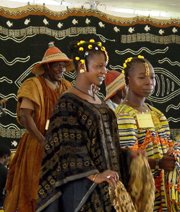 Robert Pringle writes about the burgeoning civil society and strengthening democracy in Mali:
Malians have redefined the term “consensus” to comport with the decentralization model. Whereas under the dictatorship “consensus” meant African-style democratic centralism, often smacking of communist practice, today it is understood to suggest reaching compromise on tough issues—more in the mode of Daniel Webster than Vladimir Lenin...Malians say that their history and culture have nourished interethnic tolerance. They cite a whole tool kit of conflict resolution and avoidance mechanisms...Mali’s new decentralization has created a three-tiered system: regions (think states), circles (think counties), and communes, which usually comprise several villages. Commune inhabitants elect local councils, which choose their own mayors and send representatives to the two higher tiers of the system. The 702 rural communes are widely regarded as the backbone of Malian democratization...The most striking thing about Malian democracy is its success in drawing intellectual and spiritual sustenance from an epic past, and actively incorporating homegrown elements, such as decentralization. If there is occasional fiddling with historical truth, the past provides plenty of room for differing viewpoints and for shaping tradition to meet modern needs. It is this aspect of the Malian experience that is least appreciated, and it deserves more attention from policymakers, both African and foreign, who have a tendency to assume that “tradition” equates with “bad.”via 3quarksdaily
photo courtesy cr.nps.gov
The Creative Economy
 Titus Kaloki writes about creativity echoing Richard Florida:
Tolerance for individuality and openness of minds are important for creative innovations and services to achieve economic gains. Without a receptive population selling creativity is difficult. This means education to involve creativity in content and evaluation.
![Reblog this post [with Zemanta]](http://img.zemanta.com/reblog_e.png?x-id=f03b8687-fa0d-4300-8861-d9adea5bdfc7)
President Obama and Western civilization.
 Tunku Varadarajan writing at Forbes states that:
The most important effect of an Obama presidency would be to sunder the connection between "Western-ness" and whiteness--or, at the very least, to ensure that such connection is no longer viewed as contingent. I use Western-ness as a portmanteau word for the following: democracy; scientific reason; respect for, but not servitude to, religion and hence a belief in religious tolerance and pluralism; sexual equality; secular education; individual autonomy, including a right to privacy and personal identity; and a belief that governments are subordinate to citizens...This severing (or fraying) of the "West-white" connection would make it easier for the U.S.--and the West, more broadly--to take its ideas into those corners of the world that have been most resistant to them. Whether we like it or not, vast swaths of Africa, Asia and the Middle East still live in varying degrees of post-colonial confrontation with the West, and with whiteness. This makes it difficult (often impossible) for the West to get the non-West to embrace its better ideas...[continue reading]photo courtesy of Forbes
Strengthening African Leadership
Africa has long been saddled with poor,even malevolent, leadership: predatory kleptocrats, military-installed autocrats,economic illiterates, and puffed-up posturers. By far the most egregious examples come from Nigeria, the Democratic Republic of the Congo, and Zimbabwe—countries that have been run into the ground despite their abundant natural resources. But these cases are by no means unrepresentative: by some measures, 90 percent of sub-Saharan African nations have experienced despotic rule in the last three decades. Such leaders use power as an end in itself, rather than for the public good; they are indifferent to the progress of their citizens (although anxious to receive their adulation); they are unswayed by reason and employ poisonous social or racial ideologies; and they are hypocrites, always shifting blame for their countries’ distress. Under the stewardship of these leaders,infrastructure in many African countries has fallen into disrepair, currencies have depreciated, and real prices have inflated dramatically, while job availability,health care, education standards, and life expectancy have declined. Ordinary life has become beleaguered: general security has deteriorated, crime and corruption have increased, much-needed public funds have flowed into hidden bank accounts, and offcially sanctioned ethnic discrimination—sometimes resulting in civil war—has become prevalent. This depressing picture is brought into even sharper relief by the few but striking examples of effective African leadership in recent decades. These leaders stand out because of their strength of character, their adherence to the principles of participatory democracy, and their ability to overcome deep-rooted challenges. The government of Mozambique, for example, brought about economic growth rates of more than ten percent between 1996 and 2003, following the economic catastrophe wrought by that country’s civil war (which ended in 1992). And in Kenya, President Mwai Kibaki has strengthened civil society, invested in education, and removed barriers to economic entrepreneurship instated during the repressive rule of Daniel arap Moi.The best example of good leadership in Africa is Botswana. Long before diamonds were discovered there, this former desert protectorate, which was neglected by the British under colonialism, demonstrated a knack for participatory democracy, integrity, tolerance, entrepreneurship, and the rule of law. The country has remained democratic in spirit as well as form continuously since its independence in 1966—an unmatched record in Africa. It has also defended human rights, encouraged civil liberties, and actively promoted its citizens’ social and economic development.
GOOD APPLES
What has enabled Botswana to succeed where so many other African nations have failed? Some observers point to the relative linguistic homogeneity of the country. But Somalia, which remains unstable despite a similar uniformity, shows that this factor is far from sufficient.Others point to the century-old teachings of the congregational London Missionary Society—the peaceful, pragmatic outlook that is inextricably bound up in the country’s political culture. But this explanation also fails to explain why the same positive effects have not been witnessed in other countries with a history of Christian teaching, such as in neighboring Zambia. Nor are Botswana’s plentiful diamond reserves responsible:Angola, Gabon, and Nigeria all have abundant natural resources, but none has seen comparable returns for its people.It is Botswana’s history of visionary leadership, especially in the years following independence, that best explains its success. Sir Seretse Khama, Botswana’s founding president, came from a family of Bamangwato chiefs well regarded for their benevolence and integrity.
When Khama founded the Botswana Democratic Party in 1961 and led his country to independence, he was already dedicated to the principles of deliberative democracy and market economy that would allow his young country to flourish. Modest, unostentatious as a leader, and a genuine believer in popular rule, Khama forged a participatory and law-respecting political culture that has endured under his successors, Sir Ketumile Masire and Festus Mogae. Although operating in very differerent circumstances, Mauritius’ first leader,Sir Seewoosagur Ramgoolam, held to the same leadership codes as Khama.Ramgoolam gave Mauritius a robust democratic beginning, which has been sustained by a series of wise successors from different backgrounds and parties.Both Khama and Ramgoolam could have emulated many of their contemporaries by establishing strong, single-man, kleptocratic regimes. But they refused to do so.Effective leadership has proved the decisive factor in South Africa, too: without Nelson Mandela’s inclusive and visionary leadership, his adherence to the rule of law, his insistence on broadening the delivery of essential services, and his emphasis on moving from a commandeconomy toward a market-driven one, South Africa would probably have emerged from apartheid as a far more fractured and autocratic state than it did.Too few African leaders have followed the examples of Mandela, Khama, and foreign affairs . Ramgoolam. Ghana, Lesotho, Mali, and Senegal are all showing promise. But in many other African countries,leaders have begun their presidential careers as democrats only to end up, a term or two later, as corrupt autocrats: Bakili Muluzi of Malawi, Moi of Kenya,and, most dramatically of all, Robert Mugabe of Zimbabwe. Other leaders, such as Sam Nujoma of Namibia and Yoweri Museveni of Uganda, may be heading in the same direction.
A BOLD INITIATIVE
To build on the positive leadership examples, a select group of prominent past and present African leaders who met over the last year decided to confront the continent’s pathology of poor leadership with deeds as well as words. At the conclusion of a series of private meetings(the final one of which was held in Mombasa, Kenya), they established the African Leadership Council, promulgated a Code of African Leadership with 23 commandments, issued a Mombasa Declaration promoting better leadership,and proposed a series of courses to train their political successors in the art of good government.Members of the council believe that absolute standards of leadership are both appropriate and attainable. Good leaders deliver security of the state and of the person, the rule of law, good education and health services, and a framework conducive to economic growth. They ensure effective arteries of commerce and enshrine personal and human freedoms. They empower civil society and protect the environmental commons. Crucially, good leaders also provide their citizens with a sense of belonging to a national enterprise. Conscious that Africa’s poor are getting poorer and that good governance is essential for successful economic development, the council sees itself at
the vanguard of fundamental reform in the continent. Its approach certainly goes far beyond the New Partnership for Africa’s Development (nepad) and proposals for the African Union. The Code of African Leadership, for example, says in its first commandment that leaders should “offer a coherent vision of individual growth and national advancement with justice and dignity for all,” implying that most leaders today do not. Other commandments demand that African leaders encourage “broad participation,” adhere to the letter and spirit of their national constitutions (especially term limits), encourage dissent and disagreement, respect human rights and civil liberties, strengthen the rule of law, promote policies that eradicate poverty and improve the wellbeing of their citizens, ensure a strong code of ethics, refuse to use their offices
for personal gain, oppose corruption, and bolster essential personal freedoms. This uncommonly bold agenda seeks to avoid renewed patrimonial leadership debacles, such as those presided over by Mobutu Sese Seko in Zaire, Moi in Kenya, Idi Amin in Uganda, and Jean-Bedel Bokassa in the Central African Republic. The council is highly conscious,too, of the hijacking of Zimbabwe’s government by Mugabe, which has resulted in starvation and drastically reduced living standards.The council is chaired by former President Sir Ketumile Masire of Botswana and includes former Nigerian head of state General Yakubu Gowon,Vice President Moody Awori of Kenya, former Prime Minister Hage Geingob of Namibia, and a dozen other present and former prime ministers and cabinet ministers from Sierra Leone to Kenya, Malawi, and Uganda. All are regarded throughout Africa as men of unusual personal probity and esteem and as accomplished proponents of good governance. The council intends to recruit additional members from the ranks of Africa’s outstanding democratic leaders, Francophone and Anglophone, female and male. Together they will serve the continent by advising international organizations, individual countries, and donor agencies on how to improve leadership. The group stands ready to assist civil societies in countries undergoing serious leadership crises. It will also urge greedy national leaders to attack corrupt practices and adhere to term limits (the current presidents of Gabon, Malawi, Namibia,Uganda, and Zambia, for example, have all had pangs of desire for illegal third terms). Next year(2005), it expects to begin holding special seminars for cabinet ministers and others. The council’s curriculum emphasizes constitutionalism, the rule of law, ethics, accountability,diversity, good fiscal management, coalition building, and the fundamentals of modern micro- and macroeconomics. Training courses will soon be launched.Whether the efforts of the African Leadership Council will reduce bloodshed,diminish corruption, and encourage more prosperity for citizens across Africa is by no means certain. But as a unique African response to the continent’s immense needs, this innovative endeavor is a promising, dramatic step forward.
By
Robert I. Rotberg
Reprinted with permission
Copyrighted 2004 Council on Foreign relations Inc. All Rights Reserved
A Tale of Two Inflammatory Stunts: Comparing Koran Burning to the Ground Zero Mosque
Not sure if you followed this recent story, but a Reverend Terry Jones, the leader of a tiny Florida church, had been planning to burn a bunch of Quran's on Saturday, the ninth anniversary of the September 11, 2001, extremist Muslim terrorist attacks. He has a tiny congregation of only 50 people and is not considered to be a leading authority or leadership figure in the wider Christian church. When word got out that he planned on doing this, a lot of people decided to write about it and advise him not to, including President Barack Obama, who urged him to listen to "those better angels" and give up his "stunt." Liberal bloggers and Democrat activists jumped out of the woodwork to condemn this pastor, and liberal talk radio was filled with criticisms and caricatures of him and 'crazy nut Christians'.
Reverend Jones prayed about what to do and probably listened to what people were urging him to do, and after all that the crazy nut decided that it was probably a better decision to not go ahead with the Koran burning. In the end, he made the correct decision and did the right thing for society. One other reason that he gave though was that he was promised that be calling off this inflammatory stunt, another inflammatory stunt would also be called off- that be cancelling his Koran burning, he says he was promised that the Ground Zero Mosque would not be built on Ground Zero but would be moved somewhere else.
Let's connect these two events, and compare the building of the Ground Zero Mosque to the Burning of Korans.
Liberals, Democrats, and liberal talk radio was filled with people defending the building of a mosque on Ground Zero because it was 'someone's legal right to do so' and that by Americans letting it be built would be a good demonstration of how tolerant our nation was. And yet those same radio stations, Democrats, and liberals were criticizing, mocking, and rejecting Jone's plan to burn the Koran, even though that is an even more clear example of First Amendment Freedom of Speech and that by letting him burn those Korans, it would be giving Muslims a great chance to demonstrate their toleration. It appears that these people pick and choose who they feel should get First Amendment rights, and they choose the opposite people than I would choose (if I could choose, which I can't). It appears that these liberals and Democrats are all about forcing America to show that it is tolerant and nice and welcoming to Muslims, but fearful and afraid that if Muslims are given the same chance that they'll demonstrate that they aren't tolerant, peaceful, loving, or welcoming in turn. The difference in liberals and Democrats feelings on these issues was striking.
For example, look at the reaction of the leader of the Democrat Party, Barack Obama, to the two planned events. Both building a mosque on the site of Ground Zero and burning Korans on 9/11 are inflammatory stunts designed to bring publicity and raise intense feelings. Both were destined to turn out badly- tying the mosque to 9/11 by building it on that location will increase anti-Muslim feelings in our nation, and burning the Koran will make Christians look intolerant and could lead to increased casualties in our War on Extremist Militant Islamic Terrorists. But Obama and the Democrats came out and supported the building of the mosque, but tried to put a stop to the building of Korans. This difference in reactions is troubling- why is Obama and the Democrats willing to cause damage to our society and inspire bad feelings in one situation, but unwilling in the other situation? I'll let you answer that question in your own mind.
And in the end, it was the crazy nut small time Pastor of some backward town in Florida who made the correct decision and decided not to go ahead with his plan, and it was the well-respected and esteemed Imam who is being paid by the US State Department to travel around the world as a spokesman for tolerance or something who is rejecting as 'radicals' the 70% of the nation who feels it would be wrong for him to build his mosque on that location in spite of the consequences. This demonstrates something else- one person made the correct decision and decided not to inflame the situation further, and another made the wrong decision and decided to inflame the situation further. Both of course had the legal right to inflame as much as they wanted to, both had the right to demonstrate which religion was more tolerant and accepting, but in the end, only one person decided correctly that just because you have the legal right to do something and just because it could send a message, that doesn't mean that you do it.
Pastor Jones eventually made the right choice, the Ground Zero Imam is making the wrong choice, and anyone who supports anyone who believes otherwise needs to really think about the choices they are making in their own lives.
"Why are Muslims so hypersensitive?"
Ayaan Hirsi Ali discusses tolerance and Islam during an interview about her new book Nomad:
If you compare the way Muslims take offence at perceived insults that are not insults, but are just a critical way of looking at their religion, then I start to ask myself, why are Muslims so hypersensitive to criticism and why don't they do anything with it except to respond by denying it or playing the victim? And I've come to the conclusion it's because of the gradual indoctrination – from parents, teachers – that everything in the Qur'an is true; Muhammad is infallible, you have to follow his example and defend Islam at all times, at all costs.

 More here
![Reblog this post [with Zemanta]](http://img.zemanta.com/reblog_e.png?x-id=13f618cc-de8b-449e-9608-3b018fdcf601)
Fort Jackson Five Story- US Army Catches Five Muslims Poisioning Soldiers
While lefty blogs are trying to make out this nut who ran his plane into a building into a 'teabagger', they are all ignoring a breaking story- the U.S. Army is investigating allegations that five Muslim soldiers were attempting to poison the food supply at Fort Jackson in South Carolina. All of the suspects were part of a Arabic translation program called "09 Lima" and use Arabic as their first language. Coming on the heels of the Fort Hood shooting, this is an important story to follow.
A source with intimate knowledge of the investigation, which is ongoing, told CBN News investigators that they suspected that the "Fort Jackson Five" may have been in contact with the group of five Washington, DC area Muslims that recently traveled to Pakistan to wage jihad against U.S. troops in December. That group was arrested by Pakistani authorities, also just before Christmas.
UPDATE: Keep following this blog for more details: Stakelbeck on Terror: Erick Stakelbeck :
The Army is investigating allegations that a group of soldiers from the 09 Lima program (more on that later in this post) at Fort Jackson--which is based in South Carolina--had talked about poisoning food in the base's mess hall. The men were questioned about two months ago, around Christmas. Gray said that to protect the integrity of the investigation, he could not comment further. He stressed that the investigation is "open and continuing."
CBN News also spoke to a Department of Homeland Security official with knowledge of the investigation who wished to remain anonymous. The official confirmed that the investigation was ongoing and said that someone in the Lima 09 program overheard five Muslim colleagues talking about poisoning food at the base. The person then reported the men, who were brought in for questioning.
The DHS official stressed that after the terrorist massacre at Fort Hood, the Army is taking a zero tolerance policy towards any potential threatening statements and is now extremely sensitive about any allegations in that regard.
Langganan:
Postingan (Atom)