RSS
Menampilkan postingan yang diurutkan menurut relevansi untuk kueri Loomnie. Urutkan menurut tanggal Tampilkan semua postingan

The Fruits of Disaffection

George Ayittey writes in FP:

Africa only has to look within to find the causes for radicalization. About 60 percent of Africa's nearly 1 billion people are less than 30 years old. In the past few decades, these young people have become increasingly disaffected, lost, and restless, and who can blame them? Poorly educated and jobless, they have few role models with moral stature. The value system has collapsed. Hard work and entrepreneurship no longer assure success and wealth. Political connections matter. The richest men in Africa are often heads of state and ministers. Of the 209 African heads of state since 1960, fewer than 15 can be classified as good, clean leaders. The rest -- an assortment of military brutes, briefcase bandits, and crackpot democrats -- are decidedly uninspiring.
More here
Reblog this post [with Zemanta]

  • Digg
  • Del.icio.us
  • StumbleUpon
  • Reddit
  • RSS

God’s letter to Nigerians

Okey Ndibe writes in Sahara reporters:

At the slightest provocation – in fact, often at no provocation at all – Nigerians invoke God’s name. In today’s column, I imagine a letter God has written to Nigerians titled “You’re on your own.” Here goes. Beloved Nigerians (yes, I call you beloved even though many of you are among the world’s most unrepentant sinners), I’m going to be blunt.
More here
Reblog this post [with Zemanta]

  • Digg
  • Del.icio.us
  • StumbleUpon
  • Reddit
  • RSS

France's continuing Shenanigans in Africa

In the BBC, more of the same from France and Francophone Africa:

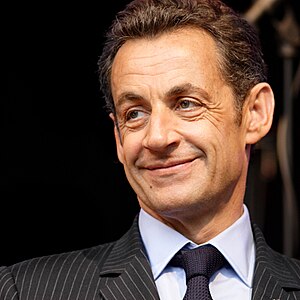
This image shows Nicolas Sarkozy who is presid...Image via Wikipedia
...since he took office, President Sarkozy has perpetuated France's time-honoured tradition of parallel diplomacy in Africa.One set of advisers presides in public over the official business with Africa, while high-ranking Elysee staff, in tandem with unofficial middlemen, is in charge of the lucrative and highly personalised politics that Mr Sarkozy denounced during his presidential campaign...[continue reading]
Reblog this post [with Zemanta]

  • Digg
  • Del.icio.us
  • StumbleUpon
  • Reddit
  • RSS

The Challenges of Informal Economies

In Foreign Affairs Nicolas van de Walle reviews Kate Meagher's new book "Identity Economics: Social Networks and the Informal Economy in Nigeria":

Within development circles, conventional wisdom has it that successful manufacturing sectors often develop in low-income countries thanks to identity-based social networks made up of producers working together. These networks are said to generate the social capital that can be used to overcome many of the shortcomings of underdevelopment. Meagher's careful study of two such networks in southwestern Nigeria -- of small, undercapitalized garment and shoe manufacturers -- suggests that the advantages for producers within the networks are being undermined by an increasingly dysfunctional state. Meagher shows that these networks, whose roots go back to the colonial era, bring in hundreds of millions of dollars in revenue and export their goods to states throughout West Africa. But in recent years, they have proved vulnerable to Asian imports and have largely failed to develop economies of scale, invest in new machinery, or generate new lines of production; these networks, it turns out, stifle innovation and consolidation, even as they protect their members. Informed by theory as well as sustained fieldwork, Meagher's study is a useful antidote to the purveyors of magic-bullet solutions for African development. It should be read by anyone interested in Africa's industrialization.
via Loomnie
Enhanced by Zemanta

  • Digg
  • Del.icio.us
  • StumbleUpon
  • Reddit
  • RSS

Chez Gangoueus a compendium of Francophone Literature

Global Voices reviews Chez Gangoueus (fr) A blog about French African literature by Réassi Ouabonzi. Answering a question about literary trends he declared :

...in Congo, a new generation of writers is budding, inspired by award-wining writer and intellectual Alain Mabanckou. In Sénégal, I'm struck by the current emergence (empowering) of women writers, in the wake of  best selling author Marie Ndiaye. I notice writers from Cameroon write with the same “in your face” directness and energy that they are are famous for. I must confess that I am in awe of Nigerian writers,  like the great Chinua Achebe. Among francophone writers, I could mention so many: Abdourahman A.Waberi from Djibouti,  Jimi Yuma from Congo, Patrice Nganang and Leonora Miano from Cameroon…
Reblog this post [with Zemanta]

  • Digg
  • Del.icio.us
  • StumbleUpon
  • Reddit
  • RSS

Environmental Determism

Jason Hickel writes in Pambazuka:

The correlation between environment and development is indeterminate; there are many regions in the world with hostile geological and climactic characteristics that have nonetheless managed to keep from descending into inveterate poverty. Second, the theory focuses on what Africa lacks rather than what Africa has, being – among other things – vast natural resource wealth in the form of unprecedented petroleum reserves and mineral deposits. The question should not be what to do in the absence of resources, but how existing resources get used, how they are distributed, and who pockets the profits.
More here
Reblog this post [with Zemanta]

  • Digg
  • Del.icio.us
  • StumbleUpon
  • Reddit
  • RSS

Is Aid central to development?

Lyinoluwa “E” Aboyeji writes in Project Diaspora:

If aid must remain relevant to development, it must stop being so self-absorbed in all its imagined importance and listen more. More importantly, it should increase the capacity of their African counterparts to identify and solve their own problems. The current system where African higher education receives little or no support while universities in the west launch multi-million dollar “Development Research Centres” they don’t need is not only clearly unsustainable, but highly self serving. It pushes an imperialistic mindset that allows western institutions to serve as command centres for Africa’s economic and political systems without the proper context and it leaches Africa’s best academic minds, leaving young Africans not fortunate enough to afford an expensive international education largely clueless and underesourced with respect to international development issues in their own countries.
More here
Reblog this post [with Zemanta]

  • Digg
  • Del.icio.us
  • StumbleUpon
  • Reddit
  • RSS

Ethnicity a Bogeyman? Perhaps Not

Codrin Arsene reviews Ethnicity INC by Jean and John Comaroff:


What if, the authors ask, the future of ethnicity lies in its capacity to incorporate identity (incorporate as in creating a legal corporation based on ethnic grounds) and couple this normative shift with the progressive commodification of one’s ethnic group culture? The authors think that the new product could efficiently represent the interests of its members. They argue that the commodification of culture doubled by the branding of the newly marketed entities could trigger the formalization and the institutionalization of the consumption of culture in ways that would be beneficial to those creating and generating culture in the first place.
More here


Reblog this post [with Zemanta]

  • Digg
  • Del.icio.us
  • StumbleUpon
  • Reddit
  • RSS

Nigeria at 50 is there anything to celebrate?

Joshua J. Omojuwa writing in African Liberty:

As Nigerians celebrate 50 years of nationhood today, the promise of independence- a nation of free people living at peace with itself and neighbours, undergirded by individual and economic well being is still a distant dream. The President and his Governors may cut mammoth cakes and pop champagne and toast to success, perhaps personal success. Yet, this artificial success is derived from plunder and supervised penury foisted on the poverty industry and fueled by years of bad governance.
Little wonder remnants of the disaggregated development plague us; dysfunctional educational system, bad energy policies, bad roads, offensive electricity supply, armed rebellions in resource-rich regions, religious and tribal wars, kidnappings and a habitation for corrupt political grand masters and scammers. Clearly we are a nation of perpetual anomalies. Yet, we are one of the richest oil-producing nations on earth able to dish out billions of Naira for the wasteful jamboree in the name of Independence...[continue reading]
Enhanced by Zemanta

  • Digg
  • Del.icio.us
  • StumbleUpon
  • Reddit
  • RSS

Literary Clusters-Lagos,Nigeria

In 3QuarksDaily Tolu Ogunlesi on a re-energized literary scene in Nigeria:

Chika Unigwe Biography: en.wikipedia.org/wiki/...Image via Wikipedia
Lagos is suddenly a hot new destination for writers from all over the world – courtesy of the exploits and efforts of writers like Adichie. Her four-year-old annual Creative Writing workshop, sponsored by Nigeria’s oldest and biggest beer company (which before now appeared to be more at home with sponsoring music festivals and talent hunts) has brought Jason Cowley, Nathan Englander, Binyavanga Wainaina, Jackie Kay, Doreen Baingana and Dave Eggers to Lagos, to facilitate writing sessions. This year Ama Ata Aidoo, Niq Mhlongo...
More here

Reblog this post [with Zemanta]

  • Digg
  • Del.icio.us
  • StumbleUpon
  • Reddit
  • RSS

Sister Fa

Meet the Berlin-based Senegalese hip-hop artiste, Sister Fa:via Loomnie

  • Digg
  • Del.icio.us
  • StumbleUpon
  • Reddit
  • RSS

Sightlines and African Urbanism

Dwell speaks with Erika Gee about the upcoming "Sightlines" lecture series. One of the questions was:

courtesy of Dwell
"The talks range in location from South Africa to quite literally Timbuktu. Tell me about that Timbuktu lecture and what it hopes to say about architectural cross-pollination across the continent.
That lecture looks at West African architecture and how often times academics are quick to treat it as something apart from the rest of Africa and particularly North Africa. But curator Labelle Prussin looks at the Jewish influence in Timbuktu and tries to make connections between West Africa and North Africa. She sees an influence in architecture, art, and commerce, and makes the point that West Africa is really an area with a number of different styles.
More here
Enhanced by Zemanta

  • Digg
  • Del.icio.us
  • StumbleUpon
  • Reddit
  • RSS

"Africa’s Hope" or "Old School Nationalism" ?

Keith Hart in response to Chinua Achebe's recent piece on  Nigeria’s promise, Africa’s Hope writes:

"This is old school nationalist history of the sort that misled Africans at the time of independence; Achebe’s vision of world history is narrow and backward-looking; the programme advocated, such as it is, takes no account of contemporary world society or of the forces within it that might support African emancipation at whatever level of association; he repeats the mistake of focusing exclusively on politics and law (“seek ye first the political kingdom”); and deals with the economic conditions of democracy only through their negation as excessive ill-begotten wealth. The thinking behind this piece, in other words, has not moved on since the mid-twentieth century."
More here
For further discussion read Loomnie's analysis

  • Digg
  • Del.icio.us
  • StumbleUpon
  • Reddit
  • RSS

The Tragedy of Umar F. Mutallab

In the wake of the Umar F. Mutallab terrorist incident, Sahara Reporters Aliyu Tilde eviscerates Nigeria's elite and ruling class :

On contemplation, I think the real reason why we elite are afraid of our newly acquired feather is because of the inconvenience that we will suffer from whenever we visit overseas or the opportunities we will miss in our hideout countries where we send our children to study after celebrating the collapse of our public schools at home; where we take our wives for delivery after we have allowed our hospitals to deteriorate; where we hide the billions we steal daily from public coffers; where some of us think is the Promised Land. Think about it: what restrictive measure would the average Nigerian, who will never have the opportunity to board even a domestic flight be afraid of? Will the airport scanners scan him on his farm? Indeed, we are crying for ourselves, for our interests, not for Nigeria
More here
.


Reblog this post [with Zemanta]

  • Digg
  • Del.icio.us
  • StumbleUpon
  • Reddit
  • RSS

Applauding the Shadow City Dwellers of 'Welcome to Lagos'

In Postconsumption Niti Bhan commends the "business flair of Nigeria's slum dwellers"highlighted in 'Welcome to Lagos':

In three programmes, series producer Will Anderson assembles a number of hugely likeable, articulate and witty people who live on garbage heaps, in beachside shanty towns and slums on stilts in the city's lagoon. Their tales build an intimate portrait of a city brimming with entrepreneurial flair, resilience, tough-mindedness and hope. This is not the apocalyptic urban vision with which Lagos has become synonymous and about which development experts sweat as the population of 16m climbs steadily towards a forecast 25m.Instead, it is a hymn to humanity and to the capacity of Africans to find means and motive to survive in even the most adverse conditions.
More here
Photo courtesy of the BBC
Reblog this post [with Zemanta]

  • Digg
  • Del.icio.us
  • StumbleUpon
  • Reddit
  • RSS

FranceAfrique and the burden of the CFA

And Francophone Africa thinks its independent? Sanou Mbaye writes about the yoke of the CFA franc:

More appalling is the fact that France guarantees the CFA franc’s free convertibility into hard currency, originally on the condition that all 15 Franc Zone countries surrender 100% of their foreign reserves to the French Treasury. The amount was reduced to 65%, and then 50%, in 2005, but France still deducts its share directly from these countries’ export earnings.
Moreover, the mandatory 20% foreign exchange cover stipulated in the convention signed with France in 1962 now stands at 110%. And a foreign-exchange control enacted in 1993 ensures that only France benefits from this capital drain by limiting the free flow of capital to France alone. The ensuing massive capital flight has bled the region’s economies and eroded their competitiveness.
More here
via Loomnie
Reblog this post [with Zemanta]

  • Digg
  • Del.icio.us
  • StumbleUpon
  • Reddit
  • RSS

Ownership of the MDG's

Pai Obanya on development problems:

On the MDG goals, Professor Obanya says that the problem is that they are not owned by developing countries. People simply sign up to programmes that they don’t fully understand because someone promises to fund the programmes if they sign up to them.
via Loomnie

  • Digg
  • Del.icio.us
  • StumbleUpon
  • Reddit
  • RSS

Naira Denominated Bonds

Reuters reports:

The head of Nigeria’s debt management office said he was hopeful of gaining parliamentary approval for its $500 million debut global bond now that conditions in the world economy had improved.Parliamentary approval for the planned naira-denominated bond is one of the last major hurdles for launching the offer, which the government hopes will establish a sovereign benchmark in the international capital market.
via Loomnie

  • Digg
  • Del.icio.us
  • StumbleUpon
  • Reddit
  • RSS