RSS
Menampilkan postingan yang diurutkan menurut relevansi untuk kueri Tradition. Urutkan menurut tanggal Tampilkan semua postingan

Republicans Overturning Tradition and Removing Choice from Parents on Kindergarten?

Two values that are supported more by conservatives than liberals are traditional values and parent choice, and yet Republicans in Michigan keep forgetting these values that they were elected on. Seduced by the power of government and feeling empowered by their large majorities in the House and the Senate, Michigan Republicans recently supported President Obama's Race to the Top program which gives more control over education to Washingtion DC and even more recently have supported raiding the K-12 School Aid fund in violation with voters stated wishes on the subject.

And now I hear that Republicans are prepared to use the power of the state to tell parents when they think a child is ready or not to go to kindergarten, overturning over 100 years of established values on the subject.

It is understandable that liberals would push to overturn tradition and take away choice from parents on when they send their own children to school, since liberals thrive on power and control, but I would never have thought that the tea party and conservatives in our good state would have swept into power people who now are about to meddle in parent's choice and established values in the name of new-age science.

Feeling that every month in a child's life makes a big difference, that young kids lack the stamina for kindergarten, and that the youngest ones have a harder time integrating socially, emotionally, physically and academically, Michigan State Senator Darwin Booher (R-Evart) and Michigan State Representative Ray Franz (R-Onekama) are planning on introducing legislation that would move up the kindergarten cutoff date from December 1 (where it has been set for over 100 years) to September 1. This would act to prevent children who turn 5 from September to December from attending kindergarten, even if their own parents feel that they are ready.

If parents still want their children to go to school earlier than the government mandated cutoff date, they would be forced to sit down with a government committee which would judge them and issue a decree on whether or not their child was ready to go to school or whether they would have to pay thousands more in daycare for another year until the state deemed it now appropriate for them to send their child to kindergarten.

State Senator and Education Chair Phil Pavlov (R-St. Clair) also apparently supports this attempt to take away choice from parents and overturn tradition. It is unclear why the state has to get involved with setting arbitrary deadlines on when a parent is allowed to send their own child to school, and I suggest that in coming elections that conservative and tea partiers keep these thoughts in mind and work to knock off these corrupted-by-power Senators and Representatives.

Parental choice and tradition, dear state government- that's the way to go.

UPDATE: For those who asked...


UPDATE II: Thank you all for the comments- they support my original point that I'm pissed at Republicans running as conservatives and then not being conservative- so thank you for supporting my argument.

While many feel that children should be older before going to kindergarden, that's their choice. No offense intended, but I don't want anyone to have the power to control when my children start going to school- that's my call as a parent. I do not want any sort of government committee to telling me that if I (as the parent) choose to send my kid to school earlier, that the government will not allow it. That's not how our state has run in the past.

Tradition and parental choice- those are conservative values, and they are the values I support.

  • Digg
  • Del.icio.us
  • StumbleUpon
  • Reddit
  • RSS

Nigeria's 500-year-old dying dye tradition

CNN reports:
Residents of Kano in Nigeria are struggling to keep alive their centuries-old tradition of hand-dying delicate cloth a deep indigo blue, with their trade under threat from the realities of modern commerce.Kano's pits are said to date back 500 years and were once the center of a bustling Saharan trade in dyed cloth.There are still over 120 pits in Kano but only 30 of them are functioning. Many of them have been filled in, often because families have moved on to other businesses, but sometimes because they're waiting for their children to grown up, dig out the pit and reclaim their tradition.

  • Digg
  • Del.icio.us
  • StumbleUpon
  • Reddit
  • RSS

America's Traditions Attacked by NBC, which Cut Portions out of our Pledge

America is an exceptional nation- a nation that was founded and built on traditions and ideas in a way that no nation had previously tried and no other nation has since duplicated. The ideas are put forth in our Declaration of Independence- all men are created equal, no man is better than you at deciding how you run your life, government is created for very limited purposes, and that these mainly are to protect your freedom of choice, to protect your life, and to protect your property which was the product of your hard work and labor. As I have written about many times, these ideas are under daily attack by those unexceptional nations who would drag us back into their petty jealousies, and by those who support these nations out of belief that America has something to apologize for or that the monarchs and empires of the past are to be admired and emulated.

Traditionally, our nation has been a nation of immigrants who come here expecting nothing other than to be rewarded for their hard work and not be judged based on their race or class, and traditionally our nation has been a nation built on rule of law, not rule of strong men ruling by decree. These traditions are also under attack by those who immigrated here expecting others to work hard for their benefit, and rule of law is slipping badly in our nation.

One other great tradition that America was firmly built on is Christianity. This Christian spirit animated our nation and our nation's leaders from the beginning to today, and is firmly a part of our character. While other Christian nations around the world have had slipping church attendance and little vigorous debate on the nature of God and God's Word, in our nation many still go to church and healthy and moral debates continue to be engaged on the nature of God.

This traditional Christian character of our nation is an important part of our tradition, and has been enshrined in our Pledge of Allegiance, which we all know and say from birth as:

I pledge allegiance to the flag of the United States of America, and to the republic for which it stands, one nation under God, indivisible, with liberty and justice for all.
But this tradition is under attack as well, by well meaning individuals who believe that out nation will be improved or strengthened in some manner if God is driven underground and killed. They object to saying the pledge, usually by hiding behind nameless others who might possibly be offended by saying that the United States of America was founded and remains as one nation under God. They seek to remove the words 'under God', believing that it is possible to pick and choose what parts of America they like and support. Today they remove the phrase 'under God', but it has always been my fear that once that phrase is permitted to be removed, others will soon follow, and our traditions will be torn asunder and our foundations as a nation will shatter and we will fail.

Sadly, this is what is now happening. The election of Barack Obama was a bad gamble that our nation took, a leap of faith on someone who did not earn it, and the empowering of the liberal wing of his party, a Democratic Party that has moved far away from most people, further took our nation down a path of failed ideas and rejection of traditions. On Sunday, while many people sat down on a great Father's Day to watch the U.S. Open Golf Championship, they saw how far our nation has gone down this path when one of the major networks altered our nation's Pledge.

NBC on Sunday decided to cut the words "under God" from the reading of the Pledge of Allegiance that accompanied the beginning of its coverage of the U.S. Open Golf Championship. Seconds after that, there was another reading of the Pledge, and this time, in addition to cutting out the words 'under God', NBC went further and cut out the words 'one nation' as well, dishonoring all of the thousands of dead who fought to keep our nation one nation during the US Civil War. Watch the video yourself.

NBC later issued an apology, but I wonder, what is next for the liberals who run NBC, who support Barack Obama, and support the liberal radical left of the modern day Democratic Party? Will they next drop out the words 'with liberty', since they don't believe that I truly have the liberty to run my own life however I want and need to be ruled over by elites in Washington? Will they drop out 'to the republic', or maybe alter it 'to the democracy', thereby changing our nation from a nation of laws into one where strong men can do what they do and the rest of us must suffer under their tyranny? What is next for our nation, if the traditions of our nations can be so casually rejected by a major network?

For your classroom, think about getting one of these posters- I Pledge Allegiance to the Flag of the USA - Classroom Motivational Poster or I Pledge Allegiance to the Flag of the United States of America - Classroom Motivational Poster.

  • Digg
  • Del.icio.us
  • StumbleUpon
  • Reddit
  • RSS

Patterns Beyond Traces

Creative African Network profiles Patterns Beyond Traces


This mixed-abled dance theatre piece is set up in the emotional field outlined between tradition and urbanity: in a world between worlds. Tradition, belief, ritual and ritualised daily grind - five dancers with and without physical disabilities explore what has been passed on to them and reflect it within the ways of their own daily life.

  • Digg
  • Del.icio.us
  • StumbleUpon
  • Reddit
  • RSS

Mali Evolves

Robert Pringle writes about the burgeoning civil society and strengthening democracy in Mali:

Malians have redefined the term “consensus” to comport with the decentralization model. Whereas under the dictatorship “consensus” meant African-style democratic centralism, often smacking of communist practice, today it is understood to suggest reaching compromise on tough issues—more in the mode of Daniel Webster than Vladimir Lenin...Malians say that their history and culture have nourished interethnic tolerance. They cite a whole tool kit of conflict resolution and avoidance mechanisms...Mali’s new decentralization has created a three-tiered system: regions (think states), circles (think counties), and communes, which usually comprise several villages. Commune inhabitants elect local councils, which choose their own mayors and send representatives to the two higher tiers of the system. The 702 rural communes are widely regarded as the backbone of Malian democratization...The most striking thing about Malian democracy is its success in drawing intellectual and spiritual sustenance from an epic past, and actively incorporating homegrown elements, such as decentralization. If there is occasional fiddling with historical truth, the past provides plenty of room for differing viewpoints and for shaping tradition to meet modern needs. It is this aspect of the Malian experience that is least appreciated, and it deserves more attention from policymakers, both African and foreign, who have a tendency to assume that “tradition” equates with “bad.”
via 3quarksdaily

photo courtesy cr.nps.gov

  • Digg
  • Del.icio.us
  • StumbleUpon
  • Reddit
  • RSS

US Has Two Party System- Deal With It and Vote Republican

The United States of America has a two party system and it always will. The two major parties earn 90-95% of the vote in our nation in the thousands of races they run in every election up and down the ballot year in and year out. Every election people wish that another different party would win, but they very rarely do. And that is the way it is.

This is not to say that so-called 'third parties' don't occasionally win a race or have a good showing. You can probably name the dozen or so times in the last several decades they had a good showing... out of thousands and thousands of races they have had a bad showing. The biggest role that 'third parties' play in our system is throwing the election to the 'other side'- all of those people who voted Libertarian helped the opposite of a libertarian win, all of those who thought HW Bush wasn't conservative enough and voted Perot helped put Clinton in office, and all those GOPs who supported TR only helped put progressive Wilson in office. And all of you who read my blog that support and vote third party, all you are doing is helping put communists, socialist, and fascists in office. And that is the way it is.

The reason we have a two party system in our nation is for several good reasons. One is tradition and history- we've always had a two party system, whether it was Revolutionary/Loyalist, Federalist/Anti-Federalist, Federalist/Democratic-Republican, Democrat/Whig, or Democrat/Republican (since 1860)- and tradition and history are important to many people. Another reason we have a two-party system is the laws and regulations that we have put in place to control elections favor two parties- single-member districts, winner-take-all elections, a popularly elected president, large geographically based districts, ballot access laws- all of which favor the two party system. Another reason is because Americans are generally moderate, and the two major parties are coalition parties that make compromises to win, which moves them both closer to the middle, which means that other parties only have room to win supporters on the margins of the political spectrum, where there are fewer people.

And this is why you personally (if you vote third party) are messing up. The GOP is a coalition party that in order to win brings in lots of groups and combines them in an imperfect manner. The Democrat party does this too, and all of the communists and fascists got smart and joined that party and now run our nation, while all of the conservatives and libertarians sit on their high horses and judge and that's why the communists and fascists run our nation. You (if you vote third party) are contributing personally to the downfall of the United States of America. You need to vote Republican- you need to be part of the coalition and as our party gets bigger and bigger, and welcomes in more groups, we'll welcome in conservatives, moderates, libertarians, and everyone who goes to a tea-party. That will make the GOP a strong party again, and will make America a strong party. And if you don't like a candidate in the GOP, actually vote in a primary for once (average 20% voter turnout) and do something about it.

We have a two party system in America, and you need to deal with it and start voting Republican.

  • Digg
  • Del.icio.us
  • StumbleUpon
  • Reddit
  • RSS

Patterns Beyond Traces

Creative African Network profiles Patterns Beyond Traces


This mixed-abled dance theatre piece is set up in the emotional field outlined between tradition and urbanity: in a world between worlds. Tradition, belief, ritual and ritualised daily grind - five dancers with and without physical disabilities explore what has been passed on to them and reflect it within the ways of their own daily life.

  • Digg
  • Del.icio.us
  • StumbleUpon
  • Reddit
  • RSS

Happy Memorial Day and Decoration Day! Personal Relections

Happy Memorial Day Everyone!

Memorial Day means different things to different people- to some, it is the honoring of fallen soldiers, who died in service to their nation, like my distant relative James, who fought and died in the Civil War.

My grandfather passed this story on to me recently. On Jan. 27,1864, James was just a farmer, but he still went off to do his duty to keep our nation one nation, undivided, with liberty and justice for all. James enlisted in the 17th Infantry Regiment. He was mustered in on Feb. 11, 1864. His Company soon joined the regiment at Annapolis, MD on April 9, 1864- some of the worst battles of the Civil War were about to take place.

He fought in the Battle of the Wilderness in Virginia, in May, 1864, and then fought in the Battle of Spotsylvania Court House, Virginia, which a vital crossroads which controlled the shortest route to the capitol of Virginia. It was here at Spotsylvania on May 12 that James was taken prisoner and shipped to the notorious Andersonville Confederate prison camp in Georgia. Some months later James died there of dysentery, and was buried in the National Cemetery, Andersonville, GA. He was only 40 years old.

His widow was left with 7 children- her Army pension was $8 a month, with $2 extra for each of her 6 minor children, until they reached the age of 16. James served our nation for 4 months and did his duty and died a true patriot. Thank you James, for all that you did.

To others, Memorial Day is a day to remember our roots and those who have gone before us. My grandfather remembers trips that he used to make a youth on Decoration Day (what Memorial Day used to be called) to visit their old family farm and the old cemetery too. Since the family had a poor section of the cemetery, they would all pitch-in and weed, cut the grass and put flowers on the graves. When they had done everything there, they would drive back to the old farm where they were raised and have a picnic and remember their family. When they were too old to do it together any more, some of the family continued the tradition.

Also on Memorial Day, it my grandfather's family tradition to take flowers to the graves of family members and remember them on this day, whether they died in war or not. It may be called Memorial Day now , but my grandfather is right- to all those who went before us and who raised us, they deserve our attention and respect and honor and thoughts too on Decoration Day.

Happy Memorial Day! Happy Decoration Day!

  • Digg
  • Del.icio.us
  • StumbleUpon
  • Reddit
  • RSS

"Failed States" and an African Solution

George Ayittey writes in Harvard International Review:

In crisis-resolution, the African tradition entails consultation and decision-making by consensus. When a crisis erupted in a typical African village, the chief and the elders would summon a village meeting and put the issue to the people. There it was debated by the people until a consensus was reached. During the debate, the chief usually made no effort to manipulate the outcome or sway public opinion. Nor were there bazooka-wielding rogues, intimidating or instructing people on what they should say. People expressed their ideas openly and freely without fear of arrest. Those who cared participated in the decision-making process. No one was locked out. Once a decision had been reached by consensus, it was binding on all, including the chief.
These village meetings are indigenous African political institutions and commonplace across the continent. Despite their distinct names in various parts of the continent, the basic principles and methods employed are the same. In recent years, this indigenous African tradition was been revived by pro-democracy forces in the form of national conferences to chart a new political future in Benin, Cape Verde Islands, Congo, Malawi, Mali, Niger, South Africa, and Zambia.
More here
Enhanced by Zemanta

  • Digg
  • Del.icio.us
  • StumbleUpon
  • Reddit
  • RSS

Heart of a Tormented Continent

There is an appealing logic to the latest multimillion-dollar aid package for Africa announced last week by George Bush and Tony Blair. It is supposed to help rob terrorists of a breeding ground and, in a humanitarian spirit, relieve the continent of some of its misery. But anyone who has followed the fate of Africa over recent decades might wonder: Why should these millions of dollars have any better effect than the billions that have gone before? Why does the West feel the need to keep pouring money into Africa? One answer has to do with the underlying conventional wisdom, which blames Africa's miseries on the delayed effects of Western colonialism.
['Africa Unchained']
Yet as the decades pass it becomes apparent that, although there is some truth to the claim, there is more to Africa's problems than that: A solution will require radical changes in the way Africa is governed and in the way its economies function. George Ayittey makes such an argument in "Africa Unchained" (Palgrave, 483 pages, $35), a superb analysis of the continent and its recent ordeals................
................Colonialism plays a part in Mr. Ayittey's account, too, but in a different way. For him, the continent's problems stem from the characteristics of the governing elite. In "Africa Unchained," he draws a sharp distinction between African governments -- generally corrupt, socialist, centralizing -- and the informal sectors of the African economy, which the elite's misdeeds have impoverished. At independence in the 1960s, Africa was a net exporter of food; now it imports $18 billion of food per annum.
But where did the elites pick up their bad habits? Mr. Ayittey describes in detail the economics of precolonial African societies. Property was held in common among the extended family but not by the community as a whole, while economic activity was undertaken for profit, with prices set by hard bargaining. Government operated through consultation, with chiefs exercising power only after full discussion with a council of elders. Thus the modern pattern of one-party or one-person rule, state ownership and state controls over prices and distribution is an import from Europe, not an African tradition.
Free Institutions
Mr. Ayittey's claim that democracy and free markets, not autocracy and communal ownership, are a legacy of Africa's own past is important, since it provides a rationale for Africans to move toward a system that can work. It presents a striking parallel to the work of parliamentarian historians at the time of the English Civil War, who traced English civil liberties back before Magna Carta to the Anglo-Saxon "Witanagemot" -- a gathering of tribal eminences -- and to the free institutions ascribed by Tacitus to the Germans of the first century. These historians gave their liberal cause legitimacy; Mr. Ayittey's researches may give a similar legitimacy to free institutions in Africa.
As for what those institutions might be, Mr. Ayittey calls for independent judiciaries, independent media and, not least, independent central banks. He would like to see power devolve as much as possible to Africa's traditional leaders -- at the village and regional level -- who are closer to the people they rule and less able to escape abroad from the penalties for corruption and malfeasance. He notes that Africa's governments today too often divert what money they have -- from aid or from oil and mineral revenues -- to military spending, wasteful prestige projects and tax-haven bank accounts. Here, too, local control would help. Aid in particular -- Mr. Bush and Mr. Blair take note -- needs to be targeted locally and regionally, rather than nationally, and it needs to be dispensed much more quickly than it is now, and in much smaller amounts.
What chance is there of such reforms actually happening? Less than one might wish. Part of the problem still comes from the West. When the principal cadres of Westerners dealing with Africa are aid agencies, charities and NGOs, rather than the financiers and businessmen who predominate in India and China, one has to expect that Africans, elite and otherwise, will be exposed to a high level of economic illiteracy.
Still, capital and investment will not flow toward Africa until it has done more to shrink the power of its governments and provide havens, secure against tax, inflation and expropriation, for the savings of its striving peoples. And in this regard Western attempts at institution-building will be of little help. It is for Africans to build their own models of governance. Luckily, as Mr. Ayittey shows, they have a proud tradition to draw upon -- and never mind the colonizers.
Mr. Martin Hutchinson is the author of "Great Conservatives" (Academica Press).

  • Digg
  • Del.icio.us
  • StumbleUpon
  • Reddit
  • RSS

Tea Party and Conservatives are the Counter-Culture Today- Occupy Wall Street Simply Fights for the Establishment?

The real counter-culture today is not to be found on the left, with the Occupy Wall Street people or in the liberal and progressive blogs on the internet. After all, counterculture is a sociological term used to describe the values and norms of behavior of people who run counter to those of the social mainstream of the day. They aren't 'fringe groups' or 'subgroups'- rather, the counterculture are those people who are the manifestations of the zeitgeist of the day. And the group that best rejects the old way of doing things, the traditional ways of doing things, and offers new and different solutions to the problems facing society today are those people who love freedom and liberty and property rights. Ladies and gentlemen, the new counterculture is the Tea Party, and if you were hip and cool you'd join it.

The 'establishment' of today is not the restrictive, conservative white-picket fence war hero's of the '50's- rather, today the 'establishment' are those very hippies who rose to power and influence reacting against the 'establishment' of that time. Today, those in power and authority are those war-dodging self-righteous selfish drug-using types who now spend their days lecturing others around about being more friendly to the environment or to make peace not war or other meaningless garbage, while they live way beyond their means piling up debt on their children and grandchildren. These so-called 'progressives' control the modern-day Democratic Party and tint the Republican Party as well. Look around you- the entertainers on TV, the comics in the clubs, the celebrities in movies, the musicians- the culture of the day is that of the left, the establishment of politics and the media is that of the liberals, and even “The Man” is a lefty tyrant.

So what then is the new counter culture? As I wrote back in The New Counter Culture: Liberty, it is those people who love life, liberty, and the protection of property who are the new counterculture- rejecting the 'mainstream' big government progressive and liberal policies of the major parties and embracing the soaring rhetoric of the Bible and the Declaration of Independence to challenge the status quo and express the ethos of the times. The new rebels are the old rebels once again; those who fight against tyranny and oppression again and take back our nation, and they are to be found in the gatherings and celebrations of the Tea Party's, conservatives, and (to a lesser extent) the Republicans.

The real change in our society, the real difference makers, are those people who are out there at Tea Party's across the nation. Those who are going to shake the world and make a difference are not Harvard-educated community organizers committed to spending money they don't have on social re-engineering schemes while they urinate on themselves and shout about being the '99%'- rather, the counter-culture and cool group of today are those entrepreneurs who are standing up at town halls and yelling 'freedom'. They are the '1%' who are fighting for change and a return to the values that once made our nation great, and that is why their movement is so vibrant and intellectually alive, because they capture the spirit of the day and the direction our nation should go more so than the old hippy establishment culture that is the status quo now.

The Weekly Standard echo's some of these thoughts of mine in its latest article The Reactionary Left, by Matthew Continetti. Here are some of the best parts of it:

...The very notion of a backward-looking left is laughable. Since its inception during the French Revolution, the left has been the party of progress, riding the wave of history to that distant shore where man will cast off the chains of society and live a truly authentic, free, and “natural” life. It’s been the conservatives who have looked in the other direction, tapping the lefties on the shoulder and reminding them that faith and tradition are important guides to human action and shouldn’t be cast off lightly. In contemporary America the equation has been reversed: Tea Party populists support drastic measures to revitalize the American government and economy, while left-wing class warriors want nothing more than to maintain the broken structures of the welfare state....

...What happened to the American left’s utopianism, its sense of adventure, its fearless derring-do? Today’s liberals say conservatives are radicals who want to overturn the American political tradition (as liberals understand it). What remains of the liberal confidence in progress seems to be restricted to the culture, where Americans continue to perform occasional experiments of living. But even the cultural left seems withered, exhausted, ready to go to that big Oneida community in the sky. So what’s a Rousseau to do? Ruminate on his glory days, and pretend that Occupy Wall Street is something more than it is....

...The wistful left reaches back farther when it mimics the class politics of the 1930s. The “99 percent” versus the “1 percent,” Warren Buffett’s secretary versus Warren Buffett, Obama’s attacks on nameless “millionaires and billionaires” are echoes of the rhetoric of Huey Long, Father Coughlin, and Franklin Roosevelt. What is puzzling is that the strategy of division and resentment has not had a good track record. To be sure, it worked for FDR. But Roosevelt had 25 percent unemployment, a minuscule federal government, and a sunny disposition. Since LBJ, the spokesmen for American liberalism have been dour and passive and condescending. Their populism has lacked bite because it is a pose. The public has seen through their attempt to rehash the old formula for what it is: “the shield and slogan of the cunning who will rule in the name of equality,” as Martin Diamond once put it.

The longing for the culture of the ’60s, the economy of the ’50s, and the politics of the ’30s is evidence of the left’s failure. No longer able to inspire with a utopian vision of the future, the left has been forced to return to its past. The left’s failure, then, is the right’s victory, because a return to the past is what we’ve been calling for all along....
Check out the whole thing, it's pretty good. Also be sure to check out this article by James Hudnall over at Big Hollywood, which covers some of the same ideas.

UPDATE: Welcome readers of the Right Wing News! Thanks for checking out this post- look around while you are here, I'm sure you'll enjoy other posts that've I've written!

  • Digg
  • Del.icio.us
  • StumbleUpon
  • Reddit
  • RSS

Obama: Does He Opposes republicanism?

Let's not forget the big picture during this primary season- defeating President Obama's attempt to hold on to political power. This is not a partisan issue- I don't suggest that Obama needs to be defeated merely because he is a Democrat or a liberal or a progressive or whatever- but rather this is an issue about putting someone in the White House who is better at getting out of my way.

I'm great a working hard, creating wealth, making my own decisions in my life, living with my own mistakes, and producing goods and services for our great nation- and so are you. All you require to be prosperous, happy, and free is a government which protects your life through national defense and police services and the like, a government which protects your liberty and freedom by making sure that enemies without and within do not gain the ability to order you around, and a government which protects your happiness by making sure that the property you do earn you keep. You are all great Americans.

And yet, President Obama does not think that you are great Americans- he thinks that you make bad decisions, that you don't understand how a baby could ruin your life, and that you are not creating the right sort of property or spending your property in the right way. And this dangerous man with these dangerous attitudes has become President of the United States of America and is now using the power of that executive office to take away your liberty and freedom and property and make your life a little less full.

You've felt it, just like I have, over the years and getting worse over the last three- that feeling like people don't matter any more, like peoples lives are inconsequential, and that feeling that our world is a little less alive. It is not surprising that you've felt this way- as government has gotten bigger and more powerful and more in control with more aspects of your lives this impersonal and vast institution has dehumanized us and treated us as numbers and taken away from our life, liberty, and property.

President Barack Obama supports this dehumanizing and confiscating and controlling philosophy because he does not think that you are all great Americans.

Jay Cost on Saturday touched on these ideas in his blog post, where he spoke about just exactly what sort of person Obama was, what his vision of the world was, and why opposing him rises beyond simply a partisan or jobs or improving economy thing- it is a real battle of vision for the future for America- one in which the individual is great and free and prosperous, or another one in which the individual is a slave to the state and controlled by the state and prosperous only as much as the state lets them be.

Here is part of Jay Cost's blog post, from the Weekly Standard, called What's So Bad About Obama?

...Obama is not “radical,” at least not in the way we usually define the concept. But that actually points to the big the problem with this president and his worldview. The progressive ideology dating back to the turn of the last century, and in which Obama is comfortably situated, was never really about overturning the established order, but rather in co-opting it...

... the hallmarks of the First New Deal – were all about grand bargains between government, labor, farmers, and capital owners. The point was to draw all classes to the bargaining table, with the meeting chaired by the progressives, naturally. So it goes for modern-day progressivism. Both Clintoncare and Obamacare did not try to implement “socialized medicine,” but rather strike a grand bargain that would encompass all of the “stakeholders” to manage the nation’s health care...

...Obama has not set out to destroy capitalism. He is no socialist in the traditional sense of the word. He is not interested in controlling the means of production, as Marx put it. He’s happy to let commerce and industry remain in private hands, but that does not mean he's a free market advocate in any politically relevant sense of the phrase. He wants the free market to do its thing, so long as the government can socialize an ever-greater amount of the profit, and also take an intimate role in managing the private sector to “socially beneficial” ends....

...The principal reason for this opposition is that there has always been more than a whiff of anti-republicanism to the progressive agenda. Just consider the name "progressive," which implies a social, epistemological, or moral vanguard -- hardly the hallmark of true republicanism. And what one person views as “socially beneficial," another may rightfully call political patronage. For instance, the New Deal was full of payoffs – small and large – to Democratic constituencies....

...And so, the Democrats’ grand dreams of a “Fair Deal” always stink of unfairness to conservatives in the republican tradition... And Barack Obama, the president who promised to bring change to Washington, has been a very diligent patron to his party's extensive list of clients. On item after item, the topline claim to benefit the national interest is regularly belied by the particularism of the fine print. Klein mentions three items in particular in his column – the auto bailout, the financial reform bill, and the health care bill – that were all justified on purely nationalistic grounds, but peel off the top layer and the stench of clientelism will overwhelm you. To this list I would add the stimulus bill, the jobs bill that Obama proposed in the fall, and the cap-and-trade bill. Liberals look upon them all as fulfilling a great national purpose, but republicans (small "r") see massive payoffs to core Democratic groups.

If you want to understand the seething anger on the conservative side of the aisle, this is what you need to appreciate: It’s not just that Obama is a big government guy in the progressive tradition, which conservatives have opposed for more than a century. It’s also that he’s a client guy, meaning that his idea of big government inevitably has special payoffs hidden in it somewhere. And more than even this, he's a boundless client guy in what should be an age of restraint. Payoffs to party clients are one thing when the economy is growing at a four percent rate per year; that is a situation where the times are so prosperous that government patrons are really just drawing upon the national surplus to satisfy their partisans. But when the economy is growing at less than two percent per year, barely enough to keep up with population growth, paying off party clients is actually like robbing from Peter to pay Paul. And while Obama and congressional Democrats have put off that bill -- in the form of our trillion-plus deficit -- conservatives are not fools. They know they'll be asked to pay up sooner or later, and with a stagnant economy that means less money in their pockets, in part because the president wants to hold together his voting coalition.

That's what's so bad about Obama.
Let's get past all of our past labels- Republicans and Democrats, Romney vs Newt, establishment vs anti-establishment, Tea Party vs Occupier, right vs left, conservative vs liberal- and realize just exactly what the battle is about today: republicanism vs dictatorship. This 2012 is about returning power back to the people of our nation by empowering them as individuals to make lives, be free, and earn property. Obama opposes that desire, and that is what is so bad about him and why he must be defeated in 2012 and his vision of government rejected with extreme manliness.

Jay Cost is the author of Spoiled Rotten: How the Politics of Patronage Corrupted the Once Noble Democratic Party and Now Threatens the American Republic.

  • Digg
  • Del.icio.us
  • StumbleUpon
  • Reddit
  • RSS

On Leadership


Great leaders  hire people smarter, more innovative, and better than themselves.

Poor leaders want to be the smartest one in the room. They always make sure they are.

Great leaders care about those who work for and with them... their life stories, their hobbies, their interests. They know that personal lives can effect professional careers and realize that to know an employee and care is the key to unleashing their potential at work.

Poor leaders only care about themselves. They will tell their grand heroic story of their own life ad nauseum.

Great leaders give others credit for good things even when a lot of the credit goes to him or her. If bad things happen, the great leader steps out front to take the blame.

Poor leaders are eager to take credit for everything, even those things that they had little or nothing to do with.

Great leaders have a great staff and tell everyone.

Poor leaders are surrounded by idiots and let everyone know it.

Great leaders focus an organization on the organization's mission. They focus on the customer

Poor leaders focus an organization on pleasing him/ her and become the only customer that matters to the employees.

Great leaders attract other great leaders.

Poor leaders repel great leaders.

Great leaders are watchful.

Poor leaders are verbose.

Great leaders can turn even poor leaders into better leaders. They mentor and create other great leaders.

Poor leaders make other poor leaders out of their buddies and cronies whether they are competent or not.

Great leaders work hard and smart and are able to tell which work is the most important. They never mistake urgent work for important work. They know that an open door as much as possible during working hours means that people will communicate with them.

Poor leaders cut corners and make excuses for why they need time away or to close their door. They know that a closed door as much as possible during working hours means that no one will bother them. So, they close their door.

Great leaders encourage and inspire the best and trust others to do their best. Most often they are made proud by the results. Sometimes, they are let down when someone misuses their freely given trust but believe it is still worth it to trust and give others the joy of service. Dale Carnegie is his friend.

Poor leaders have to manipulate every situation. They strategist every move with their sometimes hidden supporters. Machiavelli is a friend of this person.

Great leaders know that their words of encouragement are like $1000 dollar bills and look for opportunities to give honest praise and spread the wealth. They do not spend their praise for it to return to them, but it multiplies exponentially anyway in good will.

Poor leaders know that their words of anger cause immediate action and "respect." When you dole out unkindness it is like you are stealing $10 out of someone's wallet. They like the feeling of power and seeing people stand at attention when they are around. They do not know that stealing self-respect is a pathway towards imploding a person's potential and their own.

Great leaders believe that most people want to do a good job and use mistakes as teachable moments. His ability to wisely, discretely handle staff problems earns the loyalty of the flawed humans he leads. His staff is more willing to forgive his inevitable mistakes (when they happen) and are willing to provide valuable feedback to him so he can have a teachable moment as well. The leader's attitude about mistakes is ALWAYS paid back to him in his moment of need. For great leaders are also flawed humans.

Poor leaders believe that most people are slackers and want to do as little as possible to draw a pay check that they don't deserve. He thinks the whole organization will fall apart if he is  not there to make sure it runs. He believes that since he is the only person who cares about doing a good job that it is his job to personally inspect, find, and note EVERY mistake he sees - after all, he can only be finding just a small percentage of the mistakes anyway. He is never willing to forgive even the smallest mistakes and makes large publicly-known incidents out of the smallest discretions. He publicly humiliates those who make mistakes. The leader's attitude about mistakes is ALWAYS paid back to him in his moment of need. For poor leaders are also flawed humans.

Great leaders take criticism, examine it, and examine themselves to determine if there is a grain of truth in the criticism. She knows that most criticism has a grain of truth but also that there are the rare instances of a mean person (usually poor leaders) who just make stuff up. She can tell the difference.

Poor leaders never take criticism well and condemn those who give it as being subversive and enemies of the organization. She thinks she IS the organization and so her enemies are enemies of the organization. She thinks all criticism is from mean people who make stuff up.

Great leaders often have their heyday and are a living tradition of leadership. But every great leader typically has a horribly dark moment. It is most often when the great leader stands against a poor leader who has taken root somewhere and is doing harm. It is during these times of alienation, loneliness, and enmity when poor leaders and their oft-intimidated followers malign the great leader's love of the organization and the organization's mission. As the poor leaders and their followers circle, machinate, and manipulate, the great leader often questions the meaning of his whole life and if it is for naught. It is at these times the Great Leader must turn to his Maker and his mission and remain consistent with all he believes. He rarely realizes that great leaders like Churchill, Lincoln, and Roosevelt were largely made by their heroic behavior in the darkest days of their organization. The great leader clings to noble thoughts, deeds, and actions amidst even when surrounded by the most grotesque of human behavior. Great leaders eventually see the opportunity for rain amidst the dark clouds.

Poor leaders often have their heyday when they are able to take on great leaders. This bright moment brings him to the peak of what he likes: chaos and plotting. It is often when a poor leader is being attacked from his position by a great leader because the great leader has had enough. It is during these times of plotting, people, and malignment against a person with the respect and tradition of others that the poor leader experiences his greatest memories. As the poor leaders and his followers circle, machinate, and manipulate, the poor leader enjoys every moment never realizing that 


poor leaders are never made great by taking down great leaders. 


Poor leaders lead a trail of destroyed lives and people in their wake: castoffs in their quest to feel important. poor leaders eventually see dark clouds on the horizon of even the clearest day. 

Great leaders have great character, mission, and are well grounded in things that are important in life. They are real but they are not always recognized. They are loved but often not by the powerful people. They are great because they make us all greater and we do great things when they are around. Their power is lasting for when they are gone, they leave a legacy of what it means to live a good life.

Poor leaders have little character, no mission but self-promotion and are not grounded in what is important. They are fakes and make sure they are recognized. They are loved by the powerful but often disdained by the average person. They are poor leaders because they make the people around them poorer in spirit, life, and love and we do worse when they are around. Their power is often temporary for when they are gone, the power vacuum is quickly absorbed by other poor leaders ready to jostle into place.


Please add your thoughts in the comments.


This article is dedicated to two of the greatest leaders I know, my husband Kip Davis (former Rotary Club president for Camilla and recipient of the Governor's Award of Excellence for his leadership in my hometown for leading the tornado recovery efforts) my father, James Lee Adams (former president of the American Soybean Association.) These two men define my thoughts of great leadership.


I would also like to say that my headmaster, Ross Worsham, is a great leader and that these thoughts have been formed from my 43 years of living, leading, and learning about what it means to lead. He is mentioned without being named in many of the "great leader" notes. We need more great leaders and we need to know that it is important to aspire to be great, to do the right thing, and to treat all human beings with respect. Power is fleeting but a person who treats everyone with respect deserves to be a leader.

Enhanced by Zemanta

  • Digg
  • Del.icio.us
  • StumbleUpon
  • Reddit
  • RSS

France's continuing Shenanigans in Africa

In the BBC, more of the same from France and Francophone Africa:

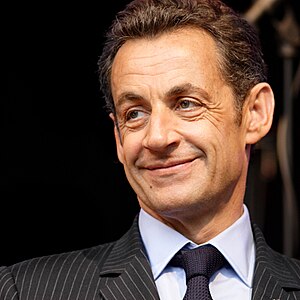
This image shows Nicolas Sarkozy who is presid...Image via Wikipedia
...since he took office, President Sarkozy has perpetuated France's time-honoured tradition of parallel diplomacy in Africa.One set of advisers presides in public over the official business with Africa, while high-ranking Elysee staff, in tandem with unofficial middlemen, is in charge of the lucrative and highly personalised politics that Mr Sarkozy denounced during his presidential campaign...[continue reading]
Reblog this post [with Zemanta]

  • Digg
  • Del.icio.us
  • StumbleUpon
  • Reddit
  • RSS

Deconstructing Culture in Africa

Wangui wa Goro writes in Pambazuka:

Most worryingly, is the fixing of tradition as something staid that will never change and which condemns the majority into servitude or slavery. For me, culture should answer the question whether it can promote and deliver democracy, equality and social justice for the majority. A pro-people culture would bode well for peace, justice and democracy in Africa; a culture that would enable a re-engagement with the self that has been lacking - a re-engagement with our neighbours and the world in ways that are powerful and which would yield tremendous wealth, enjoyment, creativity, learning and exchange.

Via NaijaBlog

  • Digg
  • Del.icio.us
  • StumbleUpon
  • Reddit
  • RSS

"The Bright Continent" by Dayo Olopade

Dayo Olopade's

The Bright Continent will report a phenomenon that is not new but has been overlooked: that people are Africa’s most abundant natural resource, and that a long tradition of individual resourcefulness, creativity, and straight hustling is the best hope for the continent’s social and economic development.The book takes inspiration from the massive failures of the traditional aid industry—and from the promise of the guys selling Christmas trees in Lagos traffic.
Enhanced by Zemanta

  • Digg
  • Del.icio.us
  • StumbleUpon
  • Reddit
  • RSS

Lagos to Ogere-Remo and beyond

Alternate Vision highlights Pieter Hugo's work about Nollywood:

Nollywood produces movies on its own terms, telling stories that appeal to and reflect the lives of its public: it is a rare instance of self-representation in Africa. The continent has a rich tradition of story-telling that has been expressed abundantly through oral and written fiction, but has never been conveyed through the mass media before. Stars are local actors; plots confront the public with familiar situations of romance, comedy, witchcraft, bribery, prostitution. The narrative is overdramatic, deprived of happy endings, tragic. The aesthetic is loud, violent, excessive; nothing is said, everything is shouted-Michael Stevenson Gallery

photo courtesy of Pieter Hugo

  • Digg
  • Del.icio.us
  • StumbleUpon
  • Reddit
  • RSS

Obama: Promising Everything, Delivering Nothing

Poor USA- I tried to warn you. We have a politician here in Michigan who sounds a lot like Obama- an amateur who lacked executive experience, a liberal who pushed for higher taxes and more regulation, and a Democrat who passes larger and larger budgets that benefit special interest groups while the state suffers. Granholm, our Governor, even has a bogeyman to blame like Obama- first it was Engler, than it was Bush, and if she was Governor another 10-20 years, it would always be a bogeyman causing the problems, not her. Get used to it, nation, because when I listen to Obama talk, that's the impression I get.

Okay, so I'm looking through Obama's speech, and here are some parts that jump out to me:

"That day of reckoning has arrived, and the time to take charge of our future is here."

First off, why is today the day of reckoning? Why wasn't it yesterday, or last year, or two years ago? Why wasn't it September 11, 2001, or 1940, or 1776? Why is it the election of Obama as President? Obama shows his lack of humility, and shows why people mock him by calling him the Messiah and the Anointed one- he feels that the election of him is the day of reckoning. That's interesting.

According to wikipedia, the Day of reckoning is a term used to describe the Last Judgment in Christian eschatology. Judgment Day, or Day of the Lords, is the judgment by God of all nations. It will take place after the resurrection of the dead and the Second Coming (Revelation 20:12–15). So what does Obama really believe about our times? Interestingly enough, wikipedia is a fine help- under the section "Gnostic tradition", there is this line-
some liberal theologies reject the traditional conception of the Last Judgment as inconsistent with an all-just and loving God, in favor of some form of universal salvation. They teach that all beings of the human evolution will ultimately be saved in a distant future as they acquire a superior grade of consciousness and altruism.

Obama thinks that he is more evolved than us, that he is superior in consciousness and altruism than us, and that he is the second coming of Jesus, and that the election of him will bring universal salvation to all- everyone, no matter if they are good or bad, will be saved by him, and he will provide everything to everyone.

Here is another line I like:
This plan will save or create 3.5 million jobs. More than 90% of these jobs will be in the private sector - jobs rebuilding our roads and bridges; constructing wind turbines and solar panels; laying broadband and expanding mass transit.

Let's see if I understand the logic- 1 trillion dollars in taxpayer money, government money, sent to government agencies and bureaucracies, and 90% of the jobs are private sector? Building roads and bridges, wind turbines, solar panels, broadband, mass transit- I guess by private sector he means private sector in the sense that favored businesses will get government money, much like the Nazi's ran their economy under their fascist systems in Germany and Italy.

Next, let's look at how Mr. Bipartisanship really works:
Given these realities, everyone in this chamber - Democrats and Republicans - will have to sacrifice some worthy priorities for which there are no dollars. And that includes me. But that does not mean we can afford to ignore our long-term challenges. I reject the view that says our problems will simply take care of themselves; that says government has no role in laying the foundation for our common prosperity.

In other words, everyone in Congress- except Democrats- will have to sacrifice their priorities- but Democrats totally reject the worldview of libertarians and fiscal conservatives. Totally reject- entirely reject- everything that you believe in, if you are a fiscal conservative or libertarian. If you voted for this guy, you elected someone who rejects your views in the name of 'bipartisanship'.

Oh, his speech is getting better- now that he is past the flowery language, we get to the heart of the matter. He is going to cut our energy supplies, especially oil. He is going to drive our domestic auto industry out of business. He is going to put in place a Soviet health care system. He is going to give everyone free college education, especially if you volunteer for Democrat causes. He is going to lose militarily around the world and sit down and give in to all of our enemies.

Incidentally, I'm shocked by how scripted this guy is- not a single variation in anything he says. I was reading this entire speech as he was saying it- he didn't vary a single word in the entire speech. Is this really how Lincoln and Reagan did it? Is this really how FDR and JFK did it? Read a speech word for word that others had written? I don't think so.

UPDATE: I was curious about what Obama knew about Greensburg, Kansas- apparently when a tornado ripped through this city last May, Obama said that 10,000 people were killed because the entire Kansas national guard was in Iraq- in reality, only 12 people died, and very little of Kansas's national guard was gone. Opps! All this guy knows are the places he saw during his campaign- all of his education about the world has been gained in campaigning for office.

How about Dillon, South Carolina, and Obama's visit there? Well, Obama was there for a campaign stop too. Apparently it is part of the 'Corridor of Shame'? Anyways, since everyone in this school is poor and African-American, and the people in this area supported Obama, he wants to now give kick-backs to this school. Interesting. See this information here.

  • Digg
  • Del.icio.us
  • StumbleUpon
  • Reddit
  • RSS

Half Tribe

Founded by Oyeronke Atilade Half Tribe states that "...Culture & Civilization are rooted in your Soul through years and decades and centuries of tradition, beliefs, experiences, practices, including war & toil, and secrets. In your Soul lies the Foundation of all that you know, believe, experience, and practice..."

  • Digg
  • Del.icio.us
  • StumbleUpon
  • Reddit
  • RSS

Send in the Senate Clowns: Jokers and Fools Run Democratic Senate

Amazing. In the hundreds of years of our nation's history, rarely has the Senate degenerated to the point where it has after the Democrats took it over. The madness and funny games began early yesterday but only got worse as the day went on, as this party made a mockery of tradition, decorum, and the rules of the chamber.

The first bit of fun was when Senator Tom Coburn objected to a request to waive the reading of an amendment that was offered by Senator Bernie Sanders. The Senate rules state that an amendment must be read in full unless the entire Senate, by unanimous consent, agrees to waive that requirement, in which case the Senator offering up the amendment can just explain it and give an outline of what it does.

Earlier that day, Coburn had offered an amendment to the healthcare bill that would have required the bill to been available for at least 72 hours before it could be voted on, but the Democrats did not allow that amendment to receive a vote. In response, Coburn later objected to the request to waive the reading of Sanders bill, as per Senate rules.

Sanders was outraged by the action, as Democrats reacted furiously to the reading of their bill out loud in the Senate. After three hours of reading only about a quarter of the bill had been read, and then Sanders withdrew his amendment and the reading of it stopped, in violation of Senate rules which stipulate that any amendment proposed must be read in its entirety (although to be fair, it is not clear if the reading has to continue if the bill is withdrawn).

The Democrats were outraged that the rules were being asked to be followed and that they were being forced to read the bills that they are proposing (no one has yet to even see a copy of the latest health care bill that is being proposed), alleging that it was all a giant conspiracy and that the rules shouldn't have to be followed when they are ruling the nation. Coburn's move was most likely a delaying tactic, but it was an acceptable tactic that has been used frequently in the past in the Senate, and as such should the Democrats should not have reacted like they did.

Later that day, the madness continued, when in a bit of petty and bitter vindictiveness that joke-of-a-Senator Al Franken shut down Senator and 2000 Democratic VP-nominee Joseph Lieberman. Lieberman spoke for 10 minutes on the Senate floor about a health care amendment that he is co-sponsoring, and then after his 10 minutes expired, Sen. Al Franken (D-MN) — the president chair of the Senate at the time — informed Lieberman his time was up.

When Lieberman politely requested “just an additional moment,” to finish, and Franken rudely barked out, “In my capacity as Senator from Minnesota, I object.” “Really??” a clearly surprised Lieberman said before he returned to his seat.

Sen. John McCain (R-AZ) later spoke about this issue, saying "I’ve never seen a member denied an extra minute or so, as the chair just did." Sen. Carl Levin (D-MI also spoke about this, saying "If the chair would yield for that…I think the same thing did occur earlier this afternoon, for reasons which have to do with trying to get this bill going..."

Levin and McCain and Lieberman have been Senators for years, and Franken has only been a Senator for a short time after stealing the election, but that does not excuse he rude behavior. Other Democrats are leaping now to defend Franken, proving that they don't respect the rules of that chamber and are willing to tolerate all sorts of thuggish and rude behavior in their quest to change America into a country where this sort of behavior is encouraged.

At their worst Republicans were never as vindictive, rude, irresponsible, and downright ugly as the Democrats are today running the United States Senate. Anyone who voted Democrat at any level should be ashamed at themselves and what they did to our nation.

  • Digg
  • Del.icio.us
  • StumbleUpon
  • Reddit
  • RSS