RSS
Menampilkan postingan yang diurutkan menurut relevansi untuk kueri indigenous. Urutkan menurut tanggal Tampilkan semua postingan

Indigenous African Institutions-George Ayittey

Brill's overview of George Ayittey's Indigenous African Institutions-2nd edition:

Since the publication of the first edition of Indigenous African Institutions in 1992, Africa has undergone a substantial change. Still, much mythology and misconception enshroud Africa and its people. An enduring myth claims that pre-colonial Africa had no viable institutions. This book is an attempt to provide a better, modern understanding of Africa and its people – not for cultural rehabilitation or romanticism but for practical reasons.
Traditional or indigenous Africa has not vanished; it is still the home of the real people of Africa – the peasant majority, who produce Africa’s real wealth using ancient institutions and practices. Kings, chiefs, and village markets still exist in Africa.
The object of development is to improve the lot of the peasants – not the pockets of Africa’s ruling elites – and it starts from the “bottom up” – not from the “top-down.” What is there at the bottom are the peasants, their institutions, practices, and economic ways of life. Africa cannot be developed by ignoring its traditional sector, nor can this sector be developed without understanding how it works. Africa’s salvation, then, lies in returning to its roots and building upon its own indigenous institutions. This ethos is captured by such phrases as “sankofa” by the Asante, “majimbo” in Swahili, and the mantra, “African Renaissance,” touted by President Thabo Mbeki of South Africa.
Botswana is the only African country that built upon its own indigenous institutions and prospered. Moreover, it was the same indigenous institutions African peasants utilized to engineer what historians call, “The Golden Age of Peasant Prosperity, 1880-1950.” In recent times, pro-democracy activists revived and modernized an indigenous African institution (the village meeting) into a “sovereign national conference” and used it as a vehicle to craft a new political dispensation for Benin, Cape Verde Islands, South Africa and Zambia – in the same way as the United Nations used a loya jirga, an ancient tribal democratic institution, to chart a new political order for Afghanistan in 2002. Similarly, the same indigenous African institutions can also be used to craft uniquely “African solutions to African problems.” Thus, the blueprint for Africa’s economic rejuvenation can be found in its on backyard; that is, its own indigenous institutions. Tragically, African leaders, elites and their Western development partners have seldom looked there.

  • Digg
  • Del.icio.us
  • StumbleUpon
  • Reddit
  • RSS

Modern Science needs Traditional Knowledge

Charles Dhewa writing in SciDev:
Knowledge acquired through conventional science, which is usually closed and formal, can be scaled up through indigenous knowledge systems, which are open and informal.Conventional science formulates principles and theories that describe nature, whereas indigenous knowledge systems evolve values, beliefs, customs and ceremonies based on an understanding of nature and the universe.While conventional science relies on conceptualisation, empirical experimentation and interpretation to generate and share knowledge, indigenous knowledge puts more emphasis on experience and practice.Unlike indigenous knowledge, conventional science works best when dealing with what is observable and measurable. But accepting the role of indigenous knowledge is essential so that we do not mislead ourselves into believing that only what is measurable is real, and only what is controllable is valuable.
More here

  • Digg
  • Del.icio.us
  • StumbleUpon
  • Reddit
  • RSS

Indigenous Science for Education and Development : A Boot-strapping Approach

Ron Eglash, Egondu Onyejekwe,Christian Sina Diatta and Nfally Badiane (ENDA) are working on an initiative that:

Fractal design for Kitwe community clinic
...suggests that pre- modern, non-state societies were neither utterly anarchic, nor frozen in static order, but rather utilized an adaptive flexibility that took advantage of the nonlinear aspects of ecological dynamics. How might this potent formulation of indigenous knowledge be applied to problems in education and development? One method is to encourage its dissemination in development agencies. But decades of research have shown that a top-down approach to development, even that making use of indigenous knowledge, is often less effective than a bottom-up, "grass roots" approach. This project will create a framework in which to test the possibility that indigenous knowledge can be used in a boot-strapping approach to development. The term boot-strapping is typically applied to computer systems ("boot up the disk"), where a small program is able to self-install a larger system (from the phrase "pulling yourself up by your own bootstraps"). Similarly , we view a boot-strapping approach to development as one which begins with indigenous knowledge under local control, and self-installs modern technological abilities.

  • Digg
  • Del.icio.us
  • StumbleUpon
  • Reddit
  • RSS

Establishing Free-Market Societies

George Ayittey stated that "...the solutions to Africa’s problems lie in Africa itself. It involves Africa going back to its roots and building upon its own indigenous institutions. Indigenous institutions of freedom, free markets in Africa, free enterprise and free trade. Some of us may not know these indigenous institutions, and this is why people like us have to talk about it in this book(Indigenous African Institutions)..."

  • Digg
  • Del.icio.us
  • StumbleUpon
  • Reddit
  • RSS

Anchoring democracy in indigenous African Institutions

Daniel Ayana writes:
Scholars have suggested the importance of integrating African democratization process with grassroots institutions for long-term consolidation. However, the major problem remained the inadequacy of secularism in disentangling the religious from the non-religious intertwined in indigenous African institutions. This essay reconsiders the Burckhardtian notion of secularism for a recalibrated definition that embraces a trajectory of transposed values. Debunking the Burckhardtian notion opens up an analytic terrain relegated to the religious. Thus indigenous African religions are re-conceptualized as civic religions to shed light on their public aspects. The essay then identifies collective ceremonies and the attendant secular/civic rituals as the grassroots institutions housed in indigenous African religions. The analysis also locates the disjuncture between independent African states and the grassroots institutions at this level of collective ceremonies, perceived as sacral or irrational. The objective is to harness them as African building blocks for democratic consolidation
More here

  • Digg
  • Del.icio.us
  • StumbleUpon
  • Reddit
  • RSS

Revive traditional law systems

In Pambazuka Ronald Elly Wanda makes a case for re-instituting the indigenous institution of traditional jurisprudence:

Ronald Elly Wanda
Since flag independence in the 1960s, African governments have been in a rush to normalise authoritarian rule and human rights abuses under the auspices of maendeleo (development) and economic growth. A short stroll in any African village today confirms that the globalised Western culture of justice delivery or innovation that most African leaders seem to trust has not improved the well-being of our local communities or delivered justice for them. On the contrary, it has often blocked viable indigenous innovation of cultures and suffocated African justice. Here in East Africa, cultures of innovation have largely accrued from the jua kali (informal), and not the formal sector. Indigenous cultural innovations have also been at the centre of development in most highly indebted poor countries (HIPC), such as in Uganda or its slightly richer sister Kenya, notably because of wanainchi (citizens) exceptionally limited access to capital.
As such, when it comes to delivering justice in Africa, we ought to revise our priorities by doing away with existing preconceived ideas that might have worked within the European cultural setting. They have clearly not worked in the face of the socio-cultural heritages of African societies, and neither has the opposite, the Africanisation of Western concepts of justice delivery.
More here

Enhanced by Zemanta

  • Digg
  • Del.icio.us
  • StumbleUpon
  • Reddit
  • RSS

Rethinking African Higher Learning

Thabo Mbeki states that:
"...An African university cannot but be an important and critical part of the African Renaissance. The challenge for an African university should be viewed as a call that insists that all critical and transformative educators in Africa embrace an indigenous African world-view and root their nation's educational paradigms in an indigenous socio-cultural and epistemological framework. This implies that all educational curricula in Africa should have Africa as their focus, and be indigenous-grounded and orientated. Failure to do so may result in education becoming alien and irrelevant..."
Via AfricanExecutive

  • Digg
  • Del.icio.us
  • StumbleUpon
  • Reddit
  • RSS

Indigenous Knowledge Is A Red Herring

Guido Sohne writes:

In a connected world, indigenous knowledge is the extent to which one is connected to other people. Indigenous knowledge will create itself once those who can use it and those who can create it are connected today. Knowledge is also a function of education and prior access to information. Connectedness is a state of acquiring knowledge of all kinds

  • Digg
  • Del.icio.us
  • StumbleUpon
  • Reddit
  • RSS

Language and Neo-Colonialism: African Development Challenge

Kwesi Kwaa Prah writes "...Africa represents today the only major historical and cultural area of the world where despite their indigenous socio-cultural majorities, countries prefer to use the languages of their erstwhile masters in their attempts to develop and make social progress. The result of this neo-colonial approach to culture and democracy is that the scientific and technological culture of Africans is hardly advancing.Actually, Africa, by and large, is retrogressing or stagnating. Mass society and its culture is shut off, and condemned to cultural backwardness and alienation from the life of the elite. The elite in turn is bent on what many social critics regard as mindless imitation of the colonial and metropolitan cultures of the west. This is an orientation, which in effect integrates the elite more into the culture of the former colonial masters than the indigenous cultures from where this elite historically and socially derives..."

  • Digg
  • Del.icio.us
  • StumbleUpon
  • Reddit
  • RSS

An Indigenous West African Food Culture

In light of the continued spike in food prices we take a look at Ifeyinwa Fransesca Smith's 1995 paper on the need for an Indigenous West African Food Culture. She made a strong case for educating the public on the benefits of under-recognized foods then,a point which remains relevant today:

There is a dire need for well planned and executed popularization campaigns of foods produced both within countries and the subregion. The many food technology institutes and food industries have roles to play in ensuring easy availability of our local foods in nutritionally adequate and culturally acceptable forms. Their roles must not end with the production of such foods, there is need for continuous research aimed at evolving better, versatile and more acceptable products. These new products should in turn be subjected to intense recipe development, be aggressively popularized through their use in the preparation of locally acceptable and nutritionally adequate meals. Finally, there is a need for continued research into newer and better ways of utilizing the partly processed foods and popularizing new recipes evolved.

  • Digg
  • Del.icio.us
  • StumbleUpon
  • Reddit
  • RSS

Selections from the New Book Making Do

In The Atlantic excerpts from the Steve Daniels book Making Do:


Images by Steve Daniels

Leonard is one of millions of entrepreneurs who rely on informal mechanisms in Kenya, where the informal sector comprises a full three quarters of the non-agricultural economy and produces over 90 percent of new jobs annually. Under severe material constraints, they are forced to improvise solutions to everyday problems that, from time to time, result in game-changing innovations that better address local needs. Informal artisans who engage in the production of goods are known as jua kali (Swahili for "hot sun") and have established entire ecosystems of production, from scrap sourcing to repair. The most advanced jua kali like Leonard have designed and built capital goods, such as lathes, that propel indigenous production forward. The jua kali have been largely ignored by formal institutions, regarded as a second-rate economy. Yet their drive for innovation, understanding of indigenous networks, and ability to work under extreme constraints make them ideal agents of industrialization.
More here
Enhanced by Zemanta

  • Digg
  • Del.icio.us
  • StumbleUpon
  • Reddit
  • RSS

Diffusion of Precommercial Inventions

An IDRC Study examined the success of indigenous pre-commercial inventions in Nigeria and posits solutions to improve the structural inefficiencies within this important plank of industrial realization. They include that
"...The government should not fund R&D activities until it identifies specific social, economic, technical, and other kinds of problems that need R&D solutions. The next step should be to develop research programs with specific objectives and, after dialogue with R&D institutes, to evolve means for achieving the desired results. Funds should then be tied to specific research programs. R&D institutes should be made to sink or swim on the basis of the number of feasible need-oriented research programs they can attract and what they can do with the programs. This means putting an end to blanket funding for institutes..."also"...The R&D institutes should be allowed to sell their services to the private sector and thus become more relevant to the needs of the country. The institutes should be allowed to compete for research projects initiated in the private sector. For this to be effective, the government needs to provide the private sector with an incentive to use R&D services. A climate of liberal imports does not provide this incentive. The incentive should take the form of special tax rebates or outright matching of funds for private-sector users of indigenous R&D institutes..."

  • Digg
  • Del.icio.us
  • StumbleUpon
  • Reddit
  • RSS

Indigenous Democracy

In 2003 the ITDG conducted a study on traditional conflict resolution mechanisms in rural Kenya, they found that these "...structures are closely bound with socio- political and economic realities of the lifestyles of the African communities. These conflict resolution structures are rooted in the culture and history of African people, and are in one way or another unique to each community. The overriding legitimacy of indigenous conflict resolution structures amongst these communities is striking..." also"...this study has given due consideration to the unique pastoralists’ cultures that emphasise the resolution of conflicts amicably through a council of elders, dialogue, traditional rituals and common utilization of resources..."

  • Digg
  • Del.icio.us
  • StumbleUpon
  • Reddit
  • RSS

The Intersect between Art and Science in Indigenous Knowledge

In Sci-Cultura:
African Alchemy - the intersect between art and science in indigenous knowledge

  • Digg
  • Del.icio.us
  • StumbleUpon
  • Reddit
  • RSS

Achieving an Indigenous Green Revolution

In SciDev:

"When the new African Agricultural Revolution is eventually implemented, it is likely to be built on Africa's own indigenous technology and knowledge requirements and the nutrition and food security needs of its people," says an UNCTAD report...It recommends strengthening the 'innovation systems' — a wide range of interconnecting issues, from providing financial incentives and ensuring technology transfer to promoting education — for agriculture in each country in Africa. "This means enhancing links between knowledge research institutes to make sure any innovation they come up with is diffused to the farmer,"
More here


Enhanced by Zemanta

  • Digg
  • Del.icio.us
  • StumbleUpon
  • Reddit
  • RSS

Gacaca Films|Documenting Indigenous Institutions

Representing indigenous institutions:
"Gacaca (Ga-CHA-cha), which literally means "justice on the grass," is a form of citizen-based justice which Rwandans decided to put into place in an attempt to deal with the crimes of the 1994 genocide...Filming for over a decade in a tiny rural hamlet, director Anne Aghion has charted the impact this experiment in transitional justice has had on survivors and perpetrators alike.Through their fear and anger, accusations and defenses, blurry truths, inconsolable sadness, and hope for life renewed, she captures the emotional journey to coexistence..."
My Neighbor My Killer: Official Trailer from Gacaca Films on Vimeo.
More here
Enhanced by Zemanta

  • Digg
  • Del.icio.us
  • StumbleUpon
  • Reddit
  • RSS

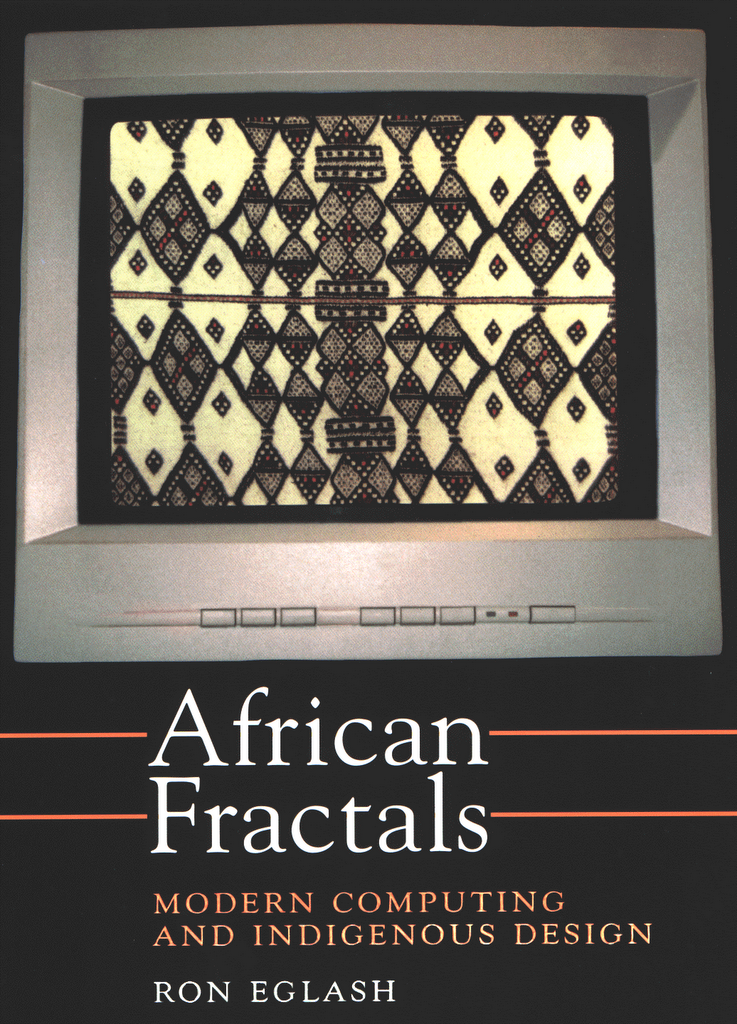
African Fractals

Abdul Karim Bangura reviews 'African Fractals: Modern Computing and Indigenous Design' by Ron Eglash:

Eglash's research began in the 1980s while investigating settlement architecture in Central and West Africa. Aerial photographs of various settlement compounds revealed that many were composed of circular structures enclosed in other circles, or rectangles within rectangles, and that the compounds were likely to have street patterns in which broad avenues branched into very small footpaths. As Eglash notes, at first he thought it was just from unconscious social dynamics. But during his fieldwork, he found that fractal designs also appear in a wide variety of intentional designs--carving, hairstyling, metalwork, painting, textiles--and the recursive process of fractal algorithms are even employed in African quantitative systems. Eglash adds that in the design rationales and cultural semantics of many African geometric figures, as well as in indigenous quantitative systems (additive progression, doubling sequences, binary recursion) and symbolic systems (iconic symbols for feedback loops, equiangular spirals, infinity), there are abstract ideas and formal structures that closely parallel some of the fundamental aspects of fractal geometry. These results, Eglash concludes, are congruent with recent developments in complex systems theory, which suggest that pre-modern, non-state societies were neither utterly anarchic, nor frozen in static order, but rather utilized an adaptive flexibility that capitalized on the nonlinear aspects of ecological dynamics.

Also mentioned at BazungaBucks

  • Digg
  • Del.icio.us
  • StumbleUpon
  • Reddit
  • RSS

Indigenous Legal Systems

Excerpts from George Ayittey's Indigenous African Institutions:

....Indeed, Africa is one of the homes of advanced legal institutions. Perhaps the most famous of these institutions are the courts still found among the Bantu states of the southern third of the continent...Disputes arise in any family or society with regards to property, and African societies were no exception. To resolve these disputes, various mechanisms and institutions were created. However within the traditional African modus operandi, there was an additional unique dimension. Individual attachment to lineages and latent groups of solidarity always carried the potential risk of transforming personal disputes into broader group conflicts...[continue reading]

via Cheetah Index

  • Digg
  • Del.icio.us
  • StumbleUpon
  • Reddit
  • RSS

Governance, Wealth Creation and Development in Africa

John Mukum Mbaku writes that "...The real obstacle to development in Africa, then, is the absence of institutional arrangements that effectively constrain the state and prevent its agents (civil servants and politicians) from engaging in opportunism; enhance indigenous entrepreneurship and the creation of wealth; and improve the ability of all individuals within each country to participate fully and effectively in national development. In order to prepare each African country for sustainable development in the new century, citizens must engage in reconstruction of the state through proper constitution making to provide governance and resource allocation systems that minimize political opportunism; enhance indigenous entrepreneurship; maximize wealth creation; promote peaceful coexistence of population groups; and generally increase the national welfare. In the following sections, we take a more detailed look at parts of this transition program..."

  • Digg
  • Del.icio.us
  • StumbleUpon
  • Reddit
  • RSS

Mazrui, African Intellectuals and Values

Kofi Akosah-Sarpong writes:
Prof. Ali Mazrui’s address at the 30th anniversary celebration of the Dakar, Senegal-based CODESRIA on the theme “Intellectuals, Nationalism and the Pan-African Ideal” reveals the growing talks, African-wide, about the implications of the African culture and the continent’s development process. The central theme of Mazrui, currently Chancellor of Kenya’s Jomo Kenyatta University of Agriculture and Technology, address is twofold. Why African intellectuals are mediocre and why this informs their inability to appropriate Pan-Africanism ideals into Africa’s development process. I would prefer why African elites have not being able to appropriate African cultural values into Africa’s development process as other elites in other parts of the world have done in their development process.

Using the East African region as a continental reference, Mazrui, known globally as one of Africa’s leading thinkers, reveals how undemocratic political climates undermined Africa’s intellectual growth, and how, by extension, this impacted on the continent’s development process. Unlike other ex-colonies, such as Japan, of which Mazrui used greatly as an example to show how African elites failed to match their Western education with their African values in both their intellectual development and the continent’s progress, the trouble with African elites and the continent’s development process is that, the elites play with ideas are not informed by Africa’s innate, indigenous values or ideas by rather the Western ideas that they have had in formal schools.

Mazrui himself shows this contradicting and confusing state of the African elites in this statement: “Uganda had for Head of Government a person who had changed his name because of admiration of the author of the great English poem, Paradise Lost. Obote became Milton Obote out of admiration of John Milton.” While in the spirit of universal intellectuality Obote could admire Milton, his admiration for a non-African poet and the fact that he is a Head of State, may have let Ugandan and African youth to admire more non-African elites than indigenous Ugandan and African elites. The central issue here is role model, values, and inspiration in the development process. In this sense, Obote did not deeply help the growth of African values and her progress. If Obote had done so, and by implications of Mazrui’s own account of the mediocrity of African intellectuals, and greatly touted a non-African value not because he was educated in Western paradigms but, like most African elites, because either he did not understand African values deeply enough or was mesmerized by Western values or did not respect African values or was confused about African values in relations to the continent’s progress.

Still, Mazrui’s argument that “The capacity to be curious and fascinated by ideas has to start early in the educational process. The spirit of intellectualism has to be nourished from primary school onwards, but it can die at the university level if mediocrity prevails,” reveals that the problem of Africa’s intellectual growth is not only at the university level but also at the primary school level; where the values, images and examples which are heavily European-centred are formed. So, if the African primary education system is heavily Western structured, it flows and grows to the high school level, and then later to the university level; thus sowing a culture of mediocrity, in terms of African values not predominantly dictating the intellectual life of the African child early enough. It is in this sense, that Ghana’s Dr. Y.K. Amoako, the former UN Economic Commission for Africa executive secretary, has observed that Africa is the only region in the world where foreign development paradigms dominate her development process. Not only does this indicate that Africa’s development process is not “culturally close” to Africans, but also a revelation that African elites are mediocre in both their intellectualizing and their direction of the continent’s progress.

This has made the African elite mediocre in their own innate environment and in their development process struggles. The mediocrity has come about because Africa’s elites do not think deeply from within Africa’s values first and the enabling aspects of their colonial legacies second in the continent’s development process. Mazrui himself testify of the Japanese elites doing so in their country’s development process. “In this connection it is worth bearing in mind important differences between the westernization of Africa and the modernization of Japan after the Meiji Restoration of 1868. Japan’s original modernization involved considerable selectivity on the part of the Japanese themselves (“Western Technique, Japanese Spirit”). The whole purpose of selective Japanese westernization was to protect Japan against the West, rather than merely to submit to western cultural attractions. The emphasis in Japan was therefore on the technical and technological techniques of the West, rather than on literary and verbal culture. The Japanese slogan of “western technique, Japanese spirit” at the time captured this ambition to borrow technology from the West while deliberately protecting a substantial part of Japanese culture. In a sense, Japan’s technological westernization was designed to reduce the danger of other forms of cultural dependency.”

This process should starts from childhood to adulthood based on a curriculum skillfully cast in African values first and any other borrowed ones second; more especially, in preparing African elites’ minds at an earlier stage: from primary and high schools levels. It is in this process that African elites, from their early formation to their university crystallization, will be “culturally close” to the African society, will be culturally close to the African’s progress in the continent’s development journey. By not being culturally close to the African society, African elites could not undertake the Japanese cultural selectivity in relations to their colonial legacies and the enabling aspects of the global culture, and, have, therefore, become both heavily technologically and culturally dependent upon the Western world despite their superb innate culture having huge technological and cultural values for progress. Writes Mazrui, “The nature of westernization in Africa has been very different. Far from emphasizing western productive technology and reducing western life-styles and verbal culture, Africa has reversed the Japanese order of emphasis. Among the factors which have facilitated this reversal has been the role of the African university as a vehicle of Western influence on African culture.”

The challenge for African elites today is how to overturn the contradiction they have caused in Africa’s progress by thinking first from within African values first, by matching African values with the enabling aspects of their colonial legacies and the global values, and by intellectually linking this “to the wider world of scholarship and science.”

  • Digg
  • Del.icio.us
  • StumbleUpon
  • Reddit
  • RSS