
There will be a rally against Government Motors on Monday, January 11th, to make a peaceful yet clear statement against Government takeover of America. Sorry about the late notice on this, but if you live in the Detroit area and would like to make your views known about all of the endless and unaccountable government bailouts, you have a chance to by showing up on Monday and peacefully protesting.
Since December of 2008, the private company General Motors has so far taken $52.9 billion in taxpayer dollars. The intended purpose of this funding was “to prevent a significant disruption of the American automotive industry,” according to the U.S. Government Accountability Office (GAO). GM used this money to go bankrupt and shed billions in debt- by that, I mean that banks and investors were forced to take a bath and thousands of people were laid off and hundreds of dealers were forced out of business. This unprecedented distribution of wealth also has resulted in the government owning 61% of GM equity and the labor unions owning a good chunk more.
Nancy Pelosi and other Democrat leaders (possible even President Obama) are coming to Detroit to check on their investment on Monday, and this is a chance for us to tell them what we think of the US government nationalizing private businesses.
The rally is Monday, January 11, 2010, from 9:30am - 12:00pm, at the Marriott Renaissance Center in Detroit, Michigan. Meet in the lobby of the Marriott at the Renaissance Center in downtown Detroit and look for the Michigan Tea Party Banner. Someone will be there to greet you. From there we will head over to Cobo hall for a Tea Party Rally. You can park in one of the many lots downtown or at the Cobo Hall lot which is close to the Renaissance Center. Dress warm!
Rally against “Government Motors” in Detroit


Where are Africa's intellectuals today?
In 1998 the then Deputy South African President,Thabo Mbeki articulated his hopes for an African Renaissance. "...The time has come that we call a halt to the seemingly socially approved deification of the acquisition of material wealth and the abuse of state power to impoverish the people and deny our Continent the possibility to achieve sustainable economic development.Africa cannot renew herself where its upper echelons are a mere parasite on the rest of society, enjoying a self-endowed mandate to use their political power and define the uses of such power such that its exercise ensures that our Continent reproduces itself as the periphery of the world economy, poor, underdeveloped and incapable of development.The African Renaissance demands that we purge ourselves of the parasites and maintain a permanent vigilance against the danger of the entrenchment in African society of this rapacious stratum with its social morality according to which everything in society must be organised materially to benefit the few As we recall with pride the African scholar and author of the Middle Ages, Sadi of Timbuktu, who had mastered such subjects as law, logic, dialectics, grammar and rhetoric, and other African intellectuals who taught at the University of Timbuktu, we must ask the question - where are Africa's intellectuals today?..."A question as pertinent now as it was then.
African Renaissance: Roadmaps to the Challenge of Globalization
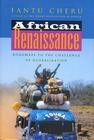 Khalil Tian Shahyd reviews African Renaissance by Fantu Cheru he "...calls on us to rethink the concept of “decolonization of the African mindset”. Africa’s dependence on foreign aid, he says, has done the opposite of its claimed mission, but in fact has been used to keep Africa’s people disempowered through the support of dictatorships and undemocratic regimes. Further, the habits of import consumption and the rejection of products produced in Africa is the highest example of how deep the colonial ingraining has been.Further along, he challenges African universities, scholars and heads of state to commit to strengthen their people’s capacity in “all the relevant specializations” and improve the ability for sub-Saharan trade negotiators to engage in meaningful dialogue during WTO meetings, and other international negotiations..."
Are you an internalist or externalist? contd.
Kofi Akosah-Sarpong responds to Y. Fredua-Kwateng's question "Are you an internalist or externalist? "...there is no internalist or externalist in the Ghana/African development process debate, there is the confused African elite not trying to grasp all the factors that have contributed to Africa's so-called "agonies," including the long-running exclusion of deeper implications of the African culture in both local and international development planning or thinking in Africa's development process.The Internalists came about because for uncritically long time African elites, for their own benefits against the peoples upkeep, which demonstrated their weaknesses, had blamed the continent's problems on external factors alone without looking at the internal factors that have also contributed to the continent's problems. "Imperialism, Down with Imperialism," said the largely the Externalists' slogans of the 1960s against today's Internalists rantings such as the Dr. George Ayittey-minted "African Solutions for African Problems," which opened up the African development process debate, both locally and internationally, by incorporating the Interenalists' stance. The Internalists are not saying Ghanaians/Africans should separate the internal factors such as predatory elites that have slowed down Africa's progress from the external forces such as the impact of colonialism; what they are saying is that in discussing Africa's problems we have to take note of the internal factors too so as to have fuller understanding of the continent's problems, especially in making policies. This is what South Africa's President Thabo Mbeki is saying in his "African Renaissance" project, and other thinkers such as Dr. George Ayittey, of American University in Washington D.C., and myself are advocatng...",GhanaWeb.
The 'Olokun head' was 'made in' Africa after all
In the Independent:
More hereEver since a pure copper sculpture was found buried in a palm grove near the Nigerian city of Ife, experts from the West have argued that the artefact was a fake that was too sophisticated to have been created by African hands...At the time of discovery, the head was considered too great a masterpiece to have been created by indigenous African artists – a reflection of prevailing attitudes of the early 20th century. Some Europeans even theorised that the work was a remnant from the lost city of Atlantis. A spokeswoman for the British Museum said when the head travelled to the West, it caused a huge stir because "it flew in the face of Western perceptions" (of African heritage and cultural achievements).It is now accepted by the curatorial community that the advanced artistic techniques used to create the sculpture were "more advanced than those of Renaissance Italy, and comparable to those of [the artist] Donatello".

![Reblog this post [with Zemanta]](http://img.zemanta.com/reblog_e.png?x-id=e94bc916-e40a-4b90-9e60-15b3af92b1bd)
Fulfilling our lost promise-Chika Unigwe
Chika Unigwe writing in the Guardian:
More hereIn a society where the pursuit of money takes precedence over everything, one can expect a decline in culture and in the quality of cultural production.Regrettably, this is going on. People are reading, but it's a different sort of literature: self-help books published mainly by evangelical pastors eager to win souls over to the gospel of prosperity. There is art on the street, but it is splashes of paint on trucks and buses, outsized drawings (usually religious, with a blonde Jesus). There is nothing of the grandeur and quality of Ife art in it...Perhaps this is too pessimistic. I was witness in Nigeria to the collective sense of hope in a people who, like the phoenix, keep rising from the ashes. There is a renaissance in Nigerian literature...Image by dan mogford via Flickr
![Reblog this post [with Zemanta]](http://img.zemanta.com/reblog_e.png?x-id=2bfd9c12-4a9b-4659-a42a-9e8201bf7425)
State Capitalism, Crony Capitalism, Corrupt Capitalism, Syndicaliam, Corporatism... Obamaism
In my post Crony Capitalism Booming Under Obama Rule in February of 2010, I wrote:
One of my biggest fears about the Obama administration is not that it is liberal and not that it is communist, but rather that it is the beginning of a renaissance of National Socialism. One of the common misconceptions that people have about National Socialism is that it was against big business, or that big business opposed it. Free markets oppose national socialism, and individuals oppose national socialism, but Big Business, threatened by government, does the logical thing, and joins in. National socialism leads to an alliance of Big Business, which enjoys government protection against challenges to its market share and in exchange transforms itself into a tool of government control over the economy. Top executives and lobbyists do very well under a National Socialist regime, while the people suffer.At the time, I was responding to a post that I found on powerlineblog called Crony Capitalism, which itself was a response to the article from Michael Barone called: "Under Obama, crony capitalism again rules the day."
That was several months ago now, and with the passage of time, we can re-evaluate my thesis- that the Obama administration is putting place a version of fascism that you can nicely called Crony Capitalism or State Capitalism, whereby the government subverts the free market for the good of the 'state' and makes alliances with Big Business to crush smaller companies through regulation and taxation.
Gregory Scoblete updates the situation with his article Will Free Markets Give Way to State Capitalism:
Here in America, we have a ruler who wants us to emulate China, Russia, or Saudi Arabia- he wants to create a 'hybrid system' here where the fascist state can leverage capitalism for the good of the all-powerful state through the heavy hand of a tyrannical government. I'd love to sugar coat this, but the evidence is piling up that this is his intention.State capitalism, Bremmer writes, "is a system in which the state dominates markets primarily for political gain." From state-owned corporations operating in strategic industries like natural resources or defense, to enormous sovereign wealth funds in the hands of autocrats with opaque operating principles, state capitalism has enabled the world's autocratic states to reap the benefits of capitalist enterprise while maintaining a vice-grip on political freedom.
In Bremmer's telling, the world's autocratic states learned a valuable lesson from the implosion of the Soviet Union: command economies do not work and when they fail, they can bring down the over-arching political system with them. They also watched the post Soviet experiment in crash liberalization with horror. To protect their hides and preserve their privilege, autocratic rulers in China, Russia, Saudi Arabia and elsewhere have created a "hybrid" system that leverages many of the tools of capitalism to generate wealth while the heavy hand of the state ensures that wealth is put to the service of the elites and rulers of each country.
Timbuktu's Ancient Texts
 The NYTimes reports on the renewed interest in the manuscripts of Timbuktu covered earlier:
A surge of interest in ancient books, hidden for centuries in houses along Timbuktu’s dusty streets and in leather trunks in nomad camps, is raising hopes that Timbuktu — a city whose name has become a staccato synonym for nowhere — may once again claim a place at the intellectual heart of Africa.
...This ancient city, a prisoner of the relentless sands of the Sahara and a changing world that prized access to the sea over the grooves worn by camel hooves across the dunes, is on the verge of a renaissance.
photo courtesy of Afrol News
Africa’s Risks
The FT writes about the impact of Kenya's political turmoil on investor perceptions:
The explosion of violence that has met Mwai Kibaki’s disputed election in what was considered one of Africa’s most stable countries threatens to undermine not only Kenya’s reputation but also the continent’s.Charlemagne Capital, an emerging market specialist, said Kenya’s place “at the centre of the renaissance in eastern Africa seemed assured”. The worst-case scenarios for the country now threatened to “wipe it off the map from the point of view of international investors”.
Africa's Capital Markets
Joanna Chung reports in the FT:
Investment bankers are grappling with a novel challenge: explaining to potential investors that exotic places such as Abuja and Accra, the capitals of Nigeria and Ghana, are among the new frontiers in the international capital markets.Quoting Stephen Jennings of Renaissance Capital
“We have a super-conviction about Africa,” he says. “We are very optimistic that the corner has been turned economically. You have to imagine where it will be in two or three years’ time, and it is going to change in ways that people don’t expect.
“I fully expect the capital markets in Sub-Saharan Africa to develop as rapidly as they have done in Russia over the past 10 years.”
Quick Hits
An architect of Singapore's astounding economic growth-via Ethan Zuckerman
Investing and empowering farmers-Guardian
Nurturing an industrial renaissance in Ghana.
Africa,Business destination-TIME
Favoring poor governments over poor people-Aidwatch
A Literature Boom?

In Bookforum James Gibbons writes:
Are we in the midst of an “African literary renaissance,” as Rob Spillman (author of God and Soldiers) contends, an el boom from the other side of the Atlantic? Perhaps, but the surge of African writing is tellingly different from the Latin American explosion of the ’60s. Besides being identified with magic realism (though not all its writers practiced it), the literature of the Latin American boom was already formed within the region’s own institutions and coteries before being packaged in translation and exported. The new African writing is emphatically not homegrown. Forged in the crucible of globalization, it is a literature largely of displacement and exile.
More here
via 3quarksdaily
How Federalism bolsters Ethiopia's Unity
In light of Sudan's impending partition we take a look Ethiopia's ability to maintain its unity. Aaron Maasho reporting in Reuters:
When Meles Zenawi's rebels closed in on Addis Ababa in the early months of 1991, their biggest threat did not come from Mengistu Haile Mariam's army but from a potential breakup of Ethiopia.The group was about to end centuries of Amhara domination over the country's 70 ethnic groups, but some feared Ethiopia's long marginalised regions might seek to cut loose, as Eritrea eventually did later.Two decades on, Ethiopia remains one nation. Meles, now prime minister, says the country's "balkanisation" was only averted by an ethnicity-based federal system...In a continent where colonial powers arbitrarily drew frontiers indifferent to ethnic divisions, Meles said last month that Ethiopia only survived as a nation by granting autonomy to its provinces -- as well as the right to secede."The successful management of our diversity has become one of the pillars of the ongoing Ethiopian renaissance," he said,More here

Indigenous African Institutions-George Ayittey
 Brill's overview of George Ayittey's Indigenous African Institutions-2nd edition:
Since the publication of the first edition of Indigenous African Institutions in 1992, Africa has undergone a substantial change. Still, much mythology and misconception enshroud Africa and its people. An enduring myth claims that pre-colonial Africa had no viable institutions. This book is an attempt to provide a better, modern understanding of Africa and its people – not for cultural rehabilitation or romanticism but for practical reasons.
Traditional or indigenous Africa has not vanished; it is still the home of the real people of Africa – the peasant majority, who produce Africa’s real wealth using ancient institutions and practices. Kings, chiefs, and village markets still exist in Africa.
The object of development is to improve the lot of the peasants – not the pockets of Africa’s ruling elites – and it starts from the “bottom up” – not from the “top-down.” What is there at the bottom are the peasants, their institutions, practices, and economic ways of life. Africa cannot be developed by ignoring its traditional sector, nor can this sector be developed without understanding how it works. Africa’s salvation, then, lies in returning to its roots and building upon its own indigenous institutions. This ethos is captured by such phrases as “sankofa” by the Asante, “majimbo” in Swahili, and the mantra, “African Renaissance,” touted by President Thabo Mbeki of South Africa.
Botswana is the only African country that built upon its own indigenous institutions and prospered. Moreover, it was the same indigenous institutions African peasants utilized to engineer what historians call, “The Golden Age of Peasant Prosperity, 1880-1950.” In recent times, pro-democracy activists revived and modernized an indigenous African institution (the village meeting) into a “sovereign national conference” and used it as a vehicle to craft a new political dispensation for Benin, Cape Verde Islands, South Africa and Zambia – in the same way as the United Nations used a loya jirga, an ancient tribal democratic institution, to chart a new political order for Afghanistan in 2002. Similarly, the same indigenous African institutions can also be used to craft uniquely “African solutions to African problems.” Thus, the blueprint for Africa’s economic rejuvenation can be found in its on backyard; that is, its own indigenous institutions. Tragically, African leaders, elites and their Western development partners have seldom looked there.
Book Review: The Man Who Was Thursday
Recently I read The Man Who Was Thursday: A Nightmare (Penguin Classics)
The book takes place in 1900 London, and focuses on a policeman who is fighting anarchists. He manages to get himself elected to the anarchists council, where each person is called by a day of the week. Our hero is called Thursday, and he schemes to stop and expose the other anarchists, including the man bad guy, Saturday. Through this surreal plot and the nutty characters, Chesterton comments on moral relativism and nihilism, and this is the best stuff in the book.
The main character, Gabriel Syme, is a guy who I sort of understand. He grew up in a home where 'change' was the mantra of the day, where his parents were beholden to progressive ideas, and where the whole family attempted to portray sophistication and rebellion. And as time went on Syme began to see how revolting this behavior was, how demented and sad these people were, and so he himself revolted to sanity. He ran from change and progressivism to common sense, to law, to gentle and courteous behavior.
I understand Syme- as our society embraces 'change' and values are lost, MTV grows more lewd, Micheal Jackson is a 'hero', not eating meat and smoking drugs is embraced, and our culture becomes more progressive, I personally am increasingly revolted. When I was younger, I was less conservative, I was more moderate- but this revolting behavior of our society is causing me to revolt against it, and to embrace traditional values, to have more common sense, and to be a better person, much like Syme was.
Chesterton, like other great authors like Orwell, understood the way the world works and understood how tyranny and oppression develops. Remember 1984 and Animal Farm- the dangerous characters, those that were bad and evil, were not the uneducated country boys who believed in private ownership and conservative values. The dangerous, evil, and bad characters were the educated, sophisticated, moral relativistic, and value free ones.
So it goes with Chesterton. As Syme talks with a policeman in Chapter 4, the policeman says:
(The anti-anarchist police) deny the snobbish English assumption that the uneducated are the dangerous criminals. We remember the Roman Emperors. We remember the great poisoning princes of the Renaissance. We say that the dangerous criminal is the educated criminal. We say that the most dangerous criminal now is the entirely lawless modern philosopher.I realize that is a long passage, but it was one of the most meaningful in the book, because it conveys that the enemy is indeed a terrible thing, and not because they wear a black mask or have a golden gun, but because of what they themselves believe. As you read that passage, perhaps you understand why Chesterton is so highly regarded- did you get a sense that he was describing someone in our political system?
Compared to him, burglars and bigamists are essentially moral men. They accept the essential idea of man; they merely seek it wrongly. Thieves respect property; they merely wish the property become their property that they may more perfectly respect it. But philosophers dislike property as property; they wish to destroy the very idea of personal possession. Bigamists respect marriage, or they would not go through the highly ceremonial and even ritualistic formality of bigamy. But philosophers despise marriage as marriage. Murderers respect human life; they merely wish to attain a greater fullness of human life in themselves by the sacrifice of what seems to them to be lesser lives. But philosophers hate life itself, their own as much as other people's.
The common criminal is a bad man, but at least he is, as it were, a conditional good man. He says that if only a certain obstacle be removed- say a wealthy uncle- he is then prepared to accept the universe and praise God. He is a reformer, but not an anarchist. He wishes to cleanse the edifice, but not to destroy it. But the evil philosopher is not trying to alter things, but to annihilate them.
Yes, the modern world has retained all of those parts of police work which are really oppressive and ignominious, the harrying of the poor, the spying upon the unfortunate. It has given up its more dignified work, the punishment of powerful traitors in the State and powerful heresiarchs in the Church.
This is a vast philosophic movement, consisting of an outer and inner ring. The outer ring- the main mass of their supporters- are merely anarchists; that is, men who believe that rules and formulas have destroyed human happiness. They believe that all the evil results of human crime are the results of the system that has called it a punishment. They do not believe that the crime creates the punishment. They believe that the punishment has created the crime. These people talk about 'a happy time coming,' 'the paradise of the future,' 'mankind freed from the bondage of vice and the bondage of virtue,' and so on.
And so also the men of the inner circle speak. But in their mouths these happy phrases have a horrible meaning. They are under no illusions; they are too intellectual to think that man upon this earth can ever be quite free of original sin and the struggle. And they mean death. When they say that mankind shall be free at last, they mean that mankind shall commit suicide. When they talk of a paradise without right or wrong, they mean the grave. They have but two objects, to destroy first humanity and then themselves.
Chesterton might have called them anarchists or philosophers, and later they might go by other names like fascist or communist, but to me, their ideas about economic suicide for no reason, their dislike of labeling things right and wrong, and their views on life and mark them as the modern Democratic Party. And at the center of the inner circle there is a man who speaks to applauding crowds and says pleasing phrases, but he is under no illusions, and his actions have terrible consequences for our great nation.
Buy the book here and learn more about the left-wing movements...
Raining on the Motowon Motion Pictures Parade
In Democratic Michigan Governor Jennifer Granholm's speech, she touted that Michigan is growing and that there is opportunity here in our state. As evidence of this, she pointed to Motown Motion Picture Studios LLC as an example of how the government can help create new industry and business in a state. Although having a movie studio in the area would be really cool, and I love the fact that jobs and opportunity is being created, let's look a little bit more at the details of the deal, reported on by WWJ news:
Motown Motion Pictures LLC – The new business venture, which will be both a film studio and a production services company, plans to invest approximately $70 million in a 600,000-square-foot development with nine sound stages in Pontiac. The project is expected to create 5,139 new jobs, including 3,600 directly by the company. The MEGA board Tuesday approved a state tax credit valued at $101 million over 12 years to help bring the project to Michigan. In addition, Infrastructure Development Film and Digital Media incentives totaling $12.9 million have been approved to help support the project. Job training assistance through the MEDC and Renaissance Zone designation by the city of Pontiac are also under consideration.Let's do a little math- 5,139 jobs created at the cost to taxpayers of 113.9 million dollars. That is $22,163 a job. That's about $127 a person- not much, but if you let every person in our state keep that money and spend it on goods and services or invest it, it would multiply many times over, and create more jobs and economic benefits than some pie in the ski scheme like this one. For those trying to do more research on this, according to the Oakland Press, here are some more details:
"It’s good news — it’s going to be 3,600 jobs,” Republican Oakland Couny Executive Patterson said Tuesday. The local investors in the new studio are Oakland County developers A. Alfred Taubman, Gary Sakwa of Grand Sakwa Properties in Farmington Hills and Linden Nelson of Nelson Ventures in Birmingham. They’re teaming up with Raleigh Studios of Hollywood, Calif., and Endeavor Talent Agency of Beverly Hills, Calif.Notice how the number of jobs this is going to bring to Michigan has dropped considerably now, and that several major players who are receiving this funding from Michigan citizens are from California. This company will likely receive the full amount of funding- but I wonder if taxpayers will receive anywhere near the full benefit from this venture.
Something Torn and New: An African Renaissance by Ngugi wa Thiongo
 From Powell's:
In Something Torn and New, Ngugi explores Africas historical, economic, and cultural fragmentation by slavery, colonialism, and globalization. Throughout this tragic history, a constant and irrepressible force was Europhonism: the replacement of native names, languages, and identities with European ones. The result was the dismemberment of African memory.via Africa's Turn
Seeking to remember language in order to revitalize it, Ngugis quest is for wholeness. Wide-ranging, erudite, and hopeful, Something Torn and New is a cri de coeur to save Africas cultural future...[continue reading]
![Reblog this post [with Zemanta]](http://img.zemanta.com/reblog_e.png?x-id=d2847935-ed23-41a2-b4f0-1e5693c56438)
The PanAfrican Cultural Festival
Via the VOA:
Algeria is preparing to host the second Pan-African Culture Festival, and the first in 40 years. The event hopes to draw hundreds of thousands of people to Algiers this July to celebrate Africa's artistic renaissance...[continue reading]
Rethinking African Higher Learning
 Thabo Mbeki states that:
"...An African university cannot but be an important and critical part of the African Renaissance. The challenge for an African university should be viewed as a call that insists that all critical and transformative educators in Africa embrace an indigenous African world-view and root their nation's educational paradigms in an indigenous socio-cultural and epistemological framework. This implies that all educational curricula in Africa should have Africa as their focus, and be indigenous-grounded and orientated. Failure to do so may result in education becoming alien and irrelevant..."
Via AfricanExecutive
Timbuktu's Libraries
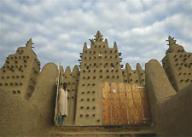 Reuters reports on efforts to preserve the manuscripts of Timbuktu covered earlier:
Researchers in Timbuktu are fighting to preserve tens of thousands of ancient texts which they say prove Africa had a written history at least as old as the European Renaissance...Written in ornate calligraphy, some were used to teach astrology or mathematics, while others tell tales of social and business life in Timbuktu during its "Golden Age", when it was a seat of learning in the 16th century.
"These manuscripts are about all the fields of human knowledge: law, the sciences, medicine," said Galla Dicko, director of the Ahmed Baba Institute, a library housing 25,000 of the texts.
photo courtesy of reuters